 Garden
Affiliate Disclosure
Some links on this page are affiliate links. As an Amazon Associate, we earn from qualifying purchases — at no extra cost to you. We do not buy, test, or physically handle the products we cover; our rankings come from aggregated owner reviews, ratings and expert consensus. Commissions never change our verdicts. How we rank · full disclosure.
The short answer: the best tall fescue grass seed for a home lawn is Jonathan Green Black Beauty Ultra — turf-type tall fescue blended with Kentucky bluegrass and perennial rye, so you get deep rooting and drought tolerance plus the ability to recover from damage. It suits transition-zone and northern lawns wanting color and durability together. Covering a large or rough area on a budget, Pennington Kentucky 31 is the traditional workhorse at a fraction of the price per pound.
We do not buy, plant, or physically handle any seed. These rankings come from aggregated owner reviews, star ratings, review volume and expert consensus — see how we rank. For the wider field see best grass seed, and to compare species read fescue vs Bermuda grass.
Top Picks at a Glance
Our #1 Pick: Jonathan Green Black Beauty Ultra
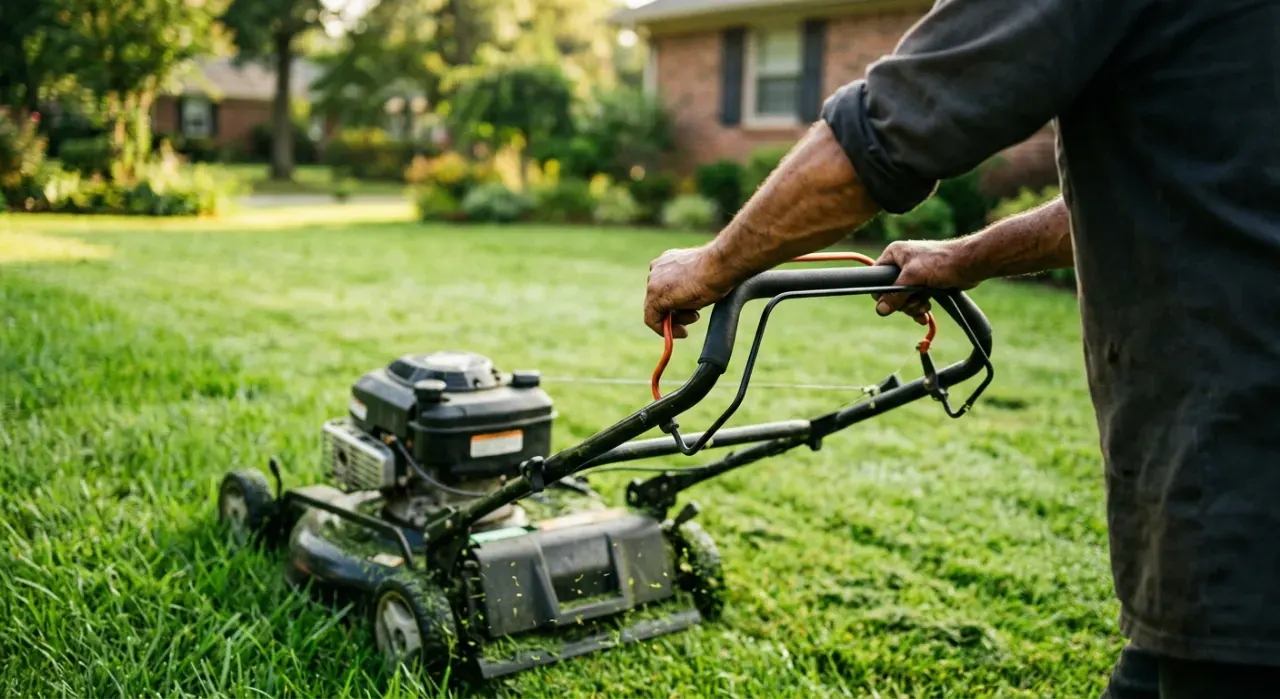
Tall fescue has one great strength and one real weakness, and this blend is built around both.
The strength is root depth. Tall fescue roots reach three to four feet into the soil profile, against six to twelve inches for Kentucky bluegrass. That is why a tall fescue lawn stays green through a July dry spell that turns a bluegrass lawn straw-colored — Penn State Extension calls it the most heat- and drought-tolerant of the cool-season turfgrasses — and it is the single reason tall fescue dominates the transition zone from Kansas to Virginia.
The weakness is that tall fescue is a bunch grass. It grows in clumps and does not spread sideways, so damage from a dog, a paddling pool or a heavy summer stays as a bare patch until you reseed it. Black Beauty Ultra addresses this directly by blending Kentucky bluegrass into the mix — bluegrass spreads by underground rhizomes and knits gaps closed, which is exactly what tall fescue cannot do. The perennial ryegrass component gives fast initial cover while the slower species establish.
The varieties themselves are worth noting: Jonathan Green selects for a naturally dark green color and a waxy leaf coating that reduces water loss. The practical effect owners describe is a lawn that holds color with less nitrogen than a comparable mass-market blend.
The complaints are consistent. Price per pound is well above supermarket seed, and though the seed analysis is cleaner, the difference is real money on a large lawn. Establishment is slower than a rye-heavy quick-cover mix, so the watering commitment runs longer. The bluegrass fraction takes a full season to contribute anything, which surprises people expecting immediate spreading. And a genuine limitation of the species: tall fescue is not a shade grass. It handles moderate shade better than bluegrass but thins under heavy canopy — for that, see our shade seed picks.
Consensus Score █████████░░░ 8.6
Check price on Amazon → (paid link)
The Ranked Field

Best for transition-zone and northern lawns that need drought tolerance and color
- Turf-type tall fescue with Kentucky bluegrass and perennial rye
- Naturally dark green color
- Deep rooting — tall fescue reaches 3 to 4 feet
- Covers roughly 2,800 sq ft when overseeding
Why buy it: a blend rather than a single species, so bluegrass fills damage while the tall fescue provides the drought tolerance.

Best for large areas, rough ground, pastures and low-maintenance lawns
- The traditional industry-standard tall fescue
- Thrives in 4 to 8 hours of sun
- Penkoted seed treatment for better establishment
- 25 lb covers a large area
Why buy it: the cheapest way to cover serious ground with a grass that survives heat, drought and neglect better than anything else here.

Best for seeding a full lawn with premium turf-type tall fescue
- Same blend as the 7 lb bag in a full-lawn size
- Seeds up to 5,000 sq ft new, 10,000 sq ft overseeding
- Dark green, disease-resistant varieties
- Deep root system for drought tolerance
Why buy it: buying premium seed by the 25 lb bag brings the cost per thousand square feet close to budget seed.

Best for established lawns being thickened with a proven tall fescue blend
- The original Black Beauty tall fescue blend
- Waxy leaf coating reduces moisture loss
- Deep rooting to 4 feet
- Naturally dark green without extra nitrogen
Why buy it: the waxy leaf cuticle on these varieties genuinely reduces water loss, which shows in July rather than in May.

Best for overseeding a normal suburban lawn or patching worn areas
- Kentucky 31 tall fescue in a 5 lb pack
- Germinates in 8 to 21 days
- Tolerates 4 to 8 hours of sun
- Penkoted seed coating
Why buy it: the right size for a real overseeding job without leaving 20 lb of seed to lose viability in the garage.
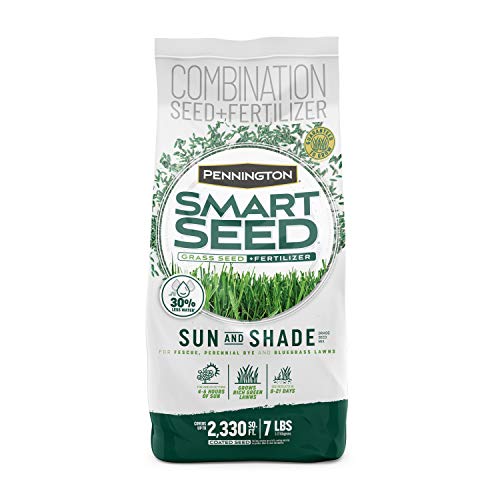
Best for northern lawns with mixed sun and shade
- Tall fescues with Kentucky bluegrass and perennial rye
- Formulated for northern climates
- Uses up to 30% less water once established
- Fertilizer included in the mix
Why buy it: tall fescue blended with bluegrass gives you drought tolerance and the ability to recover from damage, which fescue alone lacks.
Quick Comparison
| Product | Best for | Rating | Price | Buy |
|---|---|---|---|---|
| Jonathan Green Black Beauty Ultra Grass Seed (7 lb) | Best Overall | — | Check (paid link) | |
| Pennington Kentucky 31 Tall Fescue Grass Seed (25 lb) | Best Value Per Pound | — | Check (paid link) | |
| Jonathan Green Black Beauty Ultra Grass Seed (25 lb) | Best for Big Lawns | — | Check (paid link) | |
| Jonathan Green Black Beauty Original Grass Seed Blend (15 lb) | Best Classic Blend | — | Check (paid link) | |
| Pennington Kentucky 31 Tall Fescue Grass Seed (5 lb) | Best Mid-Size Bag | — | Check (paid link) | |
| Pennington Smart Sun and Shade Grass Seed Mix North (7 lb) | Best Northern Mix | — | Check (paid link) |

Turf-Type vs Kentucky 31: Which Do You Need?
This is the decision that determines both your bill and how the lawn looks, and the two products are more different in appearance than in performance.
| Turf-type tall fescue | Kentucky 31 | |
|---|---|---|
| Leaf texture | Fine to medium — looks like a lawn | Coarse and wide-bladed |
| Colour | Dark green | Medium green |
| Density | High | Lower, clumpier appearance |
| Drought and heat tolerance | Excellent | Excellent |
| Traffic tolerance | Very good | Excellent |
| Cost per pound | Higher | Lowest of any lawn grass |
| Best for | Front lawns and anywhere appearance matters | Large areas, slopes, pastures, low-maintenance ground |
One practical warning: do not mix them in the same visible area. Kentucky 31 clumps are noticeably coarser than turf-type varieties, and overseeding a fine turf-type lawn with K31 produces a patchy, uneven texture that is very difficult to remove afterwards.
The Seeds, Reviewed
1. Jonathan Green Black Beauty Ultra (7 lb) — Best Overall
Covered above. Owners praise: dark color without heavy feeding, drought performance in July and August, clean seed analysis, and density once established. Owners complain about: price per pound, slower establishment than rye-heavy mixes, a bluegrass fraction that takes a season to show, and thinning under heavy shade.
2. Pennington Kentucky 31 (25 lb) — Best Value Per Pound
Kentucky 31 is the variety that put low-maintenance lawns within reach of ordinary homeowners in the mid-twentieth century, and it is still the cheapest way to establish serious ground cover. It thrives on 4 to 8 hours of sun, germinates in 8 to 21 days, and survives conditions that kill finer grasses. The Penkoted treatment improves establishment. Owners praise: price per pound, toughness on slopes and rough ground, drought survival, and reliable germination. Owners complain about: a coarse wide blade that does not look like a manicured lawn, clumping habit, poor blending with turf-type varieties, and a light green color compared with premium blends.
3. Jonathan Green Black Beauty Ultra (25 lb) — Best for Big Lawns
The same blend in the size a full lawn actually needs. At 6 to 10 lb per 1,000 sq ft for new seeding, a 7 lb bag covers under 1,000 sq ft — so anyone seeding a real lawn should be buying this rather than four small bags, and the cost per thousand square feet drops substantially. Owners praise: value on large jobs, consistent quality with the smaller bags, full-lawn coverage, and color. Owners complain about: a large bag that loses viability if not used within a season or two, weight to handle, and the same premium price relative to Kentucky 31.
4. Jonathan Green Black Beauty Original (15 lb) — Best Classic Blend
The original Black Beauty formulation, still in production because it works. The distinguishing feature of these varieties is a waxy cuticle on the leaf that reduces transpiration — a genuine physiological trait rather than a marketing claim, and one that shows up in reviews as a lawn holding color into a dry August. Deep rooting to four feet supports the same behavior. Owners praise: summer color retention, drought performance, dark green appearance, and disease resistance. Owners complain about: price, no bluegrass in some formulations meaning gaps stay as gaps, and slower establishment than modern quick-cover mixes.
5. Pennington Kentucky 31 (5 lb) — Best Mid-Size Bag
The practical size for overseeding a normal suburban lawn, where 25 lb is far more than you need and 1 lb is not enough. Same tough Kentucky 31 genetics, same Penkoted treatment. Owners praise: the right quantity for a real job, price, germination reliability, and toughness. Owners complain about: the coarse texture of K31 in a fine lawn, patchy appearance where it establishes among finer grasses, and color that lags premium blends.
6. Pennington Smart Sun and Shade Mix North — Best Northern Mix
A tall fescue blend built specifically for northern conditions, combining tall fescues for drought tolerance with Kentucky bluegrass for winter hardiness and self-repair, plus perennial rye for quick cover. The Smart Seed drought characteristic cuts irrigation need by up to 30 percent once established, and fertilizer is included. Owners praise: winter survival, spring recovery, mixed sun and shade tolerance, and the included starter feed. Owners complain about: less shade tolerance than a dedicated dense-shade mix, a bluegrass fraction that is slow to contribute, and coverage that assumes an overseeding rate.
What Owners Actually Complain About
Tall fescue seed reviews cluster around five things. Clumpy appearance is the most common, and it is inherent to the species — tall fescue is a bunch grass, and seeding too thinly leaves visible clumps rather than a sward. Seed at the full rate. Coarse texture is second and applies almost entirely to Kentucky 31, where buyers expected a lawn and got a pasture grass. Bare spots not filling in is third, and again is the species: without a bluegrass component, tall fescue does not spread and damage stays until you reseed. Slow germination is fourth — 8 to 21 days is normal and the low end requires warm soil. And disappointing spring seeding is fifth, which is a timing problem: tall fescue seeded in spring rarely roots deeply enough to survive its first summer, and fall seeding gives dramatically better results.
How to Choose and Sow Tall Fescue
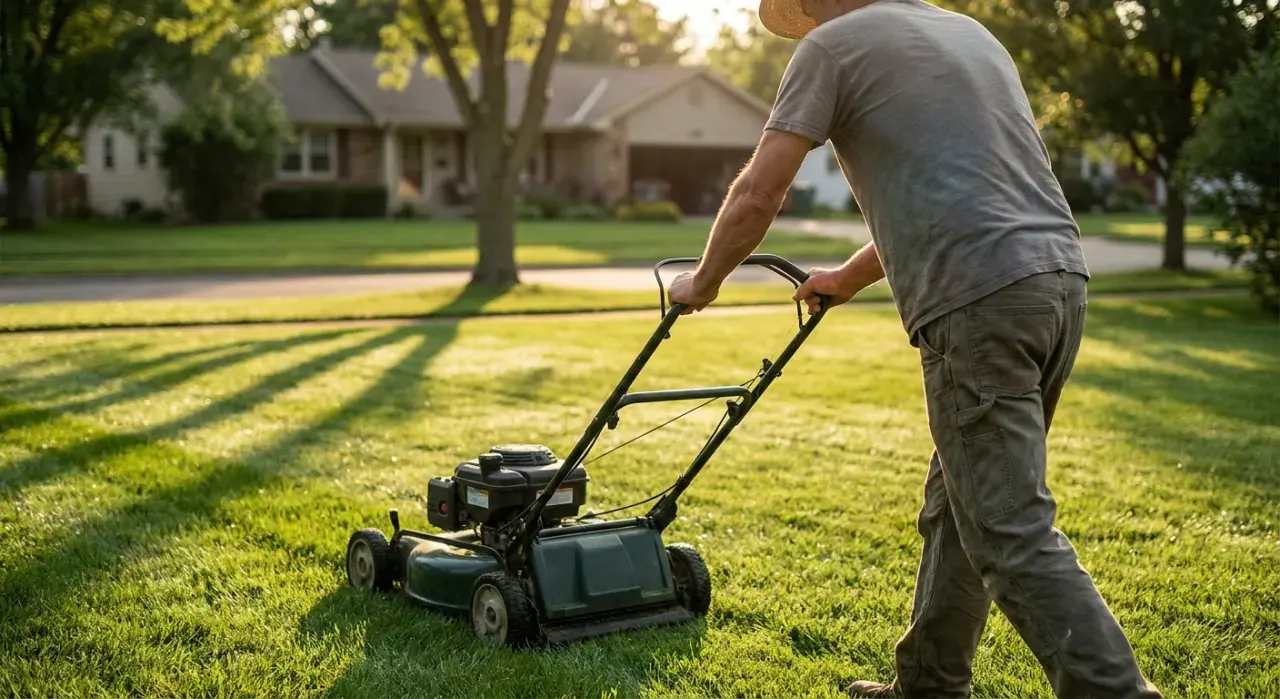
Two decisions, then technique. Turf-type or Kentucky 31? Turf-type for anywhere the lawn is looked at, K31 for slopes, back acreage and rough ground where toughness beats appearance. Blend or pure? A blend with Kentucky bluegrass repairs itself; pure tall fescue does not. For a lawn with children or dogs, take the blend.
Then sow at the right rate and the right time. Fall, six to eight weeks before hard frost is the window that produces good tall fescue lawns — Penn State Extension says not to seed later than mid-October — and spring seeding is a compromise. Mow short and remove clippings, rake or core-aerate to expose soil, spread at 6 to 10 lb per 1,000 sq ft for a new lawn or 4 to 6 for overseeding — in the same range as the NC State Extension seeding-rate table — and rake lightly to a quarter-inch depth. Apply starter fertilizer — see best fertilizer for new grass. Water lightly two or three times daily until germination, then deeply and less often. And skip pre-emergent weed control for the whole season, because it stops grass seed germinating just as effectively as weed seed.
How We Rank Grass Seed
We never buy or physically handle the products on this site. We read the owner-review record at scale, weighting four things. Germination consistency, the strongest single predictor of buyer satisfaction. Appearance at 12 months rather than at eight weeks, because texture and clumping only reveal themselves after a season. Seed analysis quality, including weed seed content and inert matter, which varies enormously between premium and budget seed. And suitability for the stated region, checked against extension guidance rather than packaging. Prices and star ratings move; the complaint pattern does not.
The Verdict
Jonathan Green Black Beauty Ultra is the tall fescue seed the owner-review record supports most strongly for a lawn you look at — deep-rooting turf-type fescue blended with bluegrass so damage actually heals. Buy the 25 lb bag if you are seeding a full lawn. For slopes, back acreage and anywhere toughness matters more than texture, Pennington Kentucky 31 remains unbeatable on price.
Next: pick the season with the best time of year to plant grass seed, work out quantities with how much grass seed for 1,000 square feet, or compare with the other cool-season option in best Kentucky bluegrass seed.