 Garden
Affiliate Disclosure
Some links on this page are affiliate links. As an Amazon Associate, we earn from qualifying purchases — at no extra cost to you. We do not buy, test, or physically handle the products we cover; our rankings come from aggregated owner reviews, ratings and expert consensus. Commissions never change our verdicts. How we rank · full disclosure.
The short answer: for the yellow dead spots dogs leave, use Scotts EZ Seed Dog Spot Repair — it is the one widely available product that pairs seed with a salt neutraliser for the damaged soil, which is why it works where plain seed simply fails again. For reseeding a whole yard that takes daily dog traffic, tall fescue is the most wear-tolerant common lawn grass and Pennington Kentucky 31 is the cheapest way to buy it in quantity. If you want the lawn to look good too, Black Beauty Ultra adds a self-repairing bluegrass fraction.
We do not buy, plant, or physically handle any seed. These rankings come from aggregated owner reviews, star ratings, review volume and expert consensus — see how we rank. For the wider field see best grass seed, and there is more on living with animals in our pets at home hub.
Top Picks at a Glance
Why Dog Urine Kills Grass (It Is Not the pH)
This matters because the wrong explanation leads to the wrong purchase, and there are a lot of products sold on the wrong explanation.
Dog urine is high in nitrogen and soluble salts. When a concentrated dose lands on one small area, it delivers the equivalent of a massive over-application of fertilizer to a few square inches of turf. Soluble salts draw moisture out of the grass tissue and the plant dies — exactly the mechanism behind fertilizer burn.
The giveaway is the pattern. A urine spot has a dead center surrounded by a ring of unusually dark, vigorous grass. That ring is grass receiving a diluted dose of the same nitrogen and thriving on it. If the problem were acidity, you would not see a fertilised ring.
Two practical conclusions follow. First, diluting is the fix — watering a spot within minutes of it happening disperses the salts before they concentrate, and it is more effective than any product. Second, supplements sold to alter urine pH address a mechanism that is not the cause, and should not be given without veterinary advice. What actually helps is more water in the dog and more water on the lawn.
Our #1 Pick: Scotts EZ Seed Dog Spot Repair
Reseeding a urine spot with ordinary grass seed usually fails, and the reason follows directly from the section above: the salts are still in the soil. New seedlings germinate into the same concentrated salt that killed the previous grass, and die the same way. That is the specific problem this product addresses.
EZ Seed Dog Spot Repair contains a salt-neutralising ingredient alongside the seed, mulch and fertilizer. The neutraliser addresses the soil chemistry, the expanding mulch holds moisture around the seed on what is usually bare, compacted ground, and the seed blend tolerates both sun and shade. Owners consistently report it succeeding on spots where plain patch seed had already failed once or twice, which is the most useful signal available in this category.
Scotts states that pets and children may re-enter the area immediately after application, though limiting heavy traffic until the third or fourth mowing is recommended — which is sensible advice regardless of product.
The complaints are worth knowing. Cost per square foot is very high. A 2 lb pack covers a small number of spots, and treating a yard full of them gets expensive quickly. It fails completely if allowed to dry out once during germination — the mulch buys you time, not immunity. Coverage claims are optimistic, because owners tend to apply more thickly than the label assumes. And a limitation nothing can solve: if the dog uses the same spot again during establishment, the repair fails. Temporary fencing or rerouting the dog for three to four weeks is not optional.
Consensus Score ████████░░░░ 8.2
Check price on Amazon → (paid link)
The Ranked Field

Best for the yellow-ringed dead patches dogs leave on a lawn
- Contains a salt neutraliser for urine-damaged soil
- Combination mulch, seed and soil amendment
- Mulch holds moisture around the seed
- Pets can re-enter the area after application
Why buy it: urine spots are a salt problem as much as a seed problem, and this is the only product here that treats both at once.
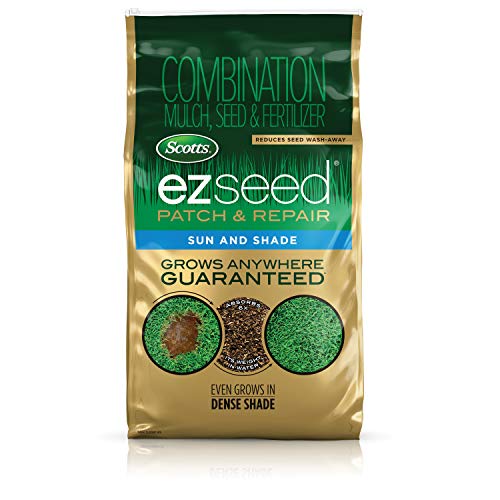
Best for bare patches from digging, running lines and worn tracks
- Expanding mulch holds water around the seed
- Sun and shade tolerant blend
- Includes fertilizer
- Covers roughly 225 sq ft of bare repair
Why buy it: a dog track is bare compacted soil, which is the seedbed most likely to dry out — the mulch is what gets germination over the line.

Best for reseeding a whole yard that takes daily dog traffic
- Exceptional traffic and wear tolerance
- Roots 3 to 4 feet deep for drought recovery
- Tolerates low fertility and rough treatment
- 25 lb covers a large area cheaply
Why buy it: the toughest common lawn grass in America, which is exactly what a yard with a large dog needs more than fine texture.

Best for dog-owning households who want a good-looking lawn too
- Turf-type tall fescue with Kentucky bluegrass and rye
- Bluegrass rhizomes fill damaged patches on their own
- Deep rooting for wear recovery
- Naturally dark green
Why buy it: the bluegrass fraction spreads into damaged areas without reseeding, which is worth a great deal in a yard that gets torn up weekly.
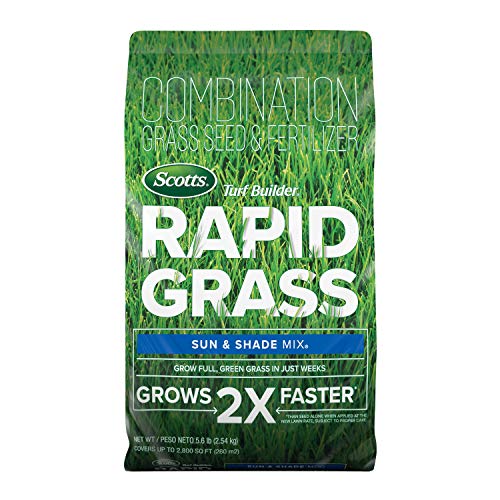
Best for getting cover back quickly before the next dig or wear line
- Grass seed and starter fertilizer combined
- Grows in weeks rather than months
- Sun and shade tolerant
- Covers about 1,555 sq ft new lawn
Why buy it: in a dog yard the race is between grass establishing and the dog wearing it out again, so germination speed genuinely matters.
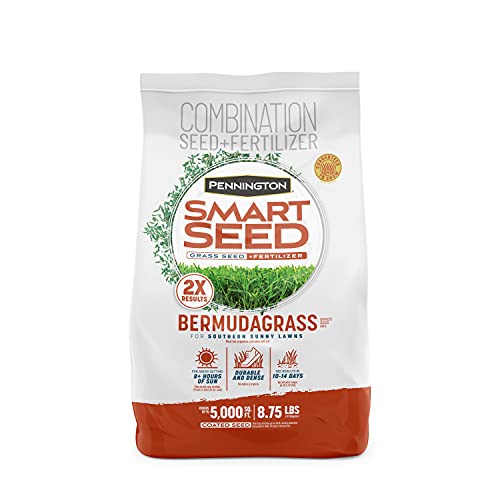
Best for sunny southern yards with active dogs
- Spreads by runners to self-repair worn areas
- Exceptional traffic tolerance
- Uses up to 30% less water once established
- Fertilizer included
Why buy it: Bermuda spreads aggressively into worn ground, which makes it the most self-healing lawn grass available in the South.
Quick Comparison
| Product | Best for | Rating | Price | Buy |
|---|---|---|---|---|
| Scotts EZ Seed Dog Spot Repair Sun and Shade (2 lb) | Best for Urine Spots | — | Check (paid link) | |
| Scotts EZ Seed Patch and Repair Sun and Shade (10 lb) | Best Overall Repair | — | Check (paid link) | |
| Pennington Kentucky 31 Tall Fescue Grass Seed (25 lb) | Most Durable Grass | — | Check (paid link) | |
| Jonathan Green Black Beauty Ultra Grass Seed (7 lb) | Best Self-Repairing Blend | — | Check (paid link) | |
| Scotts Turf Builder Rapid Grass Sun and Shade Mix (5.6 lb) | Best Fast Cover | — | Check (paid link) | |
| Pennington Smart Seed Bermudagrass Mix (8.75 lb) | Best Southern Pick | — | Check (paid link) |
Which Grass Species Survives a Dog
Two different qualities matter in a dog yard, and they are not the same thing: wear tolerance is how much traffic a grass takes before it dies, and recovery is how fast it comes back afterwards. The best dog lawns have both.
| Grass | Wear tolerance | Self-repair | Verdict for dogs |
|---|---|---|---|
| Tall fescue | Excellent | None (bunch grass) | Best cool-season base |
| Kentucky bluegrass | Moderate | Excellent (rhizomes) | Blend it with fescue |
| Perennial ryegrass | Very good | None | Good for fast cover |
| Fine fescue | Poor | Limited | Avoid in a dog yard |
| Bermuda | Excellent | Excellent (stolons and rhizomes) | Best southern option |
| Zoysia | Very good | Good but slow | Durable, slow to repair |
The practical answer in the North is a tall fescue and Kentucky bluegrass blend: fescue takes the traffic, bluegrass fills what gets destroyed. In the South it is Bermuda, which does both jobs itself.
The Seeds, Reviewed
1. Scotts EZ Seed Dog Spot Repair — Best for Urine Spots
Covered above. Owners praise: success on spots where plain seed failed, the salt neutraliser, moisture-holding mulch, and simplicity. Owners complain about: very high cost per square foot, total failure if allowed to dry out, optimistic coverage, and repairs undone by the dog returning to the same spot.
2. Scotts EZ Seed Patch and Repair (10 lb) — Best Overall Repair
The general-purpose version, and the right choice for the damage that is not urine: dig holes, worn running tracks along a fence, and the compacted bald patch by the back door. Those areas are bare, compacted and dry — the hardest seedbed there is — and the expanding mulch is what gets seed through germination. A 10 lb tub covers a meaningful amount of repair work. Owners praise: results on bare compacted ground, the moisture indicator that changes color when watering is needed, fertilizer included, and coverage per tub. Owners complain about: high cost per square foot, failure if it dries out, and mulch that washes off on any slope.
3. Pennington Kentucky 31 (25 lb) — Most Durable Grass
When the whole yard needs reseeding rather than patching, toughness beats texture. Kentucky 31 is the most wear-tolerant common lawn grass in America, roots three to four feet deep so it recovers from drought and damage, tolerates low fertility, and costs less per pound than anything else here. For a yard with a large or active dog, that combination is worth more than a fine leaf blade. Owners praise: survival under heavy use, price per pound, drought recovery, and germination reliability. Owners complain about: coarse wide blade, clumping habit, poor blending with fine turf, and no self-repair — bare spots stay until you reseed.
4. Jonathan Green Black Beauty Ultra — Best Self-Repairing Blend
The upgrade for people who want a dog and a good-looking lawn. The turf-type tall fescue takes the traffic, and the Kentucky bluegrass fraction — which Penn State Extension notes spreads by rhizomes — fills in the areas that get destroyed, which in a dog yard happens constantly. That self-repair is worth real money over a season, because it is damage you do not have to reseed. Owners praise: recovery from damage without intervention, dark color, density, and drought performance. Owners complain about: price per pound, slower establishment than rye-heavy mixes, and a bluegrass fraction that does nothing visible until year two.
5. Scotts Turf Builder Rapid Grass Sun and Shade Mix — Best Fast Cover
In a dog yard the real contest is between grass establishing and the dog wearing it out again, so germination speed is a functional advantage rather than a convenience. This combines seed with starter fertilizer and is bred for fast establishment. Owners praise: genuinely quick germination, one-bag simplicity, tolerance across sun and shade, and results on patches. Owners complain about: high cost per square foot versus buying components separately, coverage running out faster than expected, and results that depend heavily on watering discipline.
6. Pennington Smart Seed Bermudagrass Mix — Best Southern Pick
In the South, Bermuda is simply the best dog grass available. It has excellent wear tolerance and it spreads by both stolons and rhizomes, so worn areas fill in on their own — the closest thing to a self-maintaining dog lawn. Smart Seed selection cuts water need by up to 30 percent and the improved cold tolerance extends its range into the transition zone. Owners praise: self-repair into worn tracks, traffic tolerance, reduced watering, and density. Owners complain about: requiring full sun and failing under trees, 60 to 90 days to fill in, invasiveness into flower beds, and winter dormancy that turns the lawn brown.
What Owners Actually Complain About
Dog-lawn seed reviews have a very consistent pattern, and most of the failures are process rather than product. The repair died again is the top complaint, and it is nearly always one of two causes: the dog was allowed back onto the patch before the grass established, or the spot dried out during germination. Cost per square foot is the second and it is legitimate — combination repair products are convenient and expensive, and a yard full of spots gets costly fast. Slow recovery is third, particularly with bunch grasses that do not fill gaps. Ongoing new spots is fourth and is not a seed problem at all: unless the watering-and-dilution habit changes, you are reseeding the same lawn indefinitely. And dogs eating or digging the mulch appears regularly, which is worth planning for with temporary fencing rather than hoping.
How to Keep a Lawn With a Dog
Seed is one part of five. These are the habits that separate the yards that recover from the yards that do not.
- Water urine spots within minutes. A watering can kept by the back door is the single highest-value intervention available, and it costs nothing.
- Increase your dog's water intake. More dilute urine is less concentrated salt in one place. Extra bowls and wet food both help.
- Create a designated area. A gravel or mulch corner, trained to with consistency, removes most of the problem from the lawn entirely.
- Mow higher. Longer grass has deeper roots and shades the crown, which improves wear recovery substantially — Penn State Extension recommends most lawns stay at 2 inches or above; see mowing height by grass type.
- Fence off repairs for three to four weeks. Not negotiable. A repair walked on at day three is a repair wasted.
Do also check what you put on the lawn. Weed and feed products and granular insecticides carry specific re-entry instructions for pets, and organic fertilizers are generally safer around animals — though corn gluten and protein-based products are attractive to dogs to eat, so water them in and keep pets off until dry. Our organic fertilizer picks cover the safer options.
How We Rank Grass Seed
We never buy or physically handle the products on this site. We read the owner-review record at scale, weighting four things. Success where a previous attempt failed, which is the most informative signal in a repair category. Wear tolerance and recovery of the species, checked against published extension data rather than packaging. Results at 12 months rather than eight weeks, since a dog lawn is judged on whether it is still there next summer. And cost per square foot, which varies enormously between plain seed and combination repair products. Prices and star ratings move; the complaint pattern does not.
The Verdict
Scotts EZ Seed Dog Spot Repair is the product the owner-review record supports most strongly for urine damage, because it is the only one that treats the salt in the soil as well as sowing seed. For a whole yard under daily dog traffic, Pennington Kentucky 31 is the toughest and cheapest option, and Black Beauty Ultra is the upgrade if you want self-repair and a lawn worth looking at. In the South, Bermuda does both jobs better than anything else.
Next: fix the whole lawn with how to overseed a lawn, pick the season with the best time of year to plant grass seed, or choose the toughest species in best tall fescue grass seed.