 Garden


Affiliate Disclosure
Some links on this page are affiliate links. As an Amazon Associate, we earn from qualifying purchases — at no extra cost to you. We do not buy, test, or physically handle the products we cover; our rankings come from aggregated owner reviews, ratings and expert consensus. Commissions never change our verdicts. How we rank · full disclosure.
As of 2026, a small backyard pond costs roughly $500 to $5,000 to build — about $300 to $1,500 for a basic DIY liner pond, and $3,500 to $8,000 or more for a professional install with excavation, stonework and filtration. The biggest variables are whether you dig it yourself or hire out, the pond's size and features, and local labor rates. Doing your own digging saves the largest cost. Check whether your locality requires a permit for a pond over a certain depth, and call 811 — the free national call-before-you-dig service — to have utilities marked before excavating.
What are the typical cost ranges?
The single biggest fork is DIY versus professional, because labor dominates a contractor's bill. These reflect typical US pricing as of 2026 for a small pond.
| Approach | Typical cost (2026) | What you get |
|---|---|---|
| Basic DIY (small preformed or liner) | $300–$1,500 | Liner, pump, edging; you dig |
| Mid-range DIY / lightly contractor-assisted | $1,500–$3,500 | Proper liner, filtration, some rock/waterfall |
| Professional install | $3,500–$8,000+ | Excavation, stonework, filtration, waterfall |
These are estimates, not quotes. Local labor rates, site conditions and how elaborate the design is move any project within — or beyond — these bands, so get itemized quotes from local pond installers if you are hiring out.
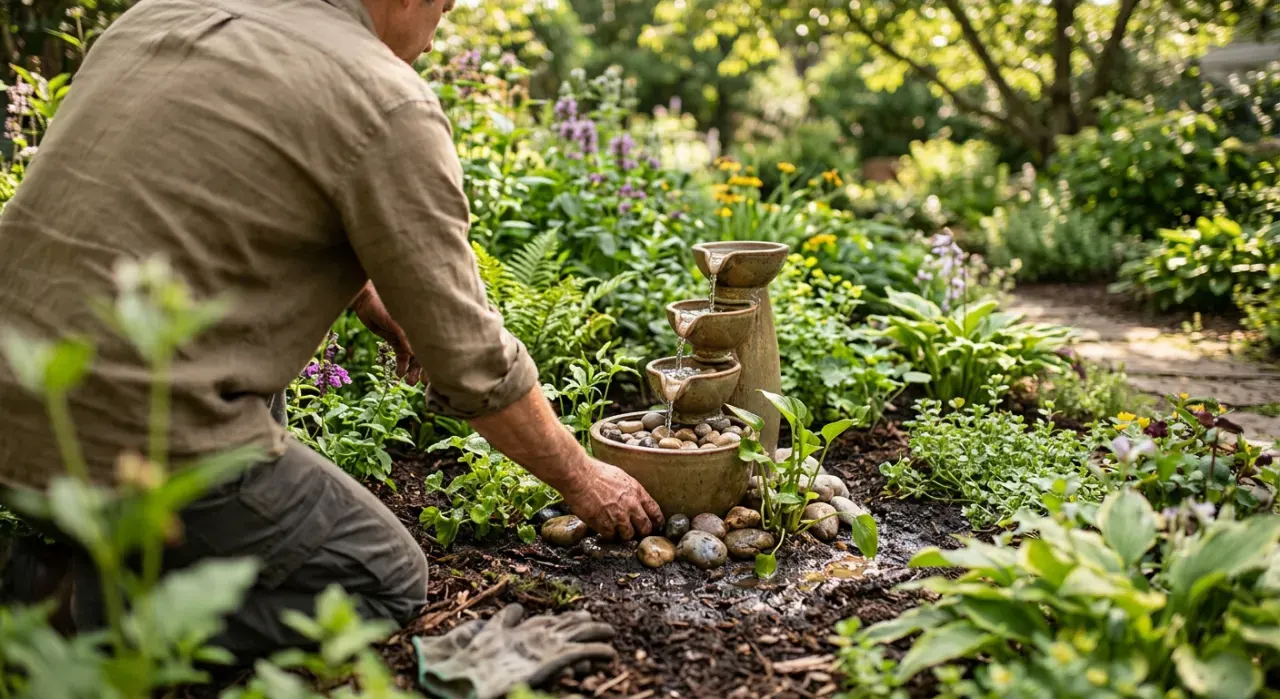
Where does the money go?
For a DIY build, the material costs break down roughly like this, with digging as sweat equity:
- Liner and underlayment — a flexible EPDM liner plus protective underlayment, sized to the hole, is a core cost.
- Pump and filter — sized to the pond's volume; a UV clarifier adds cost but keeps water clear. Sizing is covered in fountain and pump sizing.
- Rock and edging — the biggest visual cost, and labor-intensive if naturalistic; stone is priced by weight.
- Waterfall or stream — optional, adds pump capacity, liner and rock.
- Extras — lighting, plants, and if you want them, fish and fish-grade filtration.
The reason professional installs cost several times a DIY pond is that they add skilled labor to every one of these lines, especially the excavation and the stonework, which are slow and physical.

What about ongoing costs?
A pond is not only a build cost. Budget for running the pump — a small pond pump running continuously might add a few dollars to $10 or more a month to the electric bill — plus water top-ups for evaporation, occasional filter media and water treatments, and seasonal cleaning. Mosquitoes are the other recurring task: the CDC asks households to empty, scrub or otherwise deny mosquitoes any standing water weekly, which in a pond means keeping the pump running and the surface moving. Algae control is a recurring task worth planning for, with methods in fountain algae control. In cold climates, winterizing may mean a de-icer or aerator that also draws power — related is winterizing a fountain. If you keep fish, add their food and care. None of this is large for a small pond, but it is real, and knowing it up front keeps the pond from becoming a surprise line on the bills.
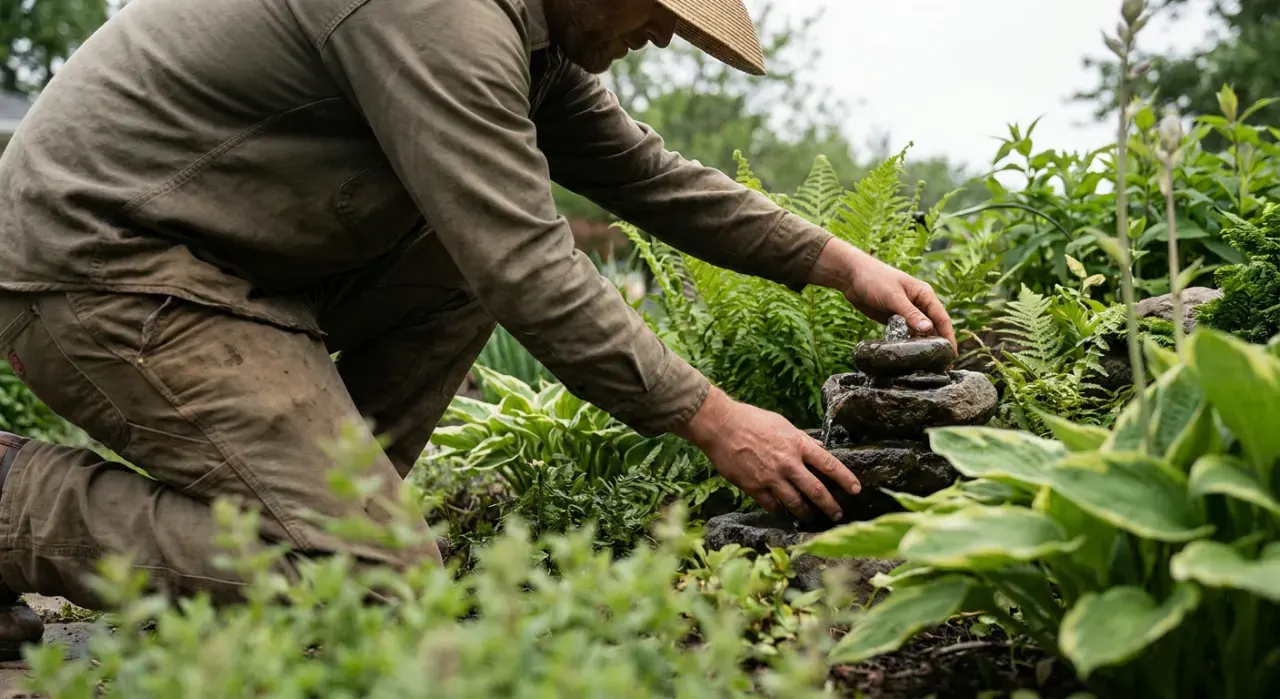
Do I need a permit, and what else should I check?
Possibly — and this is the part worth confirming before you dig, because it is jurisdiction-specific. Many small, shallow decorative ponds need no permit, but some cities and counties require one above a certain depth, often around 18 to 24 inches, for the same safety and fencing reasons that govern pools, and others regulate ponds where grading, drainage or a new water line is involved. The rules vary widely by locality, so check with your local building department first; confirming saves you from a fine or from having to fill in a finished pond. Separately, always call 811 a few days ahead to have buried utilities marked before excavating — hitting a gas or electric line is both dangerous and expensive. Once those two checks are done, the pond itself is a satisfying weekend-to-few-weekends project. Design ideas for a small space are in decorating a small yard.
We never buy, test or physically handle the products we rank. Recommendations come from aggregated owner reviews, star ratings, review volume and expert consensus — see how we rank.
More from this hub: Garden Decor · Best outdoor fountains · Fountain algae control · Changing birdbath water · How we rank