 Garden
Affiliate Disclosure
Some links on this page are affiliate links. As an Amazon Associate, we earn from qualifying purchases — at no extra cost to you. We do not buy, test, or physically handle the products we cover; our rankings come from aggregated owner reviews, ratings and expert consensus. Commissions never change our verdicts. How we rank · full disclosure.
Prune boxwood in late winter to early spring, before new growth begins, and shear a second time in early summer once the first flush has hardened. Stop all pruning by late summer — roughly six weeks before your average first frost — so any new growth has time to harden before freezing weather. Dead, damaged and diseased wood can be removed at any time of year. Late-winter pruning is the one that shapes the plant, because the spring flush fills in the outline you leave.
What should the boxwood pruning calendar look like?
Boxwood puts out one strong flush of growth in spring and often a smaller one in late summer. Timing pruning around those flushes is what separates a clean hedge from one covered in browned leaf edges.
| Season | Job | Why then |
|---|---|---|
| Late winter to early spring | Structural pruning, thinning, hard cutback | Before bud break, so the spring flush fills the new shape |
| Mid spring, during the flush | Nothing | Cut leaf edges brown conspicuously on soft new growth |
| Early summer, after the flush | Light shear to shape | New growth has hardened; the outline holds for months |
| Midsummer | Light touch-up only | Avoid heavy work in heat and drought |
| Late summer | Final light shear, then stop | Last safe point for growth to harden before frost |
| Fall | Nothing but dead wood | New growth will not harden before freezing |
| Winter | Dead and damaged wood only | Structural work resumes at late winter |
One practical note on winter greenery: cutting boxwood for holiday wreaths and garlands is effectively a December pruning, and it is generally tolerated because the cuts are light and scattered. Take modest amounts from the interior rather than shearing the outer surface, and disinfect tools between plants.
What is the difference between shearing and thinning here?
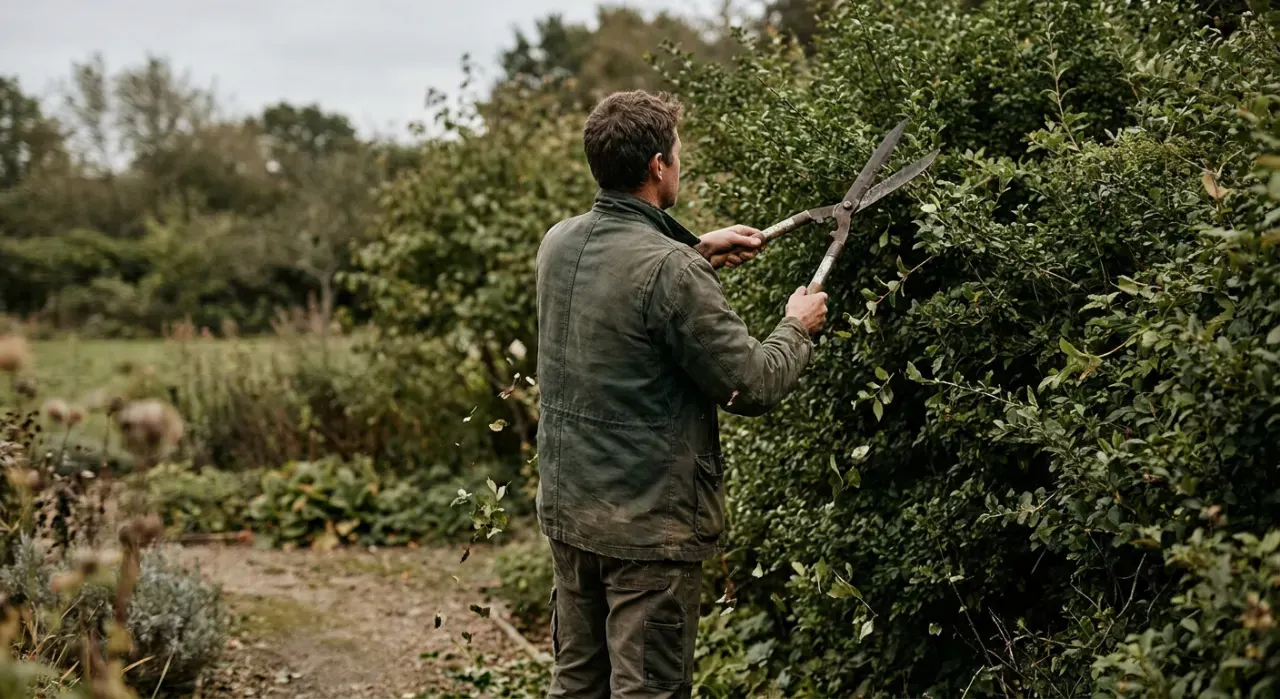
Shearing cuts every shoot at the same plane, which stimulates dense branching right at the surface. Repeated year after year with nothing else, it builds a shell of foliage several inches thick over a hollow, twiggy, leafless interior. That interior holds moisture, gets no light, and becomes the ideal environment for Volutella blight and for boxwood blight, the far more serious disease caused by Calonectria pseudonaviculata.
Thinning is the counterweight. Reaching inside and removing selected branches back to a junction opens channels through the canopy so light and air reach the inner foliage, which then keeps its leaves instead of shedding them. Extension services consistently recommend combining the two: shear for form, thin annually for health. A reasonable working ratio is to remove around 10 percent of interior branches each year while shearing the surface. The general principle behind the two cut types is set out in heading versus thinning cuts.
How much can you take off at once?
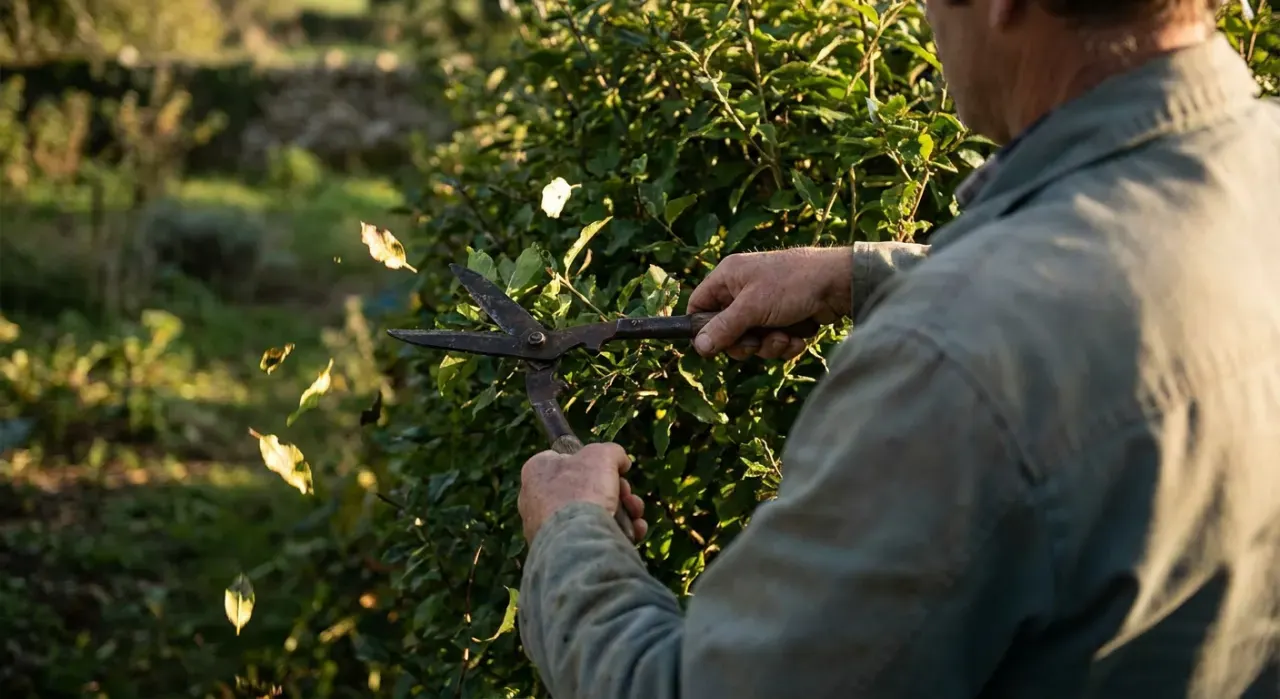
Boxwood tolerates hard pruning better than most broadleaf evergreens because it readily produces new shoots from old wood, but there is one absolute limit: do not cut into bare wood that has no green foliage or visible buds anywhere beyond the cut. Branches stripped back into completely dormant wood may never releaf.
- Routine shearing: take the current season's growth, an inch or two.
- Reshaping: up to a quarter of the plant in one late-winter session.
- Renovation: up to a third in one year, or better, staged over two to three years.
- Never: into leafless interior wood beyond where buds are visible.
- Shape matters: keep the base slightly wider than the top so light reaches the lower foliage, or the bottom thins out over time.
The full renovation sequence for an overgrown plant is in how far back you can cut a boxwood, and the same staged approach applied to hedges generally is in renovating an overgrown hedge.
What precautions should I take against boxwood blight?
Boxwood blight has spread widely across the United States since it was first confirmed here in 2011, and it moves on tools, gloves, clothing and plant debris as readily as on wind and rain. Sanitation during pruning is therefore not optional in areas where it is present.
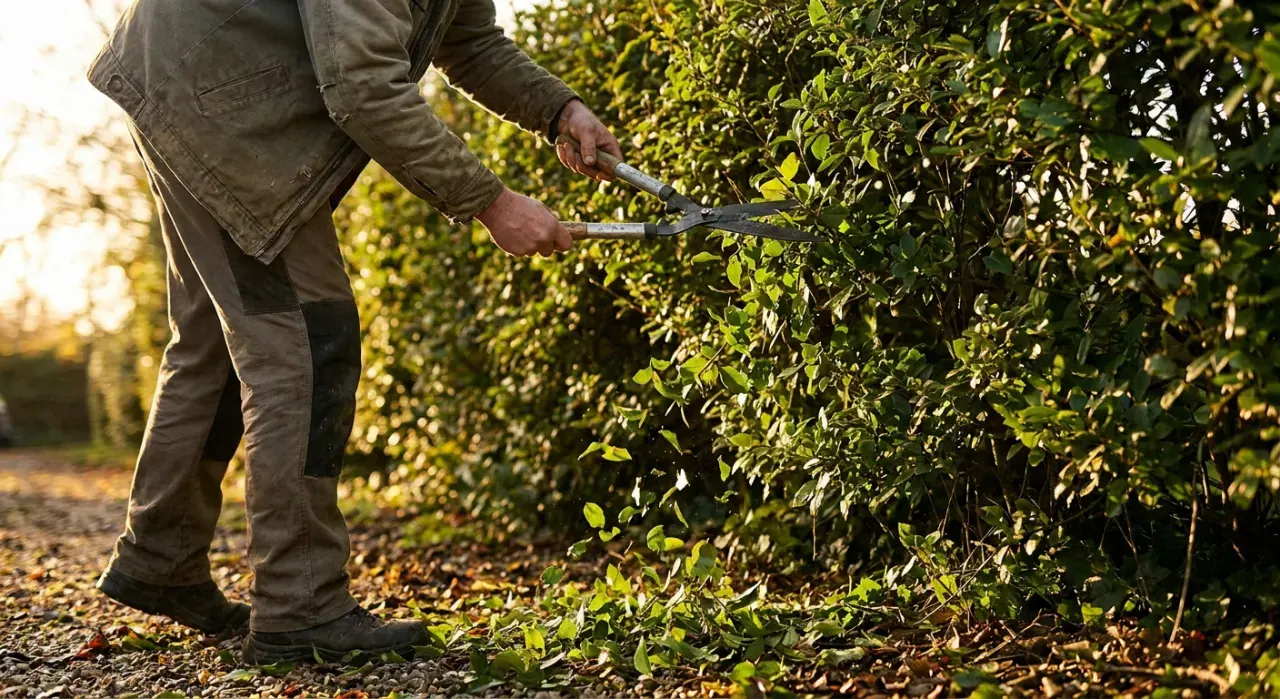
Work only when the foliage is dry. Disinfect blades between plants — a household disinfectant wipe or a bleach solution is standard practice — and always between a suspect plant and a healthy one. Collect and remove clippings rather than letting them lie inside the plant, because the fungus survives in fallen leaf litter. Do not shear a plant showing dark leaf spots, black stem lesions and rapid defoliation until you have identified the problem, and contact your state Cooperative Extension service if you suspect blight, since several states track its distribution.
For sharp, clean cuts that heal quickly, keep blades sharpened — the schedule is in how often to sharpen hedge trimmer blades and care in hedge trimmer blade care. Technique for the shearing itself is in how to trim a hedge, wider timing in the when-to-prune calendar, and tool rankings in best hedge trimmers.
We never buy, test or physically handle the products we rank. Recommendations come from aggregated owner reviews, star ratings, review volume and expert consensus — see how we rank.
More from this hub: Pruning, Trimming & Hedges · Best hedge trimmers · Common pruning mistakes · How we rank