 Garden

Affiliate Disclosure
Some links on this page are affiliate links. As an Amazon Associate, we earn from qualifying purchases — at no extra cost to you. We do not buy, test, or physically handle the products we cover; our rankings come from aggregated owner reviews, ratings and expert consensus. Commissions never change our verdicts. How we rank · full disclosure.
The short answer: boxwood is one of the few broadleaf evergreens that resprouts from old wood, so you can cut it back hard — up to about a third to a half in a single year — and it will regrow, provided you cut into live wood. For a badly overgrown plant, either make that hard cut in late winter or renew it gradually over two to three seasons. The one rule you cannot break: do not cut back into bare, dead wood, because boxwood will not regenerate from a branch that has no living green tissue under the bark.
Timing and knowing live from dead wood are what separate a successful renewal from a permanent hole. We do not prune test plants; our tool rankings come from aggregated owner reviews and expert consensus, described in how we rank. The full seasonal guide is at the pruning and hedges hub.
How far is safe to cut in one year?
How aggressively you cut depends on the plant's health and how much reshaping it needs. Match your cut to the goal.
| Goal | How much to remove | Notes |
|---|---|---|
| Light shaping | A few inches | Any time in the growing season |
| Moderate reduction | Up to about 1/3 | Late winter to early spring |
| Hard rejuvenation | Up to about 1/2 | Late winter; healthy plants only |
| Gradual renewal | A portion each year over 2 to 3 yrs | Safest for old or stressed plants |
Healthy, well-established boxwoods take a hard cut in stride; older, drought-stressed or diseased plants are better renewed over several seasons so they never lose more foliage than their roots can support.
Why must you avoid cutting into dead wood?
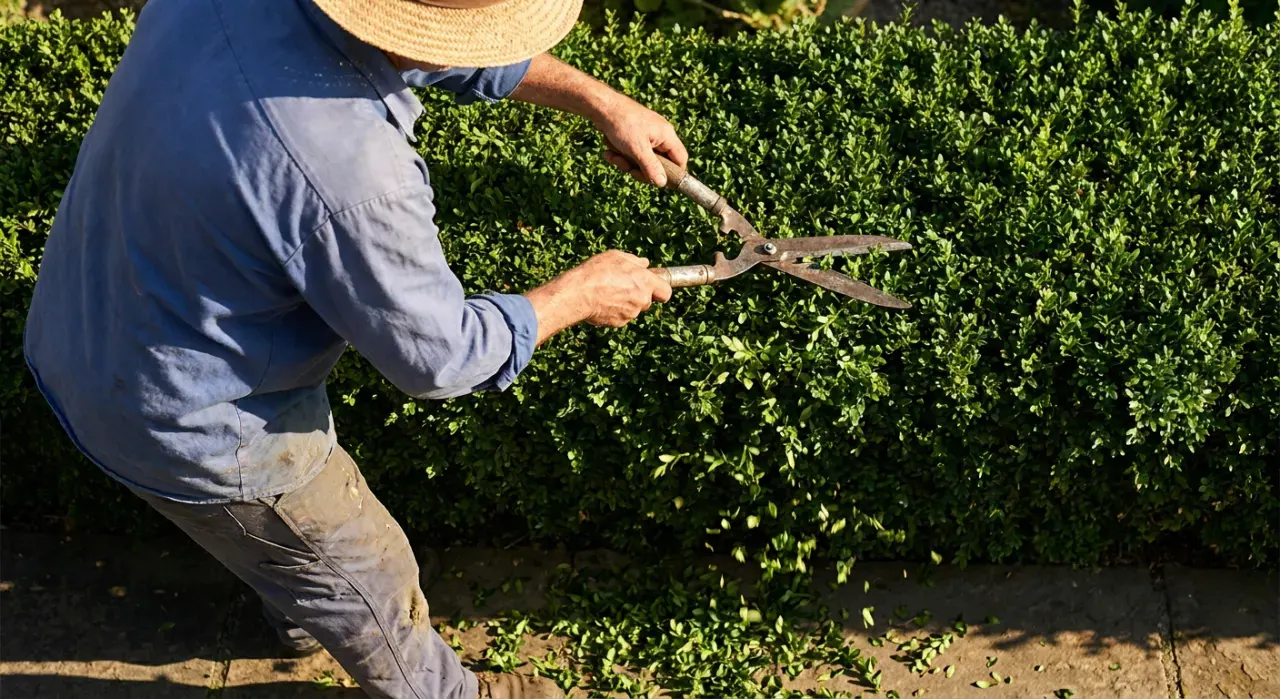
Boxwood regrows from dormant buds in living wood, but a branch with no live tissue has no buds to break. Before a hard cut, check the branches: scratch the bark with a thumbnail and look for green underneath, and look for any small leaves or buds along the stem. Green under the bark and any live growth means the branch will resprout; brown, dry, brittle wood with no green will not. Cut only as far back as there is live wood, and you keep the plant's ability to refill. This is the single most important rule in renovating any overgrown evergreen, covered more broadly in renovating an overgrown hedge.
When should you hard prune a boxwood?
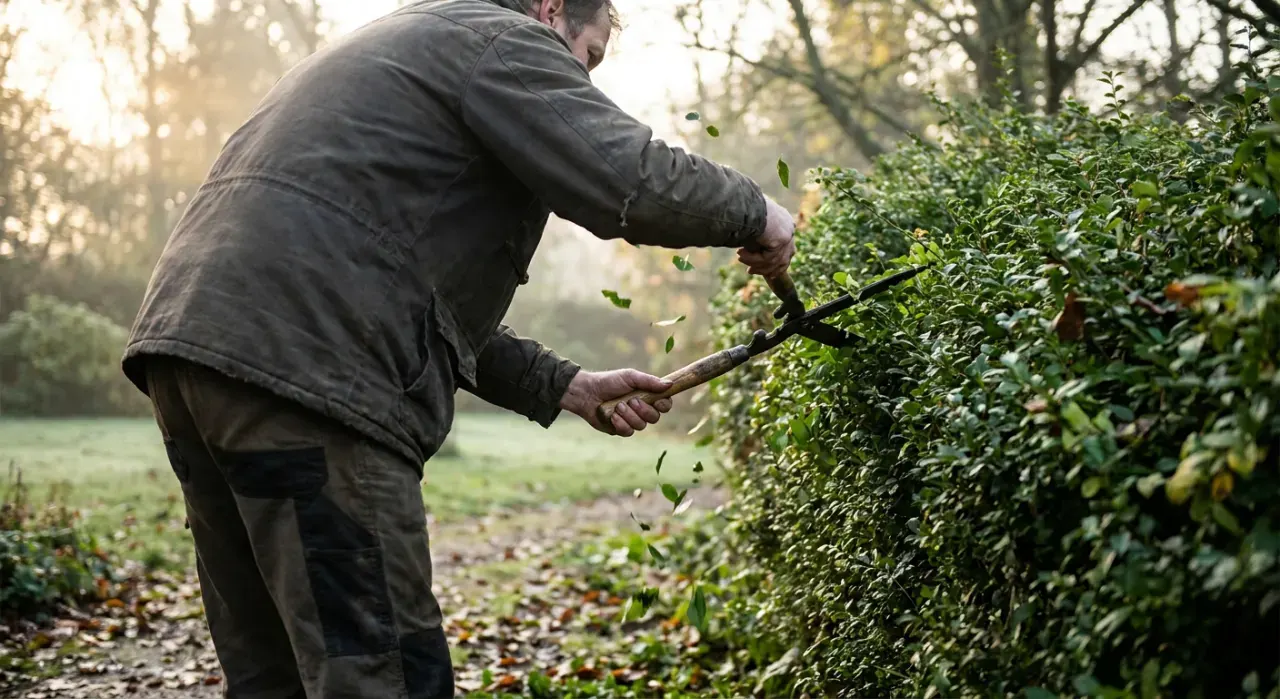
Late winter to early spring, before the spring flush, is the ideal window for heavy or renewal pruning. Cutting then means the plant channels its stored energy into filling the framework back in as growth resumes, and it has the whole season to recover. Avoid hard pruning in late summer and fall: it stimulates tender new shoots that may not harden off before cold weather, leading to winter dieback. Light trimming and shaping can be done through the season, but stop hard cuts by late summer. Where boxwood fits in the year is set out in the pruning calendar.
How do you help a boxwood recover after a hard cut?
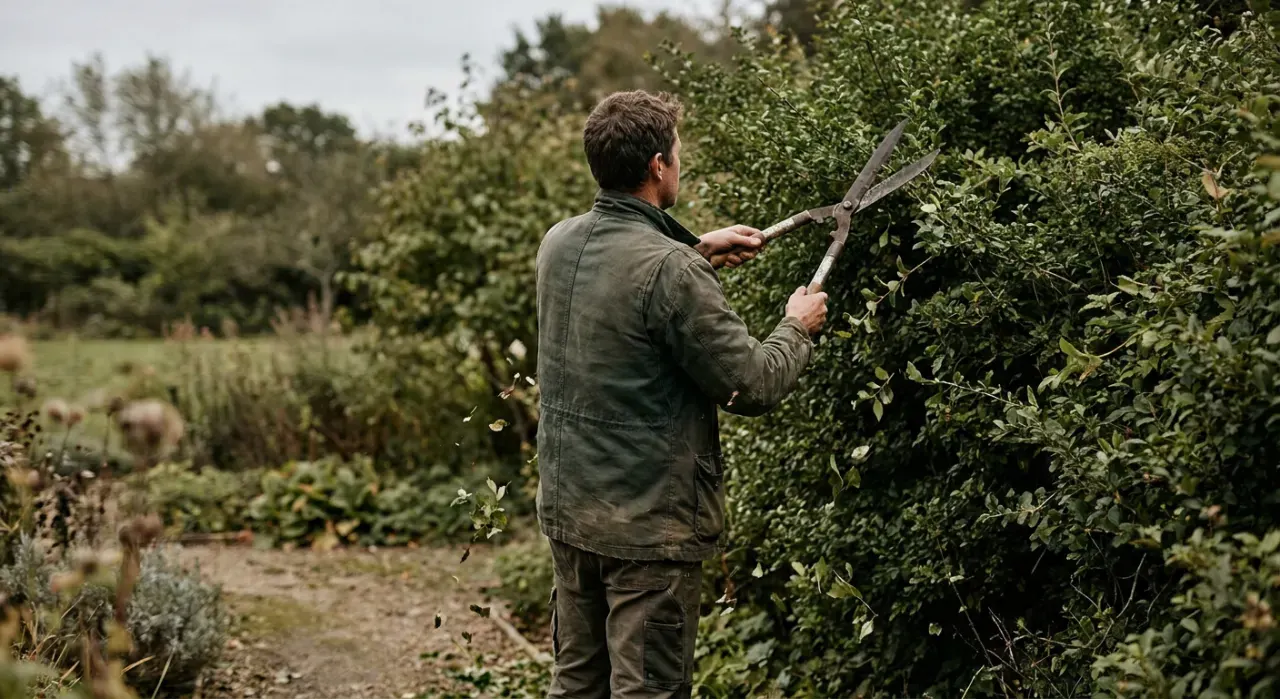
- Thin the interior. After cutting, remove some inner branches so light and air reach the center, which drives the interior buds to break and prevents a bare middle.
- Water through the first summer. A hard-pruned plant with less foliage still needs steady moisture to push new growth.
- Feed lightly in spring with a balanced fertilizer; do not overfeed, which forces weak growth.
- Sterilize your blades. Boxwood blight spreads on tools, so clean pruners between plants — a habit covered in common pruning mistakes.
- Use sharp, clean cuts. Hand pruners or loppers for thicker stems give cleaner wounds than shears on renewal work — see best loppers.
Boxwood forgives bold pruning better than almost any evergreen, as long as you stay in live wood and cut in late winter. Related questions: can you prune evergreens in the fall?, heading vs thinning cuts, and the technique guide how to prune shrubs.