 Garden


Affiliate Disclosure
Some links on this page are affiliate links. As an Amazon Associate, we earn from qualifying purchases — at no extra cost to you. We do not buy, test, or physically handle the products we cover; our rankings come from aggregated owner reviews, ratings and expert consensus. Commissions never change our verdicts. How we rank · full disclosure.
Replace a mattress every 7 to 10 years. That is the default interval most manufacturers and sleep trade bodies use, and it holds for hybrids and quality foam. Construction shifts it: budget innerspring and pillow-top beds are usually finished at 5 to 7 years, while natural latex often runs 15 to 20. The interval is only a prompt, though. Replace it sooner whenever a straightedge laid across the bare mattress shows a dip approaching an inch, the foam stops springing back, or you consistently sleep better away from home.
What are the signs a mattress is worn out?
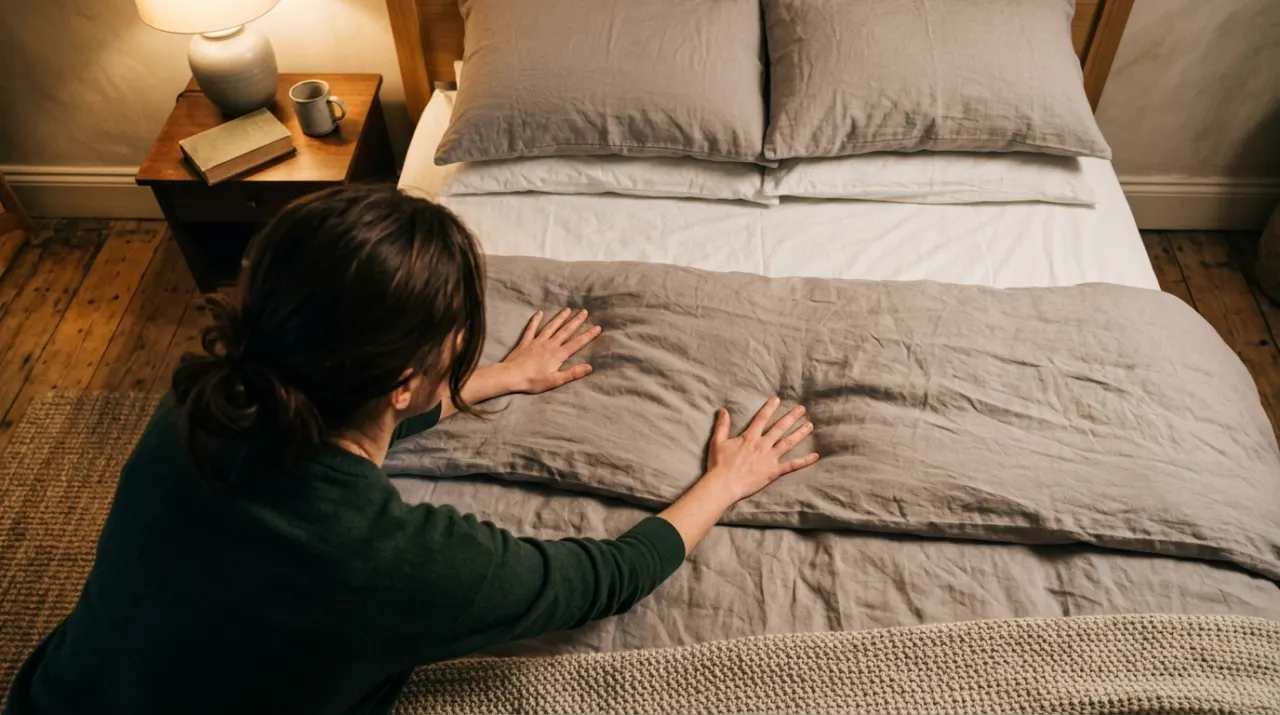
Four signs matter, and only the first is objective. Visible sag: strip the bed, lay a straightedge across it, and measure the gap at the deepest point — an inch or more is structural failure. Foam that does not recover: press a palm in for ten seconds; memory foam should return within a minute, and anything slower means the cell structure has broken down. Edge collapse: sitting on the perimeter tips you off. A better night elsewhere: if a hotel bed or a guest room reliably beats yours, the bed is the variable.
Age alone is a weak signal. A ten-year-old latex mattress on a solid foundation can be in better shape than a four-year-old budget foam bed on a slatted frame with 6-inch gaps.

How long does each mattress type actually last?
Lifespan tracks construction more than price. The comfort layers fail first in nearly every design, so the question is really how long the layer above the support core keeps its shape. Here is what each type typically delivers, and what usually gives out first.
| Type | Typical service life | What fails first |
|---|---|---|
| Budget innerspring (bonnell coils) | 5–7 years | Coils take a set; the pad over them compacts |
| Pillow-top innerspring | 5–7 years | The pillow-top flattens into a permanent trough |
| Pocketed-coil hybrid | 7–10 years | Foam comfort layers, not the coils |
| Memory foam (3 lb density) | 5–7 years | Low-density foam softens and pits |
| Memory foam (4–5 lb density) | 8–10 years | Gradual softening of the top layer |
| Natural latex (Dunlop or Talalay) | 15–20 years | Surface oxidation and crumbling at the edges |
| Airbed with adjustable chambers | 8–10 years | Pump, hoses and seals, not the chambers |
Foam density is the number worth chasing and the one least often published. Memory foam under about 3 lb per cubic foot softens quickly; 4 lb and above is the durable range. When a listing gives no density, long-term owner reviews are the substitute — the consensus across the beds in our mattress-in-a-box picks weights reports written after 18 months far more heavily than first-week impressions, because softening is invisible on night one.
Does the warranty tell you when it is worn out?
It gives you a number, which is more than anything else does. Nearly every mattress warranty defines failure as a permanent indentation measured with the bed unweighted, and the threshold is usually between 0.75 and 1.5 inches depending on the brand. That threshold is the manufacturer conceding the mattress no longer supports you. If you are at or past it, you are replacing the bed whether or not the claim succeeds.
Two clauses void more claims than any defect. The first is staining — any stain, from any cause, is treated as evidence of unsanitary use and ends the warranty, which is the entire argument for a mattress protector fitted on day one. The second is inadequate support: if the frame sagged or the slats were spaced wider than the manufacturer specifies, the failure is yours. Check how far apart bed slats should be before you file anything.

Can you make a mattress last longer?
Yes, and the four habits that work are cheap. Rotate head to toe every three to six months so the loaded zones move — see how often to rotate a mattress. Use a waterproof protector, which preserves the warranty and keeps sweat out of the foam. Support it properly: a solid platform or slats within spec, with a center support leg on queen and larger. Do not let it sit on the floor long term, because trapped moisture under a foam mattress grows mold at the seam.
What does not help: flipping a one-sided mattress (the comfort layers are only on top, so you end up sleeping on the base), and adding plywood over a sagging bed, which changes the feel without restoring support.
Should you replace a mattress that still feels fine?
No. Feel is the test, and a mattress that passes the straightedge check, recovers when pressed and still gives you good nights has no reason to be replaced because a calendar says so. The 7-to-10-year figure exists because that is when most beds fail, not because materials expire on a schedule.
Two caveats. Deterioration is gradual enough that you adapt to it, which is why a night in a different bed is such a useful comparison. And a mattress you keep past year ten deserves the accessories that protect it — a protector, and a topper if the surface has gone firm rather than saggy. Our mattress topper picks cover that case.
We never buy, sleep on or physically handle the products we rank. Every recommendation is drawn from aggregated owner reviews, star ratings, review volume and published expert consensus — see how we rank.
More from this hub: Bedding & Sleep · How often to replace pillows · Do you need a box spring? · Best mattress in a box · How we rank