 Garden
Affiliate Disclosure
Some links on this page are affiliate links. As an Amazon Associate, we earn from qualifying purchases — at no extra cost to you. We do not buy, test, or physically handle the products we cover; our rankings come from aggregated owner reviews, ratings and expert consensus. Commissions never change our verdicts. How we rank · full disclosure.
The short answer: most down, feather, and polyester pillows can be machine washed two at a time on a gentle, warm cycle with a little mild detergent and an extra rinse, then dried on low with dryer balls to keep the fill from clumping. But memory foam and latex pillows must never go in the washer or dryer — agitation destroys them, so you spot-clean and air dry those instead. Always check the care label first, because the wrong method ruins the pillow.
Pillows collect sweat, body oils, dead skin, and dust mites, and unlike sheets they rarely get washed. Below is the method by pillow type, the drying steps that prevent lumps, and how to tell when washing will not save it. We do not test the laundry products we mention; picks come from aggregated owner reviews and expert consensus, explained in how we rank.
First, identify the pillow type
Everything depends on what is inside. The care label is the final word, but here is the quick map.
| Pillow type | Machine washable? | Method |
|---|---|---|
| Down / feather | Usually yes | Gentle warm cycle, low-heat dry with balls |
| Polyester fiberfill | Usually yes | Gentle warm cycle, low-heat dry |
| Memory foam (solid) | No | Spot clean and air dry only |
| Shredded memory foam | Check label — often no | Usually spot clean; some covers wash separately |
| Latex | No | Spot clean and air dry only |
| Buckwheat | No — empty first | Wash the casing, air the hulls, never wet them |
If the label is missing or unreadable, treat foam and latex as non-washable, and hand-test any other fill by spot-cleaning first.
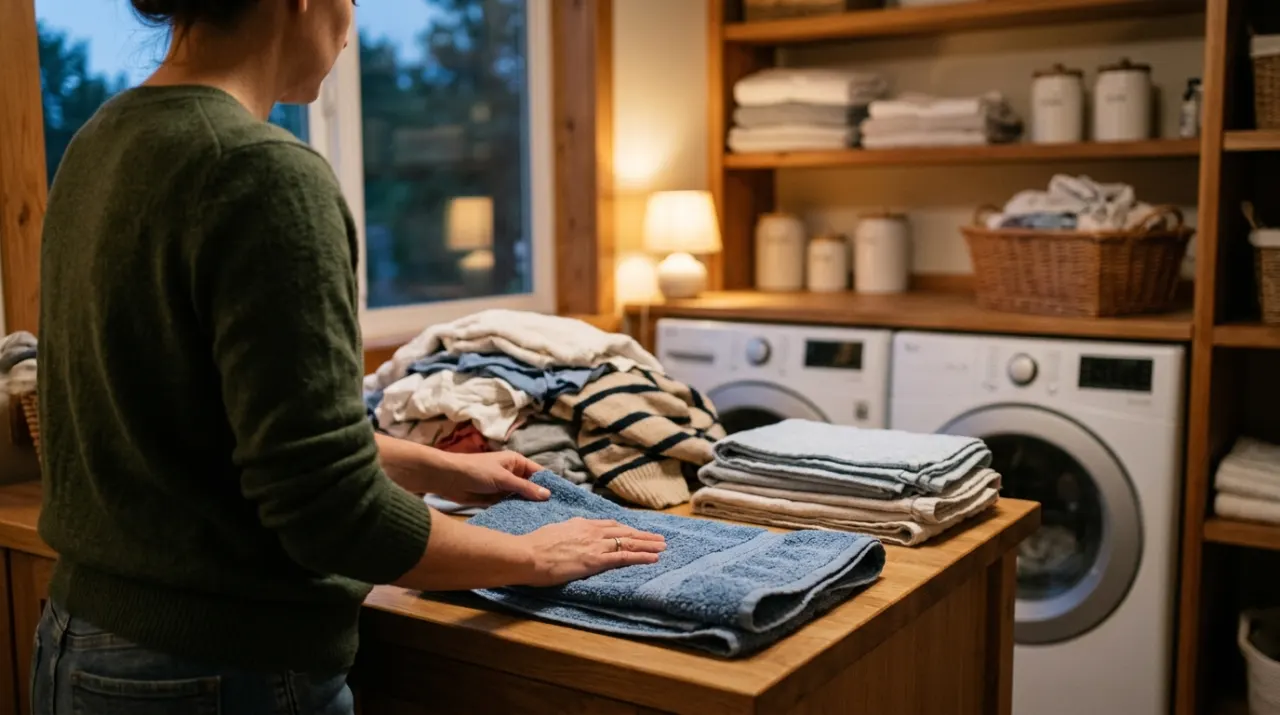
How to machine wash down, feather, and polyester pillows
- Remove any cover or protector and wash that separately. Check for and repair any seam tears first, or fill escapes into the drum.
- Wash two pillows at once on opposite sides of the drum to keep it balanced. This matters most in top-loaders, where an off-balance load bangs around.
- Use a small amount of mild detergent — about half your normal dose, since thick fill traps suds. Skip fabric softener, which coats and mats the fill.
- Run a gentle cycle in warm water. Warm cleans well without the risk hot poses to down. Add a cup of white vinegar to the rinse to cut odors and residue.
- Run a second rinse. This is the step people skip and regret — leftover detergent stiffens the fill and attracts dirt. An extra spin helps wring out water before drying.
An agitator top-loader can be hard on pillows; use the gentle setting, or a front-loader if you have one. For the detergent itself, our best laundry detergent roundup covers mild options, and best free and clear laundry detergent suits sensitive skin.
How to clean memory foam and latex pillows
These pillows are the ones people ruin, so the rule is firm: no washer, no dryer, ever. The tumbling tears the foam apart and the heat degrades it. Instead:
- Remove and machine wash the cover separately per its own label.
- Spot-clean the foam with a cloth dampened in a mild soap-and-water solution, dabbing at soiled areas rather than soaking.
- Deodorize by sprinkling baking soda over the foam, leaving it about an hour, then vacuuming it off.
- Air dry completely flat, away from direct heat and sunlight, with good airflow. Foam holds water deep inside, so give it plenty of time — a fan speeds it up.
Because foam pillows cannot be deep-cleaned, a removable, washable cover is your main line of defense. Our bedding hub covers foam options in best cervical pillow for neck pain and best latex pillow.

Drying without lumps
Drying is where pillows are made or ruined. Wet fill clumps as it dries, and if any moisture stays trapped, the pillow grows mildew and smells sour. The fix is heat management plus agitation.
- Dry on low heat. High heat can scorch down and melt synthetic fill. Low and slow is the rule.
- Add dryer balls or tennis balls. Two or three wool dryer balls, or clean tennis balls in a sock, bounce through the pillow and break up clumps as they form. See best wool dryer balls.
- Fluff every 20 to 30 minutes. Pause the dryer and hand-fluff and rotate the pillows to redistribute the fill.
- Dry until bone dry. Down can take an hour or more. A pillow that feels cool or heavy in the center is still damp — keep going.
Removing odors and yellowing
Yellow stains and lingering odor are from sweat and body oils soaking through over months. For washable pillows, a scoop of baking soda in the wash and a cup of white vinegar in the rinse tackle both. For heavy yellowing on white pillows, some people add a small amount of oxygen bleach or a booster to the wash — safe on polyester, but go easy on down and always check the label.
Airing pillows outdoors in sunlight is an old trick that genuinely works, since UV neutralizes odors and helps dry any residual moisture. If the smell returns quickly after washing, the fill may be breaking down and holding oils it can no longer release — a sign it is due for replacement.
Specialty pillows: buckwheat, body, and decorative
Some pillows need their own approach, and treating them like a standard pillow ruins them.
- Buckwheat pillows — never wet the hulls, which will rot and mold. Empty the hulls into a bowl or bag, machine wash or hand wash the empty casing, dry it fully, spread the hulls in the sun to air, then refill. Replace the hulls entirely every couple of years as they break down into powder.
- Body and pregnancy pillows — check the label; many have a removable, washable cover and a fill that should not be machine washed. Wash the cover regularly and spot-clean or air the fill. Our bedding hub ranks options in best body pillow for pregnancy.
- Decorative throw pillows — wash the cover if it unzips; for sealed decorative pillows, spot-clean and air, since the fill and trim rarely survive a machine wash.
Common pillow-washing mistakes
Most ruined pillows come down to a handful of avoidable errors.
| Mistake | What happens | Do instead |
|---|---|---|
| Machine washing memory foam or latex | The foam tears apart and is destroyed | Spot-clean and air dry only |
| Too much detergent | Suds trap in the fill and stiffen it | Half a normal dose, plus an extra rinse |
| Washing one pillow alone | Off-balance drum bangs and may not clean evenly | Wash two at once for balance |
| High-heat drying | Scorches down, melts synthetic fill, clumps everything | Low heat with dryer balls |
| Using before fully dry | Trapped moisture grows mildew and smells sour | Dry until bone dry, checking the center |
| Skipping the pillow protector | Oils and sweat reach the fill directly | Use a washable protector under the case |
How often to wash and when to replace
Wash pillows every three to six months and the cases weekly. A pillow protector under the case stretches the interval and shields the fill from oils and mites.
Washing cannot restore lost support, though. Most pillows last one to two years before the fill flattens for good. The simple test: fold the pillow in half and let go — if it does not spring back to shape, no amount of washing will fix it, and it is time to replace. Our bedding hub covers timing in how often to replace pillows and replacements in best pillow brands. For the rest of your bedding, see how to wash bedding, and browse everything at the cleaning and laundry hub.