 Garden


Affiliate Disclosure
Some links on this page are affiliate links. As an Amazon Associate, we earn from qualifying purchases — at no extra cost to you. We do not buy, test, or physically handle the products we cover; our rankings come from aggregated owner reviews, ratings and expert consensus. Commissions never change our verdicts. How we rank · full disclosure.
The short answer: buy the VermiHut Classic 5-Tray. Its continuous-flow trays let worms migrate up toward fresh food, so you harvest finished castings from the bottom without sorting, and its long, deep review record proves the system lasts. Want it cheaper? The Blütezeit 5-Tray matches the format for less. Tight on space? The FCMP 2-Tray is the compact pick.
A worm composter is the neatest way to turn kitchen scraps into the best soil amendment a gardener can make. Composting worms process waste into castings — a dark, nutrient-dense, biologically active humus that no bagged product quite matches. The composter’s whole purpose is to make the process tidy and the harvest painless, and the models below are ranked on how well they manage moisture, match capacity to a household, and let you get the castings out without picking worms by hand.
What Actually Separates a Good Worm Composter
The meaningful differences are practical, not cosmetic, and they set the order here:
- Continuous-flow harvesting. A stacking or flow-through design lets worms leave the finished castings, so you empty a tray rather than sorting. This is the biggest convenience factor by far.
- Moisture and airflow control. Waterlogging and poor air are what turn a composter sour. Good drainage and ventilation make it forgiving.
- Capacity fit. A composter run at the right scale for your scraps works better than an oversized tower run half-empty.
- Format for your space. Tray tower, fabric bag or in-ground unit — the right one depends on whether you have a kitchen corner, a balcony or a garden bed.
- The proven record. A deep review history reveals whether spigots leak and trays warp over seasons.
The Worm Composters at a Glance
Our #1 Pick: The VermiHut Classic 5-Tray
This is the worm composter most people should buy, and it earns the spot on a long record of doing the fundamentals right.
Continuous flow makes harvesting effortless. Five stacking trays let the worms follow the food upward, vacating each tray as they finish it. By the time the bottom tray is dark and crumbly, most of the worms have already moved on, so you lift it off and empty it rather than tipping the whole composter out and sorting worms from castings by hand. That is the difference between a composter you keep using and one that becomes a chore, and it is why tray systems lead this list.
It is a known quantity. The VermiHut Classic has been sold for years and reviewed thousands of times, which matters more than it sounds. Vermicomposting problems — a leaking spigot, a warped tray, a bin that sours in summer — only show up over seasons, and a deep review history is the clearest evidence that this composter survives them. The spigot drains leachate before it can pool at the base, and the five-tray capacity suits a typical household without being so large it sits underfed.
Consensus Score █████████░ 9.0 — the long-standing benchmark for a home worm composter.
Where it is weak. It ships without worms, so those are a separate purchase; the plastic trays are practical rather than attractive; and like all worm systems it slows dramatically in the cold, so it needs a temperate spot to stay productive.
Check price on Amazon → (paid link)
The Worm Composters, Ranked

Best for the buyer who wants the proven, long-established continuous-flow composter
- Five stacking trays for continuous-flow composting
- Worms migrate upward, leaving finished castings below
- Spigot to drain worm tea from the base
- Long, deep owner base built over many years
Why buy it: The original VermiHut and still the benchmark. Five trays deliver a genuine continuous-flow system, the harvesting is painless, and years of reviews confirm it lasts. For most people this is the worm composter to buy.
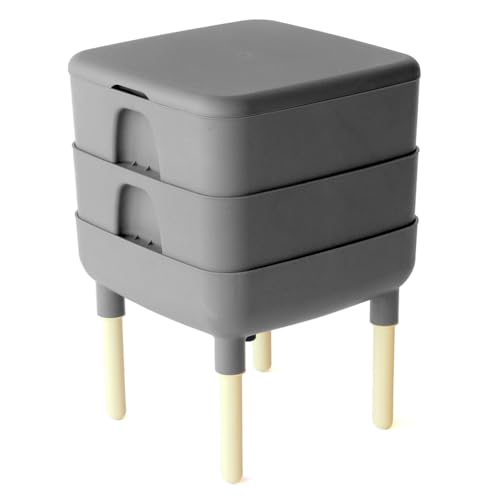
Best for smaller households and spaces that do not need a five-tray tower
- Two-tray continuous-flow design
- Compact footprint for kitchens and balconies
- Weather-resistant, rated indoor or outdoor
- Clean, well-regarded design
Why buy it: The right size for a couple or a small kitchen. Two trays handle modest scrap volumes, the footprint is small, and the build tolerates a sheltered outdoor position. Scale up only if you genuinely outgrow it.

Best for the cheapest full five-tray continuous-flow system
- Five-tray continuous-flow design at a lower price
- 53-quart total capacity
- Includes a worm-farm starter kit
- Indoor and outdoor use
Why buy it: A five-tray composter at the lowest price in this group, with a starter kit included. The review base is smaller than VermiHut's, so long-term durability is less proven, but the format is the established one.

Best for raised-bed and in-ground gardeners who want worms feeding the soil directly
- Sinks into a raised bed or garden soil
- Worms move between the composter and surrounding soil
- BPA-free, durable construction
- Delivers castings straight to the root zone
Why buy it: A different design entirely: buried in a bed, it lets worms carry castings into the surrounding soil, so there is nothing to harvest. Excellent alongside raised-bed growing, though it enriches soil rather than producing collectable castings.

Best for buyers who want a complete five-layer kit from a large, familiar brand
- Five stacking layers, 50-litre capacity
- Inclusive worm-farm starter kit
- Continuous-flow tray design
- Backed by a well-known garden brand
Why buy it: A five-layer continuous-flow composter with an all-in starter kit from a brand many gardeners already trust for other gear. A sensible, easy-to-source alternative to the VermiHut for the same job.

Best for gardeners with several beds who want in-ground composting in more than one spot
- Two in-ground composters in one purchase
- Compact size suits raised beds and borders
- Vermicomposting straight into the soil
- Beginner-friendly and inexpensive
Why buy it: Two small in-ground composters for the price of one mid-size bin. Sink one in each bed and worms enrich the soil where the plants grow. A cheap, simple way to spread vermicomposting across a garden, not a castings-harvesting system.

Quick Comparison
| Product | Best for | Rating | Price | Buy |
|---|---|---|---|---|
| VermiHut Classic 5-Tray Worm Composter | Best Worm Composter Overall | — | Check (paid link) | |
| FCMP Outdoor Essential Living Composter, 2-Tray | Best Compact Composter | — | Check (paid link) | |
| Blütezeit 5-Tray Worm Composter, 53QT | Best Value 5-Tray | — | Check (paid link) | |
| Vego Garden In-Ground Worm Composter, 7 Gallon | Best In-Ground Composter | — | Check (paid link) | |
| VIVOSUN 5-Layer Worm Composter, 50L | Best 5-Layer Kit | — | Check (paid link) | |
| 2-Pack In-Ground Worm Composter for Garden Beds | Best In-Ground Pair | — | Check (paid link) |
Tray Tower or In-Ground? Two Different Jobs
The field here splits into two philosophies, and they answer different needs. A stacking tray composter — the VermiHut, Blütezeit, VIVOSUN and FCMP — produces castings you collect and use where you like: potting mixes, top dressings, seed starting. It lives in a kitchen, utility room or balcony and gives you a portable supply of the good stuff. An in-ground composter — the Vego and the two-pack — enriches soil in place: buried in a raised bed, worms move between it and the surrounding soil, carrying castings straight to the root zone, and you never harvest. If you want a bank of castings to deploy across pots and trays, buy a tray tower. If you garden mainly in beds and want the soil quietly improved where the plants already grow, buy in-ground. Plenty of gardeners run both.
How We Rank Worm Composters
We do not buy, populate, or physically handle these composters. The ranking is built from aggregated owner reviews read across the full life of each product, published specifications, and the settled consensus of experienced vermicomposters. We weight continuous-flow harvesting, moisture and airflow control, capacity fit, format suitability, and the depth of the review record — because the failures that matter, leaks and sour bins, only appear in long-term reviews. Prices were current at the time of writing and move around. Full method on how we rank.

The Worm Composters, Assessed
1. VermiHut Classic 5-Tray — Best Overall
Covered above. Who it is for: most households. What it does better: painless tray harvesting and a proven multi-season record. Where it is weak: ships empty and slows in the cold.
2. FCMP Essential Living 2-Tray — Best Compact Composter
Who it is for: couples, small kitchens and balconies. Two trays cover modest scrap volumes, the footprint is small, and the weather-resistant build suits a sheltered spot outdoors. Where it is weak: the smaller capacity is easy to outgrow in a busy kitchen.
3. Blütezeit 5-Tray — Best Value 5-Tray
Who it is for: the cheapest full five-tray system, starter kit included. The format is proven and the price is the lowest of the towers here. Where it is weak: a thinner review base than VermiHut, so durability is less established.
4. Vego In-Ground Composter — Best In-Ground Composter
Who it is for: raised-bed gardeners who want worms feeding the soil directly. Buried in a bed, it enriches the surrounding root zone with no harvesting required. Where it is weak: it is soil enrichment rather than castings production, and needs a bed to sink into.
5. VIVOSUN 5-Layer — Best 5-Layer Kit
Who it is for: buyers who want a complete five-layer kit from a familiar brand. It runs the same continuous-flow format with an all-in starter kit and easy sourcing. Where it is weak: a smaller review history than the long-established VermiHut, so the durability picture is younger.
6. 2-Pack In-Ground Composter — Best In-Ground Pair
Who it is for: gardeners with several beds who want in-ground composting in more than one place. Two compact units for the price of one mid-size bin let you spread vermicomposting around the garden cheaply. Where it is weak: small capacity each, and, like all in-ground units, it enriches soil rather than yielding harvestable castings.
How to Choose
Want the proven default and castings to collect? The VermiHut Classic. Same format for less? The Blütezeit or the VIVOSUN kit. Small space? The FCMP 2-Tray. Garden mostly in beds? The Vego in-ground composter, or the two-pack to cover several beds. Whatever you choose, buy red wigglers separately, set up damp bedding first, and manage moisture from day one. A worm composter works beautifully alongside a countertop compost bin for collecting scraps, and the closely related worm bin options are worth comparing. The whole system is mapped in the composting and soil hub.
The Verdict
The VermiHut Classic 5-Tray is the worm composter we would tell a friend to buy: effortless harvesting and a multi-season record you can trust. Save with the Blütezeit, go compact with the FCMP 2-Tray, choose the VIVOSUN kit for easy sourcing, and the Vego or the two-pack for in-ground use. Explore the rest of the composting and soil hub or the full resources library. Check the current price on Amazon → (paid link)