 Garden

Affiliate Disclosure
Some links on this page are affiliate links. As an Amazon Associate, we earn from qualifying purchases — at no extra cost to you. We do not buy, test, or physically handle the products we cover; our rankings come from aggregated owner reviews, ratings and expert consensus. Commissions never change our verdicts. How we rank · full disclosure.
Pick a rug color by taking a mid-tone that already exists somewhere in the room — a secondary color in the sofa fabric, the artwork, or the curtains — then check it has enough contrast against your floor, and test a physical sample in daylight and under your lamps before committing. Two rules do most of the work: the rug should not match the floor value, and it should not match the sofa. Beyond that, pattern and mid-tones hide dirt, light colors open a room, and dark solids show every crumb.
The method in five steps
- Photograph the room in black and white. Take a phone photo and switch it to mono. This strips out hue and shows you value, which is what actually decides whether a rug reads as separate from the floor. If the floor and your candidate rug look the same shade of gray, the pairing will look muddy in real life.
- Pull a color from something already in the room. Not the biggest thing — the second or third. A thread in the sofa weave, a tone in a painting, the color of the curtains. A rug that echoes an existing accent looks chosen; a rug in a color that appears nowhere else looks bought at random.
- Decide whether the rug is quiet or loud. Every room needs one dominant pattern. If the sofa or the curtains are patterned, the rug should be solid, tonal or subtly textured. If everything else is plain, the rug is where the pattern belongs.
- Weigh the practical load. Dining room, entry, kids, dogs, light-colored pets — these push you toward mid-tone patterns regardless of what you would prefer. Be honest about it before you buy, not after the first spill.
- Test a sample in your actual light. Order swatches. Look at them on the floor in morning daylight, afternoon light and under lamps at night, from the doorway. Rug color shifts more between light sources than paint does because pile reflects light directionally, so the same rug looks two shades apart depending on which way you walk around it.
Matching to your floor
| Floor | Works well | Avoid |
|---|---|---|
| Dark walnut or espresso wood | Cream, oatmeal, soft gray, light blue | Deep brown, black, charcoal solids |
| Mid oak or honey wood | Blue, green, charcoal, ivory with pattern | Orange-toned tan and camel |
| Light or white-washed wood, pale LVP | Mid to dark tones, saturated blue, terracotta, charcoal | Pale cream — it disappears |
| Gray tile or concrete | Warm tones — rust, ochre, camel, warm neutrals | More cool gray |
| Beige wall-to-wall carpet | Clear contrast: navy, deep green, black-and-white pattern | Another beige |
The one universal: undertone matters as much as hue. A gray rug with a blue undertone on a wood floor with a yellow undertone reads as a clash even though neither is a strong color. Hold your sample against the floor and look for the undertone fight before you look at anything else.
Room by room
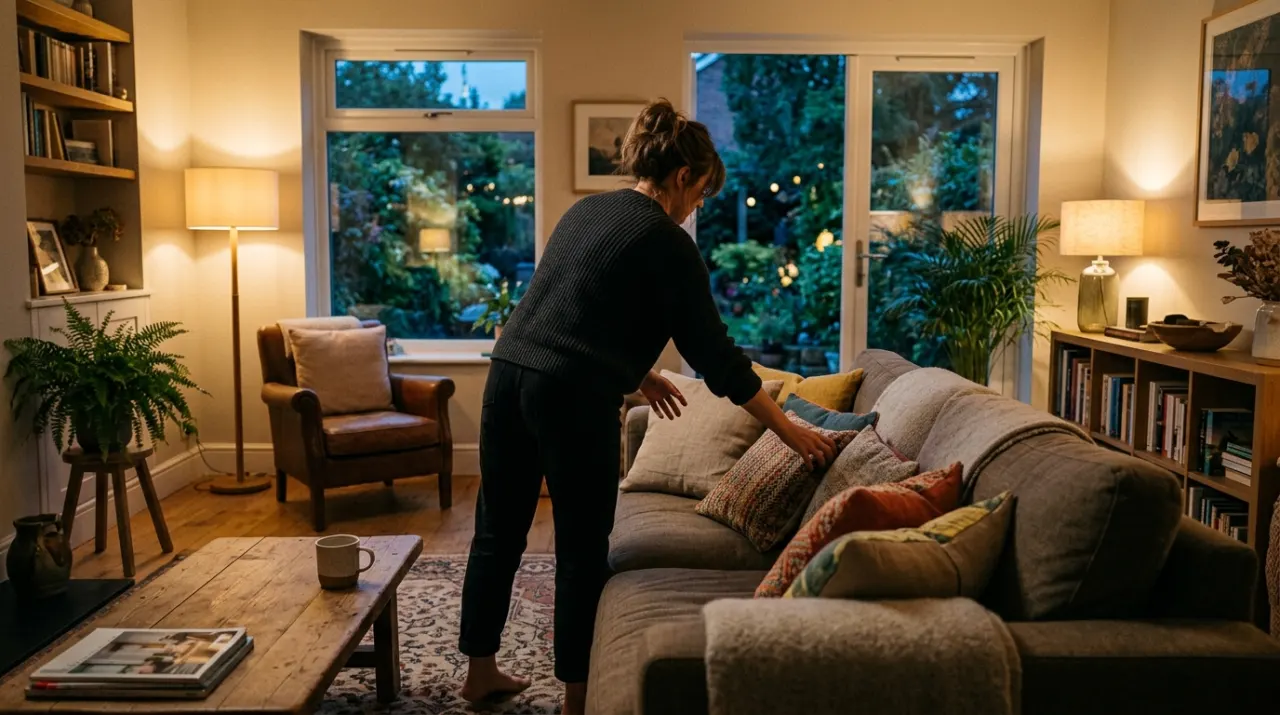
- Living room. This is the room where a rug can carry the color. Mid-tone patterns are the safest high-performing choice; a large low-contrast neutral is the safest quiet choice.
- Dining room. Pattern and mid-tone, always, and a low pile so chairs slide. Under a table you will drop food. A pale solid here is a two-year rug.
- Bedroom. Softer and lighter than you would use elsewhere — this is the one room where a pale rug is practical because traffic is low and shoes are usually off.
- Entry. Dark, patterned, washable if possible. It takes grit, salt and wet shoes.
- Home office. Low contrast and low pattern, so a chair caster does not turn the pattern into visual noise all day. Low pile matters more than color here.
- Kids and pets. Mid-tone multicolor, and check whether the rug is machine washable. Note that a light rug hides light pet hair better than a dark one, which is why charcoal is a bad choice with a golden retriever and a good one with a black cat.
Color decisions that are really size decisions
A lot of dissatisfaction blamed on color is actually about scale. A rug too small for the room reads as a floating island, and no color choice rescues that; the same rug three sizes up in the same color looks deliberate. As a general standard, aim for the front legs of all seating on the rug in a living room, and 24 to 30 inches of rug beyond the table edge on every side in a dining room so chairs stay on it when pulled out. Get the size right first, then argue about color. Layering is the other answer if the rug you love is too small — see how to layer area rugs.

Mistakes to avoid
- Choosing from a photo on a screen. Screen color is unreliable and pile changes tone with viewing angle. Get a physical sample.
- Matching the rug to the floor. The most common way a room loses definition.
- Matching the rug to the sofa. It merges the two biggest surfaces into one block and flattens the room.
- Buying a pale solid for a dining room or entry. Predictable regret.
- Ignoring undertones. A cool gray on a warm wood floor clashes even when both are neutral.
- Testing only in daylight. If the room is used at night, judge it under your lamps too. Warm bulbs at 2700K push yellow into everything.
- Forgetting the pad. A rug you like on a floor it slides across is a rug you will stop liking. Budget for a felt-and-rubber pad at the same time.
Buying
Once the color is settled, construction is what decides whether you still like the rug in three years. Owner reviews across the category repeatedly flag shedding, dye transfer onto light floors, and pile crush in traffic paths as the complaints that show up after a few months, and those are properties of the weave and fiber rather than the color. Our area rug picks weigh construction, shedding and colorfastness, and pairing your choice with the right rug pad protects both the rug and the floor beneath it.
We never buy, test or physically handle the products we rank. Recommendations come from aggregated owner reviews, star ratings, review volume and expert consensus — see how we rank.
More from this hub: Furniture & Decor · Layering area rugs · Stopping a rug sliding · Cleaning a large area rug · Best area rugs · How we rank