 Garden


Affiliate Disclosure
Some links on this page are affiliate links. As an Amazon Associate, we earn from qualifying purchases — at no extra cost to you. We do not buy, test, or physically handle the products we cover; our rankings come from aggregated owner reviews, ratings and expert consensus. Commissions never change our verdicts. How we rank · full disclosure.
Low-voltage landscape lighting cable should be buried about 6 inches deep — deep enough to clear a spade, an aerator and a string trimmer. Because it runs at 12 volts it is direct-burial rated and needs no conduit. Line-voltage 120V wiring is entirely different: under the National Electrical Code (Table 300.5) direct-burial UF cable must be at least 18 inches deep, or 6 inches in rigid metal conduit, and a GFCI-protected residential branch circuit may go at 12 inches. Bury a warning-tape strip above line-voltage runs, and call 811 before you dig.
How deep for standard 12-volt landscape cable?
About 6 inches is the working number, and it is a rule of protection rather than a code requirement, because low-voltage wiring (30 volts or less) is exempt from the burial-depth rules that govern line voltage. Six inches puts the cable below the reach of a lawn mower, a string trimmer and most casual digging, while staying shallow enough to trench with a flat spade or a half-moon edger. In beds you can go a little shallower and cover with mulch; in lawn, err toward the full 6 inches because aerators and edgers bite deeper than you expect.
| Location | Depth | Why |
|---|---|---|
| Planting beds | 3–6 in, or under mulch | Rarely dug deep; mulch adds cover |
| Lawn / turf | 6 in | Clears aerators, edgers, mower wheels |
| Under a path or driveway | Run in conduit / sleeve | Point loads and future digging |
| Emerging at the transformer | Sleeve the last stretch | UV and physical protection where it surfaces |
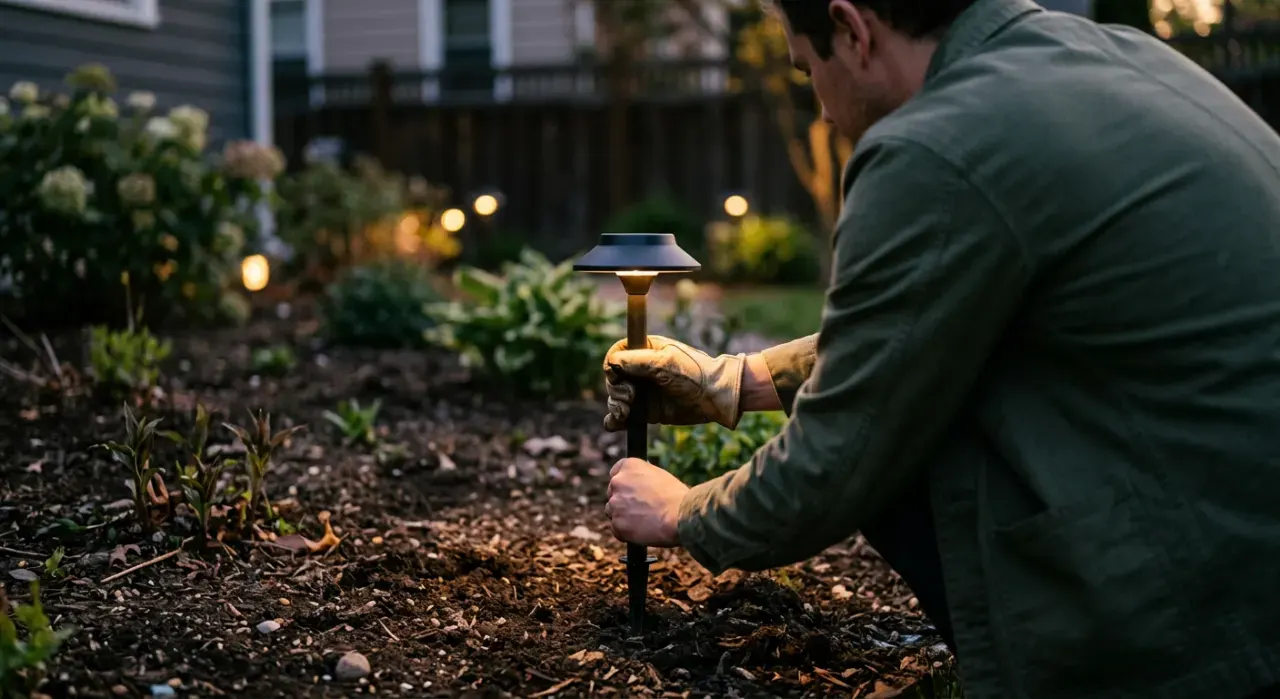
Cut a narrow slit trench with a spade, lay the cable in the bottom, and firm the soil back over it. Leave a little slack — a gentle S rather than a taut line — so the cable is not stressed if the ground shifts. Sizing that cable correctly is a separate question, covered in how to daisy-chain low-voltage lights.
What about 120-volt wiring — the code depths?
Line-voltage outdoor wiring is regulated by the National Electrical Code, and the burial minimums live in NEC Table 300.5. These are minimums; your local jurisdiction can amend them, and line-voltage outdoor circuits generally require a permit and are best left to a licensed electrician.
| Wiring method (120V, ≤20A residential) | Minimum depth |
|---|---|
| Direct-burial cable (UF) | 18 in |
| Rigid metal or intermediate metal conduit | 6 in |
| PVC / other approved raceway | 18 in |
| GFCI-protected branch circuit, ≤20A | 12 in |
| Low-voltage landscape cable (≤30V) | No NEC minimum; 6 in recommended for protection |
The gap between 6 inches for low voltage and 18 inches for line voltage is the single biggest reason DIY landscape lighting is almost always a 12-volt system: it keeps the whole job out of the line-voltage code entirely, so no permit and no electrician for the buried runs — only a standard GFCI outdoor outlet to plug the transformer into.

How do I protect the cable where digging is likely?
Depth handles the routine hazards; conduit or a sleeve handles the concentrated ones. Sleeve the cable in PVC or flexible conduit wherever it crosses under a walkway or driveway, where the load and the odds of future excavation are highest, and wherever it comes up out of the ground so the exposed section is not left bare to UV and trimmers. Bury a strip of underground-warning tape a few inches above line-voltage runs — it is cheap insurance for whoever digs there next. And record the routes: a quick photo or sketch before backfilling saves a severed cable when you plant a shrub two summers from now.

Do I need to call before digging?
Yes. Call 811 — the national "call before you dig" number — a few days before trenching, and the local utilities will mark buried gas, electric, water and communication lines for free. Even a shallow 6-inch trench can find a shallowly buried irrigation line or a service lateral, and the call costs nothing. It is a legal requirement in most states for exactly this reason. Plan the trench routes as part of the overall lighting design so you dig once.
We never buy, test or physically handle the products we rank. Recommendations come from aggregated owner reviews, star ratings, review volume and expert consensus — see how we rank.
More from this hub: Garden Lighting · Best low-voltage landscape lights · Daisy-chaining low-voltage lights · Installing path lighting · How we rank