 Garden
Affiliate Disclosure
Some links on this page are affiliate links. As an Amazon Associate, we earn from qualifying purchases — at no extra cost to you. We do not buy, test, or physically handle the products we cover; our rankings come from aggregated owner reviews, ratings and expert consensus. Commissions never change our verdicts. How we rank · full disclosure.
The short version: our #1 pick is the Nisaku NJP650, and it suits any gardener who does more digging and dividing than scooping — it is the Japanese original the whole category copies, its concave Namibagata blade bites into soil with less effort than the flat imitations, and the serrated edge saws roots that stop a trowel dead. If you garden in heavy clay or stony ground, the NJP651 is the same tool with the steel hardened to HRC58 and it stays sharp far longer.
If you have not used one before: a hori hori is not a fancy trowel. It is a digging knife, and most gardeners who buy one find their trowel stays in the shed from then on.
Top Picks at a Glance
Our #1 Pick: Nisaku NJP650
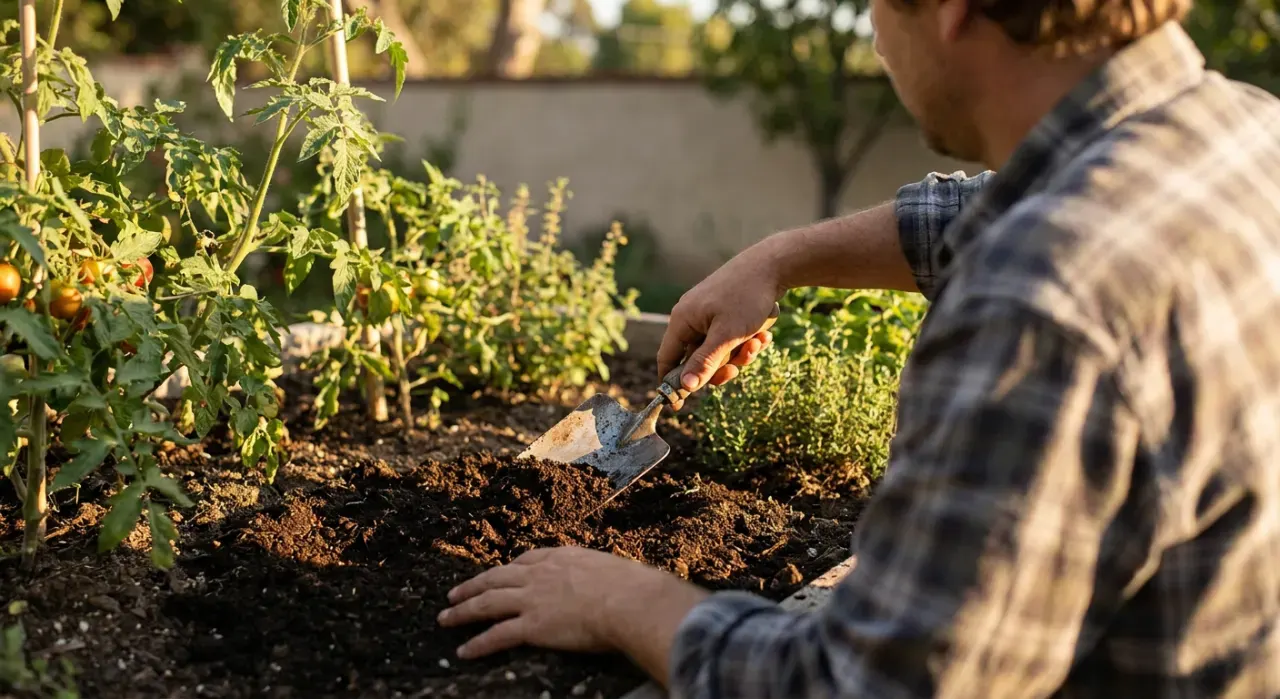
The hori hori came out of the Japanese mountains, where people dug wild plants — sansai — out of rocky ground that a trowel simply cannot penetrate. That origin explains the shape. The blade is long, narrow and pointed so it enters compacted soil edge-first rather than being pushed in face-first like a scoop, and it is slightly concave along its length, which is what the word Namibagata refers to. That curve does two things: it holds soil as you lift, and it concentrates force along a curved edge when you pull through a root mass.
Nisaku is made by Tomita, the workshop that has been producing this pattern since 1960, and the difference between it and the flood of imitations shows up in the details rather than in the photograph. The blade is properly heat treated rather than stamped from soft sheet. The serrations are cut deep enough to saw sod and root balls rather than merely textured. The tang runs the full length of the handle. And the depth markings are etched rather than printed, so they are still readable in year five.
Across the owner-review record the pattern is consistent and slightly unusual: the highest ratings come from people describing years of use rather than first impressions, and the recurring phrase is that it replaced several other tools. That is the honest case for spending thirty-five dollars on a garden knife.
Honest caveats: it arrives sharp enough to cut you badly and the sheath is nylon rather than leather, which is the most common upgrade owners make. The wooden handle needs occasional oiling and will gray if left out in the rain. It is heavier than a trowel, which matters over a long session. And it is not the tool for scooping potting mix into pots.
Check price on Amazon → (paid link)
The Ranked Field

Best for the gardener who wants the tool the whole category is copied from
- Made in Japan by Tomita, the original maker of the pattern
- 7.25-inch blade with a serrated edge on one side and a plain edge on the other
- Depth markings on the blade for planting bulbs at the right depth
- Full tang through a 5.25-inch wooden handle
Why buy it: it is the reference against which every other hori hori is judged, and the concave blade profile does more work per pull than the flat imitations.
Best for heavy clay, root cutting and gardeners who resent re-sharpening
- Blade hardened to HRC58, meaningfully harder than the standard version
- Holds an edge far longer in stony or rooty ground
- Premium leather sheath rather than nylon
- Same 7.25-inch Namibagata blade geometry
Why buy it: hardness is the specification that decides how often you sharpen, and HRC58 is a real step up rather than a marketing number.

Best for long sessions, and left-handed gardeners
- Ambidextrous walnut handle, comfortable in either hand
- Double-edged: serrated on one side, plain on the other
- Through-tang construction with visible pins
- Heavy-duty 900D polyester sheath with copper rivets
Why buy it: the handle is the part you actually interact with, and a shaped walnut grip is the difference between an hour of weeding and a blister.

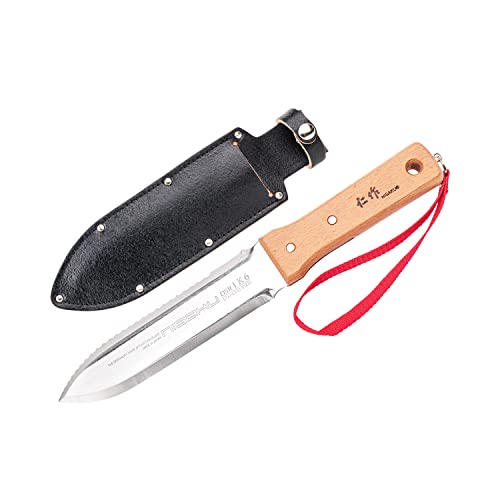
Best for a first hori hori, or a second one to leave in the shed
- 7-inch 420 stainless blade, sharp out of the box
- Full tang running the length of a 5-inch beechwood handle
- Three rivets rather than two for a stiffer joint
- FSC certified handle timber
Why buy it: full-tang construction at this price is unusual, and the tang is the joint that fails first on cheap garden knives.
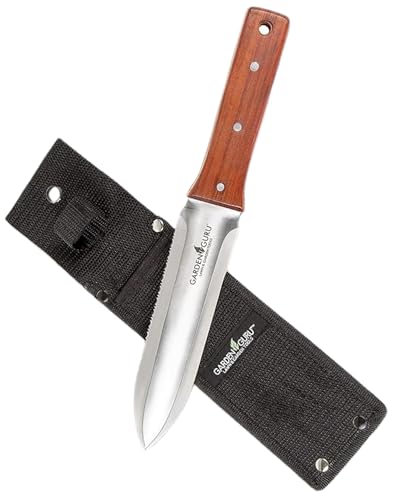
Best for trying the tool before committing to a Japanese one
- Stainless full tang blade with depth measurement marks
- Serrated and straight edges for weeding, digging and cutting
- Cheapest credible option with a real following
- Ships with a nylon storage sheath
Why buy it: the least expensive way to find out whether a hori hori replaces your trowel, which for most gardeners it does within a season.

Best for wearing on a belt all day rather than carrying it in a trug
- Thick leather sheath with a belt loop that survives being sat on
- Extra sharp blade with serrated and plain edges
- Presented in a gift box, which makes it a sensible present
- Depth markings on the blade
Why buy it: the sheath is what keeps a very sharp tool safe on your hip, and a proper leather one outlasts three nylon ones.
Quick Comparison
| Product | Best for | Rating | Price | Buy |
|---|---|---|---|---|
| NISAKU NJP650 The Original Hori Hori Namibagata Japanese Stainless Steel Weeding Knife, 7.25-Inch Blade | Best Overall | — | Check (paid link) | |
| Nisaku NJP651 Hori Weeding and Digging Knife, Hardened HRC58 Edition with Leather Sheath | Best Upgrade | — | Check (paid link) | |
| Barebones Hori Hori Ultimate Garden Knife with Double-Edged Tempered Steel Blade and Walnut Handle | Best Handle | — | Check (paid link) | |
| Truly Garden Hori Hori Knife with Sheath | Best Value | — | Check (paid link) | |
| Garden Guru Hori Hori Gardening Knife with Stainless Steel Full Tang Blade | Best Budget | — | Check (paid link) | |
| Classic Hori Hori Garden Knife with Extra Sharp Blade and Thick Leather Sheath | Best Sheath | — | Check (paid link) |
Consensus Scores
Each score is our reading of the owner-review picture for that tool — star average weighted by review volume and recency, adjusted for how the negative reviews cluster. It is never a measurement we took ourselves, and the verified review count sits on the card above.
| Knife | Consensus Score | What the reviews cluster on |
|---|---|---|
| Nisaku NJP650 | Consensus Score █████████░░░ 8.9 | replaces several tools, basic sheath |
| Nisaku NJP651 HRC58 | Consensus Score █████████░░░ 8.8 | edge retention, price |
| Barebones Hori Hori Ultimate | Consensus Score ████████░░░░ 8.5 | handle comfort, heavier in the hand |
| Truly Garden | Consensus Score ████████░░░░ 8.4 | full tang for the money, softer steel |
| Garden Guru | Consensus Score ████████░░░░ 8.1 | cheap and usable, dulls quickly |
| Classic Hori Hori with Leather Sheath | Consensus Score ████████░░░░ 8.2 | excellent sheath, ordinary blade |
How We Rank
We do not buy these knives or dig with them. We read the owner-review record at volume, because a garden tool is judged over seasons — whether the tang loosened, whether the edge held, whether the sheath survived a winter — and only owners can report that. Four things carry the weight. Blade steel and hardness, since hardness determines how often you sharpen and how well the tip survives hitting a stone. Tang construction, because a partial tang in a wooden handle is the joint that fails first and the failure is not repairable. Handle comfort, judged from reviewers describing long sessions rather than first impressions. And sheath quality, which sounds minor and is the most common source of disappointment. Prices were checked at the time of writing. Full method on how we rank.
The Knives, Reviewed
1. Nisaku NJP650 — Best Overall
Covered above. What owners like: that it replaced a trowel, a weeder and a small saw; the concave blade profile; readable depth markings; and Japanese manufacture at a price that is not extravagant. Recurring complaints: the nylon sheath, which most owners eventually replace; a wooden handle that needs oiling and greys if left outside; weight compared with a trowel; and an edge sharp enough to cause real injuries if handled carelessly. Check price (paid link).
2. Nisaku NJP651 HRC58 — Best Upgrade
The same Namibagata blade with the steel hardened to HRC58 on the Rockwell scale, which is a meaningful step up from the standard version rather than a marketing distinction. In practical terms it means the edge survives stony soil and root cutting for far longer between sharpenings, which is exactly what heavy clay gardeners and anyone dividing established perennials will notice.
It also ships with a leather sheath, which removes the one upgrade most NJP650 owners end up buying separately.
Recurring complaints: it costs roughly half again as much as the standard model, which is hard to justify for light border work. Harder steel is slightly more brittle, and a few reviewers report chipping the tip when levering against stone — a hori hori is not a pry bar. And it takes more effort to re-sharpen when it finally needs it. Check price (paid link).
3. Barebones Hori Hori Ultimate — Best Handle
Barebones approaches this as a designed object rather than a traditional pattern, and the handle is where that pays off. The shaped walnut grip is genuinely more comfortable than the straight Japanese handles over a long session, and it is symmetrical, so left-handed gardeners get the same experience as right-handed ones — which is not true of every knife here.
Through-tang construction with visible pins, a double-edged blade, and a heavy polyester sheath with copper rivets that reviewers report surviving years on a belt.
Recurring complaints: it is heavier in the hand than the Nisaku, which some reviewers like and others find tiring. The steel does not hold an edge as long as the hardened Japanese blade. And it costs the same as the NJP651 without matching it on hardness. Buy it for the ergonomics. Check price (paid link).
4. Truly Garden Hori Hori — Best Value
The thing worth paying attention to here is the full tang. On cheap garden knives the blade is a short stub epoxied or riveted into a handle, and that joint works loose after a season of levering — at which point the tool is finished, because it cannot be repaired. Truly Garden runs the tang the full length of a five-inch beechwood handle with three rivets, which is a construction standard you normally pay considerably more for.
The 420 stainless blade arrives genuinely sharp and the handle timber is FSC certified.
Recurring complaints: 420 stainless is softer than the Japanese steels and dulls faster, so expect to touch up the edge each season. The sheath is basic. And the blade is seven inches rather than 7.25, which is trivial but noticed by people comparing directly. Check price (paid link).
5. Garden Guru Hori Hori — Best Budget
Around twenty dollars for a full-tang stainless blade with depth markings, serrated and straight edges, and a nylon sheath. Its role is straightforward: it is the cheapest honest way to find out whether this style of tool suits how you garden, and for most people the answer becomes obvious within a season.
Recurring complaints: the steel is soft and dulls noticeably faster than anything above it. The handle finish is rough and benefits from a light sand and an oiling. The sheath is flimsy. And the serrations are shallower than the Japanese knives, so they saw roots less effectively. It is a starter tool, and an honest one. Check price (paid link).
6. Classic Hori Hori with Thick Leather Sheath — Best Sheath
The sheath is the most underrated component of a garden knife and the most common source of regret. A hori hori is sharp enough to do real damage, it lives on your hip or in a bucket alongside your hands, and a thin nylon sheath with a plastic clip does not inspire confidence after a season in the sun. This one ships with thick leather and a belt loop that survives being sat on, kneeled on and rained on.
It also arrives in a gift box, which makes it the sensible choice if you are buying for someone else.
Recurring complaints: the blade itself is ordinary — competent stainless rather than hardened Japanese steel — so edge retention is mid-pack. Reviewers report variation in leather quality between units. And it is priced at Nisaku level without matching Nisaku's blade. Buy it for the carry, not the cut. Check price (paid link).
What Owners Actually Complain About
Four themes recur across every brand in this category.
The sheath fell apart. The most common complaint by a wide margin, and it applies to almost every nylon sheath sold. Budget for a leather replacement or buy a knife that includes one.
The handle loosened. A partial-tang failure, and it is terminal. Check for full-tang construction before buying — it is visible as a metal strip along the top and bottom edge of the handle.
It rusted. Stainless is stain-resistant, not stain-proof, and a knife left in wet soil overnight will spot. Wipe it dry after use and the problem disappears.
I cut myself. Genuinely common in the review record. These arrive far sharper than a trowel and people handle them like a trowel. Sheath it every time you set it down, and never leave it blade-up in a bucket.
How to Choose a Hori Hori
Three things decide it. Your soil. Light loam and raised beds are fine with a softer stainless blade; heavy clay, stony ground and established perennial divisions justify hardened steel, because you will otherwise be sharpening constantly. Your hands. If you garden for hours at a stretch or you are left-handed, a shaped ambidextrous handle is worth more than a marginally better blade. Construction. Full tang, always. It is the only specification on this page whose absence cannot be fixed later.
Then look after it, because these tools last decades if you let them. Wipe the blade dry after every use and it will not spot. Oil a wooden handle once a season with boiled linseed or a wood oil, and it will not gray or split. Touch up the plain edge with a medium stone at the existing bevel angle once a year — our guide to sharpening garden tools covers the technique. Leave the serrations alone; they stay effective long after a plain edge has dulled. And store it sheathed, out of the rain. One more habit worth keeping: a blade used to divide or cut into a plant that looks diseased can carry that disease to the next healthy plant it touches if it is not cleaned in between, according to University of Missouri Extension. The extension office's fix is a dip in a solution of one part household bleach to nine parts water, per the same guidance, left to sit for a couple of minutes before it evaporates.
New to the tool? What a hori hori knife is used for covers the jobs it replaces. For the rest of the kit, see the best garden trowels and the best garden spades.
The Verdict
For most gardeners, the Nisaku NJP650 is what the owner-review record supports: the original pattern, properly heat treated, full tang, and capable of replacing a trowel, a weeder and a small saw for around thirty-five dollars. Step up to the NJP651 if your ground is heavy or stony and you would rather not sharpen every few months, and choose the Barebones Ultimate if handle comfort matters more to you than edge retention. Check price on Amazon → (paid link)
Next: the full garden hand tools hub · best garden trowels · what is a hori hori knife used for · how to sharpen garden tools · how we rank.