 Garden

Affiliate Disclosure
Some links on this page are affiliate links. As an Amazon Associate, we earn from qualifying purchases — at no extra cost to you. We do not buy, test, or physically handle the products we cover; our rankings come from aggregated owner reviews, ratings and expert consensus. Commissions never change our verdicts. How we rank · full disclosure.
Water a monstera roughly every 1 to 2 weeks, but only when the top 1 to 2 inches of soil have dried out — soil moisture, not a fixed schedule, is what decides. Check by pushing a finger or wooden skewer into the mix: if it is still damp below the surface, wait; if it is dry, water thoroughly until it drains from the bottom, then empty the saucer. The interval speeds up with more light, warmth and a smaller pot, and slows down in low light, cool rooms and winter. Overwatering, not underwatering, is the usual killer.
How do you check if it needs water?
The reliable method takes ten seconds. Push a clean finger into the soil to the second knuckle, about 1 to 2 inches, or leave a wooden skewer in the pot and pull it out to read it — dry and clean means water, damp with clinging soil means wait. When you do water, water fully: pour until it runs out the drainage holes, which wets the entire root ball and flushes built-up salts, then tip out whatever collects in the saucer so the roots never sit in standing water. A monstera would rather dry out briefly than stay wet, so when unsure, wait a day and check again.
What changes the interval?
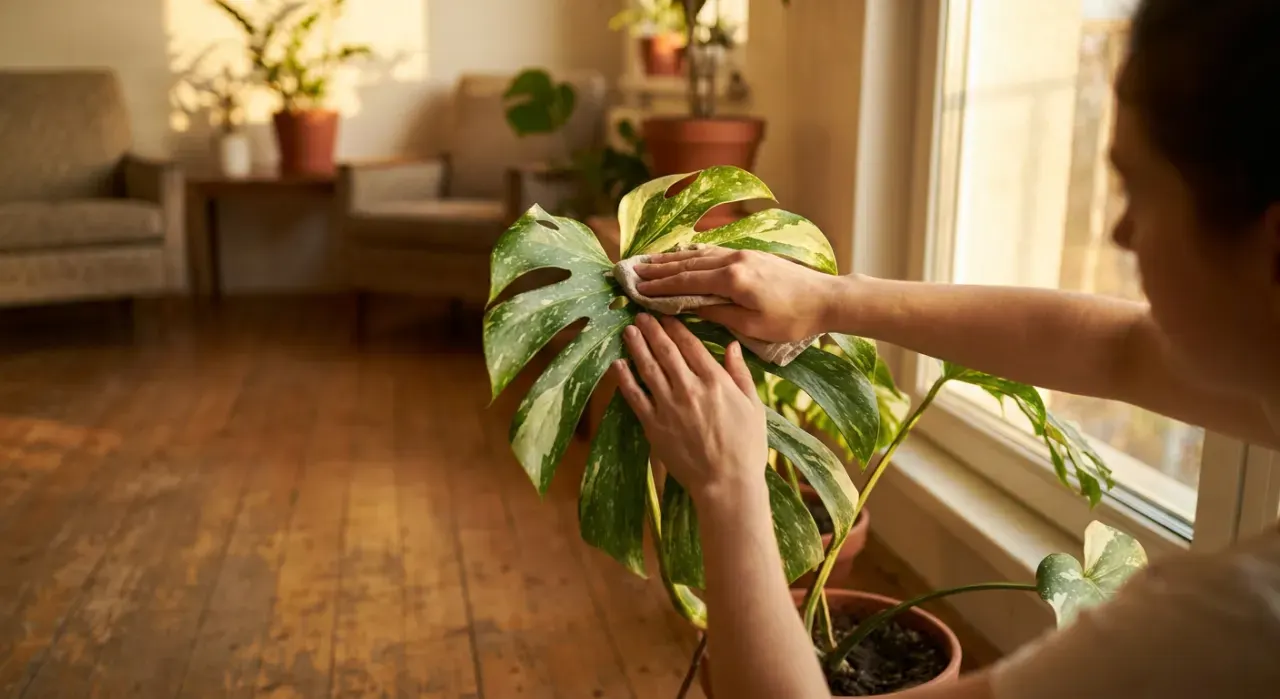
The 1-to-2-week guideline shifts with conditions, sometimes a lot. Use it as a center point and let these factors move it.
| Condition | Effect on watering |
|---|---|
| More light, warmth, active growth | More often — closer to every 7–10 days |
| Low light, cool room, winter | Less often — every 2–3+ weeks |
| Small pot or fast-draining mix | More often (dries quickly) |
| Large pot or moisture-holding mix | Less often (stays wet longer) |
| Dry indoor air / heating or AC | Somewhat more often |
This is why a single schedule fails — the same plant that wants water weekly in July may want it every three weeks in January. Always confirm with the soil.
Overwatering versus underwatering
Both leave signs, and telling them apart prevents the wrong fix. Overwatering shows as yellowing leaves, soggy soil, a musty smell, and black or mushy spots — and it leads to root rot, the leading cause of monstera death. Underwatering shows as drooping, crispy brown leaf tips and edges, and soil so dry it pulls away from the pot's sides. The trap is that a wilting, yellowing overwatered plant can look thirsty, prompting more water and faster decline. When leaves yellow, feel the soil first: wet means back off, bone-dry means water. A pot with drainage holes and a mix amended with perlite or bark makes overwatering far harder.
The right pot and mix make it forgiving
Watering frequency is easier to get right when the setup drains well. Monsteras want a chunky, airy mix — standard potting soil loosened with perlite, orchid bark or coco coir — that holds some moisture but lets excess drain fast, mimicking their epiphytic roots. The pot must have drainage holes; a decorative cachepot with no holes is where root rot starts. With good mix and drainage, an occasional overwatering flushes through instead of pooling, and the top of the soil dries at a readable pace, so your finger check actually tells you something. Fix the drainage and the frequency mostly takes care of itself.
The bottom line
Water every 1 to 2 weeks as a rough rhythm, but check the top 1 to 2 inches every time and water only when it is dry — then water thoroughly and drain fully. Watering ties directly to light and to potting, so see how often to water houseplants for the general rules and how to save an overwatered plant if it has gone too far. For a mix that drains right, our best potting mix roundup helps. Note: monstera is toxic to cats — see toxic houseplants for cats.
We never buy, test or physically handle the products we rank. Recommendations come from aggregated owner reviews, star ratings, review volume and expert consensus — see how we rank.
More from this hub: Houseplants & Indoor Greenery · How often to water houseplants · Save an overwatered plant · Best potting mix · How we rank