 Garden

Affiliate Disclosure
Some links on this page are affiliate links. As an Amazon Associate, we earn from qualifying purchases — at no extra cost to you. We do not buy, test, or physically handle the products we cover; our rankings come from aggregated owner reviews, ratings and expert consensus. Commissions never change our verdicts. How we rank · full disclosure.
The short answer: pruning a peace lily is simple. Cut spent flower stalks all the way down at the base near the soil, remove yellow, brown, or damaged leaves at the base of their stems, and optionally trim brown leaf tips following the leaf's natural shape. Use clean, sharp scissors, and you can do this routine grooming any time of year. Peace lilies do not need shaping or cutting back, so pruning is really just tidying and removing what is finished.
Peace lilies (Spathiphyllum) produce their flowers on separate stalks and hold their leaves in a clump rising from a central crown, which makes them easy to groom: almost everything you remove is cut at the base. Regular tidying keeps the plant healthy and its energy focused on new growth. Our guidance reflects horticultural consensus rather than first-hand lab testing, as explained in how we rank.
Tools and preparation
You need very little to prune a peace lily well.
- Clean, sharp scissors or small pruning shears. The stalks and leaves are soft, so ordinary sharp scissors work fine.
- Rubbing alcohol or a disinfecting wipe. Clean the blades before and after to avoid spreading disease between plants.
- Sharp beats dull. A clean cut heals better than the ragged wound a dull blade leaves.
That is the whole toolkit. There is no need for sealants or special treatments on the cuts.
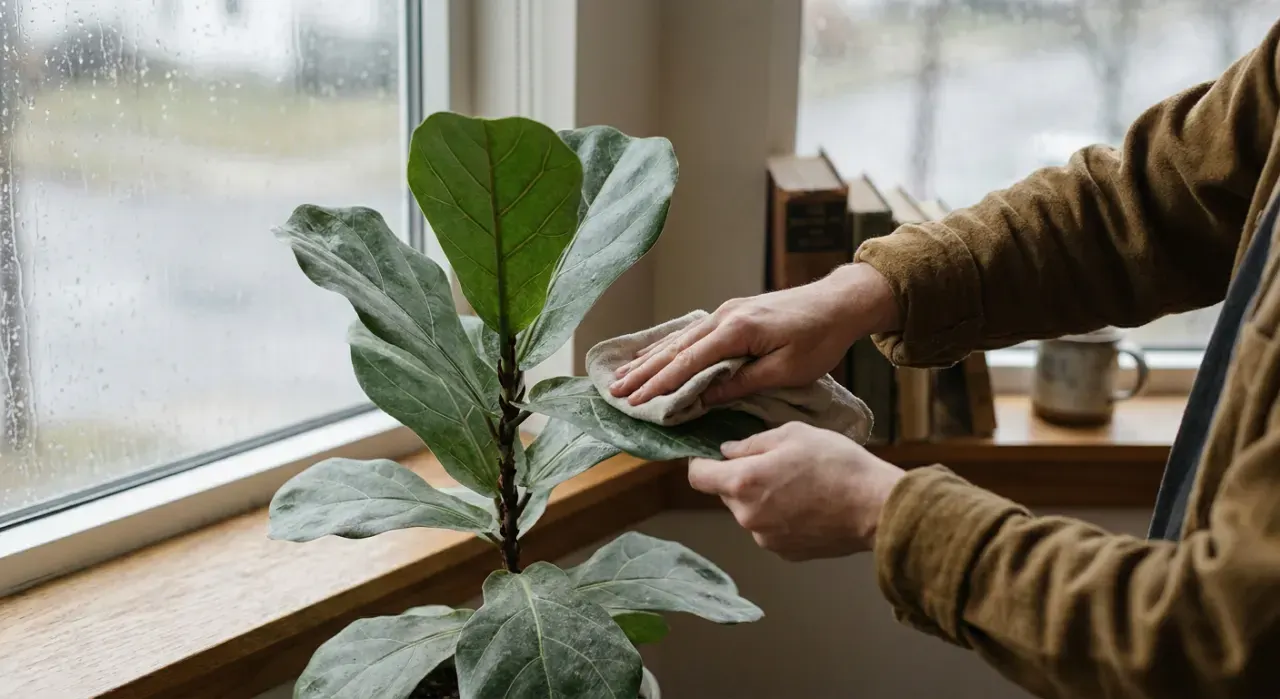
Removing spent flowers from a peace lily
Deadheading finished blooms is the most common peace lily pruning task, and knowing the flower's life cycle helps you time it.
- Watch the bloom age: a peace lily flower opens pure white, then fades to pale green, and finally turns brown as it dies. Once it starts turning green and brown, it is done and will not turn white again.
- Cut the whole stalk at the base. Follow the finished flower stalk down to where it emerges from the crown near the soil and cut it there, removing the entire stalk. Do not cut partway up, which leaves an ugly stub.
- This redirects energy. Removing spent blooms lets the plant focus on new leaves and future flowers rather than maintaining dying tissue.
Regular deadheading keeps the plant looking fresh and, combined with good light and feeding, supports more blooming.
Removing yellow and dead leaves
Peace lily leaves also rise on individual stems from the base, so damaged ones are removed the same way.
- Cut yellow, brown, or dead leaves at the base of their stem, down near the soil, rather than snipping off just the leaf blade.
- Remove leaves that are more than half discolored. A leaf that is mostly yellow or brown will not recover and is better removed whole.
- Do not strip the plant. Remove only what is genuinely damaged; healthy green leaves are the plant's engine.
If you find yourself removing many yellow leaves, the cause is usually a watering problem, so check how often to water a peace lily to address the root issue rather than just the symptoms.
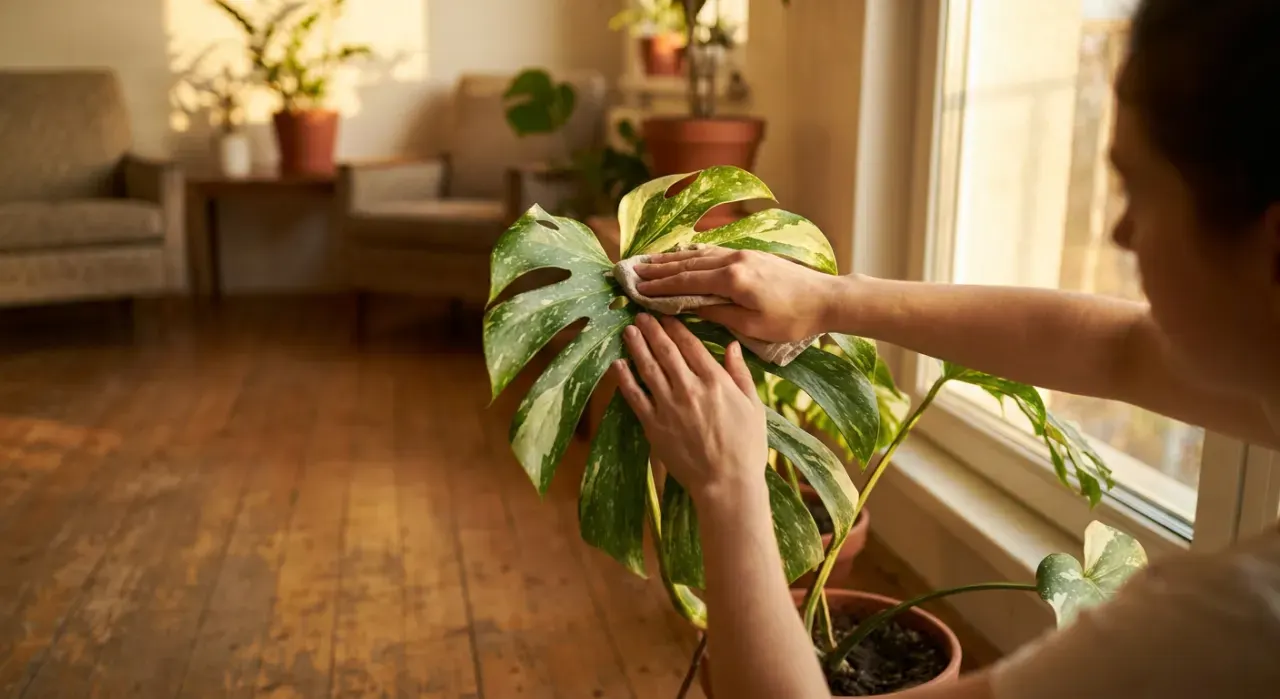
Trimming brown leaf tips
Brown tips are cosmetic, and trimming them is optional.
- Follow the leaf's natural shape. Cut along the outline of the leaf, angling the scissors to mimic the pointed tip rather than cutting straight across.
- Leave a thin brown margin. Cutting into fully green tissue just creates a fresh brown edge where you wounded the leaf, so stop just outside the healthy green.
- Fix the cause. Brown tips usually come from chlorine and minerals in tap water, inconsistent watering, or over-fertilizing. Switching to filtered water and steadying your watering prevents new ones.
Larger peace lily cleanups and dividing
Beyond routine grooming, a peace lily occasionally benefits from a bigger tidy or a division.
- General cleanup: over time, remove any old, floppy, or misshapen outer leaves at the base to keep the clump neat. Spring is the best time for a thorough cleanup.
- Dividing an overgrown plant: when a peace lily fills its pot and forms multiple crowns, you can lift it, separate the clump into sections each with roots and leaves, and repot them separately. This rejuvenates a tired plant and gives you new ones.
- Dust the leaves while you groom, wiping them with a damp cloth so they can photosynthesize efficiently.
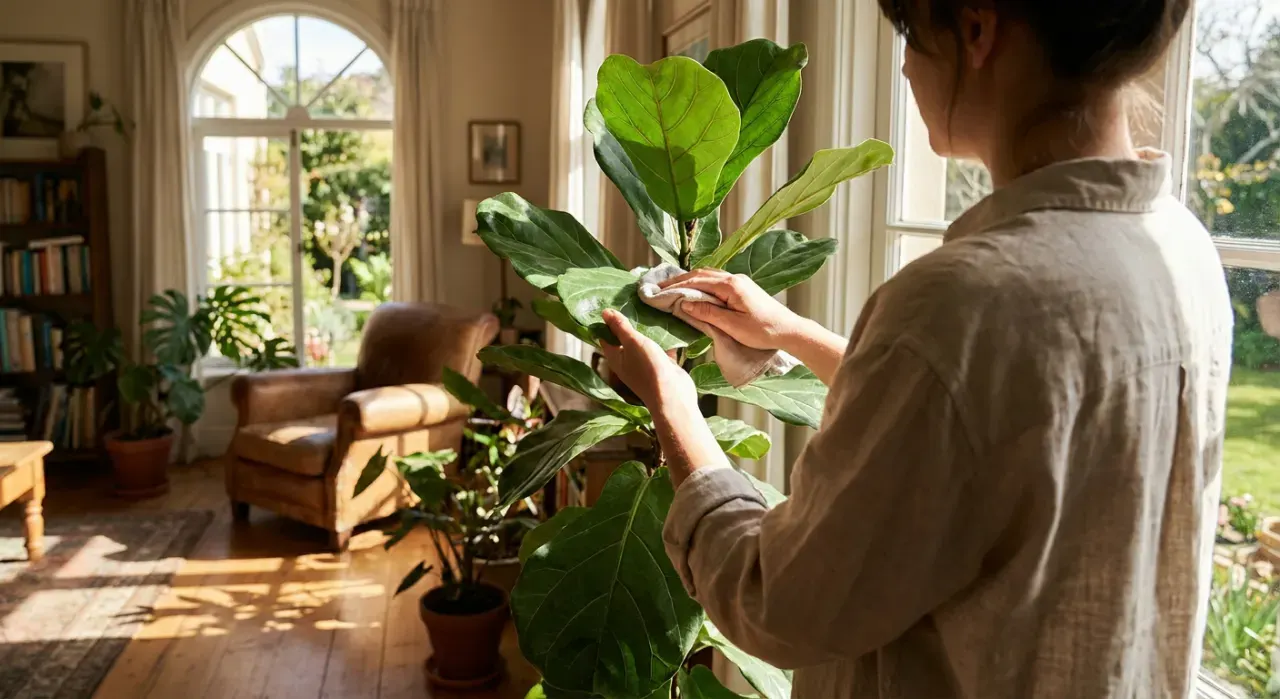
Reviving an overgrown or neglected peace lily
A peace lily that has been left to sprawl, or one that has struggled, often benefits from a more thorough renewal than routine deadheading.
- Assess the crown. A healthy peace lily is a dense clump of leaves rising from the soil. If yours has floppy outer leaves, many brown tips, and few flowers, a spring cleanup plus repotting usually revives it.
- Remove the tired leaves. Cut the oldest, floppiest, and most damaged outer leaves at the base, keeping the firm inner growth. Do not remove more than about a third of the foliage at once, so the plant keeps enough leaf area to recover.
- Divide if it is crowded. A pot-bound peace lily that dries out within a day and has multiple crowns is ready to divide. Lift it, tease or cut the clump into sections each with roots and several leaves, and repot them into fresh mix. This rejuvenates the plant and gives you extras.
- Refresh the soil. Even without dividing, repotting into fresh, well-draining mix in the same or a slightly larger pot restores nutrients and gives the roots room, which does more for a struggling plant than pruning alone.
Peace lily pruning mistakes to avoid
A few common errors do more harm than good, so they are worth naming.
- Cutting flower stalks partway up. This leaves a bare green stub that then browns and looks worse than the spent bloom did. Always cut the whole stalk at the base.
- Snipping only the leaf blade. Removing just the top of a damaged leaf leaves a headless stem behind. Remove the whole leaf at the base instead.
- Cutting into green tissue when trimming tips. This creates a fresh brown edge where you wounded the leaf; leave a thin brown margin instead.
- Over-pruning healthy leaves. Green leaves feed the plant, so removing too many at once weakens it. Take only what is genuinely spent or damaged.
- Using dirty or dull blades. These crush tissue and can spread disease; clean, sharp scissors are essential.
Aftercare
Pruning is low-stress for a peace lily, and aftercare is minimal.
- Return it to its usual bright, indirect spot and resume normal watering.
- Do not fertilize immediately if you have done a heavy cleanup; wait until you see new growth, then feed at half strength during the growing season.
- Wash your hands. Peace lilies contain calcium oxalate crystals that can irritate skin and are toxic if eaten, so keep trimmings away from pets and children.
Pruning a peace lily is really just keeping it tidy: remove what is finished, at the base, with clean scissors, and the plant stays healthy and handsome. For everything else it needs, see how to care for a peace lily and the watering detail in how often to water a peace lily. Everything else is at the houseplants and indoor greenery hub.