 Garden

Affiliate Disclosure
Some links on this page are affiliate links. As an Amazon Associate, we earn from qualifying purchases — at no extra cost to you. We do not buy, test, or physically handle the products we cover; our rankings come from aggregated owner reviews, ratings and expert consensus. Commissions never change our verdicts. How we rank · full disclosure.
A desk lamp wants 450 to 800 lumens for reading, writing and computer work, and 800 to 1,100 lumens for detailed tasks like sewing, model building or electronics. Brightness is properly measured in lumens rather than watts, which is why the numbers below matter more than any wattage printed on an old bulb box. Those outputs land on the Illuminating Engineering Society targets of roughly 30 to 50 foot-candles for general office work and 50 to 100 for fine detail. A dimmable lamp spanning the whole range beats a fixed one, because the right level at 10am for a spreadsheet is not the right level at 10pm for a novel. Placement and glare control matter as much as the number.
How many lumens for my task?
| Task | Lumens | Target foot-candles | Old bulb equivalent |
|---|---|---|---|
| Ambient desk presence, video calls | 250–450 | 15–25 | 25–40 W |
| Reading and writing | 450–650 | 30–40 | 40–60 W |
| Computer work | 450–800 | 30–50 | 40–60 W |
| Drafting, sewing, crafts | 800–1,100 | 50–75 | 60–75 W |
| Soldering, jewelry, fine detail | 1,000–1,500 | 75–100 | 75–100 W |
Add roughly 50 percent if the desk sits in a dark room with no ambient lighting, and add more again for anyone over about sixty — lighting guidance has long held that reading illumination needs rise steadily with age, roughly doubling every twenty years past forty.
Why does placement matter more than brightness?
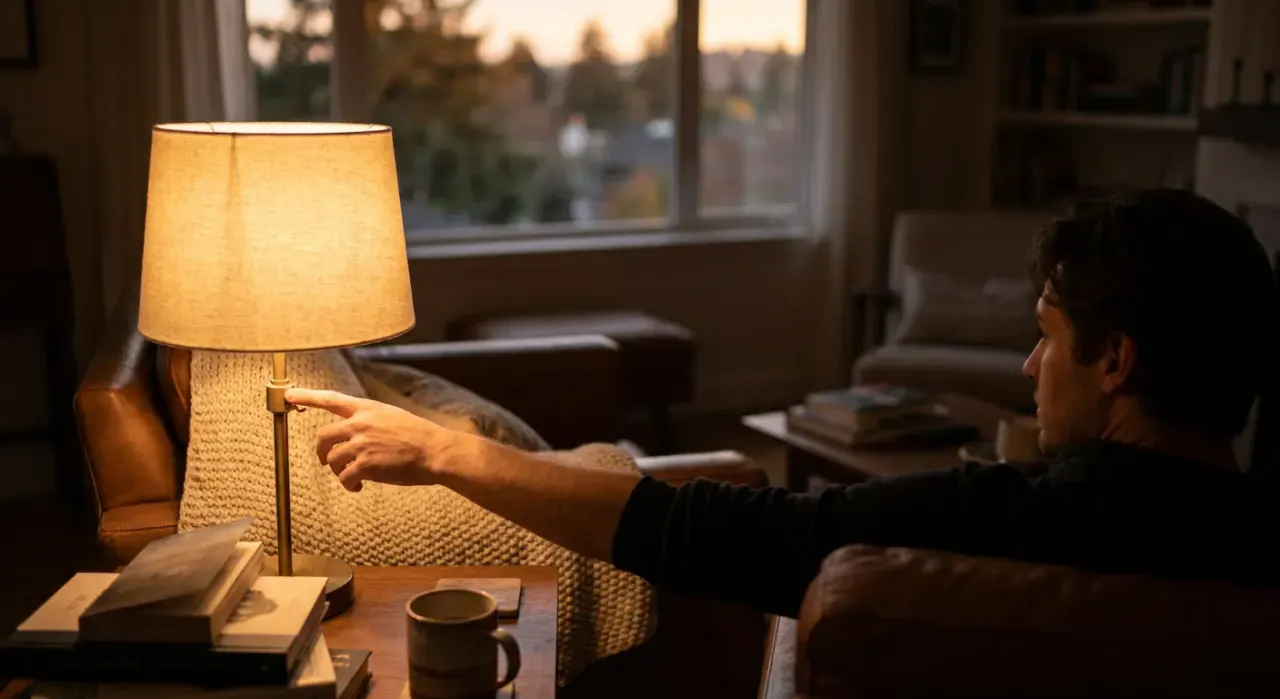
Because a desk lamp is fighting two things: shadow and glare. Put the lamp on the side opposite your writing hand — left side for a right-handed person — so your hand does not shadow the page. Set the head so the bulb itself is never in your direct line of sight when you are seated normally; if you can see the emitter, it is producing glare. For computer work, angle the lamp so it lights the desk surface and keyboard rather than the screen, since light falling on a display washes out contrast and makes you turn the screen brightness up. A lamp with a long arm and a properly shielded head does more for comfort than another 300 lumens ever will.
What about the rest of the room?
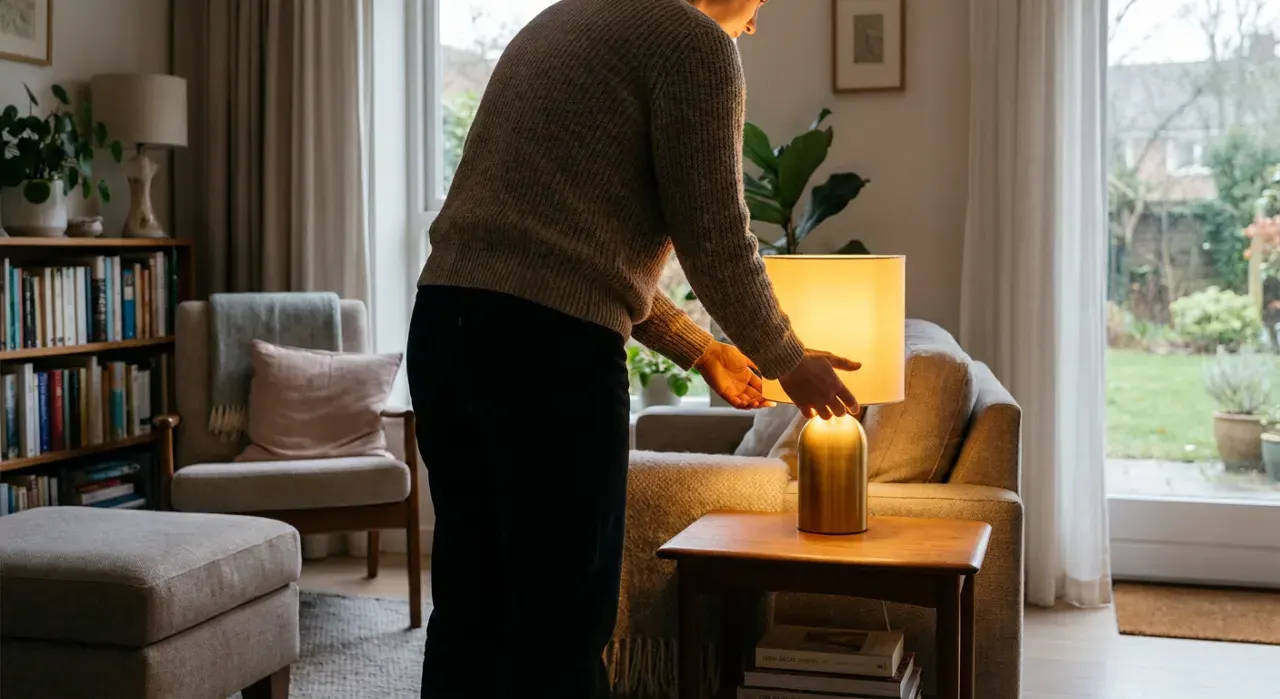
A bright pool of light in an otherwise dark room forces the eye to adapt constantly between two very different levels, which is fatiguing. Ambient room light of even 10 to 20 foot-candles behind the desk dramatically reduces that contrast. In practice: leave a lamp or the overhead on at low output rather than working by desk lamp alone at night, and dim the desk lamp accordingly. This is the same layering logic that governs kitchens, worked through in how many lumens for a kitchen.

Which specs matter besides lumens?
Three. Color rendering index — the US Department of Energy recommends a minimum CRI of 80 for interior lighting, with 90 or above rated excellent color fidelity if you are judging color. Color temperature — around 4000K for daytime focus and 2700K to 3000K for evening, which is why switchable-temperature lamps are popular for desks used at both times; the difference between the warm options is explained in 2700K versus 3000K lighting. And flicker — cheap LED drivers can pulse at line frequency in a way most people never consciously notice but many find tiring over hours. Manufacturers who take this seriously say so on the spec sheet. Our best desk lamp picks and picks for eye strain weigh all three alongside output.
Can lighting fix eye strain?
Only partly, and it is worth being straightforward about that. The American Academy of Ophthalmology advises taking regular breaks from close work, adjusting screen and room lighting for comfort, and keeping screens at a comfortable distance; good desk lighting supports that but does not substitute for it. Persistent eye strain, headaches, or any change in vision warrants a professional eye examination rather than another lamp. This page is general information and not medical advice.
We do not buy, test or physically handle any product on this site — figures here come from Illuminating Engineering Society recommended practice and manufacturer specifications, with rankings based on aggregated owner reviews. See how we rank.
More from this hub: Indoor Lighting · Under-cabinet brightness · Best LED floor lamps · How we rank