 Garden

Affiliate Disclosure
Some links on this page are affiliate links. As an Amazon Associate, we earn from qualifying purchases — at no extra cost to you. We do not buy, test, or physically handle the products we cover; our rankings come from aggregated owner reviews, ratings and expert consensus. Commissions never change our verdicts. How we rank · full disclosure.
Yes — a slow cooker is designed for long, unattended cooking, and a working unit run on Low overnight is generally safe because it holds food above 140°F, the top of the USDA’s bacterial danger zone. The genuine risks are not the cooking itself but a damaged cord, an old or faulty appliance, or placing it near curtains, paper or under cabinets. Put it on a clear, heat-resistant surface, cook on Low with thawed ingredients and enough liquid, and inspect the cord first. Never leave a malfunctioning unit running.
Why is it safe at all?
Slow cookers exist precisely so you can start a meal and walk away for hours. They draw low power and cook gently over a long period, which is the opposite of a high-heat appliance you should never leave. The safety hinges on temperature: the USDA puts the danger zone at 40 to 140 degrees Fahrenheit, where bacteria can double in as little as 20 minutes, and a properly functioning slow cooker on Low or High holds the food above 140°F for the duration — the USDA says food stays safe for as long as the cooker is operating, and that meat and poultry must always be thawed before they go in. As long as the appliance keeps doing that, the food stays out of the danger zone through the night. That is why overnight cooking of things like steel-cut oats or a pot roast is a standard, intended use.
Low, not Warm, for overnight cooking
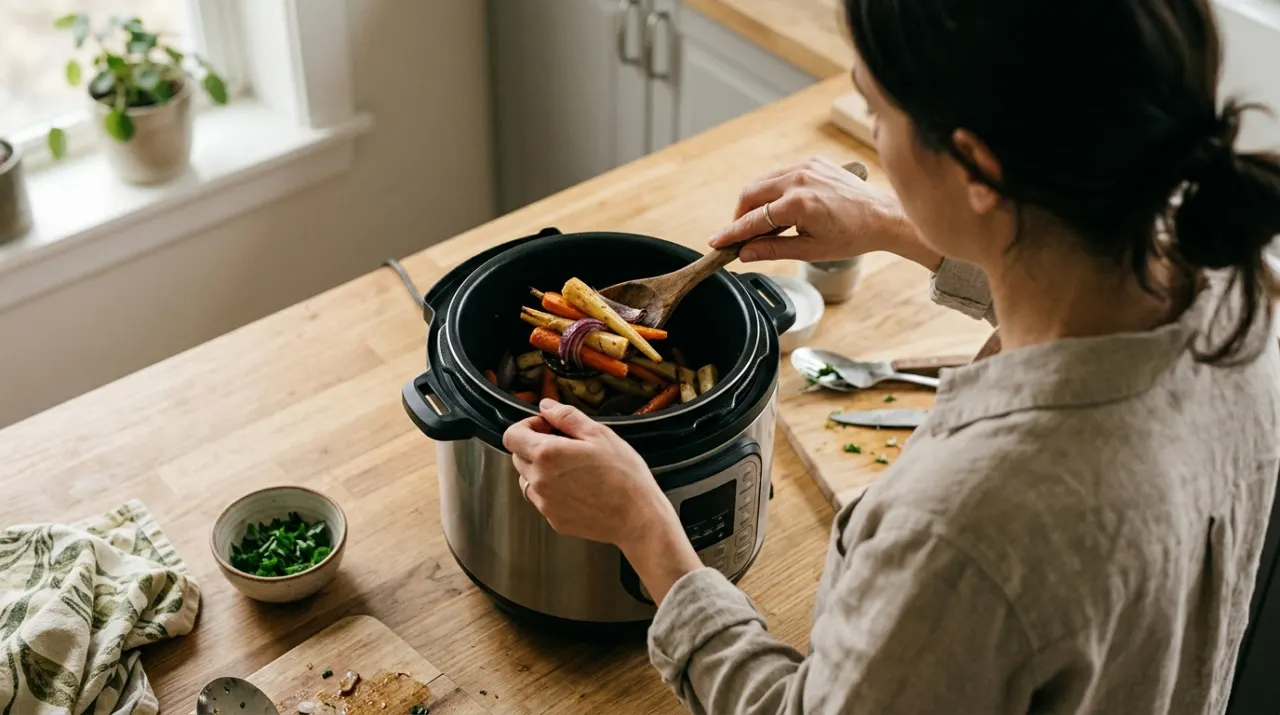
Match the setting to the task. Low is a cooking setting: it brings food up to and holds it at a safe cooking temperature over many hours, which is what an overnight dish needs. Warm is a holding setting, meant only to keep already-cooked food hot for serving; it is not designed to cook raw ingredients through and should not be relied on for that overnight. If your dish finished before bed and you only need to keep it hot, Warm for a limited time is fine — but for anything cooking from raw while you sleep, use Low.
Where do the real risks come from?
| Risk | Why | How to reduce it |
|---|---|---|
| Damaged cord | Frayed wiring can overheat | Inspect the cord before each unattended run |
| Old / faulty unit | May fail and drop food into the danger zone, or overheat | Retire aging cookers; never run one that misbehaved |
| Poor placement | Heat and steam near flammables or under cabinets | Clear, heat-resistant surface with clearance above |
| Extension cords | Can overheat / be a trip hazard | Plug directly into a wall outlet |
| Frozen ingredients | Too long passing through the danger zone | Thaw before cooking, per USDA |
Notice that none of these is the slow cooking itself — they are all about the condition and placement of the appliance.
Getting the food-safety details right
The USDA says food stays safe for as long as the cooker is operating, and that meat and poultry must always be thawed before they go in, so the food does not linger in the 40°F to 140°F range as the cooker slowly heats. Use the amount of liquid the recipe calls for, and fill the crock roughly half to two-thirds full — underfilling or overfilling both interfere with how evenly and reliably it holds temperature. Start with a recipe designed for the slow cooker rather than improvising an overnight cook, and keep the lid on, since lifting it releases heat and extends cooking time. We do not offer medical advice; when in doubt about a specific dish, err toward food-safety guidance from the USDA.
Where to go next
Curious how hot it actually gets? What temperature a slow cooker reaches on Low has the numbers. Shopping for a reliable unit? The best slow cookers ranks models on the ratings and complaints owners report, including which hold temperature consistently. Everything sits under the small kitchen appliances hub.
We never buy or physically test the products we rank — recommendations come from aggregated owner reviews and expert consensus, and the method is on how we rank. Follow your appliance manual and USDA food-safety guidance.