 Garden


Affiliate Disclosure
Some links on this page are affiliate links. As an Amazon Associate, we earn from qualifying purchases — at no extra cost to you. We do not buy, test, or physically handle the products we cover; our rankings come from aggregated owner reviews, ratings and expert consensus. Commissions never change our verdicts. How we rank · full disclosure.
The verdict: the Ninja 12-cup programmable brewer is the drip machine for a household that cannot agree on strength. It earns 4.4 stars on one feature that genuinely works — the Rich setting, which slows the water and extracts more from the same grounds — plus a removable reservoir that makes cleaning easy. Skip it if you drink a pot slowly and hate warming-plate flavor, if you want the hottest possible brew, or if counter space is tight.
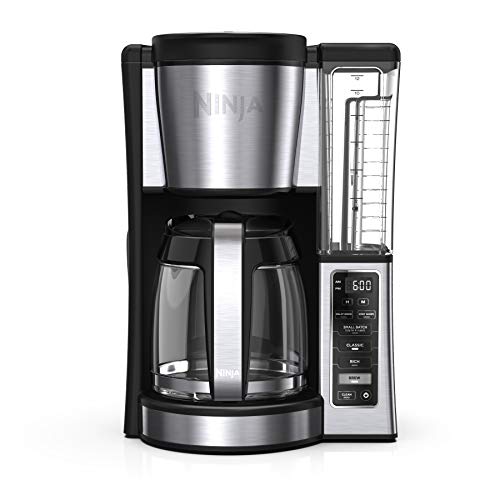
Best for households where one person wants a normal cup and another wants it strong
- Classic and Rich brew styles from the same grounds
- 12-cup glass carafe with adjustable warming plate
- 60-ounce removable water reservoir
- 24-hour delay brew and a small-batch setting
Why buy it: the Rich setting is the only honest fix for weak drip coffee that does not involve buying a scale and re-learning your grind.
What owners consistently praise
Two brew strengths from one machine is not a gimmick. Rich brew slows the flow rate so water spends longer in contact with the grounds, pulling more out of the same dose. Owners describe it as the setting that ended the household argument: one person brews Classic, the other brews Rich, nobody measures anything differently. It is also the correct answer for iced coffee, where dilution from ice otherwise leaves a watery drink.
The removable water reservoir is the practical highlight. Sixty ounces, lifts straight out, fills at the tap and washes in the sink. Anyone who has tried to pour water into a narrow fixed tank behind a hot machine, or to clean the slime that eventually grows in one, will appreciate this more than the spec sheet suggests. It also means the machine can live under a cabinet without being dragged forward every morning — a genuine advantage over taller drip makers.
Programming covers the real use cases. A 24-hour delay start, an adjustable warming plate up to about four hours, and a small-batch setting that slows the brew when you are making only a few cups so a short run still extracts properly. A permanent filter comes in the box, so there is nothing to buy on day one.

What owners actually complain about
Warming-plate flavor. This is the honest weakness of every glass-carafe drip machine and this one is no exception: coffee left on the plate develops a cooked, bitter edge within roughly 30 to 40 minutes. Set the plate low and the coffee goes lukewarm instead. There is no setting that solves it, because the physics do not allow one — you are either applying heat to brewed coffee or you are not. Owners who drink a pot over two hours are the ones writing these reviews.
The carafe can dribble. Reports are mixed rather than universal, which suggests some unit-to-unit variation in the spout, but enough owners mention coffee running down the outside of the carafe that it belongs on this page. Pouring quickly and confidently in one motion is the workaround.
Brew temperature is good, not class-leading. The consensus places it below the machines that specifically market a high-temperature brew system, and people particularly sensitive to a hot cup notice. If maximum brew heat is your priority, the Cuisinart DCC-3200 targets the 195°F to 205°F extraction window more aggressively.
Footprint and long-term electronics. It is a wide, tall machine and owners with limited counter run mention it. In reviews written two to four years out the failure mode is the control panel or the heating element rather than anything mechanical, and — as with every drip maker — machines that were never descaled dominate that group. The clean light exists for a reason; see how to descale a coffee maker.
One avoidable complaint worth naming: brew basket overflow. A grind that is too fine, or a dose above the basket line, backs water up and floods the counter. Coarsen the grind one step and the problem disappears.
Who should buy something else
If you drink a pot slowly, buy a thermal-carafe brewer instead. A vacuum carafe keeps coffee drinkable for hours without a heating element cooking it, which is the only real fix for the biggest complaint on this page. You lose the ability to see the level at a glance.
If brew temperature is your priority, the Cuisinart DCC-3200 PerfecTemp is the better machine and costs about the same — read our Cuisinart coffee maker review for the trade-offs, including a carafe that dribbles more than this one does. If you drink one or two cups a day, a 12-cup machine is the wrong size entirely; a small drip maker or a pour-over setup will give you better coffee. Start with how to choose a coffee maker, then compare the ranked field in our best coffee maker roundup.
Specifications
| Capacity | 12 cups, glass carafe |
| Brew styles | Classic and Rich |
| Water reservoir | 60 oz, removable |
| Programmable | 24-hour delay brew |
| Warming plate | Adjustable, up to approx. 4 hours |
| Small-batch mode | Yes |
| Filter | Permanent filter included |
| Owner rating | 4.4 stars (verified, see card above) |
Getting the best out of it
Three habits separate the owners who rate this machine highly from the ones who do not. Grind medium, not fine. A fine grind chokes the basket, causes overflow, and over-extracts into bitterness; medium, roughly the texture of coarse sand, is the target for a flat-bottom drip basket. Dose properly. The 12 marks on the carafe are 5-ounce cups, not mugs, so a pot marked for twelve is really about seven mugs of coffee. Roughly two tablespoons of grounds per 6 ounces of water is the starting ratio, and most people who complain of weak coffee are under-dosing rather than owning a faulty machine.
Decant rather than hold. The warming plate is the biggest single influence on how the last three cups taste. Pouring the pot into an insulated carafe as soon as the brew finishes gets you an hour of good coffee instead of forty minutes of good coffee followed by something scorched. Owners who do this describe the machine very differently from those who leave it on all morning, and the difference in the reviews is stark enough to be worth stating plainly.
How we reached this verdict
We do not brew with these machines. This review is built from the aggregated owner-review record, weighted toward reviews written six months or more after purchase, where scale problems, panel failures and daily-use annoyances actually surface. The star rating and review count on the card above come from licensed Amazon listing data and refresh automatically, so nothing on this page is a hand-typed statistic. Full method: how we rank.
Check price on Amazon → (paid link)
More from this hub: small kitchen appliances · best coffee maker · why is my coffee maker making weak coffee · how to clean a coffee maker without vinegar · how we rank.