 Garden

Affiliate Disclosure
Some links on this page are affiliate links. As an Amazon Associate, we earn from qualifying purchases — at no extra cost to you. We do not buy, test, or physically handle the products we cover; our rankings come from aggregated owner reviews, ratings and expert consensus. Commissions never change our verdicts. How we rank · full disclosure.
There are only two kinds of concrete sealer, and choosing the wrong kind causes almost every problem in this category. A penetrating sealer soaks in and reacts inside the pore structure — it changes nothing you can see and cannot peel, because there is no film to lift. A film-forming sealer sits on top as a coating; it can darken and gloss the concrete, which is usually why people buy it, and it can wear, blush, yellow and delaminate.
So ask yourself the honest question first: do you want the concrete protected, or do you want it to look different? If protection is the goal, buy penetrating and stop reading the gloss claims. If appearance is the goal, buy a good acrylic and accept a maintenance cycle plus an anti-slip additive. Trying to get both from one can is where owners end up disappointed.
Top Picks at a Glance
The Two Families, Side by Side
| Sealer type | Appearance | Typical life | Slippery when wet? | Can it peel? |
|---|---|---|---|---|
| Silane / siloxane (penetrating) | Unchanged | 7–10+ years | No change | No — no film exists |
| Silicate / siliconate (densifier) | Unchanged | Effectively permanent | No change | No |
| Acrylic, water-based (film) | Satin, slight enrichment | 3–5 years outdoors | Somewhat | Yes |
| Acrylic, solvent-based (film) | Wet look, noticeably darker | 3–5 years outdoors | Yes | Yes — the common complaint |
| Epoxy / polyurethane (film) | High gloss | 5–10 years indoors | Yes | Yes, and UV yellows it outdoors |
Two entries deserve a note. Densifiers (lithium or sodium silicate, siliconate) react with free lime in the concrete to harden the surface; they reduce dusting and improve abrasion resistance but are not on their own a strong water repellent, which is why they are often paired with a silane/siloxane topcoat. And epoxy and urethane belong on a garage floor, not on an exterior driveway — UV yellows them and they trap moisture in a slab that has no vapor barrier underneath.
The 28-Day Rule on New Concrete
New concrete has to cure before it gets sealed, and the number that matters is 28 days. That is the industry benchmark — the National Ready Mixed Concrete Association's Concrete in Practice series describes sealing compounds as liquids applied to hardened concrete after it is fully cured, generally 28 days. Curing itself is a separate operation from sealing, and CIP 11 on curing in-place concrete is worth reading if your slab was just poured, because how it was cured affects how well anything bonds to it later.
Why it matters practically: a fresh slab is still releasing moisture and still has unreacted cement chemistry at the surface. Put a film over that and you trap water underneath, which shows up as milky blushing, cloudy patches or a coating that lets go in sheets a year later. Penetrating sealers are less fussy about the film problem but still need the surface moisture gone to get in. If a contractor offers to seal a driveway the week it was poured, that is a red flag rather than a service.
Our #1 Pick: Armor SX5000 WB
The SX5000 WB is a water-based silane/siloxane penetrating sealer, and it earns the top spot by being the answer to the question most readers are actually asking: how do I stop water and salt getting into my concrete without introducing a new problem?
Because it reacts below the surface rather than coating it, there is no film to wear through, no film to yellow, no film to delaminate and no film to make the slab slick. The appearance does not change — and that is the part that generates the only real complaint about it. Owners repeatedly note that after application it looks like nothing happened, which some buyers read as failure. The test is the water: pour a cup on the slab and watch it bead and sit rather than darken the concrete.
The water-based version is the one to buy for most people. It is low odor, low VOC and legal in jurisdictions where solvent-based sealers are restricted, and its performance in the ownership record is not meaningfully behind the solvent version on residential slabs. It works on brick, pavers and stone as well as concrete, which is useful when a driveway meets a paver walk.
Two honest caveats. It does nothing for existing stains or a tired gray look — if the appearance is the complaint, buy the AR350 instead. And coverage on rough broom-finish or old porous concrete runs well under the label figure, so measure your actual square footage and add a margin.
Check price on Amazon → (paid link)
The Ranked Field

Best for driveways, patios and walkways where the concrete should look unchanged
- Silane/siloxane reacts inside the pore structure rather than filming over it
- No change in appearance and no change in traction
- Water-based, low odor, low VOC — legal in restricted jurisdictions
- Cannot peel, because there is no surface layer to peel
Why buy it: the sealer type that targets what actually destroys concrete — water and dissolved salt getting into the pores — without introducing the failure mode that generates almost every complaint in this category.

Best for pavers, stamped concrete and patios you want to look richer
- Solvent-based acrylic film that darkens and enriches the surface
- Low gloss rather than a plastic shine
- Re-coatable without stripping — the key difference between good and bad acrylics
- Roughly 750–1,500 sq ft per 5 gallons depending on porosity
Why buy it: if the point of sealing is to make the concrete look better, this is the film-former with the best ownership record for recoating cleanly years later instead of demanding a strip.
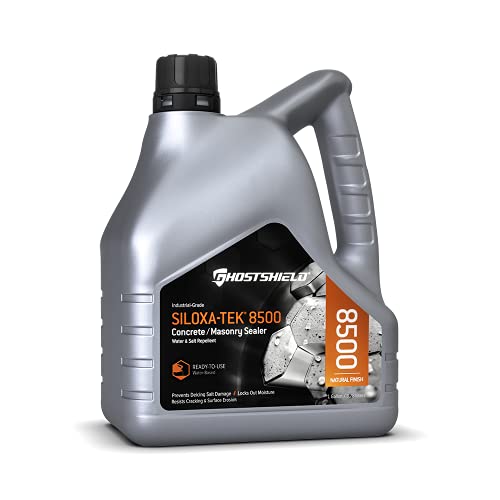
Best for northern driveways and garage floors that see road salt
- High-solids silane/siloxane blend aimed specifically at chloride resistance
- Water-based and low-VOC enough for most jurisdictions
- Adds some abrasion resistance as well as water repellency
- Ready to use — no dilution step to get wrong
Why buy it: chloride intrusion from deicing salt is what actually wrecks northern slabs, and this is formulated for that specific problem rather than for appearance.

Best for stamped, colored or decorative concrete that needs the pattern to stay visible
- Water-based acrylic tuned for decorative concrete
- Satin rather than high gloss — enhances without looking wet-plastic
- Breathable enough to reduce the white-blush risk of solvent acrylics
- Recoatable on the same product
Why buy it: decorative concrete is where high-gloss solvent sealers most often go wrong — blushing, hazing and an artificial shine — and a satin water-based acrylic is the safer bet on a pattern you paid for.

Best for sealing a modest area with real penetrating chemistry on a budget
- Ready-to-use silane siloxane, no mixing
- Natural finish with no sheen change
- Also rated for brick, pavers and masonry
- Applies with a pump sprayer
Why buy it: the cheapest honest route into penetrating chemistry — it does not have the solids content of premium blends, but it is a real silane siloxane rather than a film pretending to be one.

Best for a small patio, steps, a basement floor or a stone feature
- Water-based impregnating sealer for concrete and natural stone
- No sheen change, no film
- Sized sensibly for areas measured in tens of square feet
- Low odor, usable indoors with ventilation
Why buy it: the pragmatic buy when the concrete you want protected is a set of steps and a 150 square foot patio, and five gallons of specialist sealer makes no sense at all.
Quick Comparison
| Product | Best for | Rating | Price | Buy |
|---|---|---|---|---|
| Armor SX5000 WB Natural-Look Penetrating Water-Based Silane Siloxane Concrete Sealer, 5 Gallon | Best Overall | — | Check (paid link) | |
| Armor AR350 Low Gloss Wet Look Concrete Sealer, 5 Gallon, Solvent-Based Acrylic | Best Wet Look | — | Check (paid link) | |
| Siloxa-Tek 8500 Ready to Use, 1 Gallon Penetrating Concrete Sealer, Water and Salt Repellent | Best for Salt and Freeze-Thaw | — | Check (paid link) | |
| MasonryDefender Stamped Concrete Sealer, Clear, Water-Based, Satin Finish, 1 Gallon | Best for Stamped and Decorative | — | Check (paid link) | |
| Rain Guard Concrete Sealer, 1 Gallon, Ready to Use, Natural Finish, Silane Siloxane Waterproofer | Best Value | — | Check (paid link) | |
| Nanoprotect Concrete & Stone Sealer, Indoor and Outdoor, Water and Stain Repellent | Best Spray-On for Small Areas | — | Check (paid link) |
If You Live Where They Salt the Roads
Northern concrete does not usually fail because of rain. It fails because water gets into the pore structure, freezes, expands and spalls the surface off — and because chloride from deicing salt accelerates the whole process and attacks any reinforcing steel below. That is a different problem from the one a gloss coating solves.
The practical implication is to buy for chloride resistance rather than for looks: a high-solids silane/siloxane blend, applied before the first winter and re-tested every few years with the water-bead check. Also worth knowing that not all deicers are equal on concrete — ammonium-based products chemically attack cement paste and should never be used on a slab, and magnesium chloride is harder on concrete than plain rock salt. Sealing helps; choosing the deicer helps at least as much.
Solvent Versus Water-Based, and Your Local Rules
Solvent-based acrylics generally give a deeper wet look and darker color enrichment than water-based versions of the same product. They are also higher in VOCs, they smell strongly for a day or two, and they are the versions most likely to be restricted where you live. VOC limits in architectural coatings are set federally under the Clean Air Act — the EPA's architectural coatings compliance guide is the reference — and many states and regional air districts set tighter limits, with the Northeast coordinating stricter model rules through the Ozone Transport Commission. Check your state or air district before ordering a solvent-based sealer, because availability genuinely differs by address.
How We Rank
We do not buy, mix or apply these sealers. Rankings come from aggregated owner ratings across the most-owned concrete sealers on the US market, weighted toward reviews written after at least one full winter, because sealer failure is a seasonal event rather than a day-one one. Four things carry the weight: chemistry matched to the actual failure mode — water and chloride ingress, not appearance; recoatability, since a sealer that cannot be refreshed without stripping is a future problem you have already bought; application tolerance, because a product that only works in a perfect weather window will fail for most people; and coverage honesty, comparing stated square footage against what owners report on real, porous slabs. Prices were checked at the time of writing. Full method: how we rank.
The Field, Reviewed
1. Armor SX5000 WB — Best Overall
Covered above. Owners praise: water beading that persists for years, no change to the look or the grip, low odor from the water-based version, and that it also handles brick and pavers. Owners gripe about: that it looks like nothing happened, which reads as failure to some buyers; that it does nothing for existing stains or gray, tired concrete; and coverage falling short of the label on rough broom-finish slabs. Check price (paid link).
2. Armor AR350 — Best Wet Look
The film-former with the strongest ownership record for the thing that separates good acrylics from bad ones: accepting a fresh coat years later over a cleaned, sound existing film rather than demanding a full strip. Low gloss rather than plastic shine, which ages better.
Owners praise: genuine color enrichment on gray concrete and pavers, clean recoating, and coverage close to the stated figure on smooth slabs. Owners gripe about: a strong solvent odor during application, real slipperiness when wet without the anti-slip additive, and coverage well short on old porous concrete that drinks the first coat. Check price (paid link).
3. Siloxa-Tek 8500 — Best for Salt and Freeze-Thaw
Sits at the chloride-resistance end of penetrating sealers, which is what northern slabs actually need. Ready to use, so there is no dilution ratio to get wrong.
Owners praise: a visible reduction in salt scaling over subsequent winters, convenience, and that it works on garage floors as well as drives. Owners gripe about: price per gallon, and coverage on rough broom-finish concrete that soaks it up faster than the label suggests. Check price (paid link).
4. MasonryDefender Stamped Concrete Sealer — Best for Stamped and Decorative
Decorative concrete is where high-gloss solvent acrylics most often disappoint — blushing, hazing, and a shine that makes an expensive stamped pattern look like a bowling lane. A satin water-based acrylic tuned for the job is a safer bet.
Owners praise: a satin finish that enhances the pattern without looking artificial, lower odor than solvent alternatives, and easier recoating. Owners gripe about: less dramatic color enrichment than a solvent wet-look sealer, and that it still needs an anti-slip additive on any walking surface. Check price (paid link).
5. Rain Guard Concrete Sealer — Best Value
The cheapest sensible route into penetrating chemistry. It does not carry the solids content of premium blends and owners report a shorter effective life, but it is a real silane siloxane rather than a thin film pretending to be one.
Owners praise: easy pump-sprayer application, no appearance change, and the price. Owners gripe about: needing a second application on porous concrete, and beading that fades sooner than premium products. Check price (paid link).
6. Nanoprotect Concrete & Stone Sealer — Best Spray-On for Small Areas
Not the strongest sealer here and not trying to be. It earns its place because a large share of readers want to protect a set of steps, a 150 square foot patio or a stone feature, and buying five gallons of driveway sealer for that is absurd.
Owners praise: convenience, no sheen change, and effective water and stain repellency on patios and natural stone. Owners gripe about: cost per square foot compared with bulk sealers, and a shorter life than dedicated high-solids penetrating products. Check price (paid link).
What Owners Actually Complain About
Peeling and delamination. The dominant complaint, and it is nearly always the application rather than the can: a damp slab, too many historic coats, a second coat before the first cured, or concrete that had not reached 28 days. Penetrating sealers essentially never generate this complaint, because there is no film.
Blushing and hazing. A milky white cast under a film-forming sealer, caused by moisture trapped beneath it. Sometimes it can be reactivated with solvent by a pro; often it has to be stripped. The prevention is a genuinely dry, fully cured slab.
Slipperiness. Every film-forming sealer is slicker than bare concrete when wet. Anti-slip additive is inexpensive and is not optional on a slope, a walkway or a pool surround.
Coverage well short of the label. Stated square footage assumes smooth, sound concrete. Old broom-finish or weathered slabs can consume half again as much on the first coat.
Expecting a sealer to fix cracks. A recurring one-star theme. Sealer is not a filler and not a repair. Cracks get filled first — see our concrete crack filler picks — and only then does a coating make sense.
The Verdict
Decide whether you want protection or a different appearance, then buy accordingly. Protection on exterior concrete: Armor SX5000 WB, or Siloxa-Tek 8500 if road salt reaches your slab. A richer, darker surface: Armor AR350, with the anti-slip additive on anything you walk on. Stamped or decorative work: a satin water-based acrylic like the MasonryDefender. And whatever you buy, wait out the 28 days on new concrete, seal a genuinely dry slab, and test with a cup of water rather than resealing on a calendar. Check price on Amazon → (paid link)
More from this hub: Landscaping & Hardscaping · How to seal concrete · Best driveway sealer · Best concrete crack filler · How to fill cracks in a driveway · How we rank.