 Garden
Affiliate Disclosure
Some links on this page are affiliate links. As an Amazon Associate, we earn from qualifying purchases — at no extra cost to you. We do not buy, test, or physically handle the products we cover; our rankings come from aggregated owner reviews, ratings and expert consensus. Commissions never change our verdicts. How we rank · full disclosure.
The brand on the can matters far less than the opacity inside it. Clear, toner, semi-transparent, semi-solid and solid are not five flavors of the same product — they are five different trade-offs between how much wood you see and how long the finish lasts. Get that choice right and almost any decent stain will serve you. Get it wrong and no brand will save the job.
The relationship is simple and it is driven by pigment. Pigment is what blocks the ultraviolet light that destroys the wood surface, so the more pigment a finish carries, the longer it survives — and the less grain it lets through. That is the whole category in one sentence, and it is why a clear sealer on a sunny south-facing deck may need recoating in a single season while a solid stain on the same boards runs for years.
Top Picks at a Glance

Opacity Is the Real Decision
Before you compare brands, decide how much wood you want to see. The USDA Forest Service's Wood Handbook chapter on finishing is the standard reference here, and the pattern it describes is consistent with what owners report: penetrating finishes with little pigment need frequent renewal, and pigmented film-formers last considerably longer on horizontal surfaces.
| Opacity | Grain visible | Typical life on a deck floor | Recoating | Reversible? |
|---|---|---|---|---|
| Clear / water repellent | All of it | 1–2 years | Clean and recoat | Yes |
| Toner (very light pigment) | Nearly all | 1–3 years | Clean and recoat | Yes |
| Semi-transparent | Most | 2–3 years | Clean and recoat | Mostly |
| Semi-solid | Texture, not color | 2–4 years | Clean and recoat | With effort |
| Solid color | None — looks painted | 4–6 years, longer on rails | Strip failing areas first | No, not practically |
Say this part out loud before you buy solid stain: it is a one-way door. A solid stain is an opaque film. To get back to visible grain you have to remove that film from every square inch, which means chemical stripper, scraping and sanding across the whole deck — including the gaps between boards and the spindles. Almost nobody who does this once volunteers to do it again. Going solid is the correct choice on a deck that is genuinely too weathered, patchy or previously painted to look good any other way. It is the wrong choice on sound wood you would still like to see.
Oil Versus Water-Based: Both Are Right, For Different Reasons
This argument gets treated as tribal, and it should not be. The two chemistries have genuinely different strengths and the honest answer depends on your climate, your deck's history and your local rules.
Oil-based penetrating stains soak into the wood rather than forming a skin. That means they wet out weathered, thirsty boards more evenly, they rarely peel because there is no film to lift, and maintenance is a clean-and-recoat rather than a strip-and-start-over. They also flow and self-level, which is why oil stains produce fewer lap marks in inexperienced hands.
Water-based acrylic stains hold pigment on and just under the surface, which is where UV protection is most useful, so they typically keep their color noticeably longer. They resist mildew better in humid Southeast summers, they clean up with soap and water, and they smell like almost nothing.
That last point is now a legal issue as well as a comfort one. VOC content in architectural coatings is regulated federally under the Clean Air Act — see the EPA's compliance guide for architectural coatings — and many states and air districts set tighter limits than the national rule, with the Northeast states coordinating stricter model rules through the Ozone Transport Commission. The practical consequence for you is simple: the high-solvent oil stain a contractor swore by ten years ago may be reformulated, restricted or unavailable where you live. Check your state or air-district rules before ordering, and treat the "low VOC" line on a label as information about legality, not just about odor.
Our #1 Pick: Ready Seal
Ready Seal is not the longest-lasting deck stain here and it is not the most fade-resistant. It ranks first because deck stain fails at the application step far more often than at the chemistry step, and this is the product that deletes most of the ways to fail.
There is no primer. There is no wet-edge race across a hot board. There is no back-brushing requirement, no thinning, and no penalty for overlapping into an area you already did — the stain self-levels as it penetrates, so lap marks and roller stops largely disappear on their own. Owners consistently report that a first-timer with a pump sprayer and a stain pad gets a result that looks deliberate.
Two honest caveats, both of which show up repeatedly in the ownership record. First, the color is genuinely misleading for the first two weeks — it goes down dark, sometimes alarmingly so, and settles to the advertised tone over roughly 14 days as the solvent flashes off. A lot of one-star reviews are written on day two. Second, it is an oil-based product, so the rag safety rules below are not optional, and it will smell strongly for a day or two.
Check price on Amazon → (paid link)
The Ranked Field

Best for a first-time stainer who does not want lap marks
- Oil-based semi-transparent stain and sealer in one
- No primer, no wet-line discipline, no back-brushing required
- Self-levels as it penetrates — darkens for about 14 days then settles
- Roughly 100–150 sq ft per gallon on bare wood
Why buy it: the most forgiving finish in the category. Almost every deck-staining disaster is an application error, and this is the product that removes most of the ways to make one.
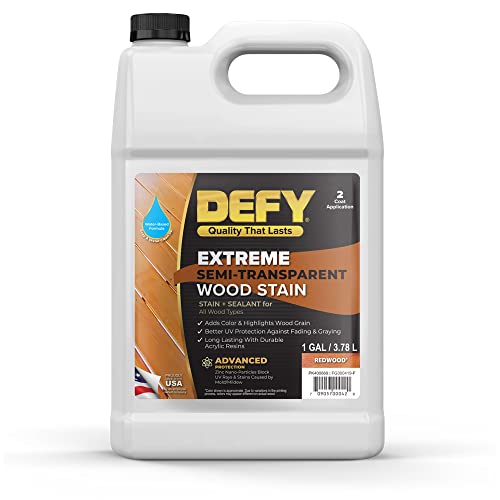
Best for holding color through several summers of UV
- Water-based semi-transparent with zinc-oxide UV blockers
- Low odor and low VOC — legal in restricted jurisdictions
- Cleans up with soap and water
- Recommended on cleaned and brightened wood, not over an old film
Why buy it: the honest answer where high-VOC oil stains are restricted or simply unwelcome, and the pick if fade resistance matters more to you than easy recoating.

Best for matching an existing Olympic-stained deck or fence
- Semi-transparent, water-repellent, one-coat formula
- Rated for decks, fences and siding
- Can be applied to damp wood, which shortens the weather window
- Wide stocked color range for touch-ups later
Why buy it: the mainstream stain most American decks actually wear, which matters more than it sounds — matching a color three years from now is far easier with a product you can buy anywhere.

Best for old, weathered, mismatched or previously painted boards
- Opaque acrylic film that hides grain and color variation
- Longest service life of any opacity — commonly 4–6 years on a deck floor
- Covers repairs and replaced boards invisibly
- Cannot be reversed without stripping or sanding
Why buy it: the right call on a tired deck where hiding is the point — but understand it is a one-way door: once a solid film is down, going back to visible grain means a full strip.
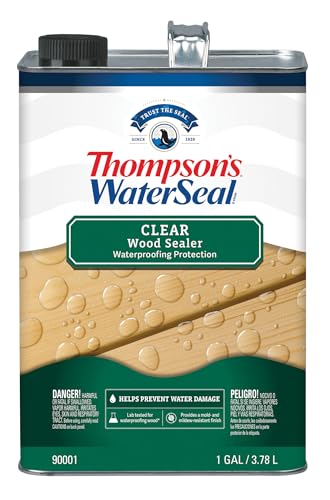
Best for new cedar or redwood you want to keep looking new
- Clear water repellent with no added pigment
- Shows the most grain of any option here
- Shortest service life — typically 1–2 years on a horizontal deck
- Can be applied to damp wood
Why buy it: the only finish that leaves the wood looking genuinely untouched. Just go in knowing that pigment is what blocks UV, so a clear finish trades appearance for the shortest recoat cycle in the category.

Best for ipe, cumaru, mahogany and other dense tropical decking
- Brazilian rosewood oil formulated for dense, oily hardwoods
- Penetrates rather than films — will not peel off ipe
- Very thin build; applied sparingly and wiped back
- Annual maintenance coat is normal on hardwood
Why buy it: ordinary deck stain does not work on ipe — the wood is too dense to absorb it and the coating sits on top and flakes. This is the chemistry class built for that problem.
Quick Comparison
| Product | Best for | Rating | Price | Buy |
|---|---|---|---|---|
| Ready Seal Exterior Wood Stain & Sealer, Natural Cedar, 5 Gallon | Best Overall | — | Check (paid link) | |
| DEFY Extreme Semi-Transparent Wood Stain and Sealer, 1 Gallon | Best Water-Based | — | Check (paid link) | |
| Olympic Maximum Semi-Transparent Wood Stain & Sealer in One, Redwood, 1 Gallon | Best Widely Available | — | Check (paid link) | |
| Olympic Maximum Solid Color Wood Stain & Sealer in One, Oxford Brown, 1 Gallon | Best Solid Color | — | Check (paid link) | |
| Thompson’s WaterSeal Clear Wood Sealer, Clear, 1 Gallon | Best Clear Sealer | — | Check (paid link) | |
| Penofin Deep Penetrating Oil Treatment for Exotic Hardwood, IPE Finish, 1 Gallon | Best for Hardwood | — | Check (paid link) |
A New Deck Usually Has to Wait
This is the single most common reason a brand-new deck's first stain job fails, and it is entirely avoidable. Freshly milled pressure-treated lumber arrives with two problems: mill glaze, a burnished, resin-smeared surface left by the planer knives, and a great deal of factory moisture from the treatment process. Neither lets stain in. Coat over them and the stain sits on the surface, stays tacky, and lifts in sheets by the following spring.
The test is free and takes ten seconds. Sprinkle a tablespoon of water onto the decking. If it beads up and sits there, the wood is still closed and wet — wait. If it soaks in and darkens the board within about a minute, the wood is ready to accept a finish. Test in several places, including a board that gets full sun and one in shade, because they dry at very different rates.
How long the wait takes depends on what you bought and where you live. Kiln-dried-after-treatment (KDAT) lumber may be ready almost immediately. Wet-treated lumber from an outdoor yard commonly needs a few weeks to a few months of dry weather. Cedar and redwood mostly need only enough time to shed mill glaze, which a wash and a light scuff handles. Full detail is in our guide to when to stain a new deck.
The Four Rules That Decide Whether It Lasts
- Never stain in direct sun, and never on a hot board. A surface above roughly 90°F flashes the carrier off before the pigment penetrates, which is how you get lap marks, patchy sheen and a coating that never fully bonds. Follow the shade around the deck, or work early and late.
- Never stain a wet board. Give the deck 24–48 hours of dry weather after washing or rain, longer for dense hardwood, and check the forecast for at least 24 hours after you finish. Water in the pores physically occupies the space the stain needs.
- Never coat over an incompatible or failing finish. Semi-transparent over solid does not work. Solid over failing solid is worse — you are gluing a new film to a layer that is already letting go, and it will peel as one sheet. Strip or sand back to sound material first.
- Two thin coats beat one heavy one, and excess must be wiped back. Stain is not paint; the wood can only absorb so much, and whatever is left on the surface stays sticky and collects dirt. On dense wood, one coat is often all it will take.
Safety: Oil-Stain Rags Can Catch Fire on Their Own
This is not a hypothetical and it is not rare. Rags, brushes, pads and paper towels soaked in oil-based stain, teak oil, linseed oil or varnish generate heat as the oil oxidizes. If that heat cannot escape — because the rag is balled up, stacked with others, or sitting in a closed plastic trash can — the temperature climbs on its own until the material ignites. There is no spark, no flame, no cigarette. It is called spontaneous combustion and it burns down garages every year.
The NFPA safety tip sheet on oily rags is short and worth reading before you open the can. Its guidance, and the practice every finisher follows:
- Lay used rags out flat and separated on a non-combustible surface outdoors — a concrete slab, a metal sheet, a wire rack — well away from the house, until they are bone dry and stiff. Dry rags are safe.
- Or submerge them in water in a sealed metal container and dispose of that container per your local hazardous-waste rules.
- Or use a listed metal oily-waste can with a self-closing lid, which is what shops do.
- Never ball them up, never pile them, never put them in a plastic bin or a household trash bag, and never leave them inside a garage, basement or vehicle overnight.
- The same applies to the stain pad, the roller cover and the drop cloth — anything that absorbed oil-based finish.
Water-based stains do not carry this risk, which is one more real argument in their favor for a homeowner working alone on a Saturday.

How We Rank
We do not buy, brush or spray these stains. Rankings come from aggregated owner ratings across the most-owned exterior deck stains on the US market, weighted toward reviews written after at least one full summer and winter — because stain failure is a seasonal event and a day-one review tells you nothing. Four things carry the weight: application tolerance, because the most common cause of failure is the person, not the product; honest service life for the stated opacity, compared against published wood-finishing research rather than marketing claims; recoatability, since a finish you cannot refresh without stripping is a future weekend you have already lost; and availability of the exact color, because matching a discontinued tone three years from now is a real problem. Prices were checked at the time of writing. Full method: how we rank.
The Field, Reviewed
1. Ready Seal Natural Cedar — Best Overall
Covered above. Owners praise: that it is nearly impossible to lap-mark, sprays and pads on quickly, needs no primer, and refreshes without stripping. Owners gripe about: the alarming initial darkness before it settles over about two weeks, strong solvent odor, inconsistent color between batches on some lots, and coverage that falls short of the label on thirsty old wood. Check price (paid link).
2. DEFY Extreme Semi-Transparent — Best Water-Based
The pick where color retention and low VOCs matter most. The zinc-oxide UV package is the reason owners in high-sun states report less fade at the two-year mark than they get from cheap oil stains.
Owners praise: genuinely good fade resistance, almost no smell, soap-and-water cleanup, and that it does not darken and change on you after application. Owners gripe about: that it demands proper prep — cleaner and brightener on bare wood, and it will not forgive being applied over an existing film; a shorter working time than oil, so lap marks are possible on a hot day; and the price per gallon. Check price (paid link).
3. Olympic Maximum Semi-Transparent — Best Widely Available
The stain a large share of American decks actually wear. Its real advantage is boring and useful: you can walk into a store and buy the same color again in three years for a rail touch-up.
Owners praise: single-coat coverage, tolerance of slightly damp wood which widens the weather window, and easy color matching later. Owners gripe about: shorter life on full-sun deck floors than on shaded rails, and results that vary a lot with prep — reviews split sharply between people who cleaned and brightened first and people who did not. Check price (paid link).
4. Olympic Maximum Solid Color — Best Solid Color
The choice for a deck that has stopped looking good in any transparent finish: gray, blotchy, patched with new boards, or previously painted. A solid film hides all of it and lasts longer than anything else here.
Owners praise: total coverage of mismatched and repaired boards, long service life on rails and vertical surfaces, and a uniform finish that reads as intentional. Owners gripe about: that it shows foot traffic wear paths on the deck floor, that it peels at any spot where moisture gets under the film, and — the one to take seriously — that there is no going back. Check price (paid link).
5. Thompson’s WaterSeal Clear — Best Clear Sealer
The most honest way to show off new cedar, redwood or a good-looking pressure-treated deck, and the shortest-lived finish in this list. Those two facts are the same fact: no pigment means no UV screen.
Owners praise: that the wood still looks like wood, easy application including on damp boards, low price, and that water beads visibly for the first season. Owners gripe about: needing a recoat every year or two on horizontal surfaces, no protection against graying, and — a recurring theme — expecting a clear sealer to do a pigmented stain's job. Check price (paid link).
6. Penofin Exotic Hardwood — Best for Hardwood
A specialist product for a specialist problem. Ipe, cumaru and similar tropical hardwoods are so dense and naturally oily that ordinary deck stain cannot get in — it sits on top, stays sticky and flakes off within months. Penofin's hardwood formula is thin enough to penetrate and is applied sparingly and wiped back.
Owners praise: that it actually absorbs into ipe, restores the deep brown the wood loses to UV, and cannot peel because it never forms a film. Owners gripe about: the price per gallon, an annual maintenance coat on exposed hardwood, and that it is easy to over-apply — excess left on the surface stays tacky. Check price (paid link).
What Owners Actually Complain About
Peeling — and it is almost never the can. The recurring stories are a damp board, a coat applied in direct sun, a second coat before the first cured, or a new finish over an old incompatible one. Film-forming stains generate nearly all of these complaints; penetrating oils generate almost none, because there is no film to lift.
The color is not what the lid showed. Real and unavoidable to a degree — the same stain over cedar, pine and pressure-treated pine produces three different results, and oil stains keep shifting for up to two weeks. Buy a quart and do a test board on the actual lumber before committing five gallons.
Coverage well short of the label. Stated square footage assumes smooth, sound, moderately absorbent wood. Old, weathered, sun-thirsty decking can drink half again as much on the first coat.
It never fully dried. Almost always over-application. Wood absorbs a finite amount; whatever sits on the surface has no way to cure and stays tacky, collecting pollen and footprints. Wipe back the excess within the manufacturer's stated window.
The Verdict
Choose the opacity first. If the wood looks good, stay transparent and accept a recoat every two to three years — Ready Seal if you want the most forgiving application, DEFY Extreme if you want maximum color retention and low VOCs. If the deck is tired, gray and patched, go solid with Olympic Maximum and accept that the decision is permanent. On ipe or another tropical hardwood, use a hardwood oil like Penofin and nothing else. Then get the boring parts right: dry wood, out of the sun, thin coats, and lay those oil-soaked rags out flat outdoors before you go inside for the night. Check price on Amazon → (paid link)
More from this hub: Landscaping & Hardscaping · How to stain a deck · Best semi-transparent deck stain · Best solid deck stain · How long deck stain lasts · How we rank.