 Garden

Affiliate Disclosure
Some links on this page are affiliate links. As an Amazon Associate, we earn from qualifying purchases — at no extra cost to you. We do not buy, test, or physically handle the products we cover; our rankings come from aggregated owner reviews, ratings and expert consensus. Commissions never change our verdicts. How we rank · full disclosure.
Sealing a driveway is cosmetic plus protective. It is not structural. No sealer adds strength, closes a structural crack, or saves a surface that is failing from the base up. What a good sealer does is keep liquid water — and in cold states, road salt — out of the pore structure, resist oil staining, and restore a uniform color. That is genuinely worth doing on a sound driveway and completely pointless on a failing one.
Two rules govern the whole job and both get broken constantly: never seal a damp or cold slab, and do not reseal on a calendar. Sealer applied below about 50°F, or over concrete that has not dried out, will not bond and will flake within a year. And coating a driveway every spring because it is spring is precisely how you build up the thick, brittle layers that peel off in sheets.
Top Picks at a Glance
Asphalt and Concrete Need Different Products
This is the fork in the road, and getting it wrong wastes the money and the weekend. Asphalt is a flexible, petroleum-bound surface that fails by oxidizing and going gray and brittle; it wants an asphalt-emulsion sealcoat, a black coating squeegeed on in bulk. Concrete is a rigid, porous mineral surface that fails by water and salt getting into the pores and then freezing; it wants either a penetrating silane/siloxane sealer that reacts inside the pores, or a film-forming acrylic that sits on top and changes the look.
| Sealer type | Surface | Look | Typical life | Can it peel? |
|---|---|---|---|---|
| Asphalt emulsion sealcoat | Asphalt only | Uniform black | 2–4 years | Yes, if over-applied |
| Coal tar sealcoat | Asphalt only | Uniform black | 3–5 years | Yes — and restricted in many jurisdictions |
| Penetrating silane/siloxane | Concrete, brick, pavers | Unchanged | 7–10 years | No — no film exists |
| Acrylic film-former | Concrete, pavers | Wet look, darker | 3–5 years | Yes, and this is the common complaint |
| Epoxy / polyurethane | Garage floors, not drives | High gloss | 5–10 indoors | Yes, and UV yellows it outdoors |
Coal Tar: Check Your Local Rules Before You Buy
Sealcoat comes in two chemistries and they are not equivalent environmentally. USGS research on coal-tar-based pavement sealcoat found that coal-tar sealcoat typically contains 35,000 to 200,000 mg/kg of polycyclic aromatic hydrocarbons — on the order of 100 times the PAH content of used motor oil, and about 1,000 times that of asphalt-emulsion sealcoat. Several of those PAHs are classified as probable human carcinogens, and the USGS fact sheet on sealcoat and environmental health traces the abraded dust into streams, soils and settled house dust.
The regulatory result is a patchwork: a number of US states, counties and municipalities have banned or restricted the sale or use of coal-tar sealcoat, several large retailers stopped stocking it voluntarily, and other jurisdictions have no rule at all. Check your state and county before you buy — this is a genuinely local question and we cannot answer it for your address. Asphalt-emulsion products are the mainstream alternative and are what most consumer-grade sealers sold today are.
Our #1 Pick: Armor AR350
For concrete driveways, patios and pavers where the owner actually wants the surface to look better, the AR350 is the film-forming sealer with the strongest ownership record. It is a solvent-based acrylic that darkens and enriches the concrete — the "wet look" — and it is the one whose owners most consistently report that a re-coat goes on cleanly years later instead of requiring a strip.
That re-coatability is the whole argument. Film-forming acrylics are the sealer type that generates almost every peeling complaint in this category, and the difference between a good one and a bad one shows up not on day one but at the first maintenance coat. Owners consistently report that the AR350 accepts a fresh coat over a cleaned, sound existing film.
Two honest caveats. First, it changes the appearance permanently — if you want the concrete to look untouched, buy the SX5000 instead. Second, any film-former on an exterior slab is slightly slicker when wet than bare concrete, so add the manufacturer's anti-slip additive on a sloped driveway or anywhere people walk in the rain.
Check price on Amazon → (paid link)
The Ranked Field

Best for concrete driveways, patios and pavers where you want a slight color lift
- Solvent-based acrylic that forms a surface film
- Darkens and enriches concrete color — the "wet look"
- Re-coatable without stripping, unlike some film formers
- Roughly 5 gallons covers 750 to 1,500 sq ft depending on porosity
Why buy it: the film-forming sealer with the best owner record for actually re-coating cleanly, which matters because peeling acrylic is the single most common complaint in this whole category.

Best for freeze-thaw regions and anywhere road salt reaches the slab
- Silane/siloxane penetrates and reacts inside the pore structure
- Leaves no film — appearance is essentially unchanged
- Water-based, low odor, DOT-recognized chemistry class
- Cannot peel, because there is no surface layer to peel
Why buy it: the honest choice in cold states: a penetrating sealer cannot peel or turn the driveway into a skating rink, and it targets the actual failure mode up north, which is water freezing inside the concrete.
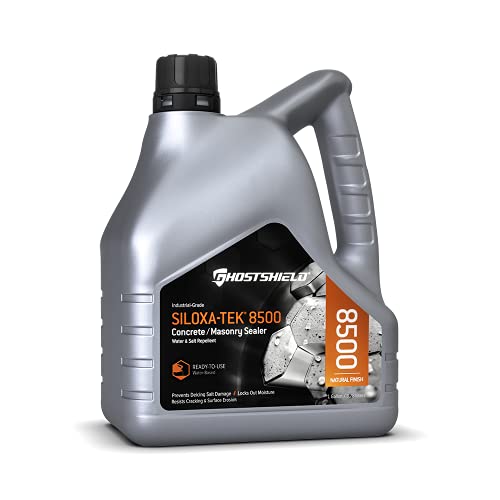
Best for garage floors and driveways that see winter road salt
- High-solids silane/siloxane blend aimed at chloride resistance
- Water-based and low-VOC enough for most jurisdictions
- Adds slight abrasion resistance as well as water repellency
- Ready to use — no dilution step to get wrong
Why buy it: chloride intrusion from road salt is what actually destroys northern concrete, and this is the class of product formulated for that specific problem rather than for looks.

Best for sealing a large area on a budget without a film
- Ready-to-use silane siloxane, no mixing
- Natural finish with no sheen change
- Also rated for brick, pavers and masonry
- Sprays on with a pump sprayer
Why buy it: the cheapest way into penetrating-sealer chemistry at driveway scale, and it does the one job that matters — keeping liquid water out of the pore structure.

Best for blacktop cracks that must be filled before any sealcoat goes on
- Elastomeric — flexes with seasonal movement instead of cracking
- Pourable for cracks up to roughly 1/2 inch wide
- Black finish blends into asphalt
- Cures ready for sealcoat over the top
Why buy it: sealcoat is not a crack filler and never was; filling first with an elastomeric product is what makes the sealcoat above it last more than a season.
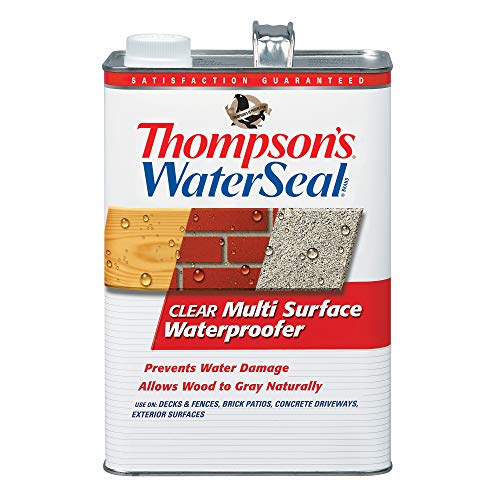
Best for a small concrete apron, path or patio alongside deck and masonry work
- Rated for concrete, masonry and wood in one product
- Clear finish with minimal appearance change
- Widely stocked and cheap enough to test on a small area
- Brush, roll or spray
Why buy it: the pragmatic buy when the concrete you want sealed is 200 square feet and buying five gallons of specialist sealer makes no sense.
Quick Comparison
| Product | Best for | Rating | Price | Buy |
|---|---|---|---|---|
| Armor AR350 Low Gloss Wet Look Concrete Sealer, 5 Gallon, Solvent-Based Acrylic | Best Overall for Concrete | — | Check (paid link) | |
| Armor SX5000 WB Natural-Look Penetrating Water-Based Silane Siloxane Concrete Sealer | Best Penetrating Sealer | — | Check (paid link) | |
| Siloxa-Tek 8500 Ready to Use, 1 Gallon Penetrating Concrete Sealer, Water and Salt Repellent | Best for Salt and Deicers | — | Check (paid link) | |
| Rain Guard Concrete Sealer, 5 Gallon, Ready to Use, Natural Finish, Silane Siloxane Waterproofer | Best Value Penetrating | — | Check (paid link) | |
| Jetcoat Premium Elastomeric Asphalt Crack Filler and Sealant, 1 Gallon | Best for Asphalt Cracks | — | Check (paid link) | |
| Thompson’s WaterSeal Multi-Surface Waterproofer, Clear, 1 Gallon | Best Multi-Surface | — | Check (paid link) |
When to Seal: Weather, Age and Frequency
Timing is where most driveway sealing goes wrong, and it is entirely controllable.
- Temperature: air and surface above 50°F, and staying there for a full 24 hours after application. The comfortable working range is about 55°F to 90°F. Cold is the more common failure; blazing sun is the less obvious one, because a coating that skins over before it wets the surface never bonds properly.
- Moisture: no rain for at least 24 hours, ideally 48. The slab must also be dry through, not merely dry on top — after heavy rain, give concrete a couple of dry days.
- New asphalt: wait roughly six months, often a full season, before the first sealcoat. Fresh asphalt is still curing and off-gassing; seal it early and you trap oils and solvents in the surface.
- New concrete: most sealers want the slab cured 28 days minimum, and penetrating sealers generally want longer still.
- Frequency: reseal on condition, not calendar. Asphalt sealcoat every two to three years in harsh winters, three to five in mild climates. Acrylic on concrete every three to five. Penetrating sealers seven to ten. If water still beads and the color is even, it does not need a coat.
Over-Sealing Is a Real Failure Mode
Every unnecessary coat adds thickness, and thickness is what peels. A sealcoat film that has been rebuilt every spring for eight years is a stack of brittle layers with poor adhesion between them, and it will eventually delaminate in sheets — usually starting where tires turn. Once that begins, the only fix is removal: pressure washing, scraping or grinding the loose material off, because a fresh coat over flaking sealer just produces a thicker flake.
The other over-application error is doing it all in one go. Two thin coats with full cure time between them outperform one heavy coat every time, and a heavy coat is the classic cause of a surface that stays tacky for days and then tracks into the garage.
How We Rank
We do not buy, mix or apply these sealers. Rankings come from aggregated owner ratings across the most-owned driveway and concrete sealers on the US market, weighted toward reviews written after at least one winter — because sealer failure is a seasonal event, not a day-one one. Four things carry the weight: chemistry matched to the actual failure mode (water and chloride ingress on concrete, oxidation on asphalt); re-coatability, since a sealer that cannot be refreshed without stripping is a future problem; application tolerance, because a product that only works in a perfect weather window will fail for most people; and coverage honesty, comparing stated square footage against what owners report on real, porous slabs. Prices were checked at the time of writing. Full method: how we rank.
The Field, Reviewed
1. Armor AR350 — Best Overall for Concrete
Covered above. Owners praise: the color enrichment on gray concrete and pavers, clean re-coating years later, and coverage close to the stated figure on non-porous slabs. Owners gripe about: strong solvent odor during application, real slipperiness when wet without the anti-slip additive, and coverage falling well short on old, porous concrete that drinks the first coat. Check price (paid link).
2. Armor SX5000 WB — Best Penetrating Sealer
The right answer wherever appearance should not change and peeling must not be possible. Silane/siloxane chemistry reacts inside the pore walls, so there is no film for traffic or UV to attack and nothing to delaminate.
Owners praise: water beading that persists for years, no change to the look, low odor from the water-based version, and that it works on brick and pavers too. Owners gripe about: that it looks like nothing happened, which some buyers read as failure, and that it does nothing for existing stains or a tired gray appearance. Check price (paid link).
3. Siloxa-Tek 8500 — Best for Salt and Deicers
Formulated at the chloride-resistance end of penetrating sealers, which is what northern concrete actually needs. Road salt carried onto a driveway by tires is a bigger long-term threat to a slab than rain is.
Owners praise: visible reduction in salt scaling over subsequent winters, ready-to-use convenience, and use on garage floors as well as drives. Owners gripe about: price per gallon and coverage on rough broom-finish concrete, which soaks it up faster than the label suggests. Check price (paid link).
4. Rain Guard Concrete Sealer 5 Gallon — Best Value Penetrating
The cheapest sensible route into penetrating chemistry at driveway scale. It does not have the solids content of the Siloxa-Tek and owners report shorter effective life, but it is a real silane siloxane rather than a film pretending to be one.
Owners praise: easy pump-sprayer application, no appearance change, and the price for five gallons. Owners gripe about: needing a second application on porous concrete, and beading that fades sooner than premium products. Check price (paid link).
5. Jetcoat Elastomeric Asphalt Crack Filler — Best for Asphalt Cracks
The step people skip. Sealcoat spans nothing; it flows into a crack and reopens with it at the first cold snap. Filling with an elastomeric product that flexes through the freeze-thaw cycle is what makes the coat above it survive.
Owners praise: that it stays flexible instead of cracking out, pours neatly into cracks up to about half an inch, and takes sealcoat over the top. Owners gripe about: shrinkage in deep cracks needing a second pour, and a finish slightly proud of the surface until traffic knocks it down. Check price (paid link).
6. Thompson’s WaterSeal Multi-Surface — Best Multi-Surface
Not the strongest concrete sealer here, and it is not trying to be. It earns a place because plenty of readers have 200 square feet of concrete apron next to a deck and a brick path, and buying three specialist products for that is absurd.
Owners praise: availability, price, and that one gallon covers deck, path and apron. Owners gripe about: a noticeably shorter life than dedicated penetrating sealers, and reapplication needed sooner than the label implies on horizontal surfaces. Check price (paid link).
What Owners Actually Complain About
Peeling. The dominant complaint by a wide margin, and it is nearly always the application rather than the can: too many historic coats, a damp slab, a cold night inside the cure window, or a second coat applied before the first cured.
Coverage well short of the label. Stated square footage assumes smooth, sound concrete. Old broom-finish or weathered slabs can consume half again as much on the first coat. Buy for your actual surface, not for the box.
Slipperiness. Every film-forming sealer is slicker than bare concrete when wet. Anti-slip additive is cheap and is not optional on a sloped drive or a walkway.
Expecting a sealer to fix cracks. A recurring one-star theme. Sealer is not a filler and not a repair. Cracks get filled first — see our guide to filling driveway cracks — and only then does a coating make sense.
The Verdict
Match the chemistry to the surface and the climate. Concrete you want to look better: Armor AR350. Concrete in a freeze-thaw or salt state: Armor SX5000 WB, or Siloxa-Tek 8500 where deicers are heavy. Asphalt: fill the cracks with Jetcoat first, then sealcoat — and check your local rules on coal tar before you buy anything black. Above all, seal a dry slab in the right weather window, and stop resealing driveways that do not need it. Check price on Amazon → (paid link)
More from this hub: Landscaping & Hardscaping · Best concrete crack filler · How to fill cracks in a driveway · Landscaping cost guide · How we rank.