 Garden


Affiliate Disclosure
Some links on this page are affiliate links. As an Amazon Associate, we earn from qualifying purchases — at no extra cost to you. We do not buy, test, or physically handle the products we cover; our rankings come from aggregated owner reviews, ratings and expert consensus. Commissions never change our verdicts. How we rank · full disclosure.
For a typical home yard under half an acre, battery now wins on almost every measure that matters — power is comparable, it is dramatically quieter and lighter, it starts instantly and it costs less to run. Gas still wins for large properties, all-day work and the very top of the power range, where a backpack delivers 800-plus CFM for an hour on a tank. Regulation is quietly settling the argument in a growing number of US cities.
The Comparison at a Glance
| Battery (cordless) | Gas | |
|---|---|---|
| Handheld power | 500–700 CFM on top models | 400–600 CFM typical handheld |
| Top-end power | Backpacks to roughly 800 CFM | Backpacks to 900+ CFM |
| Runtime | 12–20 min turbo, 40–60 min low | 45–60 min per tank, refuel in seconds |
| Noise | Roughly 59–68 dB at 50 ft | Roughly 70–80 dB at 50 ft |
| Weight, handheld | 6–10 lb with battery | 9–12 lb with fuel |
| Starting | Trigger, every time | Pull cord, choke, priming |
| Maintenance | Clear the intake; store packs correctly | Fuel mixing, stabilizer, plugs, filters, carb |
| Running cost | A few dollars a year | $30–80 a year in fuel, oil and parts |
| Long-term cost | Battery replacement at year 5–7 | Engine wear; carb issues from stale fuel |
| Emissions | None at point of use | Two-stroke engines are heavy emitters for their size |
| Local rules | Usually exempt from gas restrictions | Restricted or banned in a growing list of cities |
Power: The Gap Has Mostly Closed
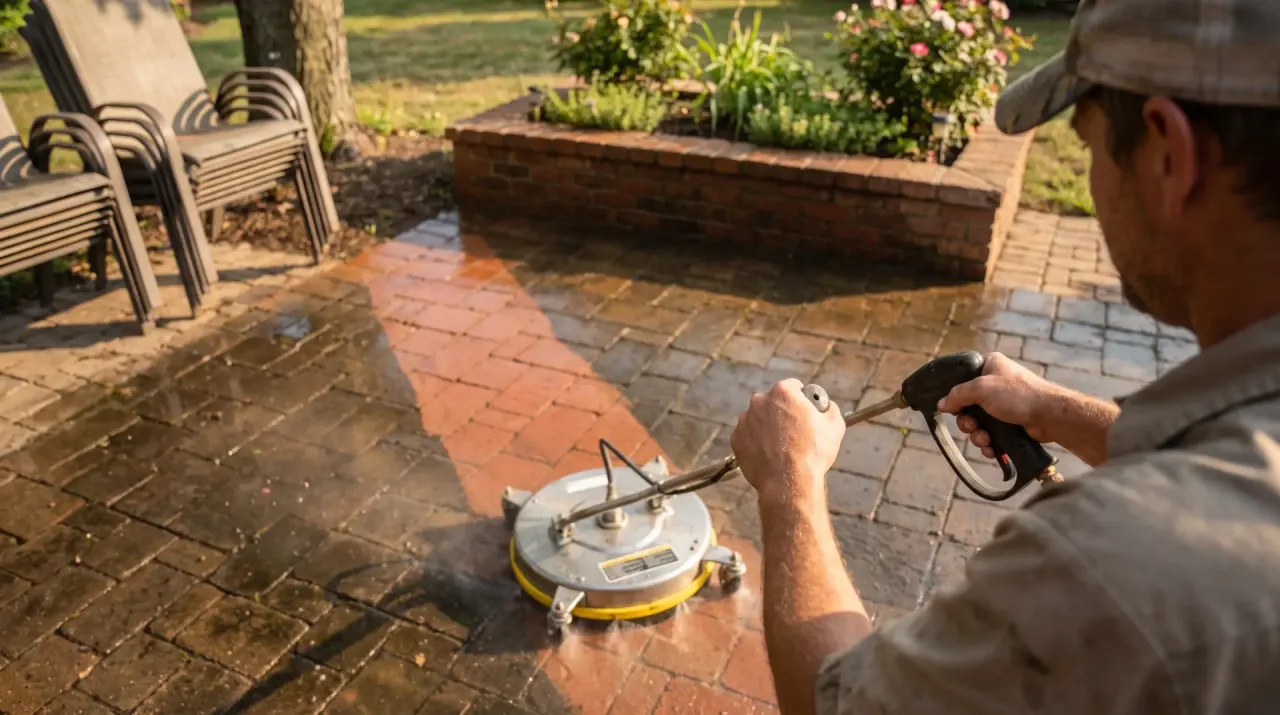
Ten years ago this was not a real comparison. Today, at the handheld level, it is: modern 56V, 60V and 80V blowers move 580 to 700 CFM, and brushless motors deliver that with instant throttle response rather than the spool-up of a two-stroke. Owner reviews across the top cordless models consistently describe them clearing a quarter-acre yard of dry leaves without any sense of being underpowered, and the consensus in the category has shifted decisively over the last few product generations.
What has not closed is the ceiling. A commercial gas backpack at 800 to 900 CFM, running an hour on a tank and refueling in twenty seconds, is still a different class of machine. If you clear acreage, or you clear wet leaves on a schedule rather than when it suits you, that is what the professionals still carry.
Read the specs the same way for both. CFM is the number that predicts how fast a yard clears; MPH is the one that is easy to inflate with a narrow nozzle. The full explanation is in CFM vs MPH explained.
Runtime: The Honest Limitation
This is where battery genuinely loses, and it is worth being blunt about it. At full throttle, a cordless blower with a mid-size pack gives you 12 to 20 minutes. That is the number reviewers raise more than any other, and anyone telling you otherwise is comparing at low speed.
Two things make it less of a problem than it sounds. First, most work does not happen at full throttle — turbo is for wet clumps and stubborn corners, and at medium speed the same pack runs 40 to 60 minutes. Second, runtime scales directly with amp hours: a 5.0 Ah pack roughly doubles a 2.5 Ah one. The practical answer for anyone with more than a small yard is a second battery, charging while the first is in use, which turns runtime into a non-issue for perhaps a hundred dollars.
Gas has no equivalent constraint. A tank runs 45 minutes to an hour and refueling takes seconds. If you are working continuously for two or three hours, that difference compounds.
Noise: The Difference People Notice Most
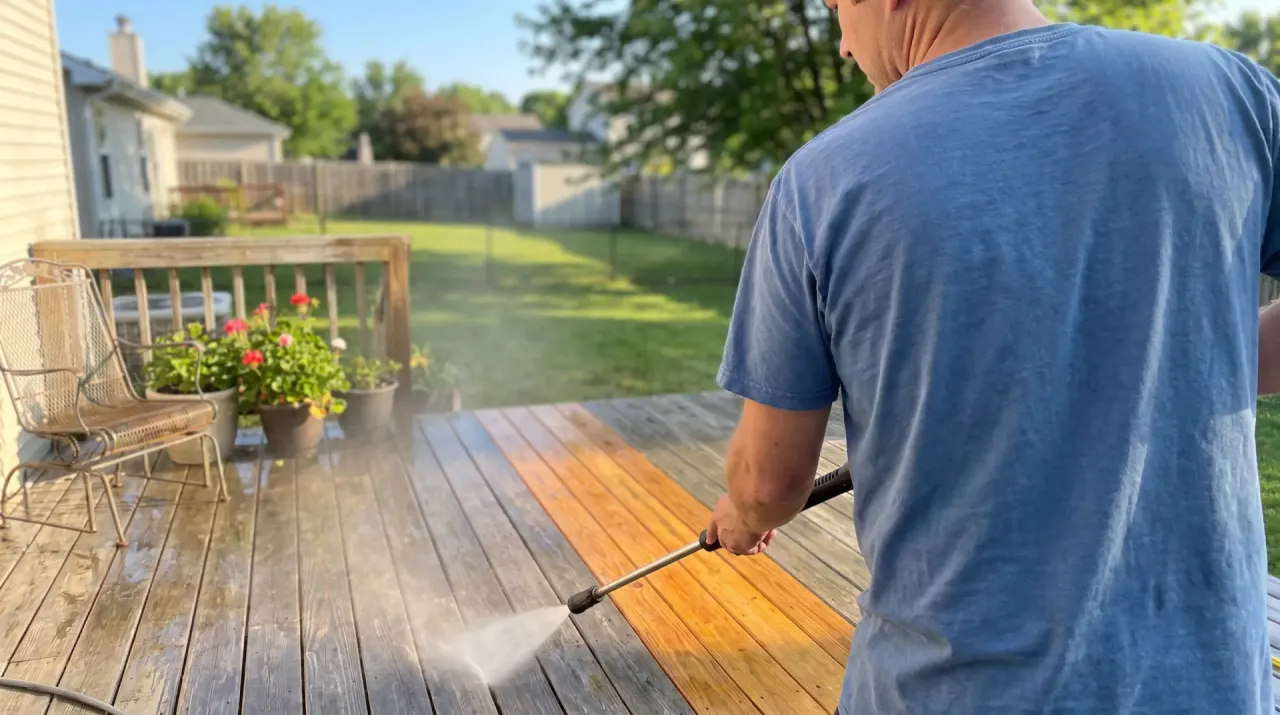
Gas handhelds typically measure around 70 to 80 dB at 50 feet, and at the operator's ear they are considerably louder. Battery blowers usually run 59 to 68 dB at the same distance. Because the decibel scale is logarithmic, that gap represents a very substantial reduction in sound energy, and the character of the sound differs too — a two-stroke produces low-frequency noise that carries across a neighborhood far better than the higher-pitched fan whine of an electric machine.
This is the practical reason many municipal ordinances distinguish between the two, and it is also the most common thing owners mention after switching: being able to clear a driveway at eight in the morning without an argument. Hearing protection is still sensible on any blower, and mandatory on gas.
Real Cost Over Five Years
Purchase price usually favors gas for equivalent output, particularly in backpack form where the battery equivalent carries a significant premium. Running cost reverses that. Gas consumes fuel, two-stroke oil, spark plugs and air filters every year, and adds the cost of a carburetor clean whenever fuel is left to go stale — which, in a machine used two months a year, is a recurring rather than a rare event. Ethanol-blended pump gas is the usual culprit, and stabilizer or ethanol-free fuel is effectively a running cost of ownership.
Battery running cost is a few dollars of electricity. The offsetting expense is pack replacement somewhere around year five to seven, which is real money and the main argument gas owners make. The way most people neutralize it is by staying inside a battery platform they already own for a mower, string trimmer or drill, so the packs are shared across tools and the blower itself is a bare-tool purchase.
The third option is worth a line. Corded electric is the value champion: $60 to $110 for 400 to 600 CFM, no batteries to age, no fuel, unlimited runtime, and owner reviews consistently describe machines lasting a decade because there is so little to fail. You pay for it by dragging a 100-foot cord, which is fine on a compact lot and miserable on a big one.

The Regulatory Angle
This is increasingly the deciding factor and a lot of buyers do not know about it until after they have bought. California adopted a rule prohibiting the sale of new gas-powered small off-road engines — the category that includes leaf blowers, string trimmers and mowers — with the sales restriction taking effect in 2024. Beyond that, a large and growing number of US municipalities have their own ordinances, ranging from seasonal bans on gas blowers to decibel caps and restricted hours of use, and the specifics vary enormously between neighboring towns.
Existing machines are generally not affected by sales bans, but availability, servicing and resale value are. If you are considering gas, the five-minute check of your own city ordinance is worth doing before you spend the money — occasionally it changes the whole decision. What the common restrictions look like is covered in leaf blower noise rules.
Which One Should You Buy
Buy battery if your yard is under half an acre, you value starting on a trigger pull, noise matters where you live, you already own tools on a battery platform, or your city restricts gas equipment. This covers the large majority of American homeowners, and the picks are ranked in best cordless leaf blower.
Buy gas if you clear half an acre or more of heavy leaf fall, you work for hours at a time, wet matted leaves are your normal condition, or you need the very top of the power range. The harness machines are in best backpack blower.
Buy corded if your yard is small, you want to spend as little as possible, and an extension cord does not bother you. The full field across all three power types is in best leaf blower.
Where to Go Next
Sizing the machine correctly matters more than the power source, and the numbers on the box are explained in CFM vs MPH explained. Whatever you end up with, the habits that keep it alive — battery storage temperature, fuel stabilizer, impeller cleaning — are in leaf blower maintenance, and the cleanup pattern that saves more time than any upgrade is in how to clear leaves fast. Everything sits under the leaf blowers and yard cleanup hub.
We do not buy or physically handle the products we rank — recommendations come from aggregated owner reviews, ratings and expert consensus, and the method is on how we rank.