 Garden

Affiliate Disclosure
Some links on this page are affiliate links. As an Amazon Associate, we earn from qualifying purchases — at no extra cost to you. We do not buy, test, or physically handle the products we cover; our rankings come from aggregated owner reviews, ratings and expert consensus. Commissions never change our verdicts. How we rank · full disclosure.
Buy a handheld if your lot is under about a quarter acre or your sessions are under twenty minutes; buy a backpack above that. That is the honest crossover, and it is set by fatigue rather than by power. A handheld weighs 5 to 11 pounds and you support all of it at arm's length; a backpack weighs 17 to 27 pounds and you support almost none of it, because the harness puts the load on your hips. Beyond about twenty minutes, the handheld's problem is your forearm, not its motor.
Power follows the same logic. Backpack units generally move 600 to 900 CFM against 350 to 600 for consumer handhelds, and the reason is simply that the frame carries the weight of a bigger engine or battery. The designer of a handheld is limited by what a wrist tolerates.
Side by side
| Handheld | Backpack | |
|---|---|---|
| Typical weight | 5–11 lb, all in your hand | 17–27 lb, carried on hips and shoulders |
| Typical airflow | 350–600 CFM | 600–900 CFM (pro models higher) |
| Typical air speed | 110–180 MPH | 150–230 MPH |
| Comfortable session | 10–20 minutes | 1–2 hours |
| Typical price | $40–$220 | $180–$600 |
| Noise at operator ear | 75–95 dBA | 85–105 dBA |
| Time to start work | Seconds | A minute to don and adjust |
| Storage | Shelf or wall hook | Floor space; awkward shape |
| Best lot size | Up to ~1/4 acre | 1/4 acre and up |
The part nobody puts on the box: where the weight sits
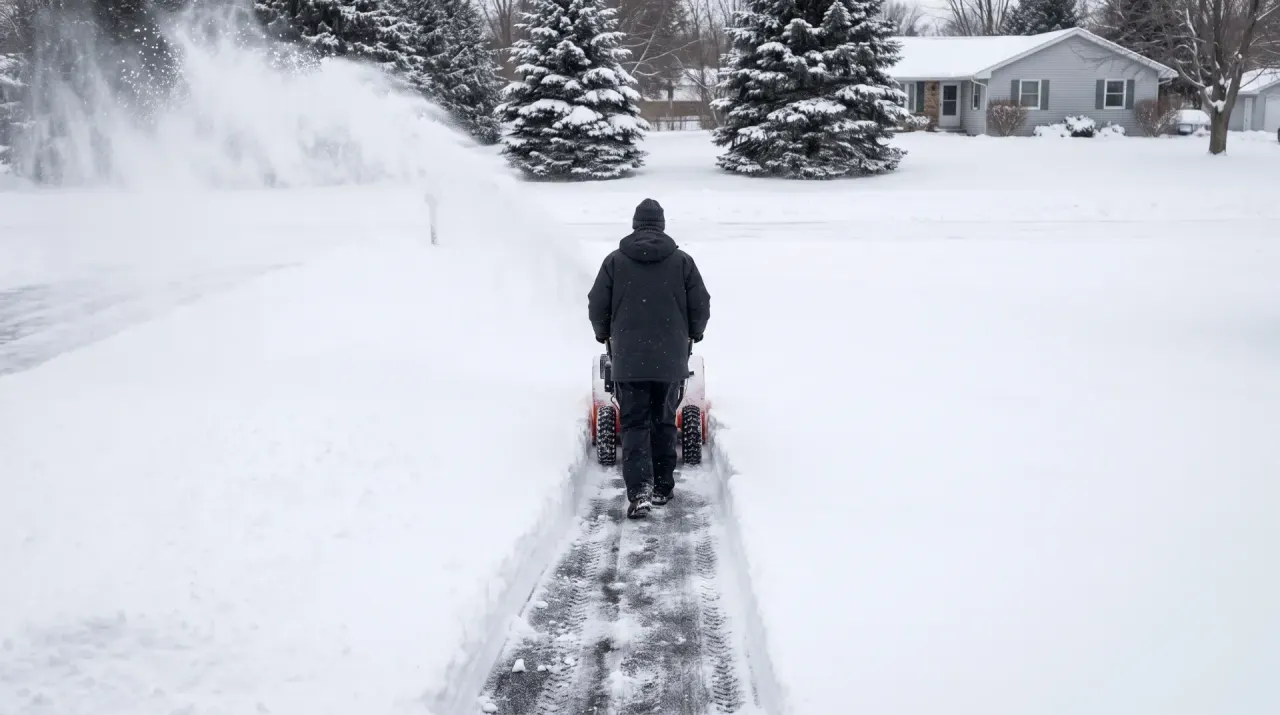
Two blowers can weigh the same and feel completely different, because holding an 8-pound tool out in front of you is not the same as carrying 8 pounds. A handheld loads your wrist, forearm and shoulder continuously, and it does it with the weight offset from your body, which multiplies the effort. This is why owner reviews of powerful handhelds so consistently mention arm fatigue rather than performance: the tool is doing its job, and the operator runs out first.
A backpack moves that load onto a hip belt and shoulder straps, leaving your arm to steer a tube weighing a couple of pounds. Adjusted properly — hip belt tightened first so it carries most of the weight, then the shoulder straps snugged — a 22-pound backpack is genuinely more comfortable for an hour than an 8-pound handheld is for twenty minutes. Adjusted badly, with everything hanging from the shoulders, it is worse than either.
The trade is bulk and the thirty seconds it takes to put on. For a five-minute driveway that overhead is real, which is why plenty of people with big lots own both: a backpack for fall cleanup and a cheap cordless handheld for everything else.
CFM versus MPH, and which one matters
Blowers are marketed on two numbers and most buyers weight them backwards. MPH is air speed at the nozzle — it dislodges what is stuck down. CFM is air volume — it moves the pile. For leaves, CFM does most of the useful work, because clearing a yard is about pushing a large mass of material a long way, not about breaking anything loose. High MPH with low CFM produces a narrow, fast jet that scatters leaves rather than herding them.
The exception is wet, matted leaves and pine needles pressed into turf, where you genuinely need speed to break the mat free before volume can carry it. That combination — high CFM and high MPH — is where backpack blowers earn their price, and it is why the difference between formats shows up most dramatically in a wet fall. There is more on this in CFM vs MPH explained and which matters more.
Matching the tool to the property
| Your situation | Buy | Why |
|---|---|---|
| Townhouse, patio, driveway only | Cordless handheld, 350–450 CFM | Short frequent jobs; grab-and-go beats power |
| Suburban lot under 1/4 acre, few trees | Cordless handheld, 450–600 CFM | Handles fall in 15–20 minute sessions |
| 1/4 to 1/2 acre with mature trees | Backpack, 600–700 CFM | Sessions cross the fatigue threshold |
| 1/2 acre and up, heavy fall | Backpack, 700 CFM+ | Volume of material is the constraint |
| Wet leaves, pine needles, oak | Backpack with high MPH too | Matted debris needs speed as well as volume |
| Gravel drive, workshop, gutters | Handheld | Precision and one-handed control matter more |
| Shoulder, wrist or back problems | Backpack, or a wheeled blower | Load off the arm entirely; try one on first |
| Noise-restricted neighborhood | Battery, either format | Many municipalities restrict gas blowers by hours or outright |
That last row is worth checking before you buy anything. A growing number of US cities and some states restrict gas leaf blowers by season, time of day, or outright, and a gas backpack is an expensive purchase to discover is illegal on your street. See leaf blower noise rules and the California situation.
Runtime is the constraint people forget
On battery tools the format changes the arithmetic completely. A cordless handheld running at full power typically empties a 4Ah battery in 12 to 20 minutes, which is fine for a driveway and frustrating for a yard — and the fix, a second battery, adds cost and weight you then have to carry. Cordless backpacks solve it differently: the battery sits in the harness, so manufacturers fit far larger packs than anyone would hold at arm's length, and 45 to 90 minutes of continuous runtime becomes realistic.
Gas reverses the comparison. A handheld gas blower holds enough fuel for roughly 30 to 45 minutes and refuels in seconds; a gas backpack runs 45 to 75 minutes on a tank. Neither has a runtime problem, which is precisely why gas hung on so long in the backpack class — for a contractor clearing lots all day, a fuel can beats a charger.
The practical consequence is that a handheld's real session limit is usually whichever comes first: your forearm at about twenty minutes, or the battery at about fifteen. Those two numbers landing in the same place is not a coincidence — it is how the category is designed.
Noise: the reason to wear protection with either
Manufacturers usually quote a decibel figure measured at 50 feet, which is the neighbor's experience, not yours. At the operator's ear a gas backpack commonly runs 95 to 105 dBA and a battery model 85 to 95 — and the harness puts the engine directly behind your head.
For context, OSHA's occupational noise limits set a permissible exposure of 90 dBA averaged over eight hours, with a hearing-conservation action level of 85 dBA, while NIOSH recommends a lower 85 dBA limit. Those are workplace averages rather than homeowner rules, but the underlying physics is the same: the relationship between level and damage is exponential, so safe exposure time falls sharply as the level climbs. An hour behind a gas backpack is a meaningful exposure, and noise-induced hearing loss is permanent and cumulative. Muffs or plugs cost a few dollars. Eye protection matters too — blowers throw grit and small stones.
So which should you buy?
Handheld if the yard is small, the jobs are short, storage is tight, or the budget is the constraint. A good cordless handheld is the most-used yard tool many households own, precisely because there is no friction in picking it up. Start at the best cordless leaf blowers or, if price is the driver, the best budget leaf blowers.
Backpack if the lot is a quarter acre or more, the fall is heavy, or you have been finishing cleanups with a sore forearm. It transforms a dreaded annual chore rather than merely speeding it up. See the best backpack blowers, and if your leaves are usually wet and matted, the picks for wet leaves.
Still deciding on power source rather than format? Gas vs battery covers that separately, and how to clear leaves fast is worth reading whichever you buy — technique makes more difference than most people expect.
We never buy or physically test the products we rank — verdicts come from aggregated owner reviews, published specifications and public standards. Method: how we rank. Hub: leaf blowers & yard cleanup.