 Garden


Affiliate Disclosure
Some links on this page are affiliate links. As an Amazon Associate, we earn from qualifying purchases — at no extra cost to you. We do not buy, test, or physically handle the products we cover; our rankings come from aggregated owner reviews, ratings and expert consensus. Commissions never change our verdicts. How we rank · full disclosure.
Mulch the leaves into the lawn wherever you can — shredded leaves break down over winter and return nitrogen, carbon and organic matter to the soil, and turf research has consistently found the practice improves density and reduces spring weed pressure. Bag only when the layer is too heavy or too wet to reduce to a thin scattering, because a dense wet mat blocks light and holds moisture against the crowns all winter. The test: after mulching you should see grass through the shredded material.
What Shredded Leaves Actually Do for a Lawn
Fallen leaves are not waste. They are the material a deciduous forest has used to build topsoil for as long as there have been forests, and a lawn under a maple is a simplified version of the same system.
They return nutrients. Leaves contain nitrogen, potassium, phosphorus and a long list of micronutrients that the tree drew up from the soil over the growing season. Bagging exports all of it. Mulching returns most of it — the shredded material decomposes over winter and the nutrients become available to turf in spring, offsetting a portion of what you would otherwise apply from a bag.
They add organic matter and carbon. This is the larger benefit and the slower one. Organic matter improves soil structure, water-holding capacity and cation exchange — the soil's ability to hold nutrients where roots can reach them. It is the single hardest thing to add to an established lawn, and leaves supply it free every fall.
They feed soil biology. Earthworms consume leaf litter and drag it down into their burrows, which is how organic matter reaches the root zone rather than sitting on top. The burrows themselves improve drainage and relieve compaction. A lawn with active earthworm populations needs less aeration, and leaf litter is what supports them.
They suppress spring weeds. Multi-year turf trials at land-grant universities have reported reduced dandelion and crabgrass pressure in plots where leaves were mulched in over consecutive falls, alongside improved turf density. The mechanism is thought to combine physical seedbed disruption with the improvement in turf competitiveness. Thicker turf outcompetes weeds, which is the same principle behind mowing high — covered in how to get rid of crabgrass.
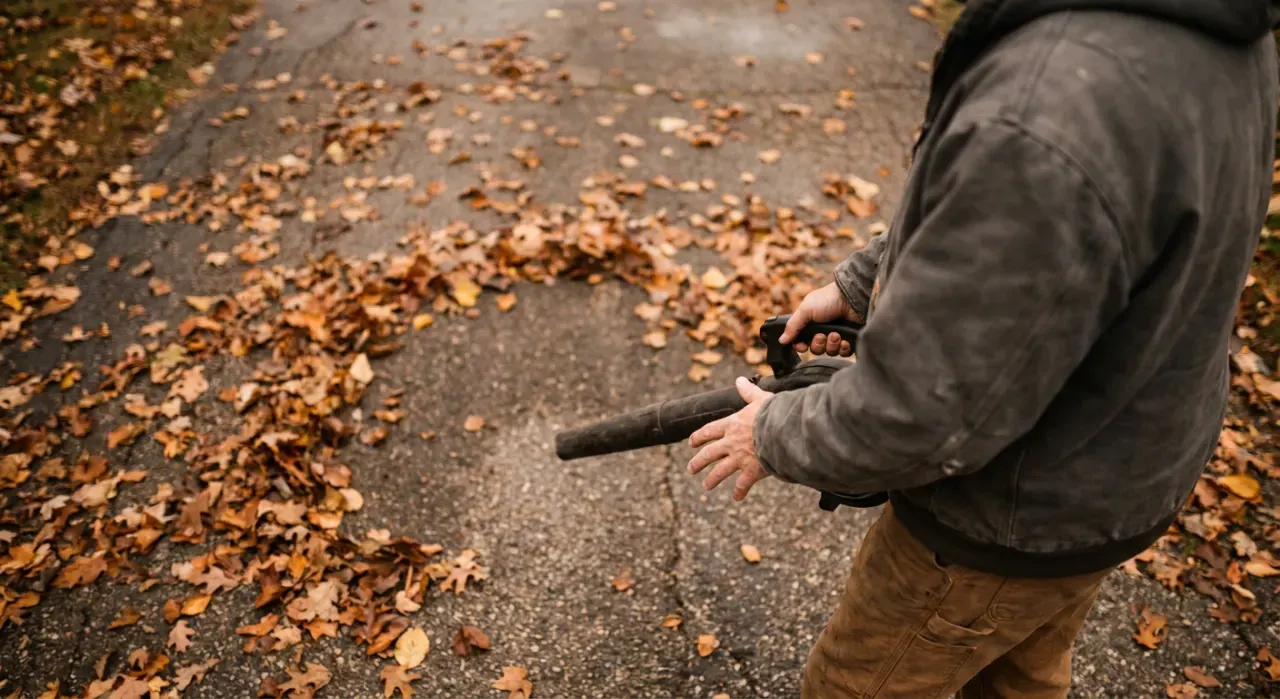
When It Smothers Instead
The agronomy only works if the material breaks down. Three conditions turn a benefit into damage, and they are the legitimate case for bagging.
Whole leaves rather than shredded. Intact leaves — especially broad flat ones like sycamore, Norway maple and oak — overlap into a continuous sheet that sheds water and blocks light completely. Shredding into pieces roughly dime-sized breaks that seal, lets air and light through to the crowns, and multiplies the surface area available to decomposers, which is what makes winter breakdown possible at all.
Depth beyond what the turf can absorb. A layer that remains visibly continuous after mulching is too much. Grass needs light on its crowns through winter, particularly in the mild spells when cool-season turf is still photosynthesizing.
Wet material going into a wet winter. A saturated mat holds moisture against the crowns for months, and that is the condition that produces snow mold, crown rot and the dead patches people find in March. In the Pacific Northwest, the upper Midwest and anywhere with reliable snow cover, this deserves more caution than the general advice implies.
The practical field test needs no measuring: after mulching, look down and see whether grass is visible through the shredded material across the whole area. If it is, you are done. If the surface is still covered, take another pass, and if a second pass does not clear it, remove the excess.
How to Mulch Leaves Properly
Getting the technique right is the difference between a lawn that absorbs a heavy fall and one that ends up smothered.
Mulch dry leaves. Dry material shreds finely and disperses; wet leaves clump, clog the deck and come out in wads. A day of drying is worth more than any equipment change.
Do it often, not once. Mulching a moderate scattering every week through the fall is far easier and far more effective than attacking a six-inch pile in November. Little and often is the whole method.
Raise the deck and slow down. A higher cutting height gives the leaves room to circulate under the deck and be cut repeatedly, which is where shredding actually happens. Walking slower has the same effect.
Take two or three passes, crossing your previous direction. Each pass reduces particle size further.
Keep the blade sharp. A dull blade tears rather than cuts and shreds poorly, and it damages the grass at the same time.
A mulching blade and plug help but are not essential. Most rotary mowers mulch adequately with the bag off and the chute closed. A dedicated mulching blade with additional cutting surfaces improves the result noticeably for very little money.
Feed nitrogen alongside. Decomposing leaves are carbon-rich, and soil microbes drawing nitrogen to break them down can briefly compete with the turf. A normal fall nitrogen application covers this and is good practice regardless.
The Three Options Compared
| Mulch into lawn | Collect for beds and compost | Bag for collection | |
|---|---|---|---|
| Effort | Lowest — one mowing pass | Moderate | Highest |
| Cost | None | None | Bags, and disposal fees in some cities |
| Soil benefit | Direct to the lawn | Directed where you want it | None — exported |
| Volume handled | Moderate layers | Any amount | Any amount |
| Risk | Smothering if overdone | Minimal | None to the lawn |
| Best when | Leaves are dry and the layer is manageable | You have beds, a heap or a vegetable garden | Heavy wet fall, or diseased foliage |
The middle column is the one most people overlook. Leaves you do collect are the best free mulch available for planting beds — two to three inches of shredded leaves suppresses the large majority of annual weed germination, holds moisture and breaks down into leaf mold that improves soil structure better than almost anything you can buy. That case is made in killing weeds without chemicals.
Leaves are also the classic brown ingredient for a compost pile: high in carbon, easy to stockpile in fall, and the thing most home compost heaps are short of all summer. Stockpiling a few bags of shredded leaves in October gives you browns to balance grass clippings and kitchen scraps through the following season, and ratios and bins are covered in the composting and soil hub.
The Exceptions Worth Knowing
Black walnut leaves contain juglone, which inhibits growth in a number of sensitive plants. On turf it is not a practical problem, but do not use walnut leaf mulch around tomatoes, peppers, eggplant or many ornamentals.
Diseased foliage — apple or crabapple leaves carrying scab, for example — should be removed rather than mulched or composted, since a home heap rarely reaches temperatures that reliably kill pathogens.
Oak leaves are slower to break down than maple or ash because they are tougher and more lignin-rich, so they need finer shredding and a bit more patience. The frequently repeated claim that they acidify soil meaningfully is overstated — the effect on established soil pH is small.
Very heavy fall. Under mature oaks or a stand of maples, some yards genuinely produce more leaf than the lawn can absorb. Mulch what the turf can take, move the rest to beds and the compost heap, and bag only what is left after that.
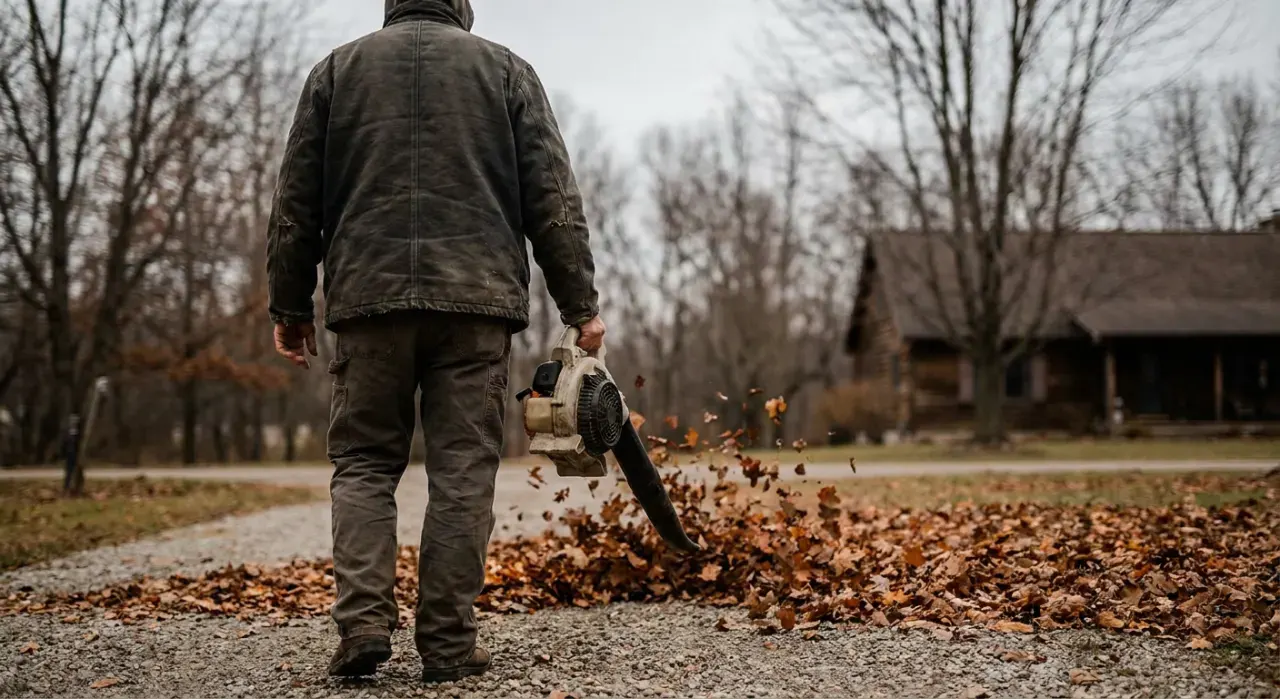
Making the Collection Half Easier
Where you are collecting rather than mulching in place, a vacuum-mulcher earns its keep: reduction ratios of roughly 10:1 to 16:1 turn a truck bed of leaves into a couple of bags of shredded material ready to spread. That is the same shredding step that makes leaves good mulch, done in one pass. The picks are in best leaf vacuum and mulcher, and the recurring owner complaint to plan around is that wet leaves and stray twigs jam the impeller — blow the bulk into a pile first, then vacuum the pile.
For moving volume, two tarps beat a stack of bags by a wide margin, and the rest of the sequence that makes fall cleanup fast is in how to clear leaves fast.
Where to Go Next
If your machine is the bottleneck, the numbers that predict how fast a yard clears are explained in CFM vs MPH explained, and the ranked field is in best leaf blower. Keeping whatever you own running is covered in leaf blower maintenance. Everything sits under the leaf blowers and yard cleanup hub.
We do not buy or physically handle the products we rank — recommendations come from aggregated owner reviews, ratings and expert consensus, and the method is on how we rank.