 Garden

Affiliate Disclosure
Some links on this page are affiliate links. As an Amazon Associate, we earn from qualifying purchases — at no extra cost to you. We do not buy, test, or physically handle the products we cover; our rankings come from aggregated owner reviews, ratings and expert consensus. Commissions never change our verdicts. How we rank · full disclosure.
The short version: this page ranks on vent simplicity, ash management and forgiving temperature control — the three things that decide whether a first charcoal cook goes well. Beginners rarely fail at cooking. They fail because they cannot tell how hot the grill is, because ash smothers the bottom vent and kills the fire, and because they run out of coals mid-cook. Rank on those and the Weber Master-Touch wins, because it is the only one here that solves all three.
That is a different question from the one our best charcoal grill roundup answers. That page weighs damper control, build quality, ash handling and what owners say five years on across every experience level, and it lands on the Original Kettle Premium — a superb grill and, on value across a whole buying population, the right answer. Ask instead which grill stops a first-timer failing, and the hinged grate and lid holder stop being conveniences and start being the difference between a finished dinner and a rescue mission indoors.
The Three Ways a Beginner Cook Goes Wrong
Each of these is a design problem with a design fix, which is exactly why they drive this ranking.
| What goes wrong | Why it happens | The feature that fixes it |
|---|---|---|
| You cannot tell how hot it is | No gauge, so you cook by guesswork and by poking at the food | Built-in lid thermometer |
| The fire dies halfway through | Ash piles up over the bottom vent and strangles the airflow | One-touch ash sweep plus a removable catch pan |
| You run out of fuel mid-cook | Adding coals means lifting hot food and a hot grate off first | Hinged cooking grate you drop charcoal through |
| Nowhere to put the hot lid | It ends up on the grass, on the table, or balanced on a plant pot | Tuck-Away lid holder on the bowl |
Notice what is not on that list: cooking area, searing power, smoking ability, brand prestige. Those matter later. None of them rescues a cook where the fire has quietly gone out under a blanket of ash.
Top Picks at a Glance
Our #1 Pick: Weber Master-Touch 22-Inch
Run the three failure modes against every grill on this page and only one answers all three.
You cannot tell how hot it is. The Master-Touch has a lid thermometer, so the first thing you do is stop guessing. That alone changes the character of learning charcoal, because a temperature you can see is a temperature you can adjust deliberately instead of by superstition.
The fire dies halfway through. The one-touch system sweeps ash off the bottom vent with a single lever and drops it into a large removable catcher. Ash accumulation over the bottom damper is the most under-appreciated cause of a cook going cold, precisely because it happens invisibly — the fire does not go out dramatically, it just fades. Sweeping it clear takes two seconds and the catcher means you are not chasing ash across the patio afterwards.
You run out of fuel mid-cook. The hinged grate lifts at the edges so you drop fresh charcoal straight down onto the fire without touching the food. On any cook longer than about an hour this stops being a convenience and becomes the difference between carrying on and unloading everything onto a plate while the grill cools.
Then there is the Tuck-Away lid holder, which hooks the lid onto the side of the bowl. It sounds like a footnote and it is not: a hot lid with nowhere to go is a small crisis the first few times, and it is why people set them on lawns and scorch a circle into the grass.
The honest weakness is price. This is the most expensive kettle in the ranking, and the Original Kettle Premium directly below gives you the thermometer and the same ash system for meaningfully less. If your budget is tight, take the Premium without a second thought — you are giving up the hinged grate and the lid holder, not the fundamentals.
Check price on Amazon → (paid link)
The Ranked Field

Best for a first grill that removes every common beginner mistake at once
- Built-in lid thermometer — you stop cooking by guesswork
- One-touch ash sweep into a large removable catcher
- Hinged grate to add coals without lifting the food off
- Tuck-Away lid holder, so the hot lid is not on the lawn
Why buy it: it is the only grill here that answers all three beginner failure modes — not knowing the temperature, ash choking the bottom vent, and running out of fuel mid-cook. Every one of those is a design problem, and this is the one design that solves all of them.
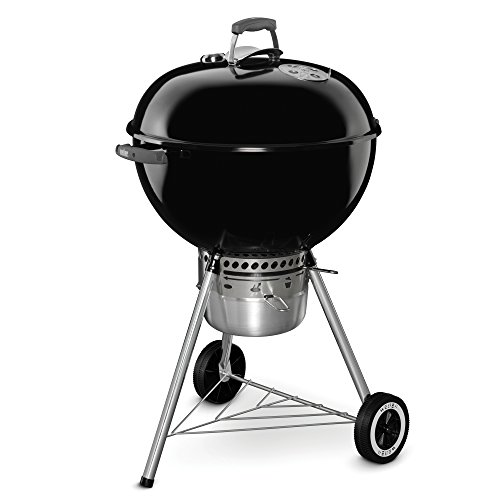
Best for the same thermometer and the same ash system for noticeably less
- Built-in lid thermometer, same as the Master-Touch
- One-touch ash sweep with a sealed hanging ash catcher
- Airtight-enough dampers to genuinely hold a temperature
- No hinged grate and no lid holder — the two things you give up
Why buy it: two of the three failure modes solved for meaningfully less money. You know your temperature and the ash never chokes the bottom vent; you just have to lift the whole grate to add coals, and find somewhere to put the lid.

Best for the correct vent and ash design at the lowest price
- Same two-vent control and same 22-inch bowl
- One-touch cleaning system sweeps ash off the bottom vent
- Open aluminum ash pan rather than a sealed catcher
- No lid thermometer at all — budget for a separate one
Why buy it: the cheapest route to the right design, with one honest catch: there is no thermometer, so you are cooking blind until you buy one. Add a decent probe or a lid gauge and the saving over the Premium shrinks considerably.

Best for learning fire management where a mistake costs almost nothing
- Identical two-vent logic on a 14-inch scale
- A bag of charcoal lasts a very long time
- Light enough to carry with one hand
- No ash catcher — you tip it out
Why buy it: the low-stakes way to learn the one skill that matters, which is managing airflow. Small fires are cheap fires, so a ruined cook costs a handful of briquettes rather than an afternoon and a family dinner.

Best for insulation that holds a temperature almost without you
- Insulated walls hold a settled temperature with very little input
- Built-in thermometer and top and bottom dampers
- Cast iron grates and a locking lid
- Overshoots easily and cools down slowly — open vents in small steps
Why buy it: genuinely forgiving in a way a thin-walled grill is not: once the temperature settles, insulation keeps it there while you go and deal with the salad. The catch is the other direction — open the vents too far and it climbs past your target and takes a long time to come back.

Best for the steadiest held temperature here, once you know how to set it
- Ceramic body holds the most stable temperature in this field
- Outstanding fuel economy from a small load of lump charcoal
- Stainless grate and heat deflectors for indirect cooking
- Slow to respond to a vent change — the opposite of forgiving while learning
Why buy it: the most stable temperature on this page once it is set, and the least stable learning experience getting there. Ceramic reacts to a vent change over many minutes, so a beginner overshooting has a long, patient wait rather than a quick correction — plus the price and the weight.
Quick Comparison
| Product | Best for | Rating | Price | Buy |
|---|---|---|---|---|
| Weber Master-Touch Charcoal Grill, 22-Inch | Answers All Three Failure Modes | — | Check (paid link) | |
| Weber Original Kettle Premium Charcoal Grill, 22-Inch | Best Value on the Same Design | — | Check (paid link) | |
| Weber Original Kettle Charcoal Grill, 22-Inch | Cheapest Way Into the Right Design | — | Check (paid link) | |
| Weber Smokey Joe Portable Charcoal Grill, 14-Inch | Best Low-Stakes Practice Grill | — | Check (paid link) | |
| Char-Griller AKORN Jr Portable Kamado Charcoal Grill and Smoker | Most Forgiving Once It Settles | — | Check (paid link) | |
| Kamado Joe Joe Jr 13.5-inch Portable Ceramic Charcoal Grill | Most Stable, Longest Feedback Loop | — | Check (paid link) |
Scored Against the Three Failure Modes
| Grill | Lid thermometer | Ash sweep and catcher | Hinged grate | Temperature forgiveness |
|---|---|---|---|---|
| Weber Master-Touch 22-Inch | Yes | Yes, large catcher | Yes | Good, responds in minutes |
| Weber Original Kettle Premium | Yes | Yes, sealed catcher | No | Good, responds in minutes |
| Weber Original Kettle | No | Sweep yes, open pan | No | Good, responds in minutes |
| Weber Smokey Joe 14-Inch | No | No catcher, tip it out | No | Fast to react, low stakes |
| Char-Griller AKORN Jr | Yes | Ash pan | No | Holds heat well, overshoots easily |
| Kamado Joe Joe Jr | Yes | Ash tool and pan | No | Most stable, slowest to correct |
The Vent Lesson Nobody Tells Beginners
Bottom vent controls the fire. Top vent controls the smoke and the fine tuning. Air comes in at the bottom, feeds the coals and decides how hard they burn; it leaves at the top, and how far you open that damper controls how quickly heat and smoke escape and lets you settle on a target. Close both and the fire goes out, which is also the trick for saving unburned charcoal.
The rule that matters more than either of them: make small adjustments and then wait. A charcoal grill answers over minutes, not seconds. New grillers open a vent, see nothing happen, open it further, then panic and close everything — and spend the whole afternoon chasing a temperature that is always responding to the change before last. Move a damper a small amount, give it five minutes, then look again.
Two more habits that make the first month easier. Light with a chimney starter rather than fluid, because evenly lit coals are what make a predictable fire possible at all — see how long a charcoal chimney takes to light. If you do use starter fluid, NFPA is clear that you should never add more to coals that are already lit. And bank all the coals to one side to build a two-zone fire, so there is always a cooler half of the grate to move food to when something flares.
How We Rank
We never buy or cook on these grills. For a beginner ranking specifically we weight knowing your temperature first, because guesswork spoils more first cooks than anything else; then ash management, since a choked bottom vent kills a fire invisibly and ash hassle is what stops people using a grill again; then the ability to add fuel without unloading the food; then how forgiving the body is, meaning how it behaves when you get a vent setting wrong. Aggregated owner ratings and review volume sit alongside those, weighted toward reviews from self-described first-time grillers. Prices were checked at the time of writing. Full method: how we rank.
The Grills, Reviewed
1. Weber Master-Touch 22-Inch — Answers All Three Failure Modes
Covered above. Thermometer, one-touch ash sweep into a big removable catcher, hinged grate, and a lid holder so the lid is not on the lawn. Owners praise: the hinged grate on longer cooks and how clean the ash system keeps the whole business. Owners gripe about: the price relative to the Premium, given that the bowl and the cooking are the same. Check price (paid link).
2. Weber Original Kettle Premium 22-Inch — Best Value on the Same Design
Two of the three failure modes solved for meaningfully less money. You get the lid thermometer, so you always know where you are, and the one-touch sweep with a sealed hanging ash catcher, so the bottom vent stays clear and the ash does not blow across the patio. It is our #1 on the main charcoal grill page, where value across all experience levels carries more weight than the specific beginner failure modes do.
What you give up is the hinged grate — adding coals means lifting the whole grate with tongs while the food is on it — and the lid holder. Neither is fatal, both are annoying, and together they are the reason it sits second here rather than first. Check price (paid link).
3. Weber Original Kettle 22-Inch — Cheapest Way Into the Right Design
The same bowl, the same two-vent logic and the same one-touch ash sweep, at the lowest price of the three. The ash catcher is an open aluminum pan rather than a sealed one, which is a windy-day nuisance rather than a cooking problem.
The honest caveat is the thermometer, or the absence of one. There is no gauge at all, which puts you straight back into the first failure mode: cooking by guesswork. You can fix it for a modest sum with a probe thermometer through the top vent — arguably a more accurate reading than a lid gauge anyway — but once you have bought one, the saving over the Premium has shrunk noticeably. Buy this if you already own a thermometer, or if the budget genuinely will not stretch. Check price (paid link).
4. Weber Smokey Joe 14-Inch — Best Low-Stakes Practice Grill
The argument for this one is not features, it is stakes. It runs on the same two-vent logic as its bigger relatives, on a scale where a bag of charcoal lasts and lasts and a ruined cook costs almost nothing. If the thing standing between you and charcoal is a fear of wasting good food in front of people, a small grill you practice on for a few weekends is a better purchase than a large one you are nervous about lighting.
The honest caveats: it is genuinely too small to cook for more than two, and there is no ash catcher — you tip the bowl out. Treat it as a teaching tool, a balcony grill or a travel grill and it is excellent; treat it as a family grill and it will disappoint. Check price (paid link).
5. Char-Griller AKORN Jr — Most Forgiving Once It Settles
This is the genuinely forgiving one on the third criterion, and it is worth understanding why. Insulated walls mean the body itself stores heat, so once a temperature has settled it stays there with very little input from you — small breezes, a cool evening and an inattentive cook all matter far less than they do on a thin-walled grill. For someone still learning, a grill that does not drift the moment you look away is a real advantage.
The honest caveat runs in the other direction. The same insulation means it overshoots easily and comes back down slowly. Open the vents too far while it is climbing and you will sail past your target and then wait a long time for it to fall. The rule is to open the dampers in small increments and give it several minutes to answer before touching them again — the same patience the kettles ask for, with a longer memory. Check price (paid link).
6. Kamado Joe Joe Jr — Most Stable, Longest Feedback Loop
The most stable temperature on this page once it is set, and superb fuel economy: ceramic holds heat so well that a small load of lump charcoal runs a long, low cook without much intervention. As a cooking instrument it is the best-built thing here.
The honest caveats are price, weight and the feedback loop, and the last one is the reason it ranks sixth on a beginner page rather than first on any other. Ceramic answers a vent change over many minutes, so the cycle of adjust, observe, learn — which is how anyone actually learns to run a charcoal fire — is stretched out enormously. That is the opposite of forgiving when you are still building intuition. Superb second grill; demanding first one. Check price (paid link).
The One Grill We Removed From This Ranking
A cheap barrel grill with an offset firebox looks like the beginner bargain of the category: an enormous cooking area, a smoker attached, and a price below the mid-range kettles. It is the hardest charcoal grill here to control, and it does not belong in a beginner ranking.
Thin steel is the root of it. A thin-walled barrel loses heat to every gust of wind, so the temperature swings with the weather instead of holding where you set it — the exact opposite of the forgiveness this page is ranking for. The offset firebox adds a second problem: the fire is at one end, so the chamber is much hotter at that end and you have to learn where the useful zones are before you can cook evenly. And smoke leaks around the lid and the doors on almost every budget offset until the owner seals them with gasket tape, which is a well-known modification and not a beginner-friendly welcome.
None of that makes them bad grills for someone who already reads a fire well. It makes them a poor first purchase. Learn airflow on a kettle, then buy the offset when you know what you are asking it to do — our main charcoal grill roundup covers that route with the trade-offs stated plainly.
What Beginners Actually Struggle With
Cooking blind. No thermometer means guesswork, and guesswork means scorched outsides and raw middles. A lid gauge or a probe is the first accessory, not an optional one.
The fire fading and nobody knowing why. Almost always ash over the bottom vent. Sweep it before you light, and again on any long cook.
Chasing the temperature. Constant vent fiddling. Small change, five minutes, then look.
Lighter fluid. Chemical taste, easy to overdo, and unevenly lit coals that make the fire unpredictable. A chimney starter solves all three.
Skipping the two-zone fire. Coals spread across the whole grate leaves nowhere to move food when it flares. Bank them to one side from the very first cook.
How to Choose Your First Charcoal Grill
Work down the three failure modes and buy the grill that closes the most of them within your budget.
Can you see the temperature? If the grill has no thermometer, add the cost of one to its price before you compare. This is the difference between the Original Kettle and the Premium, and it is why the gap between them is smaller than it looks.
Can you clear ash off the bottom vent easily? A one-touch sweep and a catcher that lifts away is the whole answer. Grills that make ash a chore get used less, which is the quietest way a first grill fails.
Can you add coals without unloading the food? Only the hinged grate does this, and it is worth more the longer you cook. If you plan on burgers and nothing else, you can live without it; if you plan on a chicken or ribs, you will want it by the second attempt.
Then match the body to your patience. A kettle responds in minutes, which is the right feedback loop while you are learning. An insulated kamado is more forgiving once settled but punishes an overshoot with a long wait. Ceramic is the most stable and the slowest to answer. And skip the thin-steel offset barrel entirely for now, whatever the cooking area on the listing says.
Whichever you choose, buy a chimney starter with it. It is the cheapest thing in this article and it changes more about the experience than any feature above. And wherever it stands, keep it outdoors and well clear of the house, deck railings and overhanging branches, which is the same clearance NFPA recommends for every charcoal grill.
The Verdict
Ranked on the three things that actually spoil a beginner cook — not knowing the temperature, ash choking the fire, and running out of coals with the food on the grill — the Weber Master-Touch is the one to buy, because it is the only grill here that answers all three, with a lid holder thrown in for the moment you are holding something hot and looking around. Take the Original Kettle Premium for the same thermometer and ash system at a lower price, the Original Kettle if the budget is tight and you will buy a thermometer separately, and the Smokey Joe if you would rather practice where mistakes are cheap. The AKORN Jr is the forgiving one once it settles; the Kamado Joe Jr is the most stable and the least patient with learners.
Rank the same category on damper control, build and long-term value across every experience level and a different grill wins — that is our best charcoal grill page. Check price on Amazon → (paid link)
More from this hub: outdoor living & grills · chimney lighting time · seasoning grill grates · how we rank.