 Garden

Affiliate Disclosure
Some links on this page are affiliate links. As an Amazon Associate, we earn from qualifying purchases — at no extra cost to you. We do not buy, test, or physically handle the products we cover; our rankings come from aggregated owner reviews, ratings and expert consensus. Commissions never change our verdicts. How we rank · full disclosure.
A charcoal chimney takes about 15 to 20 minutes to bring coals to the ready-to-cook stage — the top layer glowing orange under a light coat of gray ash. Lump charcoal is a bit quicker, around 12 to 15 minutes; standard briquettes run 15 to 25. Cold air, wind, damp or old charcoal and a chimney packed too tightly all push it toward the long end. The signal to pour is gray ash on top, not the flames you will see early on. Get the timing right and the coals stay hot through the whole cook.
How long by charcoal type?
The fuel changes the clock. Lump charcoal is irregular and full of air gaps, so it catches and ashes over fastest. Briquettes are dense and uniform, which is what makes them burn steady and long but also what makes them slower to light. Match-light or pre-treated charcoal is fastest but carries the fluid taste a chimney is meant to avoid.
| Charcoal type | Time to ready | Notes |
|---|---|---|
| Lump charcoal | 12–15 min | Lights fast, burns hotter, less even |
| Standard briquettes | 15–25 min | Slower start, long steady burn |
| Cold or windy day | +5–10 min | Draft and heat loss slow it |
| Damp / old charcoal | 25 min+ or fails | Store charcoal dry |
How do you know it's actually ready?
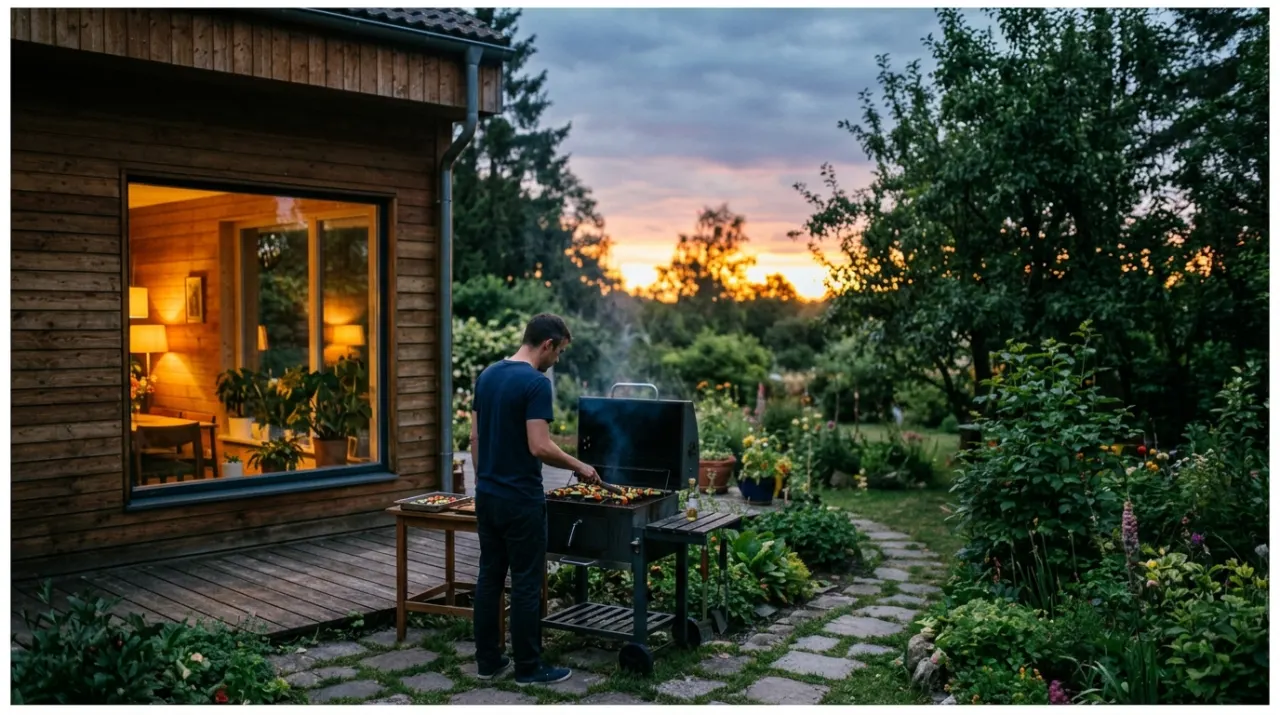
Watch the top of the chimney, not the flames. In the first few minutes you will see flames licking out the top — that is normal and means the fire is climbing. Ready is when those flames die back and the top coals glow orange under a coat of pale gray ash. If you pour while the top is still black, half your charcoal is unlit and the fire will sag halfway through cooking. The whole-load tell is strong heat rising off the top and mostly ash-gray color across the surface.
Why is it taking so long?
A chimney runs on convection: air is drawn in through the bottom vents and pulled up through the coals, and anything that blocks that draft slows everything down. The common causes are cold and wind stealing heat, damp or stale charcoal that resists lighting, too little starter material underneath, and coals packed so tightly that air cannot rise. The fixes are simple: set the chimney on the cooking grate directly over the grill's open bottom vents, use two crumpled sheets of newspaper or a couple of paraffin fire-starter cubes underneath, keep charcoal stored dry, and do not compress the load. Wet briquettes can double the time or never fully catch.
No lighter fluid, and how much to load
The reason to own a chimney is to skip lighter fluid and the petroleum taste and flare-ups it brings. Crumple two sheets of newspaper into the bottom chamber, or drop in a couple of wax starter cubes, pile the charcoal on top, and light the paper through the side holes. A standard full-size chimney holds about 5 to 6 quarts — roughly 80 to 100 briquettes, enough to fill most of a 22-inch kettle for hot direct cooking. Fill it fully for searing; load it partway for gentler grilling or to get a smoker started before adding more coals.
A chimney pairs with a grill that vents well, so if you are still choosing one, our best charcoal grill picks weight airflow and vent control. And once the coals are poured, the same safety spacing applies as any grill — keep it the right distance from the house.
We do not buy, test or physically handle any product on this site. Timing here reflects aggregated owner reports and manufacturer guidance for chimney starters — see how we rank.
More from this hub: Outdoor Living & Grills · Seasoning cast iron grates · Best charcoal grills · How long a gas grill lasts · How we rank