 Garden

Affiliate Disclosure
Some links on this page are affiliate links. As an Amazon Associate, we earn from qualifying purchases — at no extra cost to you. We do not buy, test, or physically handle the products we cover; our rankings come from aggregated owner reviews, ratings and expert consensus. Commissions never change our verdicts. How we rank · full disclosure.
No. Never grill in a garage, and never with the door open either. Charcoal and propane both produce carbon monoxide, which CDC describes as an odorless, colorless gas that kills without warning — it names charcoal grills specifically among household sources. A garage with an open door is still three walls and a ceiling, and CO builds up faster than the opening clears it. Propane adds a second hazard: leaked gas is heavier than air and pools at floor level. A grill needs open sky above it. There is no ventilation trick that makes this safe.
Why is a garage so dangerous when a grill is fine outdoors?
Outdoors, combustion gases dilute into an effectively infinite volume of air. In a garage they accumulate in a room-sized volume, and carbon monoxide is the one that kills. CDC reports that more than 400 Americans die each year from unintentional CO poisoning not linked to fires, more than 100,000 visit an emergency department, and more than 14,000 are hospitalized (CDC, Carbon Monoxide Poisoning Basics). The CPSC Carbon Monoxide Information Center and EPA both single out unvented fuel-burning appliances in enclosed spaces as a leading cause.
What makes CO different from every other grilling hazard is the absence of warning. There is no smell, no taste, no irritation of the eyes or throat. The first sign is symptoms, and CDC notes those symptoms are commonly mistaken for flu — which is why people go and lie down instead of going outside.
Does an open garage door make it safe?
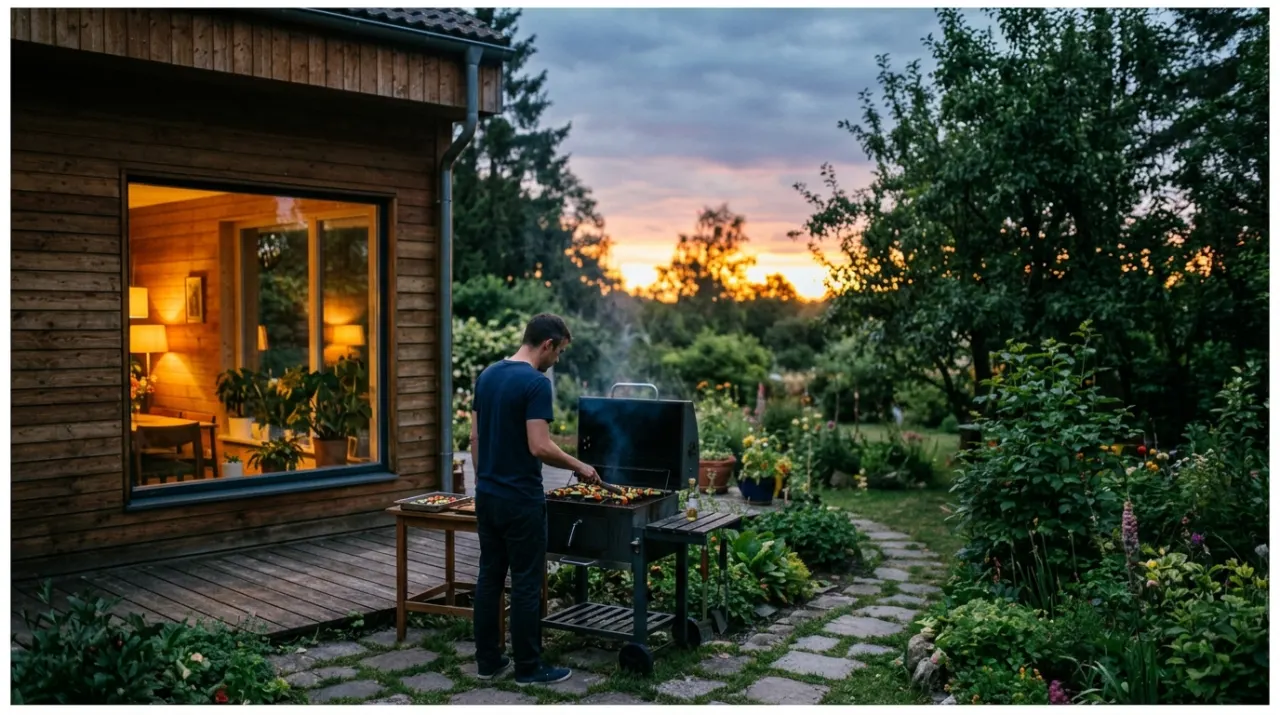
No, and this is the belief that causes most garage grilling deaths. An open door changes a garage from a sealed box to a box with one side missing. The ceiling still traps rising exhaust, the side and rear walls still block cross-flow, and on a still day there is almost no air exchange at all. Wind blowing toward the house actively pushes fumes back in. Grilling just inside the open door also puts the flame under a combustible ceiling with stored gasoline, paint and cardboard nearby.
The practical test is simple: if you cannot see open sky directly above the grill, it is not an outdoor space.
Why is charcoal the one that actually kills people?
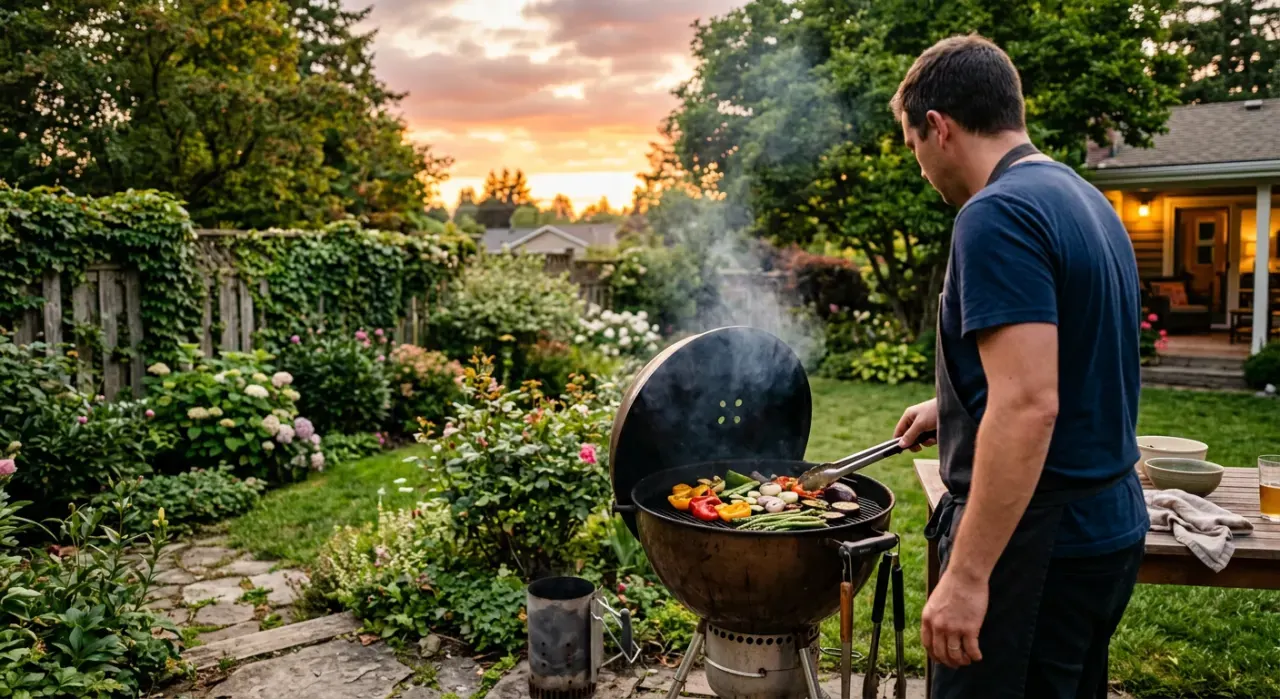
Charcoal produces very high volumes of carbon monoxide relative to the heat it gives off, and — critically — it keeps producing it for hours after cooking ends, the entire time the coals stay warm. A smoldering, nearly-dead-looking bed of coals is still generating CO.
That is why the classic fatal scenario is not someone cooking dinner in a garage. It is someone finishing a cookout outdoors and then wheeling the still-warm grill into the garage or a shed to get it out of the rain, or carrying a hibachi indoors to keep warm. The grill is not lit. The danger is not over. Let coals burn out completely outdoors, close the vents to smother them, and leave the grill outside overnight — see how to put out a charcoal grill.
Does propane have a separate risk?
Yes, two of them. Propane combustion produces carbon monoxide like any other fuel, so the CO hazard is identical. But propane also presents an explosion risk that charcoal does not: it is heavier than air, so any leaked gas sinks and collects at floor level in an enclosed space rather than dispersing upward and away. A garage floor is exactly where it pools, and the ignition source can be trivial — a water heater pilot light, a garage door opener, a light switch, a static spark.
For the same reason, propane tanks must be stored outdoors and upright, never in a garage, basement, shed or vehicle. See leaving a propane tank outside in winter.
Where can you grill when the weather is bad?
| Location | Charcoal | Propane / pellet | Electric |
|---|---|---|---|
| Open yard, deck or patio | Yes | Yes | Yes |
| Under a large patio umbrella, sides open | No | No | Yes |
| Covered patio, carport, pergola with a solid roof | No | No | Yes |
| Garage, open door | No | No | Yes, if the appliance is rated for it |
| Screened porch or enclosed gazebo | No | No | Yes, if rated for it |
| Apartment or condo balcony | Usually prohibited by fire code | Usually prohibited by fire code | Commonly the only type allowed |
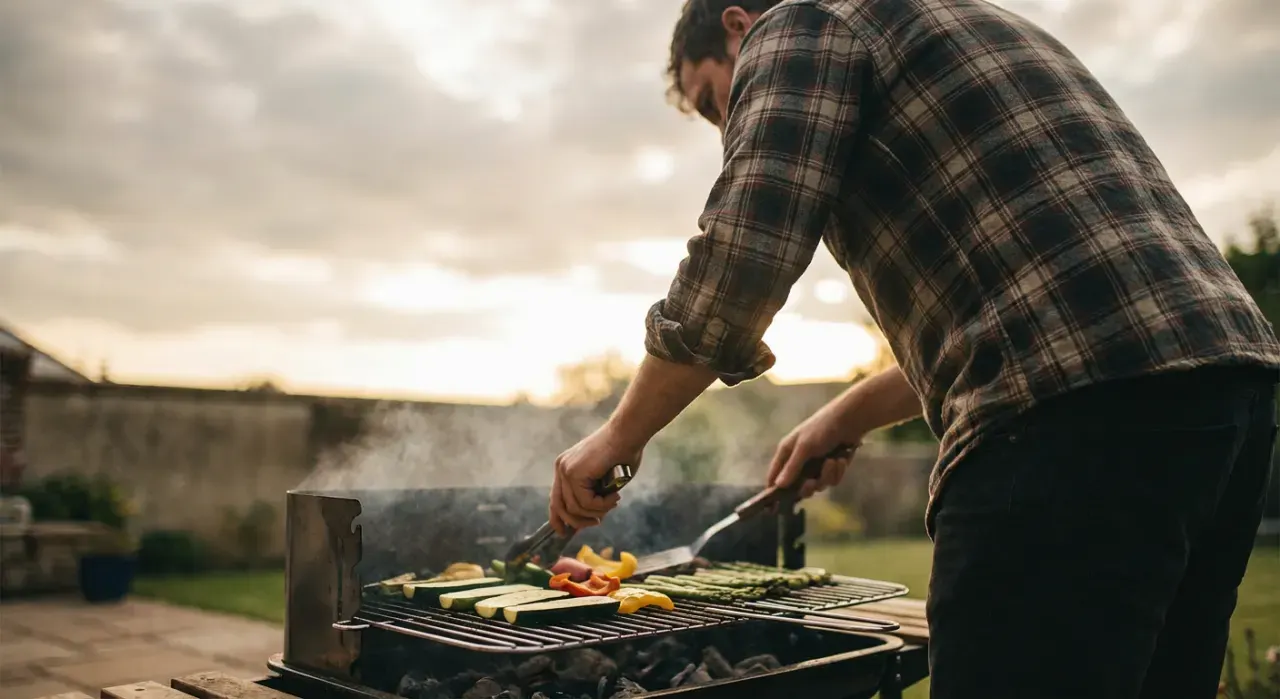
The workable answers in bad weather are: grill in the rain under an umbrella you hold while the grill itself sits in open air, use a lidded grill that cooks fine while you stand somewhere dry, or cook indoors on a stovetop grill pan or an indoor electric grill designed for the purpose. Fire services generally call for at least 10 feet between a grill and the house with clear air above — our grill clearance guide covers the distances.
What should you do if you suspect CO exposure?
Get everyone and every pet outside into fresh air immediately, then call 911 from outside. Do not go back in to open windows or turn things off. Tell responders that a grill or fuel-burning appliance may have been used indoors, because that changes how they treat it. Symptoms to act on: headache, dizziness, weakness, nausea, chest pain or confusion — especially if more than one person, or a pet, is affected at the same time.
Every home should have working CO alarms on each level and near sleeping areas, tested monthly and replaced according to the manufacturer's date stamp. A CO alarm in an attached garage is a sensible addition, but treat it as a backstop, not a permission slip.
More from this hub: outdoor living & grills · how far a grill should be from the house · how to put out a charcoal grill · gas vs charcoal · how we rank.