 Garden

Affiliate Disclosure
Some links on this page are affiliate links. As an Amazon Associate, we earn from qualifying purchases — at no extra cost to you. We do not buy, test, or physically handle the products we cover; our rankings come from aggregated owner reviews, ratings and expert consensus. Commissions never change our verdicts. How we rank · full disclosure.
Cold weather does not damage outdoor equipment — trapped moisture, grease and standing water do. The end-of-season job is therefore: deep clean the grill and dry it completely, oil the cast iron, disconnect the propane tank and store it outdoors and upright, bring in every cushion, cover or store the furniture with water shedding off rather than pooling, drain and disconnect the hoses, shut off the outdoor faucet, and clean out the fire pit. Budget an afternoon.
Almost every spring complaint — the rusted burner, the mildewed cushion, the split faucet, the cover full of ice — traces back to one of those steps being skipped in October.
The grill
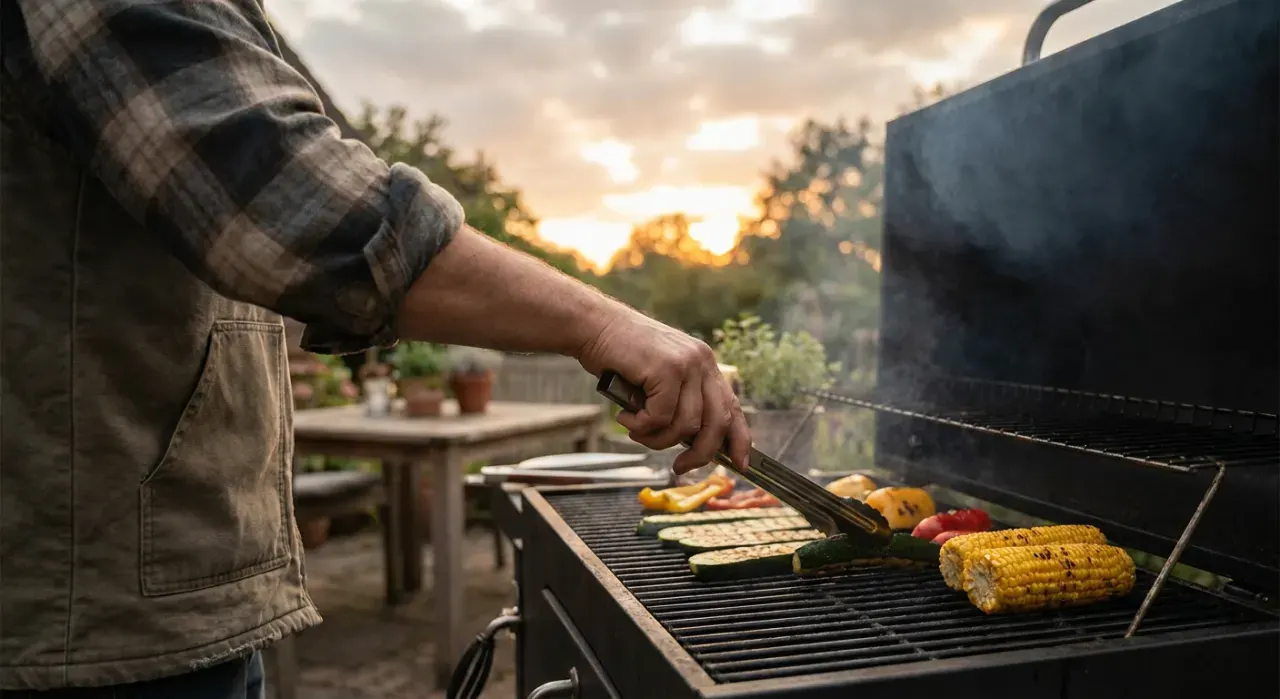
- Burn off, then scrape. Run a gas grill on high for 15 minutes with the lid closed to carbonize residue, then brush the grates while they are still hot. On a charcoal grill, let it burn out fully and clean cold.
- Deep clean the interior. Remove grates and flavorizer bars or heat tents, scrape the firebox, and clear the grease tray and drip pan completely. Old grease attracts rodents and insects looking for winter shelter, and a grill full of nesting material is a fire waiting for spring.
- Check and clear the burner ports. Blocked ports produce uneven flame and, in the worst case, incomplete combustion. A stiff wire or a paperclip clears them. Look for rust-through while you are in there — this is the right moment to order replacements for spring.
- Wash and dry every surface. Warm soapy water on the exterior, a stainless cleaner on stainless, and then dry it properly. Moisture left under a cover is what causes the rust people blame on winter.
- Oil the cast iron. A thin coat of cooking oil on cast iron grates keeps rust off through a damp winter. Do not oil enameled or stainless grates.
- Disconnect the propane tank. Close the valve, disconnect the hose, and fit the plastic safety cap over the valve outlet.
- Protect the hose and regulator. If the grill stays outside, wrap the disconnected hose end in a plastic bag so insects cannot nest in it — a spider web inside a burner tube is a classic reason a grill will not light in April.
- Cover it, or store it. A vented, strapped cover on a dry grill is the outdoor answer. A garage or shed is better if you have the room — but only for the grill itself, never for the propane tank.
Never bring a propane tank indoors. Not into a garage, a shed, a basement or an enclosed porch, in any season. Propane is heavier than air and a slow leak in an enclosed space pools at floor level instead of dispersing. Store it outdoors, upright, shaded, away from the house and from any ignition source. And when the grill comes back into service, never operate it indoors, in a garage or in any partially enclosed space — grills produce carbon monoxide, which is odorless, and it accumulates in enclosed spaces to lethal concentrations.

Best for a full-size gas grill left outdoors through winter
- Heavy-duty waterproof fabric with a fade and UV resistant coating
- Fits most 3 to 4 burner grills up to 60 inches wide
- Padded handles and adjustable straps to stop it lifting in wind
- Vents to reduce trapped condensation
Why buy it: the failure mode of a cheap cover is trapped moisture rusting the grill it was meant to protect, which is why vents and a proper strap matter more than the fabric weight.
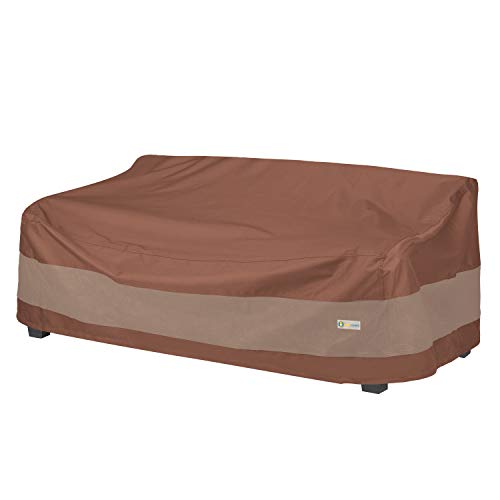
Best for outdoor seating that cannot be moved into storage
- Waterproof fabric with a water-repellent finish
- Air vents to reduce condensation and wind lofting
- Click-close straps and elastic hem for a snug fit
- Built-in support pole included to shed water rather than pool it
Why buy it: the support pole is the part that matters — a cover that ponds water freezes into a sheet of ice and stretches or splits by February.
We do not buy or physically handle the products we rank — verdicts come from aggregated owner ratings and expert consensus, described on how we rank. The ranked fields are in the best gas grill covers and the best patio furniture covers.
Patio furniture
Cushions come in, without exception. Fabric that freezes wet grows mildew that no amount of spring scrubbing removes, and the foam breaks down through repeated freeze-thaw cycles. Wash them per the care label, dry them completely — genuinely completely, because damp foam in a sealed bag is worse than leaving them out — and store them somewhere dry and ventilated. A deck box works if it drains; a sealed plastic tote in a damp garage does not.
Frames depend on what they are made of:
| Material | Winter approach | Why |
|---|---|---|
| Aluminum | Cover outdoors | Does not rust; only the fasteners and welds need care |
| HDPE resin (Adirondack style) | Cover outdoors, or leave it | Genuinely weatherproof; stack or strap it against wind |
| Teak and hardwood | Cover outdoors | Weathers to gray harmlessly; keep it off wet ground |
| Powder-coated steel | Store inside if possible | Any chip lets water in and it rusts from beneath the coating |
| Resin wicker | Store inside | Freeze-thaw cycles make the strands brittle and they crack |
| Glass tabletops | Store inside, flat | Thermal stress and ice load crack tempered glass |
| Umbrellas | Store inside, dry and closed loosely | Wet fabric stored tightly furled mildews; wind destroys open umbrellas |
If you are covering rather than storing, the detail that decides whether the cover works is water shedding. A flat cover collects rain, the rain freezes into a heavy sheet, and by February the seams have stretched or split. Use a cover with a support pole or a peaked fit, make sure it has air vents so condensation escapes and wind cannot balloon it, and strap it down properly. Lift it on a dry day now and then to air what is underneath.
Water: hoses, faucets and anything that holds it
This is the item on the list with the largest possible repair bill, because a split pipe inside a wall does not announce itself until spring.
- Disconnect every hose. A hose left attached traps water in the faucet, which freezes, expands and can split the faucet body or the pipe behind it. Frost-free sillcocks are only frost-free with the hose removed.
- Drain and coil the hoses and store them indoors. Water left inside freezes and cracks the lining.
- Shut off the interior valve that serves each outdoor faucet, then open the outside spigot to drain the line, and leave it open.
- Fit insulated faucet covers as a second layer, particularly on any spigot on a north-facing wall.
- Empty everything that holds water — birdbaths, fountains, planters, watering cans, buckets, an outdoor sink trap. Ceramic and terracotta crack when water inside them freezes.
- Drain and store hose timers, splitters and drip irrigation, all of which are cheap and all of which split.
Fire pits and heaters
- Wood-burning fire pits: remove every scrap of ash — it is hygroscopic and corrosive, and left wet over winter it eats a steel bowl from the inside. Confirm the ash is completely cold before it goes into a metal container. Then dry the bowl, oil bare steel lightly, and cover it or turn it upside down so it does not fill with water.
- Propane fire pits and heaters: disconnect and store the tank outdoors and upright, cap the valve, cover the burner assembly, and bag the hose end against insects.
- Fire pit tables with glass media: the media traps water which freezes and cracks the glass. Either cover it thoroughly or scoop the media into a dry container for the winter.
- Electric patio heaters: store indoors. Outdoor rating does not mean designed to sit under four months of snow.
The whole list
- Burn off, scrape and deep clean the grill, including the grease tray.
- Clear the burner ports and check for rust-through.
- Dry every surface; oil the cast iron grates.
- Disconnect the propane tank, cap it, store it outdoors and upright.
- Bag the hose end so insects cannot nest in it.
- Fit a vented, strapped grill cover, or move the grill under cover.
- Wash, dry and store all cushions indoors.
- Store wicker, glass tops, umbrellas and chipped steel inside; cover the rest with a peaked, vented, strapped cover.
- Disconnect, drain and store hoses; shut the interior valve and drain the outdoor faucet.
- Empty birdbaths, fountains, planters and anything else that holds water.
- Clean out the fire pit and cover or invert it.
- Note anything that needs replacing — burners, grates, a cover, a cushion set — and order it in the off-season when it is cheaper.
Where to go next
For the deep-clean detail, how to clean a gas grill and how to clean a charcoal grill. On furniture specifically, how to store patio furniture in winter and how to clean outdoor cushions. On the tank, can you leave a propane tank outside in winter. And if the grill needs parts before spring, how to replace gas grill burners. Everything else sits under the outdoor living and grills hub.