 Garden

Affiliate Disclosure
Some links on this page are affiliate links. As an Amazon Associate, we earn from qualifying purchases — at no extra cost to you. We do not buy, test, or physically handle the products we cover; our rankings come from aggregated owner reviews, ratings and expert consensus. Commissions never change our verdicts. How we rank · full disclosure.
Start with the sentence the whole category avoids printing. Colorado State University Extension's fact sheet 6.520, Preventing Deer Damage, puts it in nine words: "Adequate fencing to exclude deer is the only sure way to control deer damage." A repellent reduces browsing pressure. It does not build a wall.
That is not a reason to skip repellents. It is the reason to buy them properly — as a rotation of two unlike products, applied on a schedule, started before the damage rather than after. Everything below is ranked on that basis: cost per gallon of finished spray, how the formula behaves in rain, and whether owners keep using it a year later.
Top Picks at a Glance
Contact, Area, and Why It Matters Which You Buy
CSU's fact sheet divides the category cleanly: "two types of deer repellents are contact repellents and area repellents." Contact repellents go on the plant and make it taste wrong — the deer has to sample it to learn. Area repellents smell offensive enough that deer avoid the vicinity before biting anything. The distinction decides where each is useful.
| Active class | Type | Rain resistance | Best used on |
|---|---|---|---|
| Putrescent egg solids + garlic | Contact and area | Good once fully cured | Ornamentals, shrubs, general yard |
| Dried blood (blood meal) | Area | Very good; overwinters | Dormant shrubs, young trees |
| Capsaicin (hot pepper) | Contact | Fair; washes off | Specific plants under active browsing |
| Mint / essential oils | Area and contact | Fair | Near patios, decks and windows |
| Multi-ingredient blends | Both | Good | Rotation partner for an egg-based spray |
CSU singles out the egg-based approach — roughly 20% egg to 80% water — as "one of the most effective repellents", which is why every commercial product built on putrescent egg solids sits near the top of this category. It also notes the mixture "must be reapplied in about 30 days" and should be applied "on a dry day with temperatures above freezing."
Our #1 Pick: Liquid Fence Concentrate
Liquid Fence is not the pleasantest product here to use, and it is not the longest-lasting on woody plants. We still rank the concentrate first, for two reasons that outrank both of those.
The first is chemistry. Putrescent egg solids plus garlic is the active class extension guidance rates highest, and it works on both channels at once — the smell deters at a distance and the taste deters a deer that pushes through anyway. Owners consistently report a clear drop in browsing within a day or two of the first application, and consistently report that it fades on the schedule you would expect from any coating exposed to weather.
The second is arithmetic, and it is the reason we specify the concentrate rather than the ready-to-use gallon. A repellent only works if you reapply it, and the reason people stop reapplying is cost. One 32 oz bottle of concentrate yields several gallons of finished spray for roughly the price of a single ready-to-use gallon. That difference is what turns a bottle bought in April into a routine that survives to September.
The honest complaints: it smells genuinely awful for the first several hours, which matters if you are spraying near a door or a deck; it needs a dry window to cure; and like every repellent, it stops working on foliage that grew after you sprayed.
Check price on Amazon → (paid link)
The Ranked Field

Best for the backbone of a rotation — cheapest per gallon of finished spray
- Putrescent egg solids and garlic — the class extension guidance rates highest
- One 32 oz bottle makes several gallons of finished spray
- Rain-resistant once fully dry
- Labeled for ornamentals and edibles
Why buy it: egg-based odor-and-taste repellents are the class university extension services single out as most effective, and the concentrate is what makes reapplying every two to three weeks affordable enough to actually happen.

Best for gardens near a patio, deck or open window
- Peppermint-scented formula rather than a rotten-egg base
- Concentrate dilutes for wide coverage
- Marketed for use up to harvest on edibles
- Sticks to foliage once dry
Why buy it: the honest trade-off in this category is that the most effective smells are the ones you least want near the house — this is the one owners keep using because it does not make the deck unusable for a day.

Best for alternating with an egg-based spray to prevent habituation
- Multi-ingredient blend rather than one active
- Holds up well to rain and irrigation once cured
- Concentrate format
- Widely used by municipal and nursery growers
Why buy it: a genuinely different smell profile from Liquid Fence, which is the entire reason to own a second bottle — deer learn any single repellent, and unlike alternation is what keeps both working.

Best for small gardens and container plantings where mixing is not worth it
- No mixing — trigger sprayer on the bottle
- Mint scent, pleasant to apply
- Marketed as safe for plants, pets and pollinators when used as directed
- Also available in a spice formula for rotation
Why buy it: ready-to-use costs several times more per gallon than concentrate, and for a few containers and a border that is a rational trade — the spray you will actually pick up beats the concentrate you keep meaning to mix.

Best for winter protection on woody plants and young trees
- Dried blood powder base — an odor repellent that deters before browsing starts
- Binds to bark and stems and lasts through winter weather
- Standard in nursery and reforestation work
- Ready-to-use in a 1.3 gallon jug
Why buy it: the format that makes sense on dormant shrubs and young trees, where you want one durable late-fall application rather than a spray schedule you will have abandoned by January.

Best for covering a lot of ground with no mixing, or a first bottle to test
- One gallon ready to spray, no dilution
- Same egg-and-garlic active class as the concentrate
- Year-round application per the label
- Wide availability and cheap to replace
Why buy it: the most-owned deer repellent in America and the reason is convenience rather than performance — buy it once to see whether repellents help in your yard, then switch to concentrate for the ongoing cost.
Quick Comparison
| Product | Best for | Rating | Price | Buy |
|---|---|---|---|---|
| Liquid Fence Deer and Rabbit Repellent Concentrate, 32 Ounces | Best Overall | — | Check (paid link) | |
| Deer Out 32 oz Concentrate Deer Repellent | Best Smelling | — | Check (paid link) | |
| Bobbex Concentrated Deer Repellent, 32 oz | Best to Rotate With | — | Check (paid link) | |
| I Must Garden Deer Repellent, 32 oz Mint, Ready to Use Spray | Best Ready-to-Use | — | Check (paid link) | |
| Plantskydd Animal Repellent, Deer and Rabbit, Ready-to-Use Liquid, 1.3 Gallon | Best for Trees and Shrubs | — | Check (paid link) | |
| Liquid Fence Deer and Rabbit Repellent Ready-to-Use Spray, 1 Gallon | Best for Large Areas | — | Check (paid link) |
Why You Should Buy Two Bottles, Not One
This is the single most valuable thing in this article and it is almost never on a product label. Deer habituate to any repellent used continuously. A smell that never precedes anything actually unpleasant becomes background information, and a deer that has walked past your garlic-and-egg spray forty times without consequence stops treating it as a warning.
The fix is alternation, and extension guidance across multiple states says the same thing: switch between at least two products with genuinely different active ingredients, roughly monthly. Unlike is the operative word — two egg-based sprays from different brands are one product as far as the deer is concerned.
| Month | Product | Why |
|---|---|---|
| April | Liquid Fence concentrate | Establish before browsing starts; egg and garlic base |
| May | Bobbex concentrate | Different profile; reapply over spring growth flush |
| June | Liquid Fence concentrate | Back to the strongest formula for peak growth |
| July–August | Deer Out, or I Must Garden mint | Pleasant enough to use near outdoor living areas |
| September | Bobbex concentrate | Rotate again as natural browse begins to thin |
| Late October | Plantskydd on woody plants | One durable application to carry through winter |
Application: Most of the Result Is Here
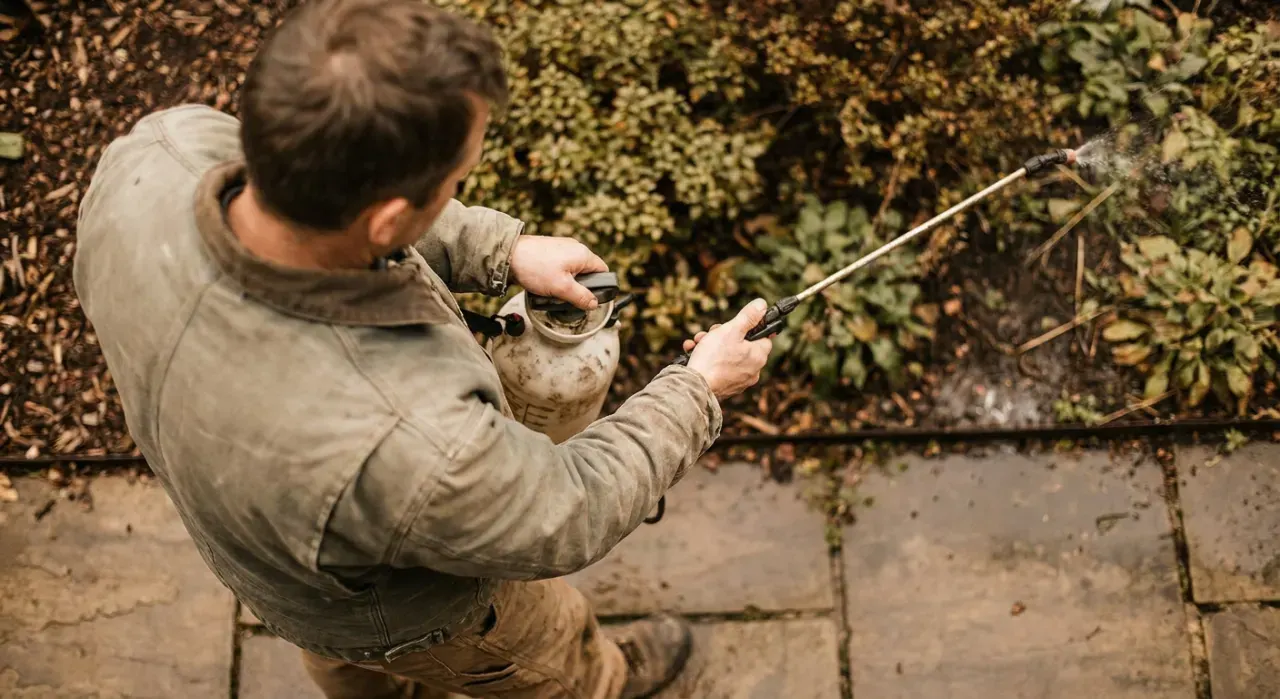
- Spray on a dry day above freezing. A coating that does not cure washes off in the first shower. CSU is specific about this.
- Treat to about 6 feet. That is deer browsing height. Spraying only the lower foliage protects only the lower foliage.
- Cover new growth every two to three weeks in spring. Not because the product expired — because those leaves are new.
- Reapply after significant rain, even with rain-resistant formulations.
- Start before the damage. A deer that has already learned your yard feeds it is much harder to redirect than one that has not tried yet.
- Rotate monthly. Two unlike products, alternating.
How We Rank
We do not buy, test or physically apply these products. Rankings come from aggregated owner ratings across the most-owned deer repellents sold in the US, weighted toward reviews from owners describing a full season rather than a first week, and cross-checked against product labels and university extension guidance on repellent classes and application. Four things carry the weight: active ingredient class, since extension guidance rates egg-based and blood-meal formulations above others; cost per gallon of finished spray, because reapplication cost determines whether a repellent gets used; rain resistance as reported by long-season owners; and usability, including how bad the smell is near a house. Prices were checked at the time of writing. Full method: how we rank.
What Owners Actually Complain About
"Deer ate the plants anyway." By far the most common low review across every brand, and in a significant share of cases the product performed as designed while the expectation was exclusion. A repellent reduces pressure; a fence excludes.
The smell. Egg-based sprays are genuinely unpleasant for several hours. This is not a defect — the smell is the mechanism — but it is a reason to plan where and when you spray.
Washing off. Applied before rain, or before dew, most of it goes. The dry-day rule exists for a reason.
Clogged trigger sprayers. Ready-to-use bottles with particulate formulas block up. Rinse the nozzle after use and store it upright.
Working at first, then not. This is habituation, and it is the single strongest argument for owning two products rather than one.
The Verdict
Buy Liquid Fence concentrate as your primary and Bobbex concentrate as your rotation partner — that pair, alternated monthly and reapplied over new growth, is the most effective thing a spray budget can do. Add Deer Out if you need something you can use near a deck without regretting it, and put Plantskydd on your shrubs and young trees in late fall so they are covered through winter. Then be realistic: if deer pressure in your yard is heavy and constant, the sprays are buying you time, and the answer is in our guide to keeping deer out of a garden — an 8-foot fence, or a two-tiered offset one. Check price on Amazon → (paid link)
More from this hub: Pets at Home · How to keep deer out of a garden · Mulch toxic to dogs · Pet-safe lawn fertilizer · How we rank