 Garden

Affiliate Disclosure
Some links on this page are affiliate links. As an Amazon Associate, we earn from qualifying purchases — at no extra cost to you. We do not buy, test, or physically handle the products we cover; our rankings come from aggregated owner reviews, ratings and expert consensus. Commissions never change our verdicts. How we rank · full disclosure.
Peach leaf curl can only be treated by a dormant-season copper spray applied before the buds swell — once you see the curled leaves, it is too late for this year. Leaf curl on peaches and nectarines is caused by the fungus Taphrina deformans, which infects buds as they open in spring and produces the red, thickened, puckered leaves. No spray reverses infected leaves; the one effective application goes on while the tree is bare and dormant. For the current season, keep the tree healthy and plan that spray for late fall or late winter. Always follow the label.
We do not test or physically handle the plants and products we cover; our guidance draws on horticultural extension research and the aggregated experience in thousands of owner reviews, as explained in how we rank.
What peach leaf curl is and how to confirm it
Peach leaf curl is a fungal disease caused by Taphrina deformans. It affects peaches and nectarines almost exclusively. The fungus overwinters as spores on the bark and around the buds, and in spring, as buds open in cool wet weather, it infects the emerging leaves.
The symptoms are unmistakable once you have seen them. New leaves emerge thickened, puckered and distorted, curling and blistering, often flushed red, pink or purple rather than green. As the disease develops, a whitish, powdery bloom of spores appears on the surface of the distorted tissue. Affected leaves eventually turn yellow or brown and drop, and the tree pushes out a second flush of more normal leaves — a recovery that drains its reserves. Severe cases distort shoots and fruit and, repeated over years, weaken the tree and cut the crop.
The critical biological point is the timing of infection: it happens once, early, as the buds open in cool wet spring weather. By the time the curled leaves are visible, the fungus is already established inside them and beyond the reach of any spray.
This is not tomato leaf curl
Because both problems are searched as "leaf curl," they get badly confused, and the mix-up leads to wasted effort. They are unrelated.
| Feature | Peach leaf curl | Tomato leaf curl |
|---|---|---|
| Cause | Fungus (Taphrina deformans) | Usually heat/water stress; sometimes herbicide or virus |
| Plants | Peaches, nectarines | Tomatoes |
| Look | Thick, red, puckered, blistered leaves | Leaves roll or cup upward, usually stay green |
| Treatment | Dormant copper spray before bud swell | No spray; fix watering, control whiteflies if viral |
If your problem is on a tomato, copper will not help — see how to treat tomato leaf curl for what actually causes it. The rest of this page is about the peach and nectarine disease.
The treatment path for peach leaf curl
The order here is unusual because the only effective spray is a dormant one — everything else is support.
- Accept the timing — Recognize that an in-season spray will not work. If leaves are already curled, this year's control window has passed; your job now is to protect next year's leaves.
- Support the infected tree — Remove the worst curled leaves, water consistently, and give a modest feeding to fuel the healthy second flush the tree will push out.
- Sanitation — Rake up and dispose of fallen distorted leaves to reduce the spore load overwintering around the tree.
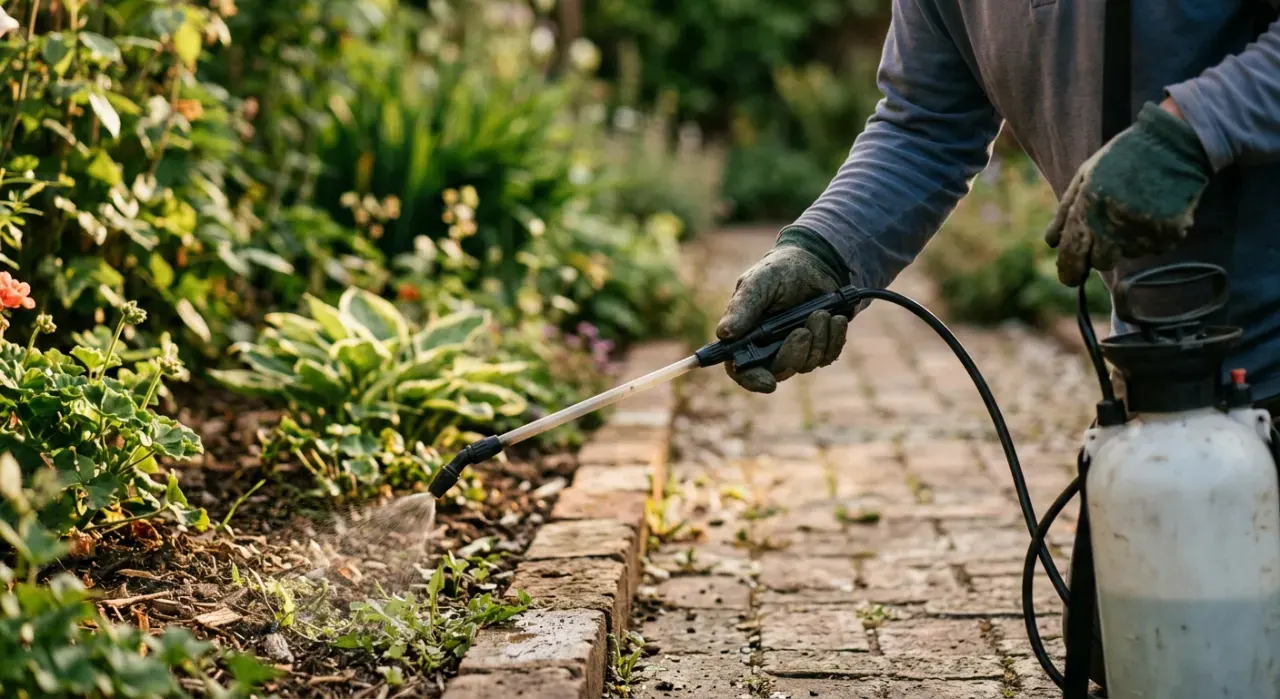
- The dormant copper spray — This is the one that matters. While the tree is fully dormant and before buds swell, spray a fixed-copper product (copper hydroxide, copper sulfate, or Bordeaux mixture) or a labeled chlorothalonil, coating every twig and bud thoroughly. In wet climates, apply once in late fall after leaf drop and again in late winter before bud break.
- Repeat annually — Because the fungus lives on the bark and reinfects each spring, the dormant spray is a yearly job on susceptible trees, not a one-time fix.
Coverage is everything: any bud you miss can still be infected, so wet the whole canopy. And read the label — in the United States the pesticide label is legally binding under FIFRA and states the crop, rate and timing you must follow.
Why the dormant window is the whole game
The reason a fall or late-winter spray works and a spring spray does not comes down to the fungus's one-shot infection. The spores sit on the bark all winter and infect only as the buds open. A fungicide laid down while the tree is bare coats those dormant buds so the fungus cannot get in as they swell and open. Once green tissue emerges and infection has occurred, there is nothing on the outside of the leaf left to protect. This is why gardeners who spray reactively, when they finally notice the curled leaves, get no result — the calendar, not the product, is what determines success.
Resistant varieties and the no-spray route
If you would rather not run an annual spray, plant a resistant variety when you establish or replace a tree. Several peach cultivars carry good resistance to leaf curl (for example, types bred specifically for curl resistance sold by regional nurseries), and starting with one of these largely sidesteps the problem. A resistant tree in a drier-spring climate may need no fungicide at all. When buying, ask the nursery specifically about peach leaf curl resistance for your region, since susceptibility and the local spring weather together decide how much trouble you will have.
Preventing it year to year
- Resistant varieties — the easiest long-term answer when planting or replacing a tree.
- Annual dormant spray — the reliable control on susceptible trees, timed before bud swell.
- Sanitation — clear fallen infected leaves to lower the overwintering spore load.
- Tree vigor — steady watering and appropriate feeding help the tree shrug off a bad year and recover its canopy.
- Site and airflow — a well-pruned, open canopy dries faster and gives the fungus less of the cool wet it needs, though timing of the spray still matters most.
For other fungal leaf diseases that reward good timing and copper, see how to treat rust on plants and how to treat black spot on roses.
Related: Pest & Weed Control hub and how we rank.