 Garden

Affiliate Disclosure
Some links on this page are affiliate links. As an Amazon Associate, we earn from qualifying purchases — at no extra cost to you. We do not buy, test, or physically handle the products we cover; our rankings come from aggregated owner reviews, ratings and expert consensus. Commissions never change our verdicts. How we rank · full disclosure.
The verdict: the 211i Max is the purifier to buy when the room is big and the problem is pets. Its hybrid HEPASilent system moves an unusually high volume of air for the noise it makes, which is the specification that actually matters in an open-plan living space full of dander and hair. It earns its strong rating. The two honest caveats: the headline 3,235 sq ft coverage is quoted at one air change per hour, and proprietary filters make this an ongoing cost rather than a one-time purchase.
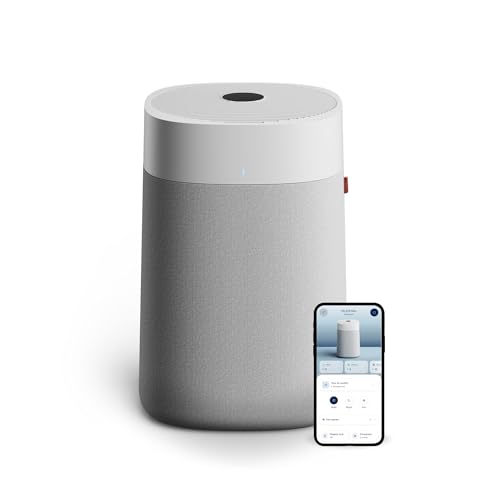
Best for an open-plan living space with shedding pets, where air volume is the real problem
- HEPASilent hybrid filtration moves high volume at low noise
- Built-in particle sensor with auto mode and app reporting
- Washable fabric pre-filter catches pet hair before the main filter
- Quiet enough on low to run overnight in a bedroom
Why buy it: the hybrid electrostatic and mechanical design delivers a very high clean air rate for the noise it makes, which is exactly what a big pet room needs.
What Owners Consistently Praise
The noise-to-airflow ratio is the standout. Owners repeatedly describe running it on medium in a living room without raising their voices, and on low in a bedroom without noticing it. That is the direct consequence of the HEPASilent design: charging particles first means the filter media can be far less dense, so the fan works against much lower resistance than a conventional H13 unit pushing the same volume.
Visible results in pet households. The most common concrete report is the fabric pre-filter turning gray with hair and dust within a fortnight, which is exactly what you want to see — that hair is not reaching the main filter or your lungs. Owners with cats and allergy symptoms consistently rate symptom reduction highly, which lines up with what we cover in do air purifiers help with pet dander.
Auto mode is trusted. The onboard particle sensor drives the fan up when something happens — cooking, a dog shaking itself, a vacuum session — and settles back down afterwards. Owners describe watching the reading spike and recover, and that visible feedback is a large part of why this model is rated as highly as it is.
Design and build get unusual praise. The washable fabric sleeve comes in several colors, the unit looks like furniture rather than an appliance, and there is no filter door to fight with — the whole body lifts off.
What Owners Actually Complain About
Filter cost is the number one gripe by a distance. The main filter is a Blueair-specific part with no meaningful third-party market, and in a heavy-shedding household it needs replacing closer to every six months than every twelve. Over three years the filters cost a significant fraction of the purchase price. Owners who did not budget for that say so bluntly in the review record. Washing the pre-filter sleeve every two to four weeks is the single most effective mitigation.
The coverage claim causes disappointment. Buyers who take 3,235 sq ft at face value and put one unit in the middle of a two-story house report it doing very little. It is not underperforming; it is being asked to do something the number never actually promised. Sized honestly at four to five air changes, it is a large-room machine.
App and Wi-Fi reliability is the second most common complaint. Reports include the unit dropping off the network, the app failing to reconnect after a router change, and firmware updates that reset settings. The purifier keeps working perfectly on its physical controls when this happens, so it is an annoyance rather than a failure, but it drags ratings down.
Top-speed noise is real. Quiet on low and medium does not mean quiet on maximum. At full fan the unit is loud enough that owners turn it down to watch television. Auto mode makes this rare, but it happens.
The status light bothers light-sensitive sleepers. There is a dimming option, but a number of owners still find the indicator visible in a fully dark bedroom and end up covering it.
Footprint and placement. It is a substantial cylinder that needs clear air on all sides, so pushing it into a corner or against a sofa — which is where most people want it — measurably cuts its effectiveness. Owners who report weak results almost always describe an obstructed position.
The electrostatic question. A minority of buyers object on principle to any charged-particle system. Blueair states the unit is ozone-free and it holds CARB certification, so this is a preference rather than a safety finding, but if you want purely mechanical filtration this is not your machine.

Who It Suits — and Who Should Buy Something Else
Buy it if you have an open-plan living area of roughly 400 to 650 square feet, shedding pets, and you care about noise. Nothing in the category delivers this much clean air this quietly, and the washable pre-filter is genuinely well suited to hair.
Buy something else if your priority is litter box ammonia specifically — a unit with a much heavier carbon stage does more for gases, and our air purifier picks for litter smell cover that trade-off. If you want a purely mechanical sealed H13 filter, or you want cheap generic replacement filters, choose a conventional true-HEPA tower instead; the full field is in our best air purifier for pets roundup. And if your room is a bedroom under 300 square feet, you are paying for capacity you cannot use — a smaller unit will be cheaper to buy and to feed.
If the smell you are chasing is dog rather than dander, do air purifiers help with dog smell sets realistic expectations before you spend.
Specifications
| Filtration | HEPASilent hybrid — electrostatic charging plus mechanical media with carbon |
|---|---|
| Stated coverage | Up to 3,235 sq ft at 1 air change per hour |
| Realistic coverage | Roughly 600 to 650 sq ft at allergy-grade air changes |
| Pre-filter | Washable fabric sleeve |
| Sensor | Particulate sensor with auto mode and app reporting |
| Connectivity | Wi-Fi with app; full manual control on the unit |
| Ozone | Stated ozone-free, CARB certified |
| Owner rating | See the verified figure on the card above |
How We Rank
We do not buy, test or physically handle air purifiers. We assemble a verdict from the owner-review record — weighted star average, recurring themes in critical reviews, long-term reports from owners writing after their first filter change — and cross-check it against published specifications and expert consensus. For purifiers this is the honest approach, because the questions that decide satisfaction are filter cost and real coverage, and both only become clear months after purchase. Full method on how we rank.
The Bottom Line
The Blueair Blue Pure 211i Max is one of the strongest large-room purifiers for a pet household, and the owner record backs that up. Size it honestly — think 600 square feet, not 3,235 — give it clear space away from walls, wash the fabric pre-filter every few weeks, and budget for a proprietary filter roughly annually. Do those four things and it is an excellent machine. Ignore them and it will feel expensive and underpowered. The wider field is in our pet air purifier rankings, and the pets at home hub covers the rest of the household picture. Check price on Amazon → (paid link)