 Garden

Affiliate Disclosure
Some links on this page are affiliate links. As an Amazon Associate, we earn from qualifying purchases — at no extra cost to you. We do not buy, test, or physically handle the products we cover; our rankings come from aggregated owner reviews, ratings and expert consensus. Commissions never change our verdicts. How we rank · full disclosure.
Wash a dog bed every 1 to 2 weeks as a general rule, and weekly if your dog sheds heavily, has allergies, goes outside a lot, or the bed sits in a high-traffic spot. Wash it immediately after any accident, or when the dog comes in wet or muddy, or after flea exposure. Machine wash the removable cover in the warmest water the care label allows — hot water is what kills dust mites and flea eggs — with a fragrance-free detergent and no fabric softener. Vacuum off loose hair first, and dry the bed thoroughly to prevent a musty smell.
How often is right for your dog?
The 1-to-2-week baseline moves with how the bed gets used. Match the frequency to the dog and the situation.
| Situation | Wash frequency |
|---|---|
| Average dog, indoor, low shedding | Every 1–2 weeks |
| Heavy shedder, or bed in a busy area | Weekly |
| Dog with allergies or itchy skin | Weekly, hot water |
| Goes outdoors a lot / gets dirty | Weekly, or as needed |
| Rarely used, clean dog | Every 2–4 weeks |
| After an accident, mud, or flea exposure | Immediately |
Between full washes, a quick daily or every-other-day habit keeps things manageable: shake the bed out, vacuum off hair, and spot-clean any marks. Washing a bed cover between the sheets you already run is easy; the buildup that makes it unpleasant only happens when weeks go by untouched.

How do I wash it properly?
The method depends on the bed's construction, so check the care label first.
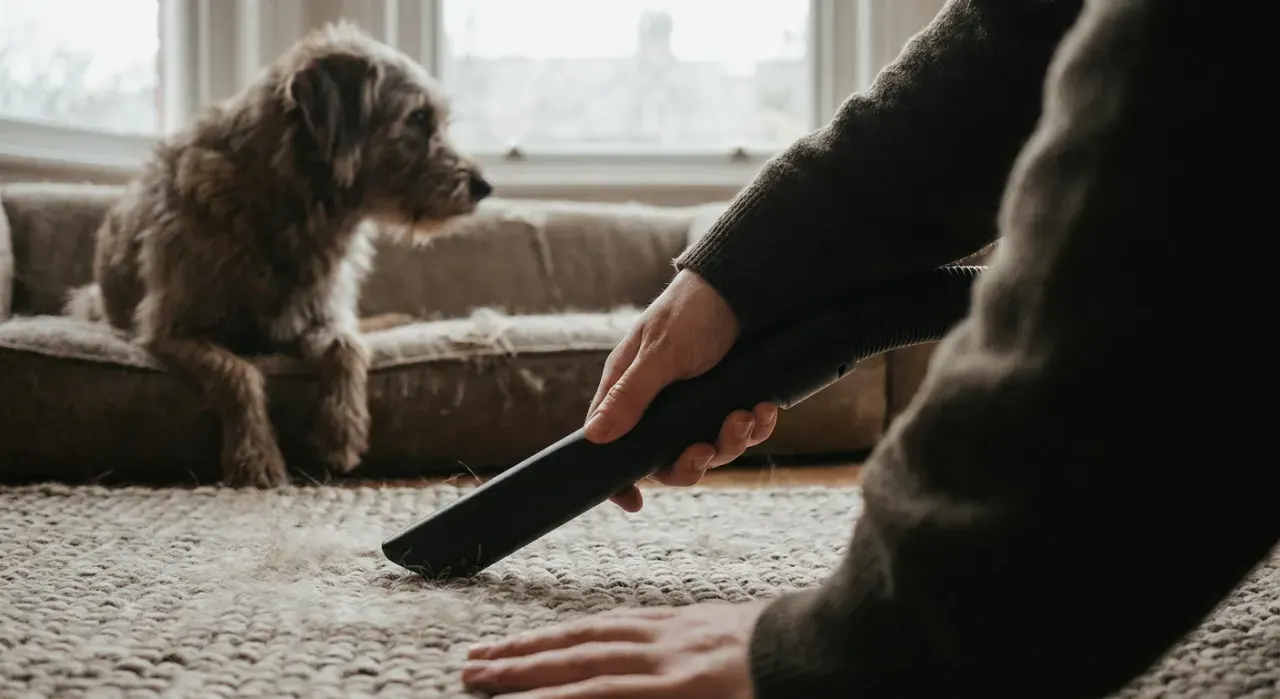
- Remove loose hair. Shake the bed outdoors and vacuum both sides — fur clogs washing machines and blocks drains.
- Pre-treat stains and odor with a pet enzyme cleaner, which breaks down the organic sources of smell rather than masking them. Let it sit — see best enzyme cleaners.
- Wash the cover on the warmest setting the label allows, with a fragrance-free pet-safe detergent and, optionally, half a cup of baking soda. Skip fabric softener, which leaves skin-irritating residue.
- Handle the insert. Foam cores usually cannot go in a home machine — spot-clean and air them. Fiber fill sometimes can; follow the label.
- Dry thoroughly. A hot dryer cycle (if the label permits) adds sanitizing power; make sure the bed is fully dry before the dog uses it, since damp fill turns musty fast.

Why does hot water matter?
Because heat is what actually sanitizes. Dust mites, bacteria, yeast and flea eggs survive a cool wash, and hot water is the most effective way to kill them, which is why the warmest label-safe temperature is the target — especially for a dog with allergies, where dust mites in bedding directly worsen itching. A fragrance-free detergent avoids adding the very irritants you are trying to remove, and a thorough rinse leaves no residue against the dog's skin. If the cover cannot take hot water, a warm wash plus a hot dryer cycle helps close the gap. Frequent hot washing of bedding is also part of controlling fleas once they appear, alongside treating the dog and the home.

What happens if you skip it?
An unwashed bed steadily accumulates shed hair, dander, dead skin, dust mites, bacteria and, if fleas are around, their eggs — turning the one place a dog rests most into a reservoir of irritants. Over weeks that buildup contributes to odor, skin irritation and allergy flare-ups for both the dog and the people in the home. None of it is an emergency, but all of it is easier to prevent with a simple 1-to-2-week routine than to fix once a bed smells or a skin problem starts. Choosing a bed with a removable, machine-washable cover makes the whole job trivial and is worth prioritizing when you buy. This is general care guidance; for any persistent skin or allergy issue, consult your veterinarian.
We never buy, test or physically handle the products we rank. Recommendations come from aggregated owner reviews, star ratings, review volume and expert consensus — see how we rank.
More from this hub: Pets at Home · Best enzyme cleaners · Best air purifier for pets · Washing pet food bowls · How we rank