 Garden

Affiliate Disclosure
Some links on this page are affiliate links. As an Amazon Associate, we earn from qualifying purchases — at no extra cost to you. We do not buy, test, or physically handle the products we cover; our rankings come from aggregated owner reviews, ratings and expert consensus. Commissions never change our verdicts. How we rank · full disclosure.
The verdict: for around $200 the Shark Navigator Lift-Away gives a pet household the three things that matter most — an anti-wrap brushroll, a properly sealed HEPA airpath, and a canister that detaches so stairs and car interiors stop being a chore. It earns its rating rather than exceeding it, because the filters demand monthly attention and Lift-Away mode is noticeably weaker than the upright. Buy it if you have carpet and pets and will wash a filter once a month. Skip it if you will not.
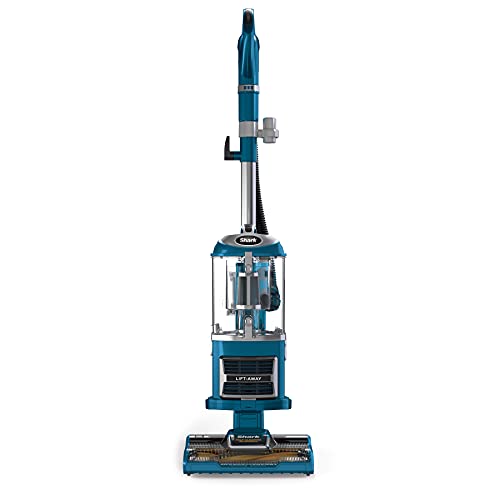
Best for a pet household that wants corded upright power plus a lift-away canister for stairs
- Lift-Away pod detaches to carry up stairs and into cars
- Self-cleaning brushroll designed to resist hair wrap
- Anti-Allergen Complete Seal with a HEPA filter
- Swivel steering and a brushroll shutoff for bare floors
Why buy it: it is the cheapest way to get sealed HEPA filtration, an anti-wrap roller and a detachable canister in one corded machine.
What Owners Consistently Praise
Pickup on carpet is the headline. Owners moving up from an older or cheaper upright describe filling the dust cup on the first pass over carpet they thought was clean, and that reaction appears constantly across the review pool. A corded motor with a driven brushroll is still the most effective way to lift embedded pet hair out of a medium-pile carpet, and this machine does it well.
The Lift-Away pod is the feature people actually credit. One click and the canister comes off the wand, leaving a light unit you can carry up a staircase or out to the car. Owners with split-level homes rate this higher than any cleaning specification, because it removes the two jobs everybody avoids.
Sealed filtration matters in a pet house and reviewers with allergies say so explicitly. The Anti-Allergen Complete Seal is the part that stops fine dander leaking around the filter rather than through it, and it is the reason this model is repeatedly recommended for dander rather than just visible hair. Our guide on whether air purifiers help with pet dander explains why vacuum sealing and air filtration solve two halves of the same problem.
Handling gets steady praise for the price. Swivel steering makes it easy to weave around furniture legs, the brushroll shuts off for hard floors so it stops flinging grit, and the weight in upright mode is manageable for most people. It is a $200 machine that does not feel like one to push.

What Owners Actually Complain About
Loses suction is the top critical review, and it is almost always the filters. Two washable pre-motor filters need rinsing roughly monthly in a pet household, and owners who do not do it report the machine going weak within three to six months and sometimes shutting off mid-clean when the thermal cutout trips. It reads like a build-quality failure and it is a maintenance one, but a design that punishes neglect this hard is a legitimate criticism. Our vacuum filter cleaning guide covers the five-minute routine.
Lift-Away mode is weaker than expected. This is the second-biggest theme. Detach the pod and the hose length plus the non-powered tools mean upholstery and stair work is much less effective than the floor head. Owners who bought it specifically for stairs and did not add the motorized pet tool are consistently disappointed.
Clogs at the neck and in the hose come up often, particularly in homes with long hair or where a sock finds its way in. The airway has several tight bends and a partial blockage kills performance without being obvious. Owners learn to check the elbow behind the floor head first, which is where most clogs sit.
Plastic build and creaks. Reviewers note flexing panels, a dust cup latch that becomes unreliable over time, and hose cuffs that split at the crimp after a year or two of tugging. Nothing sudden, but the machine feels its price after a couple of years and hoses are the most commonly replaced part.
Hair still wraps at the roller ends. The self-cleaning comb works across the middle of the brushroll but does not reach the bearing caps, so long hair accumulates there. Left alone it eventually loads the motor and shortens belt life.
Cord length and dust cup size round out the complaints. The cord suits a room at a time rather than a floor at a time, and a pet household will empty the bin more than once during a full-house clean. Neither is a dealbreaker; both are worth knowing before you buy.

Who It Suits — and Who Should Buy Something Else
Buy it if your home is mostly carpet, you have shedding pets, you want sealed HEPA filtration on a budget, and stairs or a car interior are part of the routine. It is one of the best value-for-money corded uprights in the pet category, and the field it competes in is covered in our best vacuum for pet hair rankings.
Buy something else if convenience is what actually decides whether you vacuum. A cordless stick gets used far more often, and for most people frequency beats peak suction — see our cordless picks. If you want the floor cleaned without you being involved at all, a robot is the honest answer and our robot vacuum picks for pet hair cover it. If your budget is tighter than $200, the budget pet vacuum roundup has machines that give up filtration rather than suction. And if you genuinely will not wash a filter monthly, choose a bagged upright instead — the failure mode is far more forgiving.
Specifications
| Type | Corded upright with detachable Lift-Away canister |
|---|---|
| Brushroll | Self-cleaning, anti-wrap, with bare-floor shutoff |
| Filtration | Anti-Allergen Complete Seal with HEPA post-motor filter |
| Pre-motor filters | Washable foam and felt — monthly in a pet home |
| Steering | Swivel |
| Dust cup | Bagless, tool-free empty |
| Best surface | Low to medium-pile carpet, area rugs, sealed hard floor |
| Owner rating | See the verified figure on the card above |

How We Rank
We do not buy, test or physically handle vacuums. We rank them on what large numbers of owners report over time: the weighted star average, the pattern in critical reviews with shipping complaints separated from mechanical ones, long-term reports at the one- and three-year marks, and expert consensus as a cross-check. For an upright, long-term evidence is the valuable part, because belts, hoses and filter neglect only reveal themselves after months of real use. Full method on how we rank.
The Bottom Line
The Shark Navigator Lift-Away is a genuinely good $200 upright for a pet household that will keep its filters clean. It picks up more than owners expect, the detachable pod solves stairs, and the sealed HEPA path is unusual at this price. The rating reflects the honest weaknesses: filter-sensitive suction, a weak Lift-Away hose mode without the powered tool, and plastic that shows its age. Add the motorized pet tool if stairs are the reason you are buying, put a monthly filter rinse in your calendar, and it will outlast its price. Start at the pets at home hub for the wider picture. Check price on Amazon → (paid link)