 Garden

Affiliate Disclosure
Some links on this page are affiliate links. As an Amazon Associate, we earn from qualifying purchases — at no extra cost to you. We do not buy, test, or physically handle the products we cover; our rankings come from aggregated owner reviews, ratings and expert consensus. Commissions never change our verdicts. How we rank · full disclosure.
A robotic pool cleaner is worth it for most in-ground pool owners and for larger above ground pools: expect $500 to $1,400 upfront, roughly 150 to 200 watts per cycle, and four to six years of service. The case rests on independence — a robot runs on its own low-voltage power supply and filters into its own basket, so it does not force your main pump to high speed and does not load your sand or cartridge filter. The case against is cost per year and the fact that it will not clean the waterline steps as thoroughly as you would by hand.
How does a robot compare with suction and pressure cleaners?
The three cleaner types differ mainly in what powers them, and that decides the running cost far more than the sticker price does.
| Robotic | Suction-side | Pressure-side | |
|---|---|---|---|
| Power source | Own low-voltage supply | Main pump suction | Booster pump |
| Typical price | $500 - $1,400 | $150 - $500 | $400 - $900 |
| Energy per cycle | ~0.3 - 0.4 kWh | Pump at high RPM for hours | Booster ~0.75 kW plus pump |
| Where debris goes | Own filter basket | Pump basket and main filter | Own collection bag |
| Climbs walls | Most models | Some | Rarely |
| Fine silt pickup | Good, 2 to 5 micron on fine cartridges | Depends on main filter | Coarse |
| Effect on main filter | Reduces load | Increases load | Neutral |
| Typical life | 4 - 6 years | 3 - 6 years | 5 - 8 years |
The line that matters most on a modern pool is the energy row. If you have moved to a variable-speed pump specifically to run long and slow, a suction-side cleaner undoes part of that saving by forcing a high-RPM block every day. A robot leaves the pump alone. The energy arithmetic behind that is in how many watts a pool pump uses.
Who gets the most value from one?
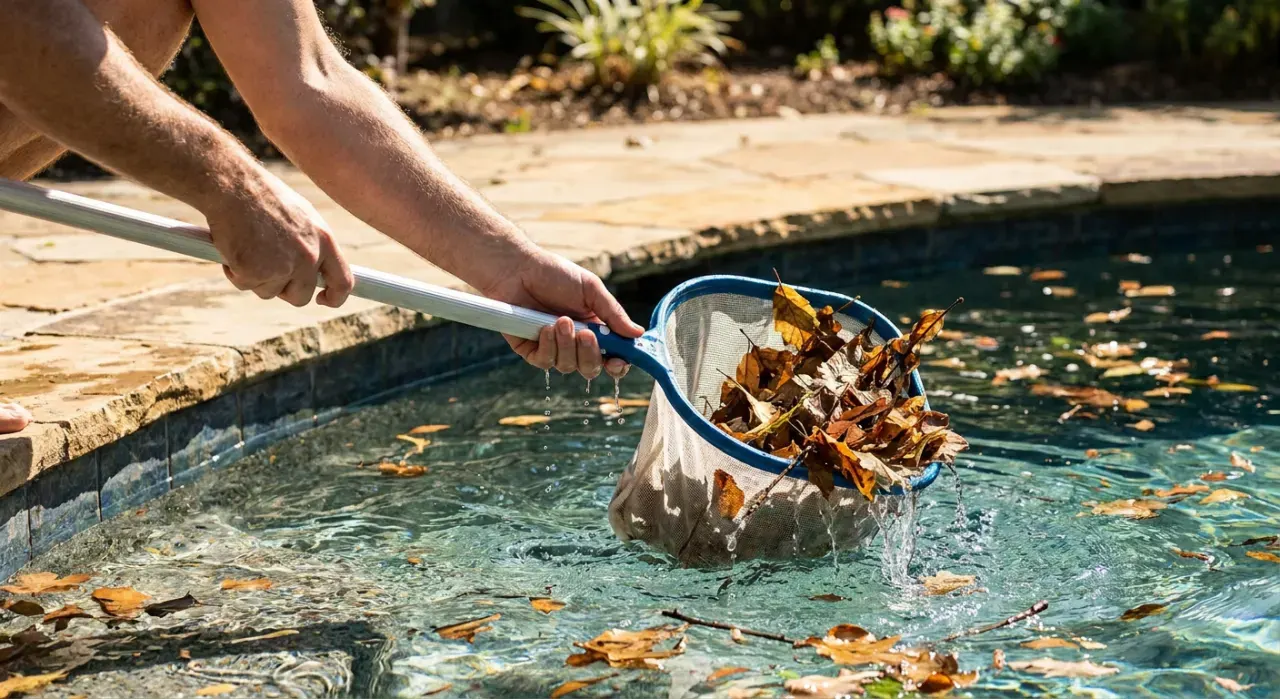
Value tracks how much debris your pool catches and how much your time is worth. A screened pool in a treeless yard barely needs one; a pool under oaks does.
- Heavy debris load. Trees, pollen, wind-blown grit. A robot run every second day keeps the floor clear without you touching a vacuum head.
- Variable-speed pump owners. The robot lets you keep the pump at low RPM permanently.
- Fine silt problems. Fine-mesh robot cartridges capture particles a sand filter passes straight through.
- Large pools. Manual vacuuming a 20,000 gallon pool takes 45 minutes or more each time.
- Vinyl liners. Soft brushes and no suction hose dragging across the floor.
- Less compelling for: small above ground pools under about 15 feet, screened enclosures with almost no debris, and anyone who genuinely does not mind vacuuming.
What is the real cost per year?
Spread the purchase over its life and add consumables, and the picture is clearer than the sticker price suggests. Figures below are typical US costs as of 2026.
| Item | Cost | Per year over 5 years |
|---|---|---|
| Mid-range robot | $700 | $140 |
| Replacement brushes | $40 every 2 years | $20 |
| Filter cartridges or basket | $35 every 2 years | $18 |
| Electricity, 100 cycles | ~35 kWh | $6 |
| Out-of-warranty power supply | $180, maybe once | $36 |
| Total | ~$220 |
Compare that with weekly pool service, which runs well above that figure per month in most of the country — the regional breakdown is in how much weekly pool service costs. A robot does not replace a service visit, since chemistry and equipment checks are the larger part of that job, but it removes the vacuuming from it.
What should you look for when buying one?
Match the cable length to your pool, first and last: a 50 foot cable will not reach the far end of a 40 foot pool once you allow for the walk-down. Then check whether the model climbs walls, whether it is rated liner-safe if you have vinyl, and how the filter is accessed — top-loading baskets get emptied, awkward bottom-loading ones do not. Look for a swivel in the cable, which is the single most effective anti-tangle feature. Fine and ultra-fine cartridge options matter if your problem is silt rather than leaves.
Warranty terms are worth reading closely because they differ more than the specifications do, and the power supply is the component most likely to need them. Whatever you buy, vacuuming frequency still depends on your debris load — the schedule is in how often you should vacuum a pool, and if your current cleaner keeps stalling, the causes are in why a pool vacuum keeps getting stuck. Our current rankings, based on aggregated owner ratings and review volume, are in best pool vacuums.
We never buy, test or physically handle the products we rank. Recommendations come from aggregated owner reviews, star ratings, review volume and expert consensus — see how we rank.
More from this hub: Pools & Spas · Best pool vacuums · How often to vacuum a pool · How we rank