 Garden
Affiliate Disclosure
Some links on this page are affiliate links. As an Amazon Associate, we earn from qualifying purchases — at no extra cost to you. We do not buy, test, or physically handle the products we cover; our rankings come from aggregated owner reviews, ratings and expert consensus. Commissions never change our verdicts. How we rank · full disclosure.
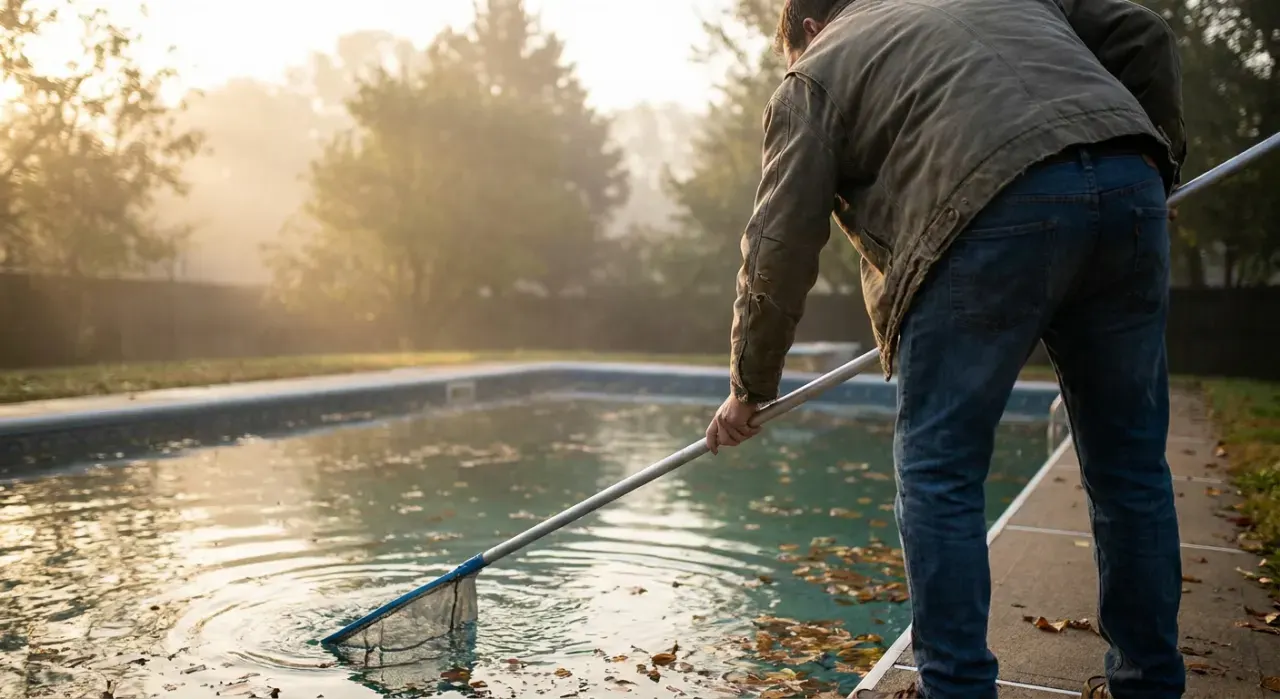
The short version: the best pool cover pump is the Little Giant APCP-1700 — genuinely automatic, roughly 1,745 GPH, a 25 ft cord so the outlet can sit well back from the water, and a motor built for continuous seasonal duty. It starts on its own in about two inches of water and stops at about one, which is exactly the behavior you want from a device whose entire job happens while you are asleep or away.
The reason to care is weight. Water on a winter cover has nowhere to go, and a few inches across a 24 ft cover is an enormous load — enough to tear grommets, drag the cover into the pool, and in bad cases buckle an above-ground wall. A cover pump is the cheap insurance that prevents an expensive spring. If you run a mesh cover, water passes straight through and you probably need none of this; see best above-ground pool cover for that decision. Everything else is at the pools and spas hub.
Top Picks at a Glance
Our #1 Pick: Little Giant APCP-1700
What separates a good cover pump from a poor one is the float, not the flow rate. Cheap cover pumps use crude float switches that stick, that fail to trigger when leaves settle around them, or that fail to shut off and let the pump run dry until the seal cooks. The APCP-1700 uses a properly engineered automatic switch that activates in roughly two inches of water and shuts down at about one, and the owner-review record is unusually consistent about it working season after season.
Consensus Score ████████░░ 8.4 — owners consistently report several winters of unattended operation without intervention
The motor matters too. This is a 1/3 HP permanent-split-capacitor design rather than the shaded-pole motors used in the cheapest pumps, which means it runs cooler, draws less current for the same output, and tolerates the long duty cycles a winter of rain produces. What those duty cycles cost you depends on where you live; the EIA publishes residential electricity prices state by state. At around 1,745 gallons per hour it clears a typical above-ground cover far faster than water accumulates in normal weather.
The 25 ft cord deserves specific mention because it is a safety feature as much as a convenience. It lets the pump sit in the middle of a cover while the plug reaches a GFCI-protected outlet well away from the pool, without chaining extension cords across wet ground — which is exactly what the electrical code around pools is designed to prevent.
The recurring criticisms are worth knowing. Owners report the float switch being the eventual failure point, generally after several seasons, and it is the part most commonly cited in three- and four-year reviews. Debris blocking the intake screen stops it silently, so it needs a check after storms. It leaves a shallow film of water behind and will freeze into an ice sheet if a hard frost arrives before you lift it. It is heavier and more expensive than the budget alternatives. And several reviewers report the discharge fitting being awkward to attach to a garden hose without leaks.
Check price on Amazon → (paid link)
Best Pool Cover Pumps 2026: The Ranked Field

Best for leaving on the cover all winter and never thinking about it
- Automatic — starts in about 2 in. of water, stops at about 1 in.
- 1,745 GPH from a 1/3 HP permanent-split-capacitor motor
- 25 ft power cord, so the outlet can be well away from the pool
- Sealed motor housing designed for continuous seasonal duty
Why buy it: a true automatic float means it deals with a February thaw at 3am, which is precisely when a cover pump earns its money.

Best for large covers and regions with heavy rainfall
- Up to 3,000 GPH — the highest flow here
- Automatic on and off water sensing
- Reinforced thermoplastic body resists corrosion
- Removes water down to a shallow residual depth
Why buy it: on a 28 ft cover after two days of rain, flow rate is the difference between clearing it overnight and not clearing it at all.

Best for smaller above-ground covers and milder winters
- 1/6 HP automatic submersible pump
- Integrated float switch, no separate controller
- Compact body sits flat on a cover
- Same Little Giant motor design as the larger model
Why buy it: on a small cover the extra flow of a 1/3 HP pump is wasted, and this does the same job for meaningfully less.

Best for owners who would rather run a pump manually and use it for other jobs too
- 1,800 GPH with a 1/4 HP thermoplastic body
- Suction screen filters larger debris
- Handles solids up to about 1/8 in.
- 10 ft cord and a standard garden-hose adapter
Why buy it: it is a general-purpose utility pump, so it also empties a flooded window well or drains a hot tub, which a dedicated cover pump will not.

Best for clearing the last of the water off a cover rather than just most of it
- Removes water down to about 1/16 in.
- Top and side discharge options
- 1,350 GPH from a 1/6 HP motor
- Small footprint that sits stably on a cover
Why buy it: pumping down to a sixteenth of an inch leaves nothing behind to freeze, which ordinary cover pumps cannot manage.

Best for unattended winter duty where near-total water removal matters
- Automatic on and off sensing with no external float
- 1,900 GPH from a 1/4 HP motor
- Multi-Flo top and side discharge
- Clears water to a very shallow residual depth
Why buy it: it combines automatic operation with near-total water removal, which is the pairing most cover pumps make you choose between.
Quick Comparison
| Product | Best for | Rating | Price | Buy |
|---|---|---|---|---|
| Little Giant APCP-1700 Automatic Submersible Swimming Pool Cover Pump 1/3 HP | Best Overall | — | Check (paid link) | |
| WAYNE WAPC250 1/4 HP Reinforced Thermoplastic Pool Cover Pump | Best High Flow | — | Check (paid link) | |
| Little Giant 5-APCP Automatic Pool Cover Pump Submersible 1/6 HP | Best Value | — | Check (paid link) | |
| Superior Pump 91250 1800 GPH Thermoplastic Submersible Utility Pump 1/4 HP | Best Manual Utility Pump | — | Check (paid link) | |
| WAYNE WaterBUG 1/6 HP 1350 GPH Submersible Pump with Multi-Flo Technology | Best for Shallow Water | — | Check (paid link) | |
| WAYNE WaterBUG AUTO 1/4 HP 1900 GPH Auto On Off Submersible Pump | Best Automatic Shallow Pump | — | Check (paid link) |
How We Rank
We do not buy or physically handle these pumps. Rankings come from aggregating star ratings and review volume across large owner-review sets, weighting recent reviews above older ones, checking stated flow rates, horsepower, activation depths, residual depths, cord lengths and motor types against manufacturer documentation, and reading negative reviews closely. In this category the negative reviews concentrate almost entirely on float switches and clogged intakes, which makes them a genuinely useful reliability signal.
Four factors set the order. Float reliability, weighted most heavily, because an automatic pump that does not switch on is worse than no pump at all — it creates false confidence. Flow rate against cover size, since a large cover in heavy rain needs real capacity. Residual water depth, which determines whether the pump freezes into the ice. And owner satisfaction, weighted by review volume and read across multiple seasons. Prices were checked at the time of writing. Full method: how we rank.
The Pumps, Reviewed
1. Little Giant APCP-1700 — Best Overall
Covered above. Consensus Score ████████░░ 8.4. Strengths: a reliable automatic float that starts at about 2 in. and stops at about 1 in.; a 1/3 HP PSC motor built for long duty cycles; roughly 1,745 GPH; a 25 ft cord that keeps the outlet away from the water; and a reputation across multiple seasons of unattended use. Recurring complaints: the float switch is the eventual failure point; the intake screen clogs with leaves and stops it silently; it leaves a film of water that can freeze it in; it is expensive; and the discharge fitting is fiddly to seal.
2. WAYNE WAPC250 — Best High Flow
The one to buy if your cover is large or your winters are wet. At up to 3,000 gallons per hour it moves roughly twice the water of the standard automatic pumps, which matters when 28 ft of cover is collecting two days of steady rain. It senses water automatically, its reinforced thermoplastic body shrugs off corrosion, and it draws the cover down to a shallow residual level.
Consensus Score ████████░░ 8.0 — strong ratings with sensing reliability the main reservation
Recurring complaints: the automatic sensing is reported as inconsistent by a minority, sometimes cycling on and off rapidly in shallow water. Owners describe it as noisier than the Little Giant. Its higher flow means it can pull air and lose prime in very shallow water. And several reviewers report the cord being shorter than they would like.
3. Little Giant 5-APCP — Best Value
The smaller sibling, and correctly sized for a modest above-ground cover in a mild climate. A 1/6 HP motor with the same integrated automatic float design, in a compact body that sits flat on the cover. If your cover is 18 ft rather than 28 ft, the extra capacity of a 1/3 HP pump is spare capacity you are paying for and never using.
Consensus Score ███████░░░ 7.8 — good ratings within its capacity limits
Recurring complaints: owners with large covers report it struggling to keep up during sustained rain, which is a sizing issue. The float switch draws the same long-term criticism as the larger model. Several describe the cord as too short for a wide cover. And it leaves a similar residual film of water behind.
4. Superior Pump 91250 — Best Manual Utility Pump
Not a dedicated cover pump, and included deliberately. It is a 1/4 HP thermoplastic submersible utility pump moving up to 1,800 GPH, with a suction screen and a garden-hose adapter. Because it is manual, it costs far less for the flow it delivers, and it is genuinely useful the rest of the year for draining a hot tub, clearing a flooded window well or emptying a pool at closing.
Consensus Score ████████░░ 8.1 — very well rated as a utility pump, with the manual caveat
Recurring complaints: it is manual, so it does nothing while you sleep and it will run dry if you forget it — which is the most reported way these die. The suction screen clogs on a leafy cover. The 10 ft cord is short for pool use and encourages extension-cord chaining, which is unsafe around a pool. And it leaves more water behind than a dedicated cover pump.
5. WAYNE WaterBUG — Best for Shallow Water
The specialist. Multi-Flo technology gives it top and side discharge options and, more importantly, it removes water down to about a sixteenth of an inch — an order of magnitude better than a standard cover pump. That is the specification that determines whether a hard frost welds your pump into the ice or leaves it sitting on a dry cover.
Consensus Score ████████░░ 8.3 — highly rated, with the manual operation the main limitation
Recurring complaints: the standard WaterBUG is manual, so it needs supervision. At 1,350 GPH it is slower than the high-flow automatics. Owners report the intake screen clogging quickly on debris. And several describe it as needing to be repositioned to find the low point on an uneven cover.
6. WAYNE WaterBUG AUTO — Best Automatic Shallow Pump
The combination that most cover pumps make you choose between: automatic operation and near-total water removal. It senses water without an external float, moves 1,900 GPH from a 1/4 HP motor, and clears down to a very shallow residual depth. For unattended winter duty in a climate that freezes hard, that pairing is genuinely valuable.
Consensus Score ████████░░ 8.0 — well rated, with price and sensing quirks the criticisms
Recurring complaints: it is priced alongside the premium dedicated cover pumps. Owners report the automatic sensing cycling rapidly in very shallow water, which is hard on the motor. Debris in the intake defeats the sensing as well as the pumping. And several reviewers describe the discharge options as fiddly to configure the first time.

How to Choose a Pool Cover Pump
Buy automatic unless you have a specific reason not to. The entire purpose of a cover pump is to deal with water when nobody is watching — a thaw at three in the morning, a week of rain while you are away. A manual pump only protects you when you remember it, and a manual pump left running is a burned-out seal. If you buy manual, buy it as a utility pump you also use for other jobs.
Match flow to cover area and rainfall. A 1/6 HP pump around 1,300 GPH is fine for a small above-ground cover in a dry winter. A 24 to 28 ft cover in a wet climate wants 1,700 GPH or more, and heavy-rainfall regions justify the 3,000 GPH class. Under-pumping shows up as water still on the cover after two days of rain, which is exactly the situation that tears grommets.
Check the residual depth specification, because it decides whether the pump survives a hard freeze. A pump that clears to a quarter inch will freeze into the ice; one that clears to a sixteenth generally will not. Setting the pump on a small platform or float, positioned at the low point of the cover, helps either way — and in severe climates, lifting the pump before a deep freeze and returning it at the thaw is the pragmatic approach.
Finally, get the electrical side right. Use a GFCI-protected outdoor receptacle, keep the plug and any connection up off wet ground, and choose a pump whose own cord is long enough to reach without an extension lead — chained extension cords near a pool are both a code problem and a genuine hazard, and the National Electrical Code sets specific requirements for receptacles serving pool equipment, including GFCI protection and minimum distances from the water. Requirements vary by jurisdiction, so confirm yours or ask a licensed electrician. Then check the intake screen after every storm, because a clogged screen is the most common reason a working pump quietly stops working. And remember that neither the cover nor the pump is a barrier: the CDC puts four-sided isolation fencing at least four feet high, with a self-closing self-latching gate, at 83 percent lower drowning risk than fencing the property line.
What Owners Actually Complain About
Float switch failure is the defining long-term complaint across every automatic pump in this category. They stick, they fail to trigger under debris, or they stop shutting off. Most reports come in year three or four, and it is the single reason to buy a pump with a well-regarded switch rather than the cheapest automatic on the shelf.
Clogged intake screens is the most common short-term failure and it is entirely environmental. Leaves, pine needles and grit settle around the pump and block it, and because the pump fails silently owners often find out when the cover is already sagging. A check after every storm prevents nearly all of it.
Freezing into the ice produces a distinctive category of angry reviews — a pump immovably locked into an ice sheet, and in some cases a cover torn while extracting it. Residual depth and a small raised platform address it; nothing eliminates it in a severe climate.
Running dry kills manual pumps, and it is user error rather than product failure, though it appears in reviews as the latter. And short cords generate consistent complaints because they push owners toward extension leads in exactly the environment where extension leads should not be used.
The Verdict
For most solid winter covers the Little Giant APCP-1700 is the pump to buy: reliably automatic, well-built, and with a cord long enough to keep the outlet safely back from the pool. Size down to the Little Giant 5-APCP for a small cover in a mild climate, and up to the Wayne WAPC250 for a large cover in a wet one. If hard freezes are your problem, the WaterBUG AUTO combines automatic operation with near-total water removal, and the manual WaterBUG does the same job for less if you are willing to supervise it. The Superior Pump 91250 is the value pick if you want a general-purpose utility pump that can also clear a cover.
Check price on Amazon → (paid link)
Next: choose the cover it works with in best above-ground pool cover, close the pool correctly with how do you winterize an above-ground pool, or read can you leave an above-ground pool up all year.