 Garden

Affiliate Disclosure
Some links on this page are affiliate links. As an Amazon Associate, we earn from qualifying purchases — at no extra cost to you. We do not buy, test, or physically handle the products we cover; our rankings come from aggregated owner reviews, ratings and expert consensus. Commissions never change our verdicts. How we rank · full disclosure.
The short version: after weighing six of the most-reviewed wet/dry vacuums on the US market against owner ratings, review volume, published specifications and the complaints that recur year after year, the CRAFTSMAN CMXEVBE17595 is the one we would put in most garages. It has the 2-1/2-inch hose that actually moves debris, a 16-gallon tank that survives a burst water heater, an oversized drain so you are not tipping a hundred pounds of water into a floor drain, and a price that undercuts most rivals at the same capacity. Below is the full ranked field, the consensus score behind each placement, and what owners genuinely complain about.
A shop vac is the tool that makes every other tool tolerable — the circular saw and the random orbital sander both produce dust faster than a broom can deal with it, and both connect to a vac port. If you are building out a garage from scratch, our workbench setup guide covers where the vac should live so the hose reaches everything.
Top Picks at a Glance

Our #1 Pick: CRAFTSMAN CMXEVBE17595
Three specifications decide whether a shop vac feels powerful, and hose diameter is the one people ignore. This vac ships with a 2-1/2-inch hose, which moves several times the volume of air per second that a 1-1/4-inch hose does, and that is why it swallows wood offcuts, drywall chunks and wet leaves that smaller vacs simply rattle around. The swivel cuff means the hose does not fight you when you walk around the drum. The 16-gallon tank covers real emergencies rather than tidy-ups.
The detail that owners praise most in long-tenure reviews is mundane: the oversized drain port at the base. Emptying sixteen gallons of water by tipping the drum is a genuinely unpleasant, back-straining job, and a drain plug turns it into a two-minute one. The built-in blower port covers the other half of garage cleanup — blasting sawdust off a bench or leaves off a driveway rather than trying to suck them up.
Consensus Score █████████░░░ 9.0 — from the aggregated owner-review consensus
Check price on Amazon → (paid link)
The Ranked Field

Best for a two-car garage that handles sawdust, flooded water heaters and car interiors
- 16-gallon poly tank, 6.5 peak HP
- 2-1/2-inch hose with 180-degree swivel cuff
- Built-in blower port and oversized drain
- Two extension wands and five nozzles included
Why buy it: the size and hose diameter that actually match garage messes, at a price the 14- and 16-gallon competition rarely beats.
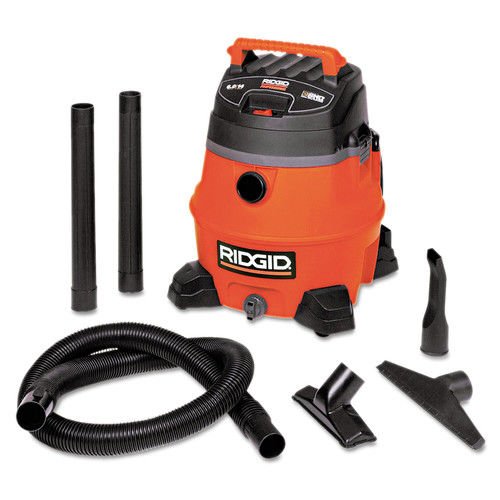
Best for owners who want the vac to outlive the house
- 14-gallon drum, 6.0 peak HP
- 2-1/2-inch locking hose
- Qwik Lock filter fastening system
- Rear caster design resists tipping
Why buy it: the most durable vac in the ranking by long-tenure owner reports, with accessories that stay available for years.

Best for people who want a leaf blower and a shop vac in one purchase
- 12-gallon tank, 5 peak HP
- Detachable blower with one-hand release
- 2-1/2-inch hose, 7 ft.
- Cartridge filter plus foam sleeve for wet pickup
Why buy it: the detachable blower turns the motor head into a genuine yard blower, which no other vac here does properly.
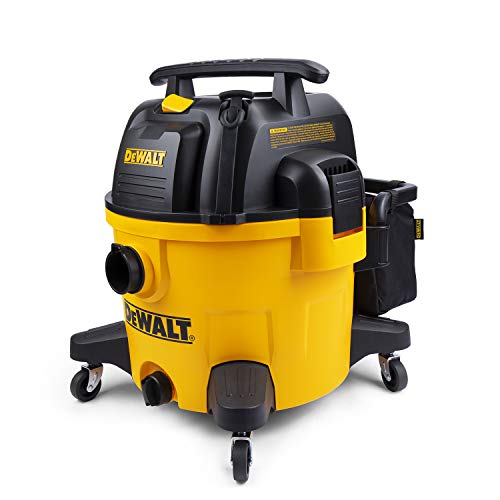
Best for a one-car garage or a basement shop with limited floor space
- 9-gallon poly tank, 5 peak HP
- Vacuum, blower and wet pickup in one unit
- 1-7/8-inch hose with tool attachments
- On-board cord and accessory storage
Why buy it: the sweet spot between a portable and a drum vac, with the on-board storage that stops accessories going missing.

Best for carrying up stairs, into a crawl space or out to the car
- 5-gallon stainless steel tank
- 4.5 peak HP, 7 ft. 1.25-inch hose
- Full-circumference dolly with carry handles
- Cartridge filter, foam sleeve and bag included
Why buy it: a stainless tank that will not crack when it gets dropped, in the size people actually carry rather than roll.

Best for car interiors, workbench cleanup and small spills
- 2.5-gallon tank, 2 peak HP
- 10 ft. cord, 6 ft. 1.25-inch hose
- Converts to blower
- Reusable cloth filter and foam sleeve
Why buy it: the cheapest vac here that still handles water, and the one most often bought purely for detailing a car.
Quick Comparison
| Product | Best for | Rating | Price | Buy |
|---|---|---|---|---|
| CRAFTSMAN CMXEVBE17595 16-Gallon 6.5 Peak HP Wet/Dry Vac | Best Overall | — | Check (paid link) | |
| RIDGID WD1450 14-Gallon 6.0 Peak HP Wet/Dry Vac | Best Built | — | Check (paid link) | |
| Vacmaster VBV1210 12-Gallon 5 Peak HP Wet/Dry Vac | Best Value | — | Check (paid link) | |
| DEWALT DXV09P 9-Gallon 5 Peak HP Wet/Dry Vac | Best Mid-Size | — | Check (paid link) | |
| Shop-Vac 5989300 5-Gallon 4.5 Peak HP Stainless Wet/Dry Vac | Best Portable | — | Check (paid link) | |
| Armor All AA255 2.5-Gallon 2 Peak HP Wet/Dry Utility Vac | Best Budget | — | Check (paid link) |

How We Rank
We never buy, test or physically handle the products we rank. Instead we aggregate what the owner base already knows: star ratings weighted by review volume, the shape of the one- and two-star distribution, published specifications, and the consensus of trade and DIY publications that do run these machines. For shop vacuums we weight four things — hose diameter and airflow rather than peak horsepower claims, filtration options, because a vac that cannot hold drywall dust is half a tool, emptying and drainage, which is the job owners complain about most, and durability signals from long-tenure reviews, especially cracked hose cuffs, broken casters and filters that stop being manufactured. Noise is noted throughout; every machine here is loud. Prices move constantly and were accurate at the time of writing. Our full method is on how we rank.
Filters, Bags and the Drywall Dust Problem
If you take one thing from this page, take this: the filter that comes in the box is a general-purpose pleated cartridge, and general-purpose means wood chips, dirt, gravel and water. It does not mean drywall dust, concrete dust, plaster or fireplace ash. Concrete dust is the one that matters most: OSHA notes that cutting, sawing, grinding and drilling stone, concrete, brick and mortar releases respirable crystalline silica, and its construction rules pair those tools with a HEPA-filtered vacuum rather than a general-purpose one. Those particles are fine enough to pass through a standard pleated filter, and what happens next is that they blow out of the exhaust and settle over the whole room — which is why so many one-star reviews in this category say the vac "just moved the dust around."
Two fixes, and they work together. First, fit a fine-dust or HEPA-rated cartridge filter designed for your model. Second, drop a disposable collection bag into the drum. The bag catches the great majority of the debris before it ever touches the filter, which keeps suction high for far longer and turns emptying into lifting a bag out rather than eating a cloud. Both consumables are cheap, both are model-specific, and both are worth checking availability for before you commit to a machine.
For wet pickup the rule reverses: take the pleated filter and the bag out, fit the foam sleeve, and watch the float. Running water through a dry filter ruins it in one job, and it is the second most common self-inflicted failure in the category.
The Vacuums, Reviewed
1. CRAFTSMAN CMXEVBE17595 16-Gallon — Best Overall
Covered above. Consensus Score █████████░░░ 9.0. What owners like: the 2-1/2-inch hose, the drain plug, the price at this capacity and the accessory set. What owners complain about: it is loud, as all high-airflow vacs are; the poly drum takes up serious floor space; the standard filter is not adequate for drywall dust; and a recurring gripe is that the casters wander on rough concrete and the tall drum can tip if the hose is yanked. A few owners report the hose becoming stiff and awkward in a cold garage. Check price (paid link).
2. RIDGID WD1450 14-Gallon — Best Built
RIDGID vacs have the strongest long-tenure reputation in the category, and the reviews bear it out: owners describing ten and fifteen years of use are common, and the accessory and filter ecosystem stays available long after competitors discontinue theirs. The Qwik Lock filter system means no wing nut to lose, the rear-caster layout is stabler than most, and the locking hose does not pop off under load. Consensus Score █████████░░░ 8.9. Complaints: it costs more than the larger CRAFTSMAN; the standard filter has the same fine-dust limitation as everything else; and it is among the loudest machines here, which several owners rate as genuinely unpleasant without ear protection — NIOSH treats noise as hazardous from 85 dBA upward. Storage of the hose and wands is also poorly solved. Check price (paid link).
3. Vacmaster VBV1210 12-Gallon — Best Value
The detachable blower is not a gimmick. The motor head lifts off the drum and becomes a handheld blower with a real nozzle, which means one purchase covers garage cleanup, gutter debris and clearing a driveway. Twelve gallons and a 2-1/2-inch hose put it in the same functional class as the top two at a lower price. Consensus Score ████████░░░░ 8.6. Complaints: build quality is a step below the RIDGID — owners report latches and caster sockets as the weak points; the blower is loud enough that neighbors notice; and the filter is the usual general-purpose cartridge. Several long-term reviews mention the power switch as the part most likely to fail. Check price (paid link).
4. DEWALT DXV09P 9-Gallon — Best Mid-Size
Nine gallons is the size that fits a one-car garage or a basement shop without dominating it, and this one adds proper on-board storage for the cord and the nozzles, which is the difference between a tidy vac and a pile of attachments in a bucket. It vacuums wet and dry and converts to a blower. Consensus Score ████████░░░░ 8.7. Complaints: the hose is 1-7/8-inch rather than the full 2-1/2-inch of the larger drums, so it clogs more easily on big offcuts; nine gallons fills fast on a real cleanup; and owners report the price fluctuating a great deal, so it can look poor value on a bad week. Filter availability is fine but sold at a premium. Check price (paid link).
5. Shop-Vac 5989300 5-Gallon Stainless — Best Portable
The stainless drum is the reason to pick this over a plastic five-gallon vac: it survives being dropped down basement stairs, and it does not become brittle in an unheated garage. Five gallons with a full-circumference dolly and two carry handles is the size people actually pick up and move, which is the whole point of a portable. Consensus Score ███████░░░░░ 8.3. Complaints: the 1.25-inch hose is the narrowest here and clogs readily on wood chips and leaves; five gallons of sawdust is not much; and the tank is loud in a way a metal drum always is. Owners also note the short hose limits reach around a car. Check price (paid link).
6. Armor All AA255 2.5-Gallon — Best Budget
Two and a half gallons, two peak horsepower, and a car-detailing nozzle set. This is the vac people buy for the trunk and the workbench, and by review volume it is one of the most widely owned small wet/dry vacs in America. It still picks up water, still converts to a blower, and costs less than a set of good sanding discs. Consensus Score ████████░░░░ 8.4. Complaints: the tank is tiny, so any real job means repeated emptying; the cloth filter is basic and fine dust escapes; the 10-foot cord is short; and owners who expected garage-grade suction from a 2 HP motor are the ones leaving low ratings. Used as a car and bench vac, it is well-liked. Check price (paid link).
What Owners Actually Complain About
Across all six, four themes dominate the negative reviews.
Noise. Universal and worth planning for. These machines run in the range where a conversation is impossible and prolonged exposure genuinely matters. Owners who use one indoors for hours describe ear protection as necessary rather than cautious.
Fine dust escaping. Covered above, and it is the most common one-star theme in the category. It is a consumables problem, not a machine problem, but nobody tells buyers that at the point of sale.
Hose diameter and clogging. Owners of the smaller vacs consistently describe wood chips, leaves and insulation jamming in a 1-1/4-inch hose. The larger drums with 2-1/2-inch hoses almost never generate this complaint, and it is the single strongest argument for buying up a size.
Storage and accessory loss. Wands, nozzles and the crevice tool go missing. Models with on-board storage — the DEWALT especially — draw noticeably fewer complaints here. A cheap wall hook and a bucket solve it on everything else.
How to Choose Between Them
If you have a garage and any intention of doing projects in it, buy the CRAFTSMAN 16-gallon and be done. The hose diameter alone justifies it. If you want the last vac you ever buy, the RIDGID WD1450 has the strongest long-term ownership record and the most durable accessory supply. If you also need a blower, the Vacmaster VBV1210 genuinely replaces one. If floor space is tight, the DEWALT DXV09P is the best-organized mid-size unit. If you are carrying it more than rolling it, the stainless Shop-Vac survives the abuse. If the job is really just the car and the workbench, the Armor All AA255 is honest about what it is.
Then, whatever you buy, order two things with it: a fine-dust filter and a pack of collection bags. They cost a fraction of the machine and they are the difference between a vac that solves the dust problem and one that redistributes it.
The Verdict
The CRAFTSMAN CMXEVBE17595 wins because it gets the two things right that actually determine how a shop vac feels — a 2-1/2-inch hose and a tank big enough for a real mess — and then adds a drain plug that saves your back. The RIDGID WD1450 is the pick if longevity outranks capacity, and the Vacmaster VBV1210 is the one to buy if a blower is on your list too. At the small end, the stainless Shop-Vac 5989300 and the Armor All AA255 are honest portables rather than compromised drum vacs. Pair whichever you choose with a fine-dust filter, and see the rest of the hub at power tools and workshop. Check price on Amazon → (paid link)