 Garden


Affiliate Disclosure
Some links on this page are affiliate links. As an Amazon Associate, we earn from qualifying purchases — at no extra cost to you. We do not buy, test, or physically handle the products we cover; our rankings come from aggregated owner reviews, ratings and expert consensus. Commissions never change our verdicts. How we rank · full disclosure.
"Whole house generator" means two very different products, and buyers routinely search for one and end up looking at the other. In the trade it means a permanently installed standby generator: a fixed unit on a pad beside the house, plumbed to natural gas or propane, wired to an automatic transfer switch, which starts itself within seconds of an outage whether or not anyone is home. That is a $9,000 to $17,000 installed purchase in 2026 and it is sold through dealers, not shipped in a box.
What you can actually buy online is the second product: a large portable generator, 10,000 watts and up, which manufacturers market as "home backup" or "whole home power". Wired through a manual transfer switch by an electrician, one of these will run every circuit a family genuinely needs during an outage. It will not usually run central air conditioning alongside an electric range, and it will not start itself. That is the honest trade, and for a lot of households it is the right one.
Two rules, before anything else.
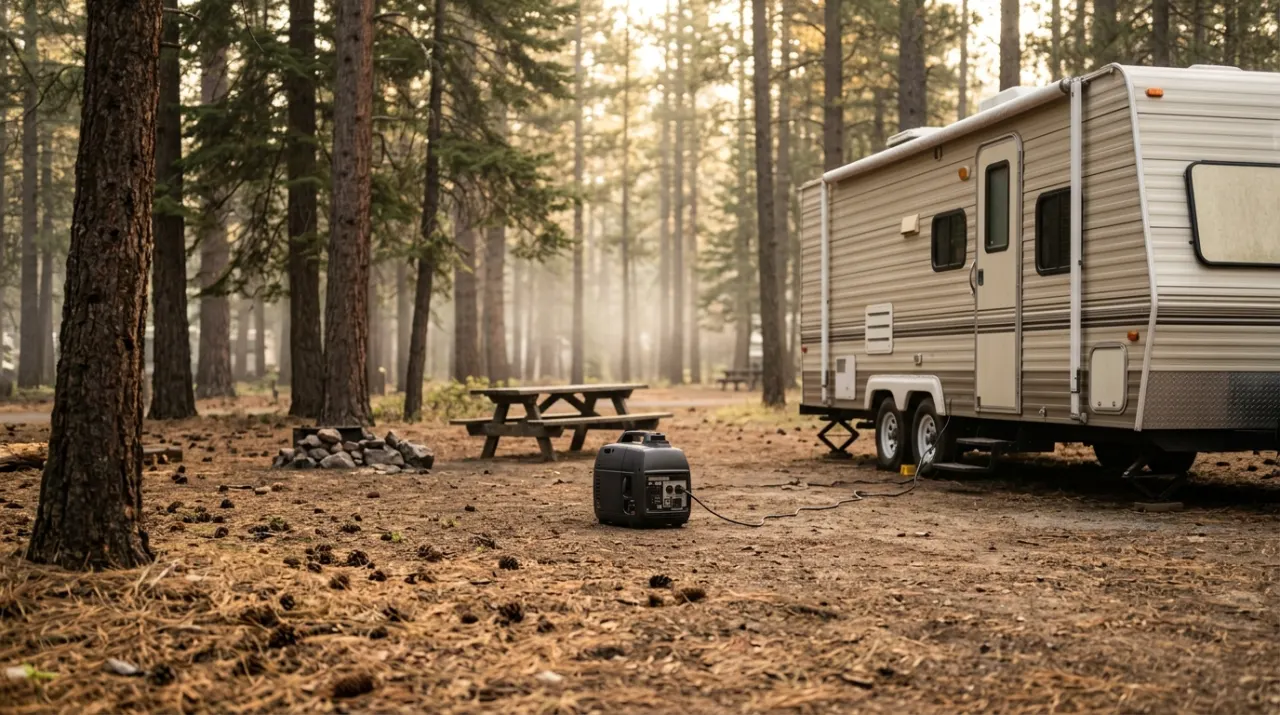
Carbon monoxide. Portable generators run outdoors only, at least 20 feet from the house, exhaust pointed away from doors, windows and vents. Never in a garage, a basement or under a carport, even with the door open. The US Consumer Product Safety Commission states a single portable generator can emit as much carbon monoxide as hundreds of cars, and links more than 100 US deaths a year to generator CO. It is colorless and odorless — you get no warning. Fit CO alarms on every level of the home.
Never plug a generator into a wall outlet. Backfeeding energizes the utility line and can electrocute the crews restoring your power. A transfer switch or interlock kit fitted by a licensed electrician is the only correct method.
Top Picks at a Glance

Standby vs Large Portable: The Real Comparison
| Installed standby | Large portable + transfer switch | |
|---|---|---|
| Typical 2026 cost | $9,000–$17,000 installed | $1,500–$3,000 all in |
| Starts itself | Yes, in about 10–30 seconds | No — you go outside and start it |
| Fuel | Natural gas or a large propane tank | Gasoline, propane bottles, or gas if tri-fuel |
| Runs central air | Yes, with load management | Marginal — usually one large motor at a time |
| Works when you are away | Yes | No |
| Noise | 60–70 dB, enclosed | 70–80 dB open frame; ~65 dB inverter |
| Maintenance | Annual dealer service, self-tests weekly | Oil, filters, fuel stabilizer, quarterly exercise |
| Permit and inspection | Always | For the transfer switch installation |
| Adds to home value | Generally yes | No — it is equipment, not a fixture |
The decision usually comes down to two questions. Do outages at your address last hours or days? and is anyone home to start a machine? If the answers are "days" and "sometimes not" — an elderly parent in the house, a sump pump that has to keep running, a home business, or a medical device — the standby unit earns its cost. If your outages are a handful of hours a few times a year and someone is always around, a large portable and a manual transfer switch does the same job for a fraction of the money.
Our #1 Pick: Westinghouse 14500 Peak Watt Tri-Fuel
Ranked first because it addresses the one thing that separates a portable from a real standby unit: fuel supply. A portable running on gasoline is limited by how many cans you can store and whether the gas stations near you have power. Tri-fuel capability means this machine can be connected to a house natural gas line by a licensed installer, at which point the fuel problem simply disappears — it runs as long as the gas is flowing, which in most US outages is indefinitely.
At 11,500 running watts it has the output to cover a full-size home's essentials with real headroom, including a well pump starting while the furnace blower is already turning. The onboard CO sensor with automatic shutdown is not a gimmick; it is the feature the industry adopted after the CPSC pushed hard on generator carbon monoxide deaths, and it should be a requirement rather than a bonus on any generator you buy today.
The honest downsides come up consistently in owner reviews. It is heavy, and the wheel kit is designed for a driveway rather than a lawn. Assembly takes longer than the box suggests. And output drops when you switch fuels: expect roughly 10 percent less on propane and rather more than that on natural gas, which is physics rather than a defect. Size for the fuel you will actually use.
Check price on Amazon → (paid link)
The Ranked Field

Best for a full-size home on natural gas, with a well pump and central air
- 14,500 peak / 11,500 running watts on gasoline
- Tri-fuel: gasoline, propane, or a permanent natural gas connection
- Built-in CO sensor with automatic engine shutdown
- 50A and 30A transfer-switch outlets, remote electric start
Why buy it: the natural gas option is what makes this a genuine whole-house answer — plumbed to a house line by a licensed installer it never runs out of fuel, which is the one thing portables normally cannot promise.

Best for most houses that want everything essential running at once
- 12,500 peak / 9,500 running watts on gasoline
- Dual fuel — gasoline or a standard 20lb propane tank
- Transfer switch ready with 30A L14-30R and 50A outlets
- Remote key fob start, electric start battery included
Why buy it: covers the load profile of the great majority of American homes at roughly a tenth of the installed cost of a permanent standby unit.

Best for homes on well water, hobby farms, and anywhere the machine gets worked hard
- 13,000 peak / 10,500 running watts, dual fuel
- 500cc engine with copper windings and an all-metal frame
- CO Alert shutdown sensor built in
- Full outlet panel including 50A and 30A twist-lock
Why buy it: copper windings and a steel frame are the difference between a machine that survives a decade of storms and one that is disposable after four.

Best for close neighbors, HOA rules, and sensitive electronics
- 12,000 peak / 9,500 running watts, dual fuel
- Inverter output with clean sine wave for electronics
- Markedly quieter than an open-frame unit of the same output
- Transfer switch ready, remote electric start
Why buy it: inverter technology at 9,500 running watts is unusual and expensive, and it buys you two things: much lower noise and power clean enough for anything with a circuit board.

Best for maximum output per dollar when noise is not the constraint
- 13,000 peak / 10,500 running watts on gasoline, dual fuel
- 500cc engine with a heavy-duty wheel kit
- MX2 switch to draw full power from both 120V legs
- Remote electric start
Why buy it: the MX2 switch is genuinely useful — it lets you take the full output as 120V when you have no 240V loads, which most units at this size will not do.

Best for connecting a large portable generator to the house legally and safely
- 100A / 24,000W double-throw switch for 120/240V service
- Physically prevents utility and generator being connected together
- Sized for 10,000W-plus portable generators
- Requires installation by a licensed electrician
Why buy it: this, or an interlock kit, is the only legal and safe way to get generator power into house wiring — and it is the part buyers most often forget to budget for.
Quick Comparison
| Product | Best for | Rating | Price | Buy |
|---|---|---|---|---|
| Westinghouse WGen11500TFc 14500 Peak Watt Tri-Fuel Home Backup Generator, Remote Electric Start | Best Overall | — | Check (paid link) | |
| Westinghouse WGen9500DF 12500 Peak Watt Dual Fuel Home Backup Generator, Remote Electric Start | Best Value at Scale | — | Check (paid link) | |
| DuroMax XP13000HX 13000 Watt Dual Fuel Portable Generator with CO Alert | Best Build Quality | — | Check (paid link) | |
| Westinghouse iGen12000DF 12000 Peak Watt Dual Fuel Portable Inverter Generator, Remote Electric Start | Quietest at This Size | — | Check (paid link) | |
| DuroStar DS13000MX 13000 Watt Dual Fuel Portable Generator, Remote Electric Start | Best Big Open Frame | — | Check (paid link) | |
| 100A Manual Transfer Switch, 24000W Double-Throw Safety Switch, 120/240V | The Piece You Cannot Skip | — | Check (paid link) |
Sizing a Whole-House Backup Honestly
Whole-house sizing has one wrinkle that essentials-only sizing does not: air conditioning. A three-ton central AC compressor draws 3,500 to 4,000 running watts and can surge to 8,000 to 12,000 on start, which is more than most portables can supply while anything else is running. A hard-start kit fitted by an HVAC technician cuts that inrush substantially and is often the cheapest way to bring central air within reach of a 10,000-watt machine.
| Home profile | Running watts needed | Sensible choice |
|---|---|---|
| Essentials only, gas heat, city water | 3,500–5,000W | Mid-size portable |
| Essentials plus a well pump | 6,500–7,500W | Large portable |
| Full home, gas appliances, one AC unit | 10,000–14,000W | Large portable or 18kW standby |
| Full home with electric range and water heater | 16,000–20,000W | Standby with load management |
| Large home, two AC units, electric heat | 20,000–26,000W | Standby, liquid-cooled at the top end |
Standby generators use load management to stretch capacity — smart modules that shed the air conditioner for a moment while the well pump starts, then bring it back. That is why an 18kW standby unit can serve a home whose peak demand on paper looks higher. Portables have no equivalent, so with a portable you manage load yourself by not running everything at once.
Installation, Permits and Costs
Both routes involve a licensed electrician and a permit, and both are jurisdiction-specific — the figures below are national ballparks as of 2026 and your local costs will differ, sometimes by a lot.
- Manual transfer switch, 6 to 12 circuits: switch $200 to $500, installation $500 to $1,500. A day's work for an electrician.
- Interlock kit: $100 to $250 for the kit plus a generator inlet box, $400 to $1,000 installed. Cheaper than a transfer switch and covers the whole panel, but only some panel brands and models have an approved kit.
- Automatic transfer switch for a standby unit: generally included in the installed price of the system.
- Natural gas connection for a tri-fuel portable: $500 to $2,000 depending on the run length and whether the meter needs upsizing.
- Permit and inspection: $100 to $500 in most jurisdictions.
Get the permit. An unpermitted generator connection is an insurance problem after a fire and a genuine hazard to utility crews, and inspectors in storm-prone regions look for exactly this.

How We Rank
We do not buy, install or run these machines. Rankings come from aggregated owner ratings across the most-owned large portable generators, weighted toward reviews written after at least one storm season where starting reliability and voltage stability under real load show up, and cross-checked against published specifications for running wattage, fuel flexibility and outlet configuration. Four things carry the weight: running watts rather than the peak figure; fuel flexibility, because a machine that can burn natural gas solves the endurance problem outright; safety equipment, specifically CO shutdown sensors; and build quality, particularly copper windings and steel frames on machines expected to run for days at a time. Prices were checked at the time of writing. Full method: how we rank.
What Owners Actually Complain About
Nobody budgeted for the transfer switch. The most common surprise in this category. The generator is roughly half the total cost of a working home backup setup.
Weight. A 13,000-watt portable weighs 220 to 280 pounds. Owners consistently report it takes two people and a plan to position it, and that the wheels do not cope with soft ground.
Fuel consumption in a long outage. At half load these units burn roughly 0.6 to 1.0 gallons an hour. Three days is 40 to 70 gallons of gasoline, which is a serious storage and refill problem.
Output on alternative fuels. Buyers who size for the gasoline figure and then run propane or natural gas are consistently surprised when the machine cannot carry the load they planned for.
Noise complaints from neighbors. An open-frame unit at 10,000 watts running for three days is genuinely intrusive. Owners in dense neighborhoods increasingly move to the inverter models for this reason alone.
The Verdict
If your home has a gas line, the Westinghouse 14500 Tri-Fuel is the best whole-house answer you can buy in a box, because unlimited fuel is the capability that separates a portable from a real standby system. The Westinghouse 12500 Dual Fuel is the better value for most homes that do not need that last 2,000 watts, and the Westinghouse iGen12000DF is worth the premium if noise or clean power for electronics matters. But if outages at your address last days, nobody is reliably home, or someone in the house depends on powered medical equipment, get quotes for a permanently installed standby generator instead — it is the product that actually does what "whole house" implies. Check price on Amazon → (paid link)
Sources: US Consumer Product Safety Commission Carbon Monoxide Information Center; ESFI portable generator safety; NFPA 70, National Electrical Code, which governs optional standby systems in Article 702.
More from this hub: power tools & workshop · best standby generators · best portable generators · how long generators last · how we rank.