 Garden

Affiliate Disclosure
Some links on this page are affiliate links. As an Amazon Associate, we earn from qualifying purchases — at no extra cost to you. We do not buy, test, or physically handle the products we cover; our rankings come from aggregated owner reviews, ratings and expert consensus. Commissions never change our verdicts. How we rank · full disclosure.
Yes — most portable, jobsite and contractor table saws are designed to run on a standard 120-volt 15-amp circuit, with motors that draw roughly 12 to 15 amps. The complication is that many run close to the ceiling, so the startup surge, a heavy cut, a dull blade, or another tool on the same circuit can push past 15 amps and trip the breaker. Give the saw a dedicated circuit while cutting — the 80 percent continuous-load ceiling comes from the National Electrical Code. Larger cabinet saws need a 20-amp or 240-volt circuit instead.
Why it usually works
Portable and contractor table saws are built around universal motors sized for household power, and their running current typically lands in the 12-to-15-amp band that a standard 15-amp circuit supplies at 120 volts. So for ripping and crosscutting normal stock, the saw and the circuit are matched by design. The reason it is not effortless is headroom: a saw pulling 14 or 15 amps has almost none left, so anything that adds load — the wood binding, a dull blade dragging, or a shared circuit — nudges it over the line and the breaker does its job.

The startup surge and heavy cuts
Two situations account for most trips. First, inrush current: when the motor starts it briefly draws far more than its running amperage, and that spike alone can trip a 15-amp breaker, particularly on a shared or older circuit. Let the blade reach full speed before feeding material, and never start the saw already loaded against wood. Second, cutting load: forcing a thick or hardwood cut, or using a dull blade, raises the current draw during the cut. A sharp blade and a steady feed rate keep the saw within its limits and the breaker happy.
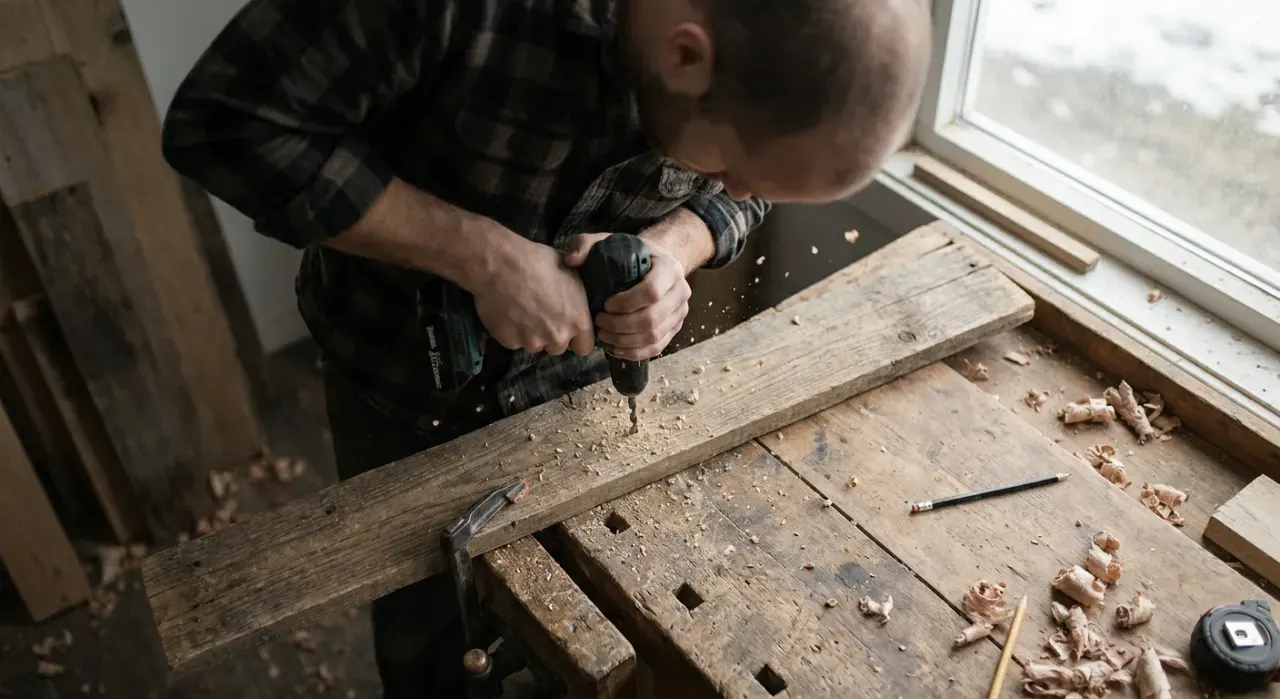
Give it a dedicated circuit
| Setup | Result |
|---|---|
| Saw alone on a 15A circuit | Generally fine for portable/contractor saws |
| Saw + dust collector on same circuit | Likely to trip; combined draw too high |
| Saw + shop lights/other tools | Nuisance trips, stressed wiring |
| Cabinet saw on 15A circuit | Insufficient; needs 20A or 240V |
The practical rule is that nothing else meaningful should be drawing on the circuit while the saw is running. That single habit prevents most trips.
When you need more circuit
Bigger saws need bigger circuits. Full-size cabinet saws and higher-powered motors commonly require a 20-amp 120V circuit or a 240-volt circuit because they draw more than a 15-amp line can safely deliver. The saw’s nameplate and manual state the required circuit — follow it rather than guessing. Critically, do not swap a 15-amp breaker for a 20-amp one to stop trips: the breaker protects the wiring, and if the wire is only rated for 15 amps, a larger breaker is a fire hazard. Upsizing a circuit properly is a licensed electrician’s job.

Extension cords and voltage drop
Plug the saw straight into the outlet whenever you can. If a cord is unavoidable, use a heavy-gauge (low AWG number) cord kept as short as possible and rated for the saw’s amperage. A thin or long extension cord causes voltage drop, which makes the motor draw more current, run hotter, and trip breakers — overloaded cords and outlets are near the top of the CPSC's home electrical safety checklist — a frequent hidden cause of both nuisance trips and motor strain. Follow the manufacturer’s cord guidance.
Where to go next
Related current questions: how many amps a circular saw draws covers the handheld equivalent. Shopping the shop out? The best circular saws ranks models on owner ratings. Everything sits under the power tools and workshop hub.
We never buy or physically test the products we rank — recommendations come from aggregated owner reviews and expert consensus, and the method is on how we rank. Follow your saw’s nameplate and manual, and use a licensed electrician for circuit work.