 Garden

Affiliate Disclosure
Some links on this page are affiliate links. As an Amazon Associate, we earn from qualifying purchases — at no extra cost to you. We do not buy, test, or physically handle the products we cover; our rankings come from aggregated owner reviews, ratings and expert consensus. Commissions never change our verdicts. How we rank · full disclosure.
The short answer: for most people the 5"x5" sprouting kit with a humidity dome is the best microgreen kit — fine mesh for tiny seeds, a dome to hold humidity, and no soil to buy or clean. Choose the Seed Sprouter Tray kit if you just want the cheapest way to try it, and the Back to the Roots DIY kit if you have never grown anything and want the seed and medium included.
The word "kit" hides a lot in this category. Some kits are a complete system — seed, medium, tray and instructions in one box — and some are two bare trays with a lid and a hopeful photo of greens on the packaging. The gap between those two matters most to a first-time grower, who orders the second kind expecting the first and finds there is nothing to actually plant. This page sorts six kits by what is genuinely in the box and who each one suits.
What Makes a Microgreen Kit Worth Buying
A kit is only worth a premium over a plain tray if it removes a decision or a purchase. Judged that way, four things separate them:
- What is actually included. Seed and medium in the box mean you can plant on day one. A tray-only "kit" means a second order before anything grows. This is the difference buyers most often miss.
- Soil-free or soil-based. Mesh trays and jars grow on water and rinse clean; soil trays give a denser crop but more mess. Most beginners are happier soil-free.
- Reusability. A mesh tray or sprouter jar runs endless crops for the cost of seed. A guided beginner kit is finite by design — excellent for learning, not for the long run.
- Footprint. A jar kit lives on a windowsill; a self-watering tray owns a stretch of counter. Match the kit to the space you will actually give it.

The Microgreen Kits at a Glance
Our #1 Pick: The 5"x5" Sprouting Kit with Humidity Dome
This kit wins because it gets the two things beginners struggle with exactly right: seed retention and humidity. The 1.2mm mesh is fine enough to hold broccoli, alfalfa, radish and clover seed without it washing through, which is where cheaper coarse-mesh trays fail, and the humidity dome keeps the first critical days of germination even and fast.
What it does better than the others. It is soil-free, so there is nothing to buy, spill or clean between crops — you rinse the trays and start again. The BPA-free food-grade plastic is the right call for something you grow food in, and the whole thing resets in minutes. For a first grower that removes every one of the usual failure points at once: no soil mess, no seed washing away, no guessing at humidity.
Consensus Score █████████░ 8.8 — a consistently strong reputation as an easy, repeatable first kit, with the standard note that you supply your own seed.
Where it is weak. Seed is not included, so budget a bag from the start — our best microgreen seeds guide covers what to buy. The 5"x5" trays are modest, so a household eating microgreens daily will want several running at once. And soil-free crops stand for a shorter window than soil-grown ones before they need cutting.
Check price on Amazon → (paid link)
The Microgreen Kits, Ranked

Best for a first grower who wants everything to sprout on the counter without soil or mess
- Fine 1.2mm mesh holds tiny broccoli and clover seed
- Humidity dome speeds and evens germination
- BPA-free food-grade plastic throughout
- Soil-free — rinse and reuse between crops
Why buy it: The most complete no-fuss starting point on the page: mesh trays fine enough for the smallest seeds, a dome to hold humidity, and no soil to buy or clean up, so a first crop is genuinely a fill-and-rinse job.
Best for the cheapest reliable way to find out whether microgreens are for you
- Large-capacity soil-free tray with drainage
- Food-grade PP, rinses clean for reuse
- Handles microgreens, wheatgrass and bean sprouts
- Lowest sticker price of any kit here
Why buy it: The lowest-risk way in: a big soil-free tray with a lid for a few dollars, so a first failed crop costs almost nothing and a first success pays the kit off immediately.

Best for an absolute beginner or a gift, where guided variety matters more than bulk yield
- Six guided grows in one box
- Seed and growing medium included — nothing else to buy
- Clear step-by-step instructions for first-timers
- Recognized brand with strong beginner support
Why buy it: The kit that assumes you have never grown anything: six pre-portioned grows with the medium and instructions included, so the first harvest happens without a single supply run or judgement call.

Best for sprouts and small microgreen batches in a kitchen with no counter space to spare
- Two wide-mouth jars with stainless sprouter lids
- Stand, blackout sleeves and drain tray included
- Grows broccoli, alfalfa and bean sprouts
- Compact — lives on a windowsill
Why buy it: The whole system in two jars: lids, stand, blackout sleeves and drain tray, so it produces fresh sprouts in the footprint of a coffee mug rather than a tray on the counter.
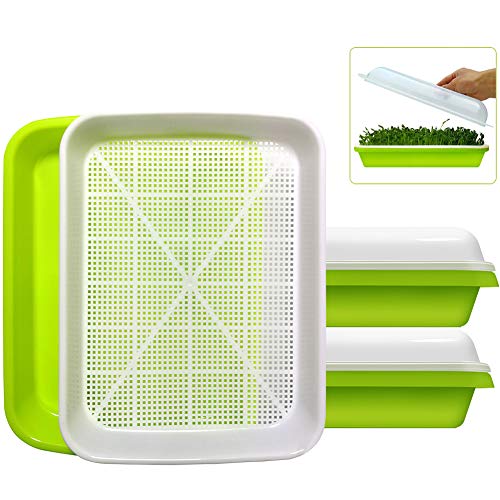
Best for running two crops at once so there is always a tray ready to cut
- Two trays with humidity lids for staggered sowing
- BPA-free food-grade, soil-free
- Large capacity for wheatgrass and microgreens
- Rinse-and-reuse construction
Why buy it: Two trays for the price of one cheap kit lets you stagger sowing, so a fresh crop is always days behind the one you are cutting rather than starting from zero each time.

Best for a grower who wants a finished-looking countertop kit with seeds already included
- Self-watering reusable tray reduces daily attention
- US premium seeds and grow mats included
- Bamboo frame that suits an open kitchen
- Everything needed for the first crop in one box
Why buy it: The most finished kit here — a self-watering tray, seeds and mats in a bamboo frame that looks deliberate on a counter, so the first crop needs neither extra purchases nor twice-daily watering.
Quick Comparison
| Product | Best for | Rating | Price | Buy |
|---|---|---|---|---|
| Microgreen Sprouting Kit, 5"x5" Trays with Humidity Dome (BPA-Free) | Best Microgreen Kit Overall | — | Check (paid link) | |
| Seed Sprouter Tray Kit with Lid, BPA-Free PP | Best Value Kit | — | Check (paid link) | |
| Back to the Roots DIY Microgreen Grow Kit, 6-Grow Variety Pack | Best Beginner & Gift Kit | — | Check (paid link) | |
| Kitmiido Organic Sprouting Jar Kit, 2 x 32oz Mason Jars | Best Jar Kit | — | Check (paid link) | |
| SUNPRO Seed Sprouter Tray Kit, 2-Pack with Humidity Lid | Best Twin-Tray Kit | — | Check (paid link) | |
| Microgreens Growing Kit — Self-Watering Tray with Seeds & Grow Mats | Best Premium Complete Kit | — | Check (paid link) |
How to Choose the Right Kit
Start with how much hand-holding you want. If this is your first time growing anything, a guided kit with seed and medium included removes every decision — the Back to the Roots pack is built for exactly that. If you are comfortable buying seed separately and want gear that lasts, a reusable mesh tray or jar kit is the better long-term buy. Then match the kit to your space and appetite. A single windowsill and occasional garnishes point to a jar kit; a household eating microgreens on everything wants twin trays or a self-watering tray running continuously.
Whatever you pick, the kit is only half the system. The other half is what you sow and where you sow it, and those have their own dedicated guides: best microgreen seeds for what to plant, best microgreen trays if you decide to scale up in soil, and best microgreens growing kits for the fuller countertop systems.

The Mistakes That Ruin a First Microgreen Crop
The failures new growers report are consistent and every one is preventable. Sowing seed too thickly is the biggest — a piled layer traps moisture and grows mold instead of clean stems, so sow an even single layer with seeds nearly touching. Top-watering the greens wets the leaves and invites the same mold; water from below wherever the kit allows it. Leaving the humidity dome on too long after germination suffocates the crop — lift it once the seeds have sprouted and give them air and light. And buying a "kit" that turns out to be trays only leaves a first-timer with nothing to plant on arrival, which is why we flag on every entry whether seed is actually included. Get those four right and a first crop rarely fails.
How We Rank Microgreen Kits
We do not buy, test or physically handle these kits. These rankings come from reading aggregated owner reviews across the category, weighted toward the complaint that recurs most: buyers who ordered a "kit" and received only trays, with no seed to plant. So the first thing we check is what the listing genuinely includes, and we say plainly when seed is not in the box. Beyond that we weigh mesh fineness against the seeds people actually grow, reusability against price, and long-tail reviews written several crops in over launch-window enthusiasm, because a kit that still works on its tenth crop is the only durability signal that counts. Prices were current at the time of writing and change often. Full method on how we rank.
The Verdict
The 5"x5" sprouting kit with a humidity dome is the microgreen kit we would hand a friend starting out: soil-free, forgiving, and endlessly reusable. Take the Seed Sprouter Tray kit to try microgreens for the price of a coffee, the Back to the Roots DIY kit if you want seed and medium included for a true first grow, and the self-watering complete kit if you want a finished countertop system. Then buy seed in bulk from our best microgreen seeds guide and browse the full small-space gardening hub or every guide at resources. Check the current price on Amazon → (paid link)