 Garden

Affiliate Disclosure
Some links on this page are affiliate links. As an Amazon Associate, we earn from qualifying purchases — at no extra cost to you. We do not buy, test, or physically handle the products we cover; our rankings come from aggregated owner reviews, ratings and expert consensus. Commissions never change our verdicts. How we rank · full disclosure.
The short answer: for a complete, sow-immediately setup, buy the Gardzen 5-Set trays with domes. Want something that lasts for years? The rigid Burpee SuperSeed is the durable pick, and the heavy-duty RooTrimmer 1020 base trays are the leak-proof foundation for bottom-watering. Match the cells and format to how you actually sow.
Seed starting trays are the unglamorous backbone of raising your own plants: they hold the cells, manage the water, and either survive for years or crack in a season. The decisions that matter are practical — cell size, drainage, durability, and whether you want domes and watering bases bundled in or prefer to build a flexible 1020 system yourself. This page ranks the options on exactly those points.
What Actually Separates Good Seed Starting Trays
Trays look interchangeable and are not, and these are the axes the ranking turns on:
- Cell size and count. Bigger cells forgive watering lapses and suit long-stay seedlings; more, smaller cells pack in volume. The right balance depends on what you grow.
- Drainage plus a base. Holed cells over a solid base tray is the winning combination — it drains the soil and enables bottom-watering.
- Durability. Rigid reusable trays last for years; flimsy packs crack and warp within a season and cost more over time.
- 1020 compatibility. Standard-size trays work with any dome, heat mat and insert, keeping the whole setup flexible.
- What’s included. Domes and bases in the box get a beginner sowing at once; bare cell trays give a builder more flexibility for less.
The Trays at a Glance
Our #1 Pick: The Gardzen 5-Set Trays with Domes
These are the trays most people should start with, because they hand you a complete, working seed-starting system in one box.
Everything needed, nothing missing. Each of the five sets pairs a cell tray with drainage holes, a solid watering base to catch runoff and enable bottom-watering, and a vented humidity dome to hold moisture during germination. That means you can fill, sow and cover the moment the box arrives, without discovering you also need domes or bases — the frustration that greets people who buy bare cell trays without realizing it. Two hundred cells across the set is enough for a genuine first season of vegetables and flowers.
Proven and standard. The design is Amazon’s Choice with a very large, long-running owner base, which is the clearest evidence that the trays hold together, the domes fit and the bases do not leak. Because they follow the standard footprint, the domes and bases also play nicely with other 1020 gear you add later, like a heat mat under the base. For a beginner who wants to get seeds in soil this week rather than assembling a system from parts, this is the straightforward answer.
Consensus Score ████████░░ 8.8 — the complete, proven starter set that leaves nothing to buy separately.
Where it is weak. The cells and domes are lighter-duty than premium reusable trays, so with rough handling they will not last as many seasons; the cells are on the smaller side, so fast growers need potting up promptly; and heavy-handed watering can flex the thinner base trays.
Check price on Amazon → (paid link)
The Trays, Ranked

Best for the beginner who wants complete tray-and-dome sets ready to sow out of the box
- Five trays with cells, bases and vented humidity domes
- 200 cells total across the set
- Drainage holes and watertight base trays
- Amazon's Choice with a very large owner base
Why buy it: The complete beginner package: five full tray sets with drainage cells, watering bases and vented domes, so you sow and cover in one go. Enough cells for a serious first season and a proven, top-rated design. The safe default.

Best for gardeners who want a rigid, long-lasting tray that survives many seasons
- Rigid, heavy-duty tray built for repeated reuse
- 36 generously sized cells for stronger starts
- Bottom-watering design for even moisture
- From a long-trusted seed brand
Why buy it: Where flimsy cell packs crack after a season, this Burpee tray is built to last for years. Larger cells give seedlings more room and the bottom-watering design keeps moisture even. The choice if you would rather buy once.

Best for growers starting a lot of seedlings who want plenty of cells and domes
- 120 cells across ten reusable trays
- Clear vented domes and see-through bases
- Drainage holes to prevent waterlogging
- Reusable and hugely popular
Why buy it: A high-cell-count kit for volume sowing, with vented domes and clear bases so you can watch moisture and roots. Reusable for several seasons and one of the best-selling seed-starting kits on the market. Great cells-per-dollar.
Best for the cheapest way to get lots of cells for succession sowing
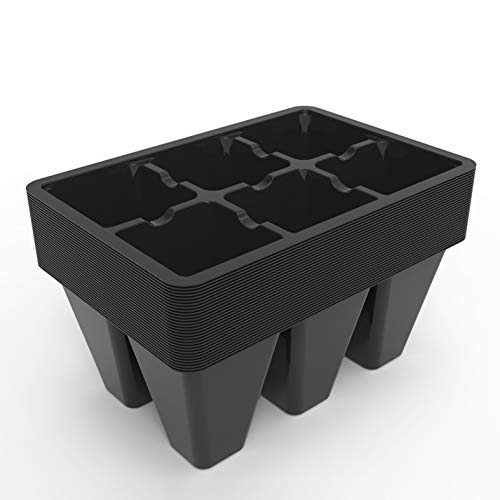
- Thirty 6-cell trays, 180 cells in total
- Drainage holes in every cell
- Compact standard cell size
- Very low price per cell
Why buy it: No domes, no bases, just a large stack of drainage cell trays for the least money. Ideal for succession sowing where you fill and empty trays constantly. Pair with a 1020 base tray and you have a flexible, cheap system.

Best for growers who want rugged, leak-proof base trays for bottom-watering and microgreens
- Extra-thick, heavy-duty 1020 trays with no holes
- Leak-proof for reliable bottom-watering
- Reusable for many seasons, resist cracking
- Also suited to microgreens and fodder
Why buy it: The workhorse base tray: thick, rigid, no-hole 1020 trays that hold water for bottom-watering and refuse to crack. Use them under cell trays or on their own for microgreens. The durable foundation of a serious setup.

Best for high-volume seed starters who want a big cell count with domes and bases
- 400 cells across ten complete sets
- Vented humidity domes and watering bases included
- Drainage holes throughout
- Everything needed for large sowings in one box
Why buy it: For anyone starting hundreds of seedlings, this kit bundles 400 cells with domes and bases so nothing else is needed. The most cells-with-domes in this group, at a sensible price. Overkill for a windowsill, ideal for a big garden.
Quick Comparison
| Product | Best for | Rating | Price | Buy |
|---|---|---|---|---|
| Gardzen 5-Set Seed Starter Trays with Vented Domes (200 Cells) | Best Seed Starting Trays Overall | — | Check (paid link) | |
| Burpee SuperSeed 36-Cell Reusable Seed Starting Tray | Best Durable Reusable Tray | — | Check (paid link) | |
| MIXC 120-Cell Seed Starter Trays with Humidity Dome (10-Pack) | Best Reusable Cell Kit | — | Check (paid link) | |
| Gardzen 30-Pack 6-Cell Seed Starting Trays | Best Budget Cell Trays | — | Check (paid link) | |
| RooTrimmer 1020 Extra-Thick Trays, No Holes (10-Pack) | Best Heavy-Duty 1020 Trays | — | Check (paid link) | |
| Mr. Pen Seed Starter Tray Kits, 10-Pack (400 Cells) | Best Large-Volume Kit | — | Check (paid link) |
Build a 1020 System, or Buy a Kit?
There are two sensible ways to buy trays, and they suit different growers. A complete kit — the Gardzen or Mr. Pen sets — bundles cells, bases and domes so a beginner is sowing immediately with nothing left to source. A modular 1020 system — heavy-duty no-hole base trays like the RooTrimmer, plus separate cell inserts and domes — costs a little more thought but gives far more flexibility: you drop in whatever cell size a given crop wants, reuse the rugged bases for years, and stack the whole thing on a heat mat. The base trays double as microgreen and fodder trays too. For a first season, buy the kit; once you know you will keep starting seeds, migrate to durable 1020 bases and pick cell inserts to match each crop. The standard footprint is what makes the modular route work, so whatever you buy, favor 1020-compatible gear and you can mix brands freely.
How We Rank Seed Starting Trays
We do not buy, sow into, or physically handle these trays. The ranking is built from aggregated owner reviews read across the full life of each product, published specifications, and the settled consensus of experienced seed starters. We weight cell size and count, drainage paired with a usable base, durability, 1020 compatibility and what is included, and we lean on long-tail reviews — where cracking, warping and leaking bases surface — over launch ratings. Prices were current at the time of writing and move around. Full method on how we rank.
The Trays, Assessed
1. Gardzen 5-Set — Best Overall
Covered above. Who it is for: beginners who want a complete kit. What it does better: cells, bases and domes all included and proven. Where it is weak: lighter-duty than premium reusable trays, with smaller cells.
2. Burpee SuperSeed 36-Cell — Best Durable Reusable Tray
Who it is for: gardeners who would rather buy once. The rigid build survives many seasons, the 36 larger cells give seedlings room, and bottom-watering keeps moisture even. Where it is weak: no dome included, and a lower cell count than the volume kits.
3. MIXC 120-Cell Kit — Best Reusable Cell Kit
Who it is for: volume sowing with domes and clear bases to watch moisture and roots. Reusable, popular and strong on cells-per-dollar. Where it is weak: the cells are small, so fast growers need potting up promptly.
4. Gardzen 30-Pack 6-Cell — Best Budget Cell Trays
Who it is for: the cheapest way to get lots of cells for succession sowing. Just drainage cell trays, 180 cells, at a very low price. Where it is weak: no domes or bases, so you supply a 1020 base and cover yourself.
5. RooTrimmer 1020 Heavy-Duty — Best Heavy-Duty Base Trays
Who it is for: growers who want rugged, leak-proof no-hole 1020 bases for bottom-watering and microgreens. Thick, rigid, crack-resistant and reusable for years. Where it is weak: they are base trays, not cell trays, so you add cell inserts for seed starting.
6. Mr. Pen 400-Cell Kit — Best Large-Volume Kit
Who it is for: high-volume starters who want a big cell count with domes and bases included. Four hundred cells and everything to cover them, in one box. Where it is weak: far more than a windowsill grower needs, and the light-duty cells favor careful handling.
How to Choose
Beginner who wants to sow now? The Gardzen 5-Set. Buy-once durability? The Burpee SuperSeed or RooTrimmer 1020 bases. Volume with domes? The MIXC or Mr. Pen kits. Cheap succession cells? The Gardzen 30-pack. Whatever you pick, favor the 1020 standard so everything fits together, and bottom-water to keep seedlings healthy. Trays work best filled with proper seed-starting soil, topped with a humidity dome, warmed by a seedling heat mat and lit by grow lights. More in the vegetable growing hub.
The Verdict
The Gardzen 5-Set trays with domes are the ones we would tell a friend to start with: a complete, proven system with nothing left to buy. Step up to the Burpee SuperSeed or RooTrimmer 1020 bases for years of reuse, choose the MIXC or Mr. Pen kits for volume, and the Gardzen 30-pack for cheap succession cells. Then standardize on 1020 and bottom-water. Explore the rest of the vegetable growing hub or the full resources library. Check the current price on Amazon → (paid link)