 Garden

Affiliate Disclosure
Some links on this page are affiliate links. As an Amazon Associate, we earn from qualifying purchases — at no extra cost to you. We do not buy, test, or physically handle the products we cover; our rankings come from aggregated owner reviews, ratings and expert consensus. Commissions never change our verdicts. How we rank · full disclosure.
The short answer: the best seeds for a beginner are a broad, forgiving variety kit rather than a single prized packet, and the 43-Variety Vegetable & Herb Kit is the one to buy — dozens of easy crops, non-GMO, for a few dollars. Want fruit in the mix too? The 44-pack is even wider. Starting with the easiest crops of all? A herb kit is the most rewarding first step.
The best advice for a new gardener is not which single seed to buy but how to buy: broadly, cheaply, and forgivingly. Your first year is really an experiment to learn what thrives in your soil, your climate and your level of attention, and a multi-variety kit lets you run that experiment across dozens of crops for the price of a couple of named packets. This page ranks beginner kits on exactly that — variety, ease, value and the freedom to save seed — and deliberately favors broad sets over single packets.
What Actually Makes a Good Seed Kit for Beginners
For a first-time grower the priorities are different from an experienced one, and these are the axes here:
- Breadth of variety. The single biggest factor. Many crops in one box let you discover what grows well for you without buying dozens of packets.
- Easy, forgiving crops. Kits weighted toward beginner-friendly vegetables and herbs, not fussy specialists.
- Value per seed. Thousands of seeds across many varieties for the price of a few packets is what makes a kit a smart first buy.
- Non-GMO and, ideally, open-pollinated. So you can save seed and grow it again next year — a rewarding, money-saving next step.
- Storage and labeling. A resealable bag or vault and plant markers help, because you will not sow it all in one season.
The Beginner Seed Kits at a Glance
Our #1 Pick: The 43-Variety Vegetable & Herb Kit
This is the kit most beginners should buy, because it is built around the one thing a first-year grower needs most: room to experiment.
Breadth is the whole point. Forty-three separate varieties in a single box means you can sow a wide spread of easy vegetables and herbs, see what comes up well in your conditions, and let the garden teach you — all without the cost and commitment of buying dozens of individual packets. That breadth is precisely what a beginner wants, because the honest truth of a first year is that some crops will thrive and some will sulk, and you cannot know which in advance. A kit turns that uncertainty from an expensive gamble into a cheap, broad experiment.
Value and freedom to save. Over 10,000 seeds for the price of a couple of named packets is exceptional value, and because the seeds are non-GMO heirloom types, you can save seed from the plants you love and grow them again next year rather than rebuying. The included resealable mylar storage bag matters more than it sounds: you will not sow all forty-three varieties in one season, and stored cool and dry, the rest stay viable for years. It is Amazon’s Choice with a large following, which is the clearest sign the seeds germinate and the packaging holds up.
Consensus Score ████████░░ 8.8 — the broad, cheap, forgiving starter kit the first-year grower actually needs.
Where it is weak. A kit gives you its selection, not a specific prized variety, so a grower set on one particular heirloom tomato should buy that packet separately; germination rates across so many varieties can be a little uneven; and the sheer number of varieties can overwhelm, so start with a handful rather than trying to sow everything at once.
Check price on Amazon → (paid link)
The Best Seeds for Beginners, Ranked

Best for the first-time grower who wants a broad, forgiving mix of easy crops in one box
- 43 separate vegetable and herb varieties
- Over 10,000 non-GMO heirloom seeds
- Includes a resealable mylar storage bag
- Amazon's Choice with a large owner base
Why buy it: The ideal beginner starter: 43 varieties means you can try a wide spread of easy crops and discover what grows well for you, without buying dozens of separate packets. Non-GMO heirloom seeds you can save, plus a storage bag. Unbeatable variety per dollar.

Best for beginners who want the widest possible spread including some fruit
- 44 varieties spanning vegetables, fruit and herbs
- Over 15,000 non-GMO seeds
- Broad enough to cover a whole first garden
- Strongly rated for germination and packaging
Why buy it: An even wider spread than the 43-variety kit, adding fruit to the vegetable and herb mix and more seeds overall. If you want one purchase to seed an entire beginner garden across the season, this is the generous choice.

Best for beginners who want a resealable, long-storing vault of open-pollinated staples
- 35 heirloom, non-GMO, open-pollinated varieties
- Over 16,000 seeds with 35 plant markers
- Packaged for long-term storage
- Focused on dependable staple crops
Why buy it: A staple-focused vault of open-pollinated varieties chosen to store well and grow reliably, with plant markers included. The pick if you want a dependable core of proven crops you can save and resow year after year, rather than novelties.

Best for beginners who want to start with easy, rewarding kitchen herbs
- 15 culinary herb varieties in one kit
- Over 4,300 non-GMO heirloom seeds
- Suits indoor, outdoor and hydroponic growing
- Best-seller with a very large following
Why buy it: Herbs are among the most forgiving and rewarding crops for a beginner, and this 15-variety kit is a superb, cheap way in. Grow them on a windowsill or outdoors, and enjoy fresh basil, cilantro and parsley from a first sowing.
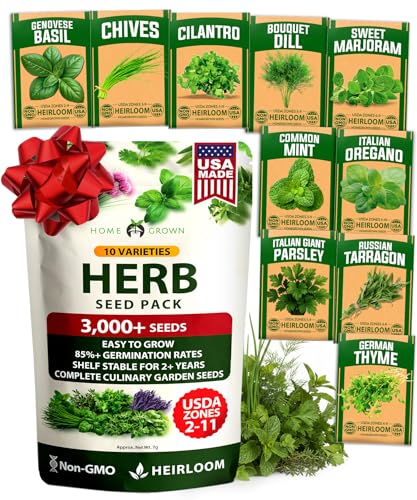
Best for a small, focused set of the most-used kitchen herbs
- 10 culinary herb varieties
- Over 3,000 non-GMO heirloom seeds
- Compact selection of the popular herbs
- Indoor, outdoor and hydroponic friendly
Why buy it: A tighter, cheaper herb selection focused on the herbs people actually use most. Ideal for a windowsill or a small first herb garden, without the surplus of a larger kit. The lowest-cost way to start growing your own herbs.

Best for beginners who specifically want certified organic herb seeds
- 10 certified organic, non-GMO heirloom herb varieties
- Presented as a tidy gift-style kit
- Suited to indoor and outdoor culinary gardening
- Well-rated for germination
Why buy it: For growers who want the organic label from the very first seed, this certified-organic 10-variety herb kit delivers. A clean, gift-ready set of the popular culinary herbs, and a lovely present for a beginner gardener as well.
Quick Comparison
| Product | Best for | Rating | Price | Buy |
|---|---|---|---|---|
| 43-Variety Assorted Vegetable & Herb Seed Kit (10,000+ Seeds) | Best Beginner Seed Variety Kit Overall | — | Check (paid link) | |
| 44-Pack Vegetable, Fruit & Herb Seed Kit (15,000+ Seeds) | Best Big Variety Value | — | Check (paid link) | |
| Gardeners Basics Survival Seed Vault, 35 Varieties (16,000+ Seeds) | Best Long-Storage Kit | — | Check (paid link) | |
| HOME GROWN Culinary Herb Seed Kit, 15 Varieties (4,300+ Seeds) | Best Herb Starter Kit | — | Check (paid link) | |
| HOME GROWN 10-Variety Herb Seed Kit (3,000+ Seeds) | Best Compact Herb Kit | — | Check (paid link) | |
| Sereniseed Certified Organic Herb Seeds, 10-Pack | Best Organic Herb Kit | — | Check (paid link) |
Start With the Beginner Seeds That Reward You Fast
Whatever kit you buy, the secret to sticking with gardening is early success, so sow the forgiving, fast crops first. Radishes and lettuce are up in days and ready in weeks, which is enormously encouraging for a beginner. Bush beans, peas, zucchini and cucumbers germinate readily and crop generously. And herbs — basil, cilantro, parsley, chives — are among the easiest and most rewarding of all, thriving on a windowsill and cut fresh into cooking. Leave the fussier, slower crops like tomatoes and peppers until you have a few easy wins behind you; they are worth growing but need warmth to germinate and a longer season to reward you. A broad kit lets you do exactly this: pick out the easy crops for your first sowings, and keep the rest for later in the season or next year. The other half of success is the growing setup, not just the seed — even the easiest seeds do better sown into proper conditions.
How We Rank Beginner Seed Kits
We do not buy, sow, or grow these seeds ourselves. The ranking is built from aggregated owner reviews read across the full life of each product, published specifications, and the settled consensus of experienced gardeners advising beginners. We weight breadth of variety, the beginner-friendliness of the crops included, value per seed, non-GMO and open-pollinated status (so seed can be saved), and storage and labeling extras. We deliberately favor broad multi-variety kits over single packets, because breadth is what a first-year grower needs. We lean on long-tail reviews for real germination experience over launch enthusiasm. Prices were current at the time of writing. Full method on how we rank.
The Kits, Assessed
1. 43-Variety Vegetable & Herb Kit — Best Overall
Covered above. Who it is for: most first-time growers. What it does better: huge breadth, great value and saveable heirloom seed. Where it is weak: a fixed selection rather than specific prized varieties.
2. 44-Pack Vegetable, Fruit & Herb Kit — Best Big Variety Value
Who it is for: beginners who want the widest spread, fruit included. Forty-four varieties and 15,000+ seeds cover a whole first garden. Where it is weak: more than most beginners can sow in a season, and the fruit crops can be a step harder than the easy vegetables.
3. Gardeners Basics Survival Vault — Best Long-Storage Kit
Who it is for: beginners who want a dependable core of open-pollinated staples packaged to store for years, with plant markers included. Where it is weak: focused on reliable staples rather than variety novelty, and pricier than the general kits.
4. HOME GROWN 15-Variety Herb Kit — Best Herb Starter Kit
Who it is for: beginners starting with the easiest, most rewarding crops. Fifteen herbs to grow indoors or out, cheaply. Where it is weak: herbs only, so it is a companion to a vegetable kit rather than a whole garden in itself.
5. HOME GROWN 10-Variety Herb Kit — Best Compact Herb Kit
Who it is for: a tighter, cheaper set of the most-used kitchen herbs for a windowsill or small garden. Where it is weak: fewer varieties than the 15-pack, so less to explore.
6. Sereniseed Organic Herb Kit — Best Organic Herb Kit
Who it is for: beginners who specifically want certified organic herb seed, and a gift-ready set. Where it is weak: ten herb varieties only, at a slightly higher price for the organic certification.
How to Choose Seeds for Beginners
Want the broad, forgiving default? The 43-variety kit. The widest spread with fruit? The 44-pack. A storable core of staples? The survival vault. Easiest, most rewarding start? A herb kit — the 15-variety, the compact 10, or the organic set. Whichever you pick, sow the easy fast crops first and keep the rest for later. Seeds are only half of it: warmth-loving varieties do best started in seed-starting trays with proper seed-starting soil, a humidity dome and a heat mat. More in the vegetable growing hub.
The Verdict
The 43-Variety Vegetable & Herb Kit is what we would tell a beginner to buy: broad, cheap, forgiving, and full of saveable heirloom seed to experiment with. Go wider with the 44-pack, choose the survival vault for storable staples, and start with a herb kit for the easiest, most rewarding first crops. Then sow the easy ones first and let the garden teach you. Explore the rest of the vegetable growing hub or the full resources library. Check the current price on Amazon → (paid link)