 Garden
Affiliate Disclosure
Some links on this page are affiliate links. As an Amazon Associate, we earn from qualifying purchases — at no extra cost to you. We do not buy, test, or physically handle the products we cover; our rankings come from aggregated owner reviews, ratings and expert consensus. Commissions never change our verdicts. How we rank · full disclosure.
The short version: the best large room humidifier is the AIRCARE MA console. Above roughly 500 square feet the physics change: a tabletop unit runs out of water long before it moves the reading, and an ultrasonic machine scaled up to the job coats the whole room in mineral dust. Console evaporative humidifiers answer both problems — several gallons of capacity, and a wick that traps minerals instead of dispersing them. The AIRCARE MA is the best-supported machine in that class. If circulation is your specific problem, the Vornado Evap40 throws moisture further than anything else here.
If the space you are humidifying is actually a normal bedroom, do not buy a console — best humidifier for a bedroom is the right page and will save you money. If you want the technology explained before you choose, best evaporative humidifier covers the wick-based field in detail, and the general ranking sits in best humidifier.
Top Picks at a Glance
Our #1 Pick: AIRCARE MA Console
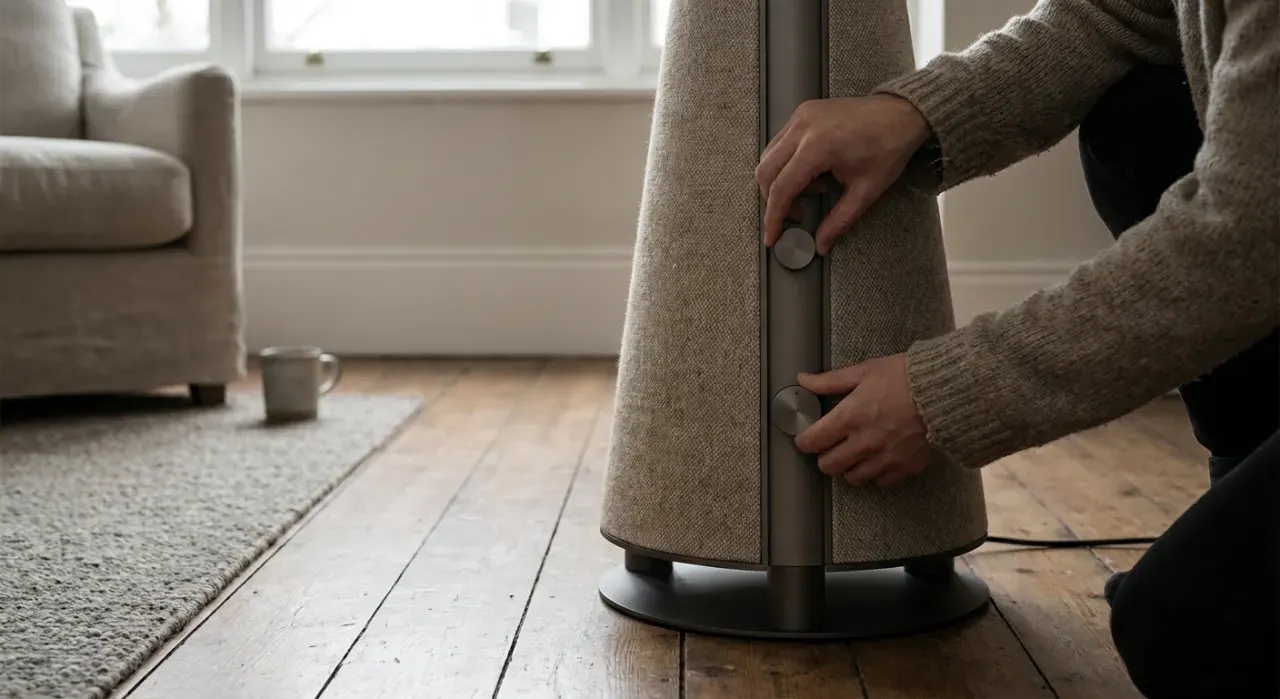
AIRCARE has built console evaporative humidifiers for decades, and the MA is the model most large American rooms end up with. It is a cabinet rather than an appliance: a large water reservoir, a wick that stands in it, a fan that pulls room air through the wet media, and a digital humidistat that reads the room and throttles the fan to hold your target.
The evaporative principle is what makes it right for a big space. Output rises when the air is dry and falls automatically as the room approaches saturation, so it self-limits rather than pumping moisture into a room until the windows run. In a large area where you cannot see every corner, that behavior is worth more than any headline output number.
The second advantage is invisible until you notice it is missing: no white dust. Minerals stay in the wick. Scale that up mentally — the EPA notes that ultrasonic and impeller humidifiers disperse tap-water minerals into the air as white dust, and a unit large enough for a great room would deposit a fine film across every surface in it within a week of hard-water use.
Consensus Score █████████░░ 8.7 — a long, stable owner consensus built over years rather than a recent sales spike.
The honest weaknesses: it is a large piece of furniture and it looks like one; the fan hums continuously, which is fine in a living room and wrong in a bedroom; wicks are a recurring cost every one to three months and stiffen fast in hard water; and refilling several gallons means either a hose or a lot of pitcher trips.
Check price on Amazon → (paid link)
The Ranked Field

Best for an open-plan living area or a whole floor of a house
- Console tank rated for whole-house coverage
- Evaporative wick — no white dust at all
- Digital humidistat holds a set percentage
- Cannot over-humidify a room by design
Why buy it: the only format that can genuinely humidify a whole floor, and the wick means none of the mineral dust that a big ultrasonic unit would scatter everywhere.
Best for a large great room where moisture needs to reach the far corners
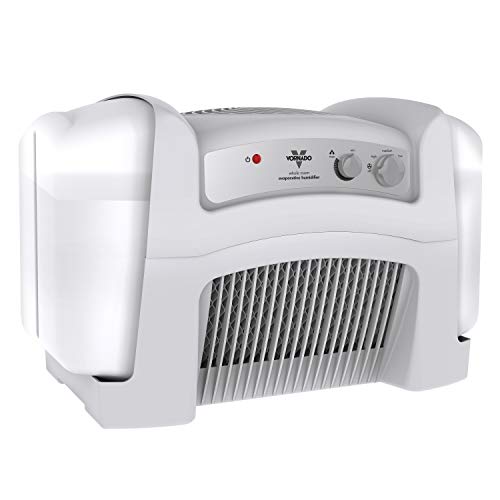
- Vortex air circulation moves moisture across the room
- 4-gallon dual-tank capacity
- Adjustable humidistat and three speeds
- Both tanks lift out for filling
Why buy it: circulation is the difference between humidifying a room and humidifying the three feet around the machine — this is the one that actually moves the air.

Best for a large open home where a low console would be blocked by furniture
- Raised pedestal outlet clears low furniture
- Digital humidistat with automatic shut-off
- Coverage claimed for very large homes
- Furniture-style cabinet rather than a plastic box
Why buy it: output raised above sofa height, which in a furnished great room reaches far more of the space than a floor-level console.
Best for a very large or commercial-sized space up to about 2,700 sq ft
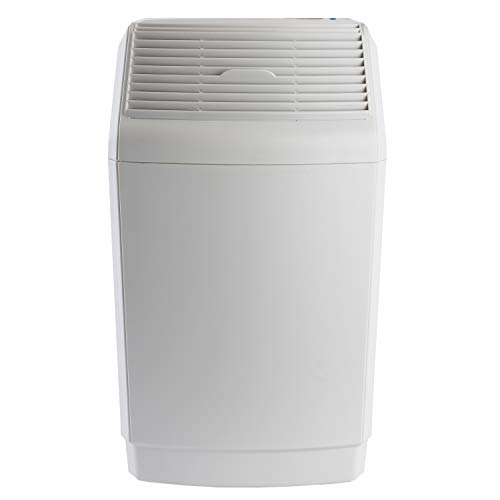
- 6-gallon capacity, the largest here
- Rated to roughly 2,700 sq ft
- Digital controls with auto humidistat
- Automatic shut-off when the tank empties
Why buy it: six gallons of water on board, which is what a genuinely large space needs before refilling becomes the daily chore that kills the habit.

Best for a large bedroom or a mid-sized open area with app control
- 6L top-fill tank, up to 60 hours on low
- Humidistat with a target percentage
- App scheduling and voice control
- Near-silent ultrasonic operation
Why buy it: the largest tank you can get in a quiet, app-controlled ultrasonic body — right where a console would be overkill but a small unit cannot cope.
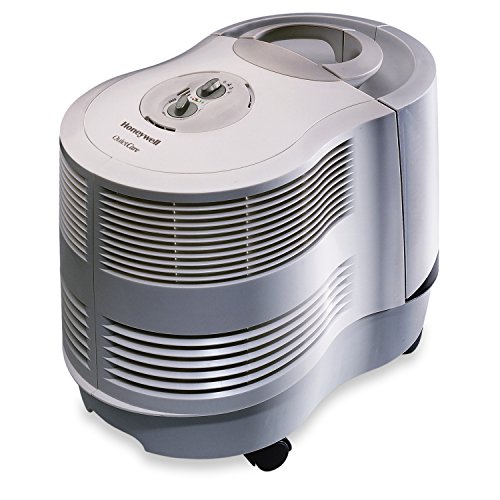
Best for a large room where simple mechanical controls are preferred
- Console-scale output with a wicking filter
- Simple dial controls, nothing to pair
- Multiple fan speeds
- Removable tanks for filling
Why buy it: console output with mechanical controls and a well-known filter supply, for people who want no screens involved.
Quick Comparison
| Product | Best for | Rating | Price | Buy |
|---|---|---|---|---|
| AIRCARE MA Whole-House Console-Style Evaporative Humidifier | Best Overall | — | Check (paid link) | |
| Vornado Evap40 4-Gallon Evaporative Humidifier | Best Airflow | — | Check (paid link) | |
| AIRCARE EP9 800 Digital Whole-House Pedestal Evaporative Humidifier | Best Whole-House Pedestal | — | Check (paid link) | |
| AIRCARE 831000 Space Saver 6-Gallon Evaporative Humidifier | Best Capacity | — | Check (paid link) | |
| LEVOIT Classic 300S Ultrasonic Smart Top Fill Humidifier | Best Smart Option | — | Check (paid link) | |
| Honeywell Cool Moisture Console Humidifier | Best Traditional Console | — | Check (paid link) |
How We Rank
We do not buy, test or physically handle humidifiers. We rank them on evidence that scales: star ratings weighted by review volume, tank capacity and coverage claims compared like for like, the recurring complaints that surface in critical reviews, long-term owner reports written after a full heating season, and expert consensus across established outlets as a cross-check. For a large-room page we weight three things harder than usual — gallons on board, whether the machine actually circulates air rather than just producing moisture, and the annual cost of wicks — because those decide whether the humidity reading in the far corner of the room ever moves. Prices were current at the time of writing. Full method on how we rank.
The Large Room Humidifiers, Reviewed
1. AIRCARE MA Console — Best Overall
Covered above. What owners praise: genuine whole-floor coverage, no mineral dust, a humidistat that holds a set point, and years of service from a simple mechanism. What owners complain about: the size, continuous fan noise, wick cost and the stiffening of wicks in hard water, plus the chore of refilling several gallons. The reference console humidifier in the American market.
2. Vornado Evap40 — Best Airflow
Vornado’s whole argument is air movement, and in a large room that argument is correct. Producing moisture is easy; getting it 25 feet across a great room to the corner where the piano sits is the actual problem, and the Evap40’s vortex circulation is the only design here that addresses it directly. Four gallons across two lift-out tanks makes filling manageable rather than a two-handed wrestle. What owners praise: even humidity across a big space rather than a damp patch near the machine, dual tanks that fit under a faucet, and an adjustable humidistat. What owners complain about: it is the loudest unit here on high because circulation is the point; wicks need frequent replacement; and the base needs regular cleaning to avoid odor. Buy it when the room is wide rather than merely large.
3. AIRCARE EP9 800 Pedestal — Best Whole-House Pedestal
The pedestal format solves a problem people only notice after buying a console: a low cabinet sitting behind a sofa is blowing humid air into the back of the sofa. Raising the outlet above furniture height gets it into the room. The EP9 800 pairs that with a digital humidistat, automatic shut-off and a furniture-style cabinet that survives being in a living room rather than a utility space. What owners praise: coverage in a furnished open plan, the look, and a display that shows both current and target humidity. What owners complain about: price at the top of the console class, a large footprint, wick cost, and a fill opening that is higher off the ground and therefore more awkward with a full pitcher. The right console for a furnished great room.
4. AIRCARE 831000 Space Saver — Best Capacity
Six gallons is the headline and it is the right headline for a very large space. At console output rates a four-gallon machine in a 2,000 square foot open plan can empty in a day, and a daily refill is the habit that eventually stops. The 831000 is rated to roughly 2,700 square feet with digital controls and an auto humidistat. What owners praise: the runtime between fills, the coverage, and simple, robust operation. What owners complain about: weight and bulk, a fan that is audible from the next room, wick cost proportional to its size, and a cabinet that is not attractive furniture. Right for a very large or semi-commercial space.
5. LEVOIT Classic 300S — Best Smart Option
The 300S is the bridge model: too small for a great room, too large to be called a bedroom unit. Its 6-liter tank runs up to 60 hours on low, it fills from the top, and it holds a target humidity with app scheduling and voice control. In a large primary bedroom or a mid-sized open area it does the job with none of the console’s bulk or fan hum. What owners praise: runtime, near-silence, top-fill convenience and genuine humidistat control. What owners complain about: as an ultrasonic unit it leaves white mineral dust with hard tap water, it is out of its depth above roughly 500 square feet, and the base needs weekly descaling. Right at the smaller end of large; wrong for a whole floor.
6. Honeywell Cool Moisture Console — Best Traditional Console
Honeywell’s console is the mechanical alternative: dial controls, several fan speeds, removable tanks and a wicking filter, with nothing to pair and no display to fail. Filter supply is easy to find in any hardware store, which matters for a consumable you buy several times a season. What owners praise: straightforward operation, easy filter availability, reliable output, and a price under the AIRCARE units. What owners complain about: no digital humidistat readout, so you are setting a dial and checking a separate hygrometer; a fan that is clearly audible; and tanks that are awkward to carry when full. A sensible, cheaper console for people who want no electronics.
Sizing a Large Room Humidifier
| Space | Tank capacity | Format |
|---|---|---|
| Up to 400 sq ft | 1–1.5 gallons | Tabletop — see our bedroom picks |
| 400–800 sq ft | 1.5–3 gallons | Large tabletop or small console |
| 800–1,500 sq ft | 3–4 gallons | Console evaporative |
| 1,500 sq ft and up | 4–6 gallons | Whole-house console or pedestal |
Two adjustments matter more than the square footage itself. Homes with forced-air heating lose humidity dramatically faster than homes with radiators or heat pumps, because every heating cycle pushes dry, heated air through the space — add roughly a size. And an older house with single glazing and air leaks behaves like a much larger sealed one, because the moisture you add keeps escaping. Ceiling height matters too: humidification is a volume problem, and a room with 12-foot ceilings has half again the air of the same floor area at eight feet.
Wicks: the Real Running Cost
Every evaporative machine here depends on a wick filter, and it is the recurring expense rather than electricity. A wick works by staying saturated and presenting a large surface area to moving air. Over time minerals from the water crystallize in the media, the wick stiffens, absorption falls, and the output quietly halves without any warning light.
Plan on replacing wicks every one to three months during a heating season, sooner in hard-water areas. The signs are a wick that has gone hard or crusty, a visible drop in water consumption, or a smell developing in the reservoir. Some owners extend life by rinsing a wick in a vinegar solution, which recovers a little absorption but never returns it to new. Buy wicks in multipacks and keep a spare, because a machine waiting on a filter is a machine not humidifying. Related background: evaporative vs ultrasonic humidifiers.
What Owners Actually Complain About
Read the critical reviews across all six machines and five themes repeat. Refilling leads, and it is the honest cost of the format — several gallons a day in a dry house means either a hose, a bucket routine, or a machine that spends half the season empty. Fan noise is second and is intrinsic: an evaporative humidifier is a fan blowing through a wet filter, so silence is not available. Wick cost and availability is third, particularly for owners who did not price the consumable before buying. Size comes fourth — console humidifiers are furniture, and photographs consistently understate them. And reservoir smell, which develops in any machine holding several gallons of standing water that is not cleaned every week or two — the EPA asks for every third day on a portable unit. Why a humidifier smells works through the causes.
Placement and Maintenance in a Big Space
Put a console where air can reach it and leave it, not in an alcove or hard against a wall behind a sofa: these machines pull room air in and push humid air out, and a blocked intake cuts output substantially. Central to the space, with a couple of feet of clearance, near an interior wall rather than under a cold window. Keep it off wood floors that would suffer from a slow leak, and away from the return grille of a forced-air system, which will read the humid air and confuse a thermostat-mounted sensor.
Set a target of 40 to 45 percent in winter and let the humidistat work. Watch the windows: condensation on the inside of the glass in the morning means the setting is too high for the outdoor temperature and needs backing off, regardless of what the display says. Empty and wipe the reservoir weekly, descale with white vinegar monthly in hard-water areas, and replace wicks on schedule. Full instructions are in how to clean a humidifier, targets are in ideal indoor humidity in winter, and if you want the actual reading rather than a guess, a device from best air quality monitor settles it. Keeping a home in the EPA’s recommended band — below 60 percent, ideally 30 to 50 — is a building-maintenance target, not a treatment for anything — nothing here is medical advice.
How to Choose Between These Six
Whole floor of a house, want the safe default? The AIRCARE MA console. Wide great room where the far corner never gets there? The Vornado Evap40. Furnished open plan where a low console is blocked? The AIRCARE EP9 800 pedestal. Very large or semi-commercial space? The AIRCARE 831000 with six gallons. Large bedroom or mid-sized area, want quiet and an app? The LEVOIT Classic 300S. Console output with no electronics? The Honeywell console. If your room turns out to be smaller than you thought, best bedroom humidifier is cheaper and better suited, and everything else lives in the air quality hub.
The Verdict
For most large rooms the AIRCARE MA console is the machine we would recommend: enough capacity to matter, a wick that keeps minerals out of the room, a humidistat that holds a target, and a self-limiting design that will not soak your window frames. Take the Vornado Evap40 if circulation is the problem, the EP9 800 if furniture is blocking a low console, and the 831000 if the space is genuinely huge. Whatever you buy, set a target rather than a speed, budget for wicks, and check the windows for condensation before you turn it up. Check price on Amazon → (paid link)