 Garden
Affiliate Disclosure
Some links on this page are affiliate links. As an Amazon Associate, we earn from qualifying purchases — at no extra cost to you. We do not buy, test, or physically handle the products we cover; our rankings come from aggregated owner reviews, ratings and expert consensus. Commissions never change our verdicts. How we rank · full disclosure.
Cleaning a humidifier is a five-minute job you should do far more often than you probably do — the EPA recommends emptying and drying it daily and disinfecting every third day. It costs nothing but white vinegar and a little disinfectant, and there’s no risk beyond ordinary chemical care. This isn’t about appearances: an uncleaned humidifier grows bacteria and mold in its standing water, and an ultrasonic unit sprays that straight into the air you breathe. The two rules are descale the mineral scale with vinegar and disinfect the tank — and never mix bleach and vinegar.
Tools and materials
- White vinegar for descaling and a manufacturer-approved disinfectant (dilute bleach or 3 percent hydrogen peroxide) for germs.
- A soft brush or old toothbrush for tight corners, plus a soft cloth and clean water for rinsing.
- Distilled water for refilling if you have hard water — it slows scale dramatically. See our best humidifier picks for models that resist buildup.
Step 1: Unplug and disassemble
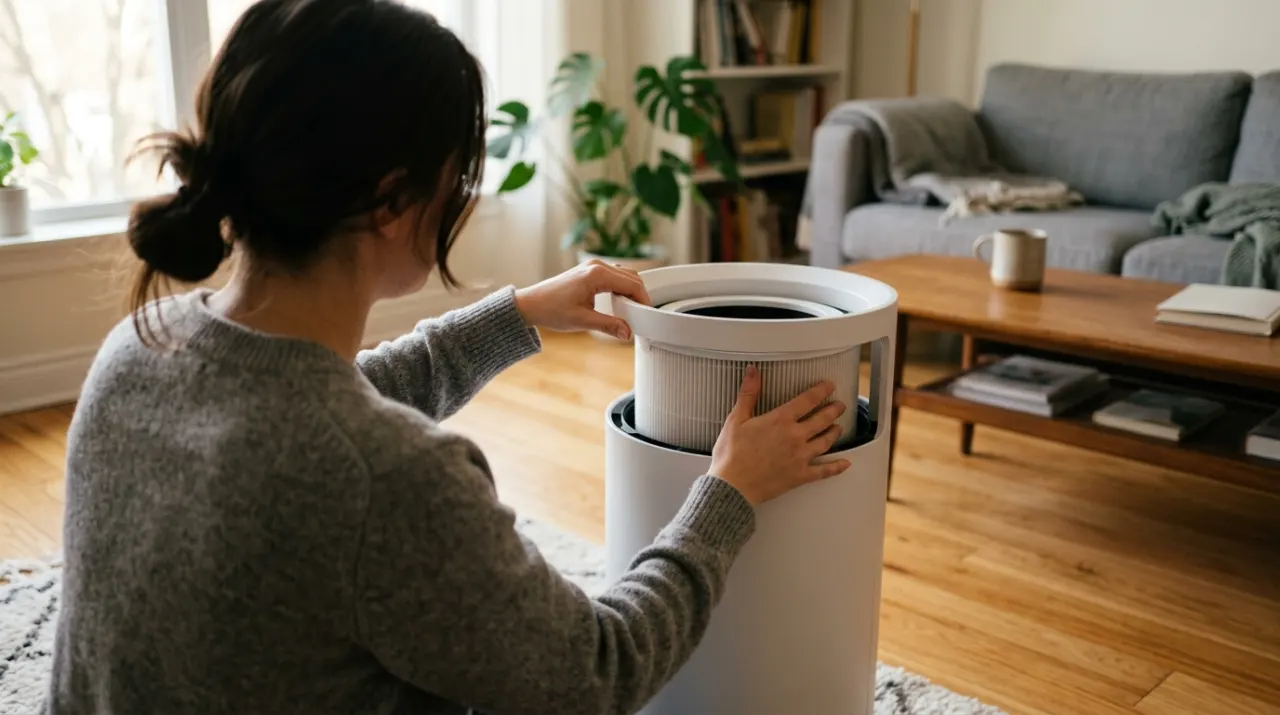
Switch off and unplug the humidifier — never clean a plugged-in unit. Empty any remaining water, and take it apart as far as the manual allows: remove the tank, the base, and any wick, filter, or nozzle. Set aside the wick or filter, which usually gets rinsed or replaced rather than soaked in vinegar.
Step 2: Descale with vinegar
Pour white vinegar into the base and tank over the chalky mineral deposits, or fill the tank with a vinegar-water mix, and let it soak 20 to 30 minutes. The acid dissolves the calcium and magnesium scale that builds up on the transducer, heating element, or tank walls. Scrub the loosened deposits with a soft brush; give heavy scale a second soak if needed.
Step 3: Disinfect the tank
After descaling, disinfect with the solution your manufacturer specifies — commonly about a teaspoon of bleach per gallon of water, or 3 percent hydrogen peroxide. Swish it through the tank and base and let it sit the recommended time to kill bacteria and mold. Critically, do this as a separate step from the vinegar and rinse in between — mixing bleach with vinegar releases toxic chlorine gas.
Step 4: Rinse thoroughly and dry
Rinse every part several times with clean water until you can’t smell vinegar or disinfectant — any residue can be aerosolized into the room. Wipe or air-dry all surfaces completely. Drying matters: a humidifier put away damp grows the very microbes you just killed. Let the parts dry fully before reassembling or storing.
Step 5: Maintain the schedule
Going forward, empty and dry the tank daily rather than topping off old water, and disinfect on the EPA’s every-third-day cadence (weekly at minimum). Use distilled water to slow scale, and replace wicks and filters on the manufacturer’s schedule. This routine is what keeps the mist clean instead of spreading mold and bacteria into your air.
Where to go next
Humidifier care sits alongside cleaning a dehumidifier and replacing an air purifier filter as core air-quality maintenance. If tap water is your issue, see whether tap water is safe in a humidifier. It all lives under the air quality hub.
We never buy or physically test the products we rank — our picks come from aggregated owner reviews and expert consensus, explained on how we rank. Follow your unit’s manual for its specific cleaning products.