 Garden
Affiliate Disclosure
Some links on this page are affiliate links. As an Amazon Associate, we earn from qualifying purchases — at no extra cost to you. We do not buy, test, or physically handle the products we cover; our rankings come from aggregated owner reviews, ratings and expert consensus. Commissions never change our verdicts. How we rank · full disclosure.
The short answer: empty and dry it every day, disinfect it every three days at minimum and weekly at the absolute outside, descale it monthly if you use tap water, and deep clean it before storage at the end of the season. The Consumer Product Safety Commission has advised daily emptying and drying plus regular disinfection since the 1980s, because a humidifier tank is warm standing water and will grow bacteria and mold within days. An ultrasonic unit then sprays whatever is in there into the room.
We do not buy or physically handle the units we rank; our picks come from aggregated owner reviews and expert consensus, set out in how we rank. Shortlists live in best humidifier, inside the air quality hub.
What does the full schedule look like?
Four intervals, each doing a different job. Daily emptying prevents the standing water that biofilm needs. Disinfection every three days kills what has established on the surfaces. Monthly descaling removes the mineral deposit that shelters organisms and, on ultrasonic models, chokes the transducer. Seasonal deep cleaning and dry storage prevents the unit turning into a sealed incubator over summer. Skipping the first interval is what makes all the others harder, because biofilm that has been allowed to establish is far more work to remove than water you tipped out.
| Interval | Task | Time | Why |
|---|---|---|---|
| Daily | Empty tank and basin, wipe, leave to air dry, refill fresh | 2 min | Removes the standing water bacteria need |
| Every 3 days | Disinfect with dilute bleach or hydrogen peroxide, rinse, dry | 20 min mostly unattended | Kills established biofilm |
| Weekly | Scrub basin and mist outlet with a soft brush | 10 min | Reaches the corners rinsing misses |
| Monthly | Descale with undiluted white vinegar soak | 30 min soak | Dissolves mineral scale, restores output |
| End of season | Full clean, replace wick or filter, dry fully, store uncovered | 1 hour | Stops mold growth in storage |
Why does it need emptying every single day?
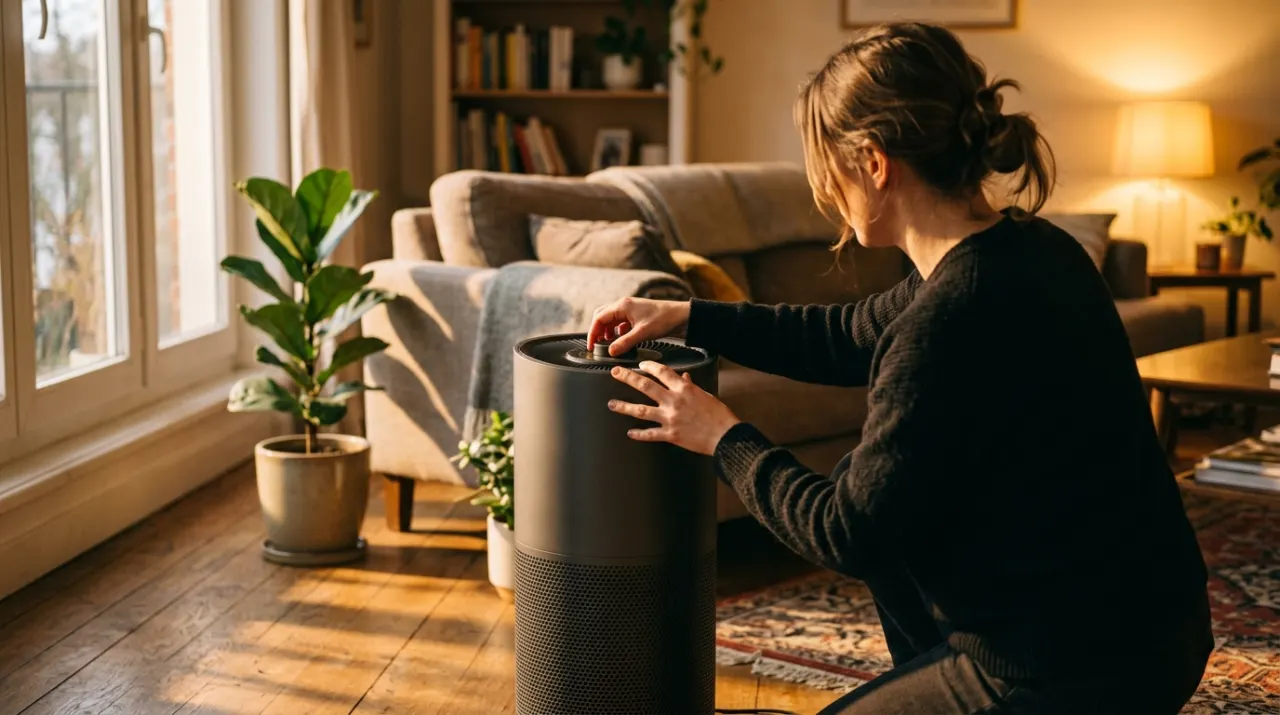
Because bacterial populations in warm standing water double in hours, not weeks. Topping up a partly full tank is worse than refilling an empty one, since it leaves the established colony in place and gives it fresh nutrients. Biofilm — the slippery layer you feel on the tank wall — is the visible stage, and by then the population is well established. The health concern is specific to humidifiers: ultrasonic and impeller models create an aerosol, so anything living in the reservoir gets a direct route into the air of the room where somebody is sleeping for eight hours.
Does the type of humidifier change how often?
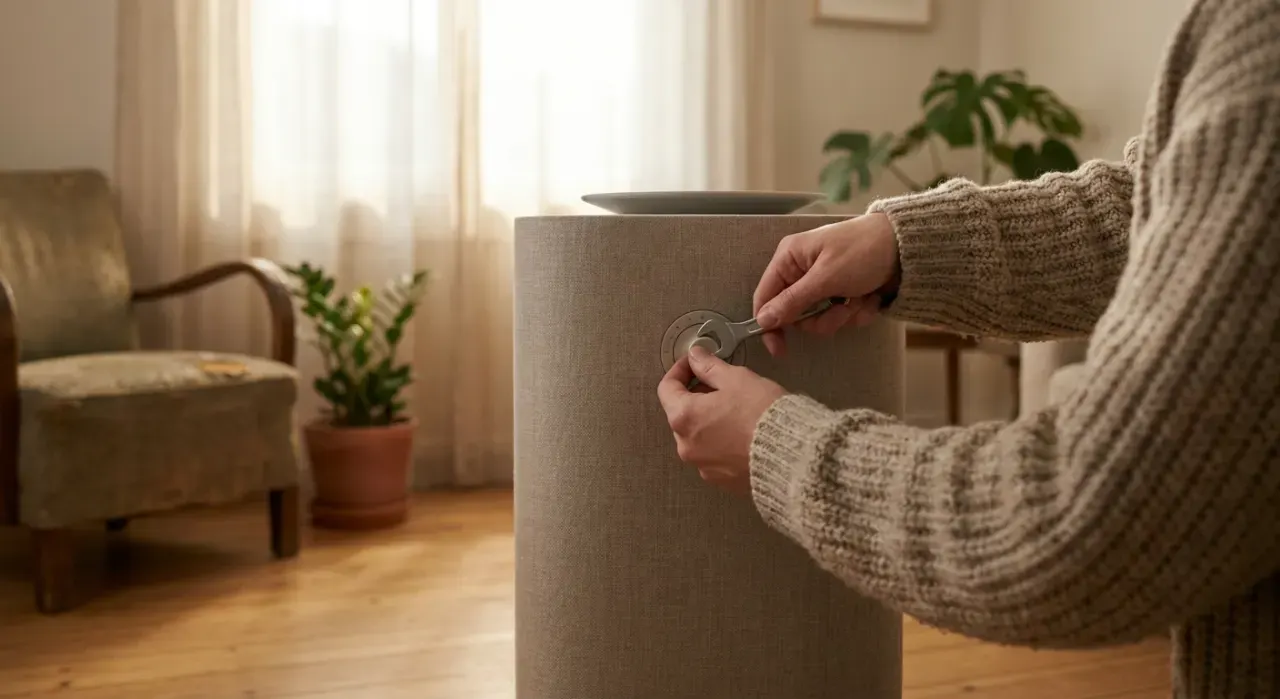
It changes the emphasis rather than the frequency. Ultrasonic units are the most demanding, because they aerosolize the tank water directly and the vibrating transducer disc scales up fast in hard water. Evaporative units are somewhat more forgiving, since the wick traps minerals and most organisms rather than releasing them, but the wick itself becomes the thing that goes bad and needs replacing every one to three months. Warm mist units boil the water, which handles the microbial side, but they scale heavily on the heating element and need the most aggressive descaling of the three.
The comparison in evaporative vs ultrasonic humidifier covers this in more detail, and cool mist vs warm mist covers the safety and power trade-offs that go with each.
Does water choice change the schedule?
It changes descaling, not disinfection. Hard tap water deposits calcium and magnesium on every wet surface, so a household on well water or in a hard-water region may need to descale every two to three weeks rather than monthly. Distilled or demineralized water eliminates that entirely and also stops the white mineral dust that ultrasonic units throw across furniture — the cause is explained in why does my humidifier leave white dust. What distilled water does not do is sterilize anything, so the daily and three-day tasks stay exactly as they are. The full argument is in can you use tap water in a humidifier.
If yours has already developed an odor, that is a diagnosis rather than a maintenance question, and why does my humidifier smell walks through the causes. The step-by-step method for each interval above is in how to clean a humidifier. And keep an eye on the number the machine is chasing: the EPA recommends indoor relative humidity between 30 and 50 percent, and a unit running past that is both wasting water and creating the damp surfaces that mold wants.