 Garden

Affiliate Disclosure
Some links on this page are affiliate links. As an Amazon Associate, we earn from qualifying purchases — at no extra cost to you. We do not buy, test, or physically handle the products we cover; our rankings come from aggregated owner reviews, ratings and expert consensus. Commissions never change our verdicts. How we rank · full disclosure.
To get rid of cooking smells, ventilate hard while you cook and for 15 to 20 minutes after — run the range hood on high, open windows for a cross-breeze, and use a fan to push air out — then mop up what lingers with activated carbon, baking soda, or a simmer pot of citrus and vinegar. Ventilation removes the bulk of the odor at the source; absorbers handle the residue that has settled into the room. The reason smells linger is grease and oil particles soaking into walls, fabrics and cabinets, where they slowly re-release.
Fried food, fish, strong spices and anything burnt are the worst offenders because they throw the most airborne oil and volatile compounds. We do not test products first-hand; our picks come from aggregated owner reviews and expert consensus, described in how we rank.
Ventilate Cooking Smells at the Source, Immediately
The single most effective move is removing odor-laden air before it can settle. Timing matters — start ventilating before you cook, not after the smell has spread.
- Run the range hood on high from the moment you turn on the burner, and leave it going 15 to 20 minutes after you finish. A hood that vents outside is dramatically better than a recirculating one.
- Open a window nearby to give the hood makeup air, so it can actually pull air out rather than starving.
- Create cross-ventilation. Open a window or door on the opposite side of the space so air flows through and out.
- Add a box fan in a window blowing outward. This actively exhausts kitchen air and pulls fresh air in elsewhere.
- Close doors to bedrooms and closets so the smell does not soak into fabrics in other rooms.
If your kitchen has no range hood or only a recirculating one, this is the upgrade with the biggest payoff — a hood ducted outside removes odor, grease and moisture in one step.
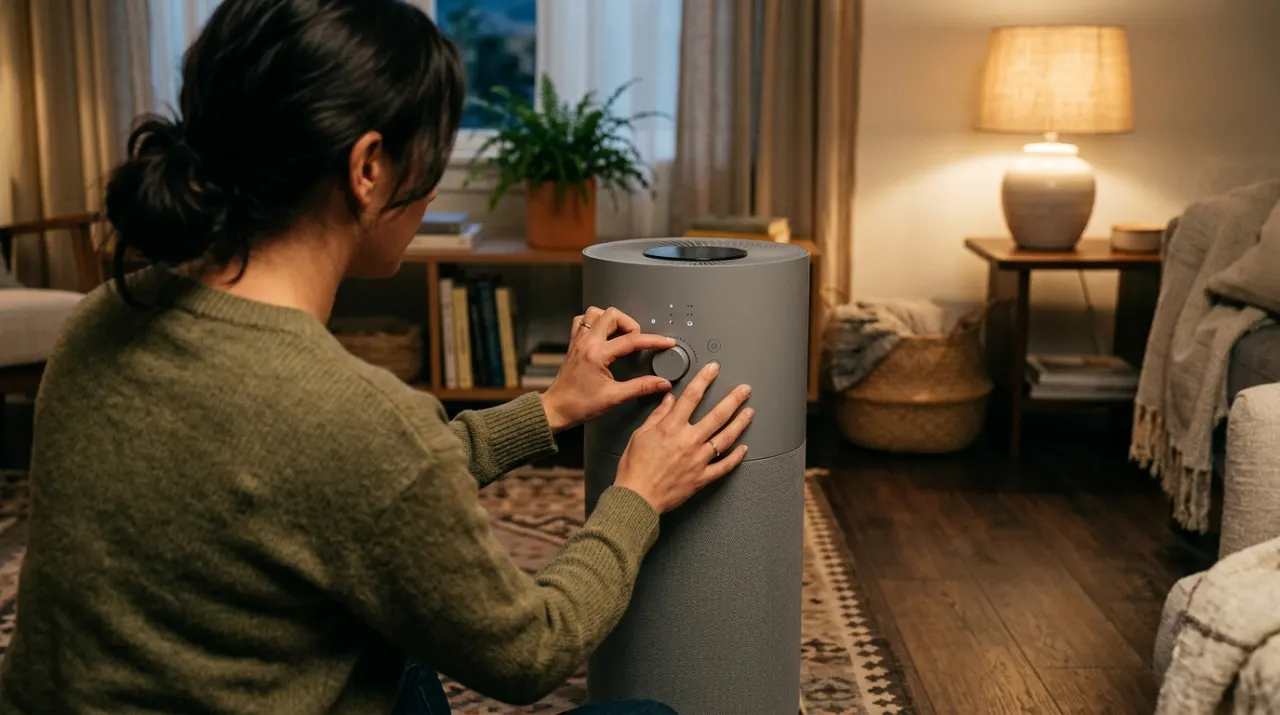
The range-hood fix most kitchens are missing
Many homes have a range hood that recirculates air through a charcoal filter and blows it back into the kitchen, rather than ducting it outside. A recirculating hood does little for odor and nothing for moisture and heat.
| Hood type | Removes odor? | Removes moisture/heat? |
|---|---|---|
| Ducted (vents outside) | Yes, effectively | Yes |
| Recirculating (charcoal filter) | Partly, if the filter is fresh | No |
| No hood | No | No |
If you have a recirculating hood, keep the charcoal filter fresh — a saturated one does nothing. If you have no hood, ventilating with fans and windows and running a carbon air purifier is the practical workaround.
Absorb the Cooking Smells That Linger
After ventilation clears the bulk, absorbers neutralize the residue. These work by adsorbing odor molecules, not masking them.
- Activated carbon is the most effective absorber — in an air purifier, in charcoal odor bags, or as loose activated charcoal in an open container.
- Baking soda in open bowls quietly pulls odors from the air over hours; refresh it every couple of weeks.
- White vinegar in a bowl on the counter neutralizes many cooking smells overnight, and the vinegar smell itself dissipates.
- Ground coffee set out in a bowl absorbs strong odors like fish and fried food.
An air purifier with an activated carbon stage is the set-and-forget version of this. Note that HEPA-only purifiers do not remove odors — you specifically need the carbon filter, which saturates faster and needs replacing every 3 to 6 months. See best air purifier for smoke smell, which covers the same carbon-filtration approach.
The simmer-pot trick
Simmering aromatics is an old kitchen trick that genuinely helps, because the fresh scent replaces the stale one while the steam helps distribute it.
Fill a small saucepan with water and simmer any of: lemon or orange slices and peel, a splash of white vinegar, cinnamon sticks, whole cloves, or a few sprigs of rosemary. Let it simmer gently for 15 to 30 minutes with the lid off, topping up the water so it does not boil dry. Vinegar in particular neutralizes rather than masks odors. This is best used after ventilating, not instead of it — it freshens the air rather than removing the source.
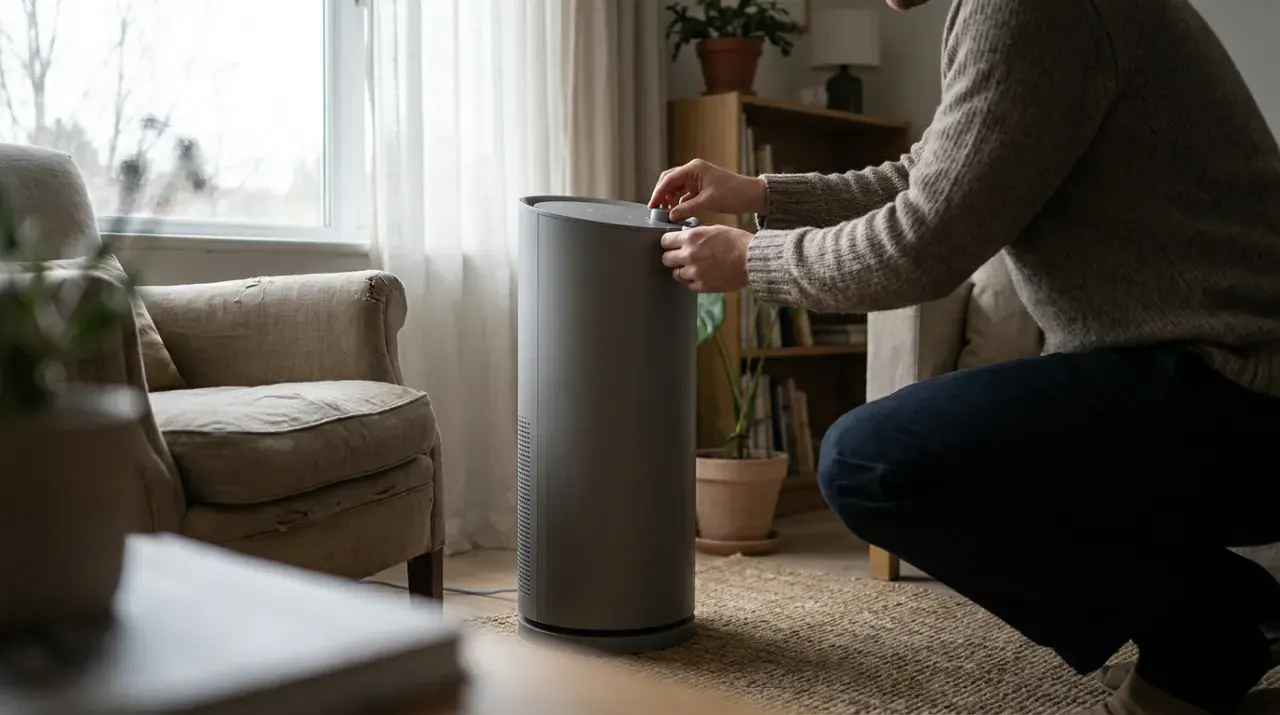
Clean the surfaces that hold smell
Cooking smell clings to grease, and grease clings to surfaces. If a smell keeps coming back days later, settled residue is the reason.
- Wipe down cabinets, backsplash and countertops near the stove with a degreasing cleaner; grease films trap odor.
- Clean the range hood filter — a greasy metal mesh filter holds and re-releases smell. Soak it in hot soapy water or run it through the dishwasher.
- Take out the trash and clean the bin. Food scraps are an ongoing source; run the garbage disposal with citrus peel.
- Wash or air out soft furnishings. Curtains, kitchen textiles and nearby upholstery absorb odor; launder or freshen them.
The worst-offending foods and how to handle them
Some foods are far harder on a kitchen than others because they release more airborne oil and sulfur or nitrogen compounds. Knowing which ones lets you prep ventilation accordingly.
| Food | Why it lingers | Best tactic |
|---|---|---|
| Fish and seafood | Strong volatile amines cling to grease and fabric | Ventilate hard, cook with a lid, simmer vinegar after |
| Fried food | Airborne oil coats surfaces and re-releases smell | Splatter screen, clean grease immediately |
| Garlic, onions, curry spices | Potent sulfur and aromatic compounds | Range hood on high, contain to the kitchen |
| Cabbage, broccoli, Brussels sprouts | Release sulfur compounds when overcooked | Do not overcook; ventilate while cooking |
| Burnt food | Smoke particles saturate the room fast | Ventilate immediately, air out, carbon absorber |
The pattern is consistent: the stronger the food, the more it pays to ventilate before you start rather than after. For fish and fried food especially, the smell binds to grease, so the real fix is cleaning up grease residue promptly and airing the room while you cook, not spraying air freshener afterward. Overcooking cruciferous vegetables is what produces their sulfurous smell, so cooking them just to tender-crisp cuts the odor at the source.
Prevent Cooking Smells Next Time
A little prep stops smells from ever taking hold.
- Ventilate before you start, not after the smell has spread.
- Cook with lids on where possible to trap odor and splatter.
- Manage grease with a splatter screen when frying and clean up immediately.
- Contain strong-smelling cooking by closing off other rooms.
- Keep a carbon air purifier running in an open-plan kitchen for continuous odor control.
Good ventilation solves cooking odor and doubles as moisture and indoor-air control. For the bigger picture see how to improve indoor air quality and best air purifiers. Everything else is at the air quality hub.