 Garden
Affiliate Disclosure
Some links on this page are affiliate links. As an Amazon Associate, we earn from qualifying purchases — at no extra cost to you. We do not buy, test, or physically handle the products we cover; our rankings come from aggregated owner reviews, ratings and expert consensus. Commissions never change our verdicts. How we rank · full disclosure.
The short version: after weighing six of the most-reviewed air purifiers in the US market on owner ratings, review volume, published CADR and filter running costs, our #1 pick is the Coway Airmega AP-1512HH Mighty. It is the machine that balances every variable rather than winning one of them — four-stage filtration with true HEPA, a genuine auto mode with a visible air-quality light, low noise, and replacement filters that will not make you resent it in year three.
Before you choose, size the machine to the room. The rule and the reasoning are in the air quality hub and in understanding CADR ratings — getting this wrong is the single most common cause of disappointment. If allergies are your reason for buying, read best air purifier for allergies as well.
Top Picks at a Glance
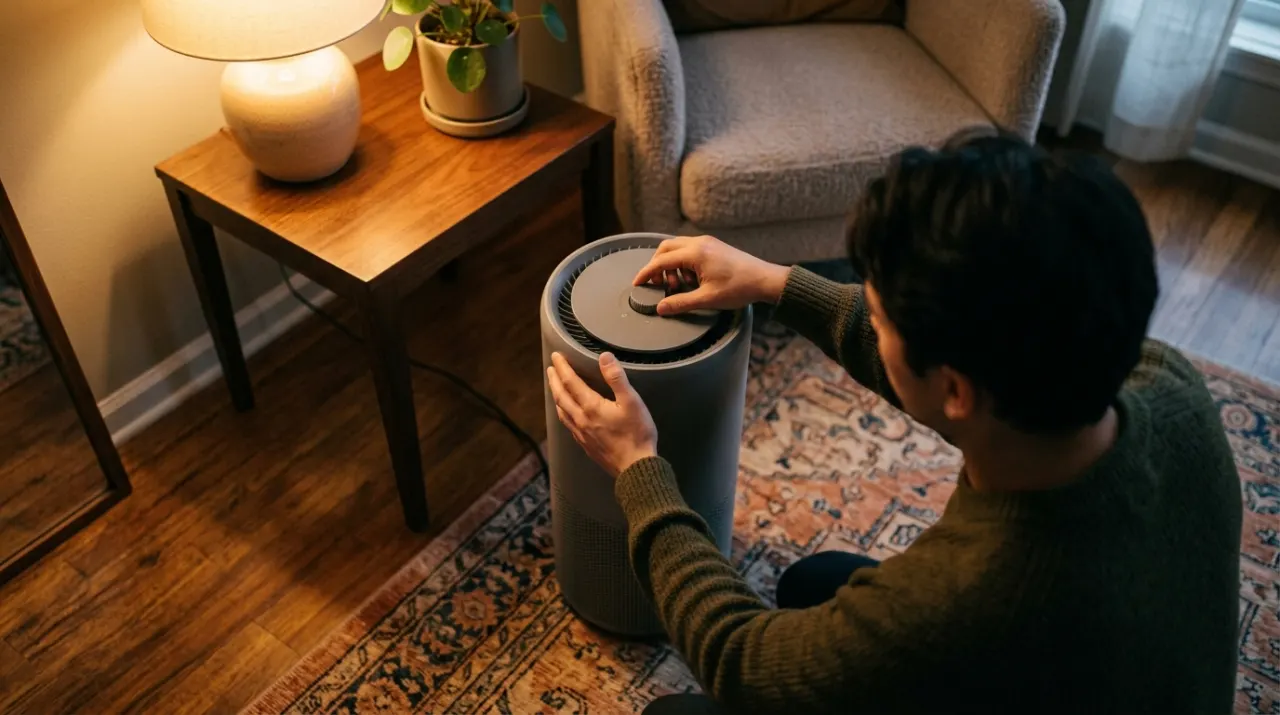
Our #1 Pick: Coway Airmega AP-1512HH Mighty
The Mighty has held the top of this category for close to a decade, and the reason is that it does not have a weak axis. Four-stage filtration — washable pre-filter, deodorizing carbon layer, true HEPA, and a switchable ionizer — covers particulate and odor together. The auto mode is a real one, driven by a particle sensor with a colored air-quality ring that tells you at a glance whether the air in the room is clean, and eco mode shuts the fan off entirely once it is.
It is rated for around 360 square feet at a proper air-change rate, which covers most bedrooms and a lot of living rooms, and it does that at a noise level owners consistently describe as unobtrusive on the lower speeds. Filters are $50 to $60 for a set, replaced roughly annually, and are stocked everywhere — a boring detail that determines whether a purifier is still running in year five.
Consensus Score ██████████░ 9.2 — from 28,848 owner ratings across an average of 4.6 stars.
The honest weaknesses: it is not the cheapest way into HEPA filtration, the top-speed fan is loud enough that few owners use it for long, and the ionizer is a feature many people simply switch off. Neither of those changes the recommendation.
Check price on Amazon → (paid link)
The Ranked Field

Best for a bedroom or living room up to about 360 sq ft
- Four-stage filtration with true HEPA
- Auto mode with an air-quality indicator light
- Eco mode shuts the fan off in clean air
- Filter-change indicator
Why buy it: the strongest combination of verified CADR, quiet running and sane filter costs the consensus recognizes.

Best for bedrooms, nurseries, home offices and dorm rooms
- 3-in-1 pre-filter, carbon and HEPA
- 141 CFM CADR in a small footprint
- Sleep mode down around 24 dB
- Cheap, widely stocked filters
Why buy it: the highest-rated purifier in America by review volume, and the cheapest sensible way to clean a bedroom.

Best for kitchens, smoke and pet odor in medium rooms
- Large washable AOC carbon filter
- True HEPA rated to 0.3 microns
- 360 sq ft CADR room rating
- PlasmaWave can be switched off
Why buy it: the biggest carbon filter at this price, which is what actually removes cooking and pet odor rather than masking it.

Best for open-plan living areas up to roughly 465 sq ft
- Three cleaning levels plus Turbo Clean
- Rated for 465 sq ft at proper air changes
- ENERGY STAR certified
- Three separate HEPA filters
Why buy it: raw air movement — nothing else here clears a big open room as quickly on turbo.

Best for larger bedrooms and living rooms with app scheduling
- Built-in air-quality sensor and auto mode
- VeSync app plus Alexa and Google
- 231 CFM smoke CADR
- Down to about 24 dB in sleep mode
Why buy it: the sensor and app turn it into a set-and-forget machine that only runs hard when the air needs it.
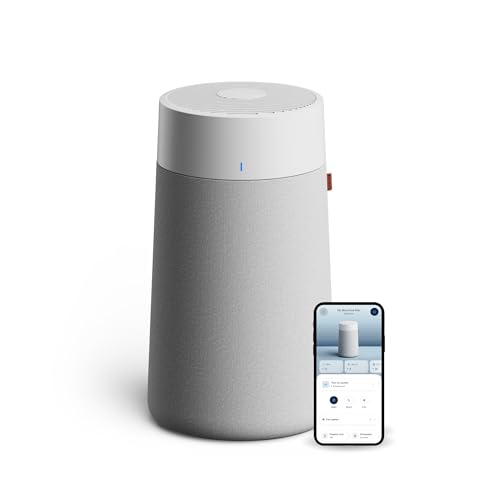
Best for small bedrooms, nurseries and offices where noise matters
- HEPASilent filtration runs unusually quiet
- Washable fabric pre-filter sleeve
- Auto mode with particle sensing
- Small footprint for bedside use
Why buy it: the quietest machine in the ranking, which is the spec that decides whether a bedroom purifier stays switched on.
Quick Comparison
| Product | Best for | Rating | Price | Buy |
|---|---|---|---|---|
| Coway Airmega AP-1512HH Mighty | Best Overall | — | Check (paid link) | |
| LEVOIT Core 300-P Air Purifier | Best Value | — | Check (paid link) | |
| Winix 5500-2 with PlasmaWave | Best for Odors | — | Check (paid link) | |
| Honeywell HPA300 True HEPA | Best for Large Rooms | — | Check (paid link) | |
| LEVOIT Core 400S-P Smart Purifier | Best Smart | — | Check (paid link) | |
| BLUEAIR Blue Pure 411i Max | Best Compact | — | Check (paid link) |
How We Rank
We do not buy, test or physically handle air purifiers. We rank them on evidence that scales: star ratings weighted by review volume, published AHAM CADR figures compared like for like rather than against marketing coverage claims, the pattern of recurring complaints in critical reviews, long-term owner reports written after the first or second filter change, and expert consensus across established review outlets as a cross-check. We also weigh filter cost and availability directly, because a purifier with expensive proprietary filters is a purifier that gets unplugged. Prices were current at the time of writing and change constantly. Full method on how we rank.
The Air Purifiers, Reviewed
1. Coway Airmega AP-1512HH Mighty — Best Overall
Covered above. What owners praise: quiet operation on low and medium, an auto mode that visibly responds to cooking and dust, sensible filter costs, and a build that survives years of continuous running. What owners complain about: the top fan speed is genuinely loud, the air-quality light cannot always be fully dimmed for bedroom use, and it costs more than the LEVOIT for a similar room size. The most consistently recommended purifier in the category.
2. LEVOIT Core 300-P — Best Value
The most-reviewed air purifier in the United States, holding 4.7 stars across more than 108,198 owner ratings — a level of consensus almost nothing in home appliances achieves. For a bedroom or office it delivers genuine 3-in-1 filtration at around $90, runs near 24 dB in sleep mode, and takes up the footprint of a small trash can. What owners praise: price, quietness, and how cheap and available the replacement filters are. What owners complain about: no air-quality sensor on the base model so auto behavior is limited, and it is genuinely undersized for a large living room — buy the 400S for those. In a bedroom, unbeatable value.
3. Winix 5500-2 — Best for Odors
The odor specialist. Its washable AOC carbon filter is substantially larger than the thin carbon sheets most purifiers use, and carbon volume is what actually determines whether cooking smells, litter box odor and smoke get removed rather than diluted. What owners praise: odor performance, the washable pre-filter that cuts running costs, and a strong 360 sq ft rating for the price. What owners complain about: PlasmaWave produces a faint smell some people dislike, though it can be switched off, and the controls are dated compared with the smart models here. If your problem is smell rather than dust, this is the buy.
4. Honeywell HPA300 — Best for Large Rooms
The brute. Three separate HEPA filters and a Turbo Clean setting let it clear an open-plan living room faster than anything else in this ranking, and it is ENERGY STAR certified despite the airflow. What owners praise: raw capacity, fast clearing after cooking or wildfire smoke, and long filter life relative to the volume of air moved. What owners complain about: it is large and unattractive, turbo is loud enough to interrupt conversation, and buying three HEPA filters plus carbon pre-filters at once is the highest replacement cost here. Right machine for a big room, overkill for a bedroom.
5. LEVOIT Core 400S-P — Best Smart
The Core 300’s bigger sibling with a sensor and an app. A 231 CFM smoke CADR properly covers a large bedroom or a medium living room, and the auto mode reacts to real particle readings rather than a timer. What owners praise: the sensor visibly responding to cooking, sensible app scheduling, quiet sleep mode, and the same cheap-filter advantage as the rest of the LEVOIT range. What owners complain about: app setup can be fiddly, the display cannot always be fully switched off, and the sensor occasionally over-reacts to humidity. The best set-and-forget machine here.
6. BLUEAIR Blue Pure 411i Max — Best Compact
The quiet one. Blueair’s HEPASilent approach combines mechanical filtration with an electrostatic charge, which lets it move usable air at a lower fan speed — and noise is the spec that decides whether a bedroom purifier stays switched on. The washable fabric pre-filter sleeve is a nice touch on running costs. What owners praise: genuinely low noise, small footprint, simple one-button operation. What owners complain about: a much smaller review base than the others here, limited coverage compared with the Coway, and a filter ecosystem crowded with third-party alternatives of uneven quality. Best for a small room where silence matters most.
What Owners Actually Complain About
Read the critical reviews across all six and five themes repeat. Undersizing is the biggest, and it is nearly always the buyer’s fault rather than the machine’s — a purifier bought on an advertised 1,500 sq ft claim and installed in a 600 sq ft open-plan room will disappoint. Noise on high is universal; every purifier here is loud at maximum, so buy one large enough to stay on medium. Filter costs generate more anger than any other issue, especially where filters are proprietary or hard to find. Indicator lights that cannot be dimmed frustrate bedroom users on several models. And the ionizer question comes up repeatedly — ionizing stages can produce ozone, which the EPA warns can damage the lungs when inhaled, so if a machine has one, check it can be switched off, and prefer CARB-compliant units. Our running costs guide covers the money side properly.
How to Choose Between These Six
Start with room size, then noise, then filter cost. A bedroom or living room up to about 360 sq ft? The Coway Mighty — the safest all-round buy. Tight budget or a small bedroom? The LEVOIT Core 300-P, with no real competitor at the price. Cooking, smoke or pet odor is the actual problem? The Winix 5500-2, for the carbon volume. Big open-plan space? The Honeywell HPA300. Want it to manage itself? The LEVOIT Core 400S-P. Noise above everything? The Blueair 411i Max. If you are not certain your problem is airborne particles at all, check air purifier vs humidifier first — dry winter air produces symptoms that feel identical.
What Separates a Great Purifier From a Cheap One
Five things actually distinguish the machines worth buying. A true HEPA filter in a sealed housing comes first — the phrases HEPA-type, HEPA-like and 99 percent HEPA are not held to the 99.97-percent-at-0.3-microns standard, and a filter of any grade is irrelevant if air can bypass it through gaps in the body. Published CADR comes second, because it is the only number that lets you compare brands honestly — AHAM lists three verified figures, for tobacco smoke, pollen and dust; a manufacturer that quotes coverage in square feet but never publishes a CADR figure is usually avoiding the comparison.
Carbon volume is third and is the most under-specified feature in the category: a thin carbon-impregnated mesh does very little for odor, while a filter with real granular carbon by weight makes a noticeable difference in a kitchen or a pet household. Noise at usable speeds is fourth — every purifier here is loud at maximum, so the meaningful figure is how much clean air it delivers at a speed you will actually tolerate overnight. Filter cost and availability is fifth and decides the machine’s real lifespan; proprietary filters that are expensive or frequently out of stock are the most common reason a working purifier ends up unplugged in a closet.
Placement and Running Habits That Change the Result
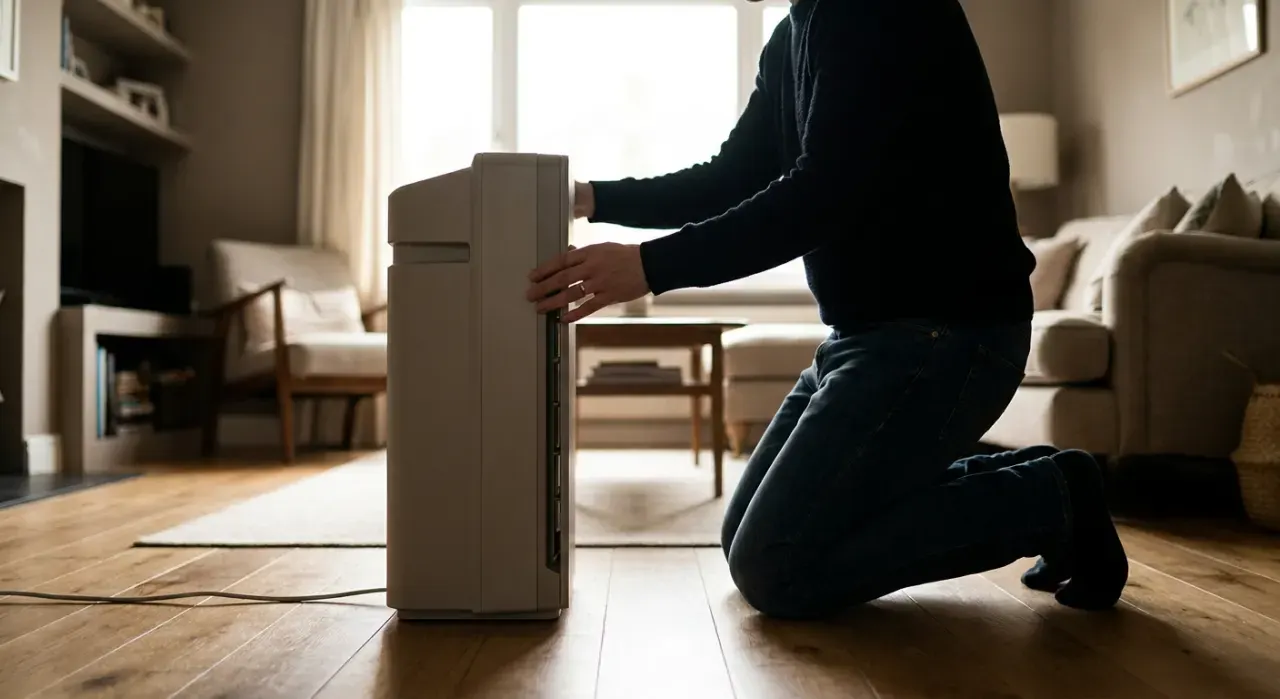
Where you put a purifier matters nearly as much as which one you buy. Give it clear air on all sides — at least a foot or two from walls, never tucked behind a sofa or under a shelf, because most designs draw in from the sides or the base and exhaust upward. Put it in the room you sleep in, since that is where you spend the longest continuous stretch breathing the same air, and close the door while it runs; a purifier with an open hallway is being asked to clean the whole house and will do none of it well.
Then let it run. Purifiers work by cycling the room’s air repeatedly, so intermittent use on high accomplishes less than continuous running on a medium setting — and continuous medium is both quieter and gentler on the filter. Vacuum the washable pre-filter every few weeks so hair and large dust never reach the HEPA layer, which is the cheapest way to extend its life. Replace filters on schedule rather than when they look dirty, because a loaded HEPA filter restricts airflow long before it looks used up. And remember what a purifier cannot do: it will not remove allergens already settled in carpet and bedding, and it will not fix mold, which the EPA treats as a moisture problem first — see mold and indoor air and do air purifiers help allergies.
The Verdict
For the best balance of filtration, quiet running and long-term cost, the Coway Airmega AP-1512HH Mighty is the air purifier we would recommend to most households — the depth and consistency of its owner consensus is exceptional. Save money with the LEVOIT Core 300-P in a bedroom, or step up to the Honeywell HPA300 for a genuinely large room. Whatever you buy, size it to the room and keep the door closed while it runs. Check price on Amazon → (paid link)