 Garden
Affiliate Disclosure
Some links on this page are affiliate links. As an Amazon Associate, we earn from qualifying purchases — at no extra cost to you. We do not buy, test, or physically handle the products we cover; our rankings come from aggregated owner reviews, ratings and expert consensus. Commissions never change our verdicts. How we rank · full disclosure.
The short version: for allergy relief specifically, our #1 pick is the Coway Airmega AP-1512HH Mighty. Allergy buyers need three things that ordinary buyers can be relaxed about — a genuinely sealed true-HEPA path, enough clean-air delivery to turn the room over four or five times an hour, and filters cheap enough that they get replaced before they choke. The Coway is the machine that holds all three at once, and its owner consensus among allergy sufferers is the deepest and most stable in the category.
This page is the allergy-specific cut of our main best air purifier ranking. If your problem is pet dander and pet odor rather than pollen, go to best air purifier for pets instead — the filter priorities are different. And if you are not yet sure your symptoms are particulate at all, air purifier vs humidifier sorts that out in a couple of minutes.
Top Picks at a Glance
Our #1 Pick: Coway Airmega AP-1512HH Mighty
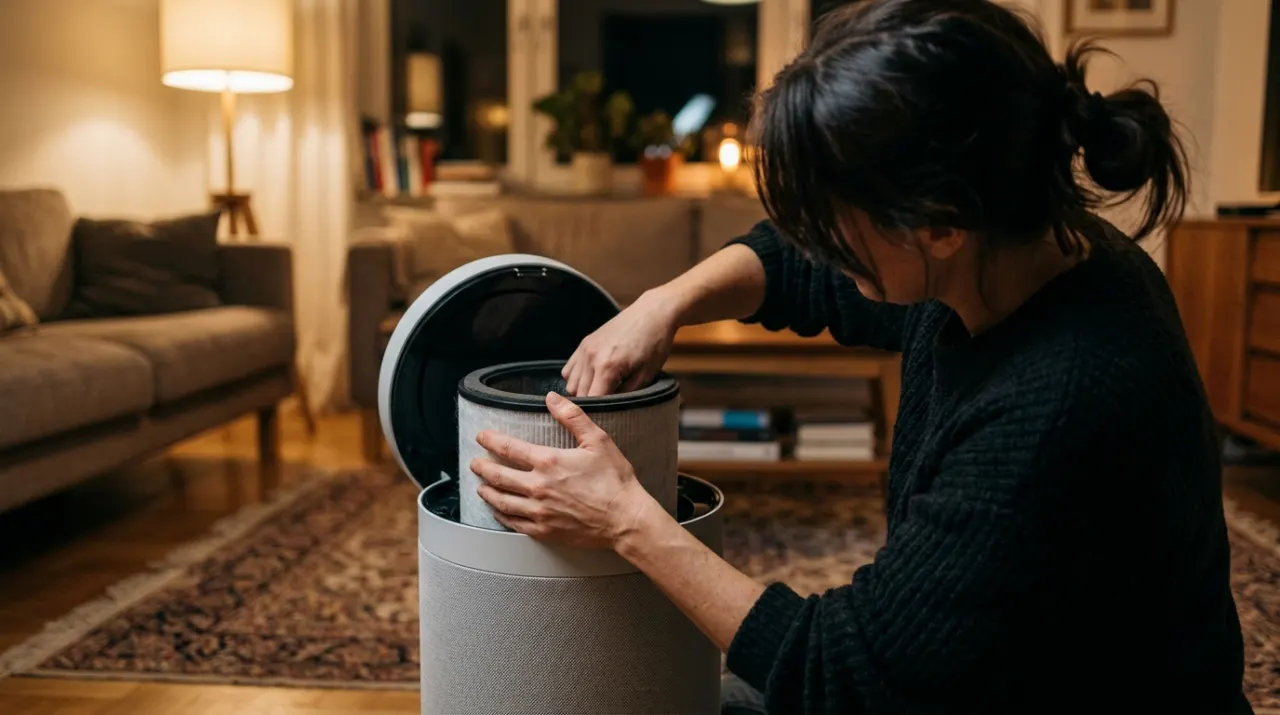
The Mighty wins here for an unglamorous reason: it has no weak axis. The filter stack is a washable pre-filter, an activated-carbon deodorizing layer, a true HEPA element and a switchable ionizer, and the housing is well enough sealed that the air genuinely goes through the HEPA rather than around it. That last detail is the one allergy buyers most often overlook — a superb filter in a leaky body performs like a mediocre filter.
It is rated at around 360 square feet at a proper air-change rate, which covers most bedrooms and many living rooms, and owners consistently describe it as unobtrusive on the lower two speeds. The particle sensor drives a real auto mode with a colored air-quality ring, so you can watch it react when someone walks in from a mown lawn. Eco mode then shuts the fan off once the air is clean again.
Consensus Score ██████████░ 9.2 — the deepest and most stable owner consensus of any purifier in this ranking.
The honest weaknesses: top speed is loud enough that few owners use it for long, the air-quality light cannot be fully dimmed on older units, and it costs more than the LEVOIT for a similar room. None of that changes the recommendation for an allergy household.
Check price on Amazon → (paid link)
The Ranked Field

Best for a pollen-season bedroom or living room up to about 360 sq ft
- Four-stage filtration with true HEPA
- Particle sensor drives a real auto mode
- Washable pre-filter catches hair and lint
- Filters widely stocked and reasonably priced
Why buy it: the most consistent allergy consensus in the category — sealed true HEPA, honest CADR and filters cheap enough that people actually change them on time.

Best for severe pollen and dust-mite allergy in a large bedroom
- H13 media rated to 0.1 microns
- Gasketed filter housing limits bypass
- Three-stage pre-filter, H13 and carbon
- High top-speed airflow for fast knockdown
Why buy it: a tighter filter grade in a well-gasketed body, which is the combination that matters when pollen counts spike.

Best for a single bedroom, nursery or home office on a budget
- 3-in-1 pre-filter, true HEPA and carbon
- 141 CFM CADR from a small cylinder
- Sleep mode near 24 dB
- Cheapest widely-stocked filters here
Why buy it: genuine HEPA filtration at a price that lets an allergy household put one in every bedroom instead of one in the hallway.
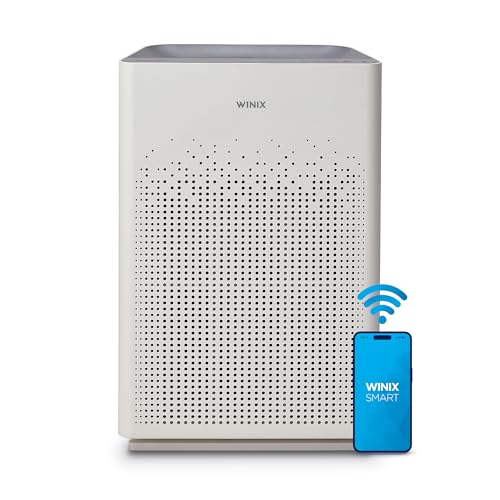
Best for households that want the machine to react to pollen without being told
- Built-in particle sensor with a visible readout
- Large washable AOC carbon filter
- Wi-Fi app with filter-life tracking
- Rated to about 1,740 sq ft at one air change
Why buy it: the sensor and auto mode ramp the fan when someone opens a door in May, which is exactly when an allergy sufferer is least likely to notice.

Best for open-plan living areas and big primary bedrooms
- AHAM-verified 391 CFM CADR
- Auto mode driven by a real particle sensor
- Sleep mode quoted at 26 dB or below
- Same cheap LEVOIT filter ecosystem
Why buy it: AHAM-verified airflow high enough to give a genuinely large room four or five air changes an hour rather than a marketing figure.

Best for a spare room, dorm or first purifier in a small space
- True HEPA in a narrow 22 in. tower
- Charcoal layer for light odor control
- Three speeds with a simple dial
- Slim footprint beside a nightstand
Why buy it: the cheapest true HEPA tower with a long, stable review history rather than a six-month sales spike.
Quick Comparison
| Product | Best for | Rating | Price | Buy |
|---|---|---|---|---|
| Coway Airmega AP-1512HH Mighty | Best Overall | — | Check (paid link) | |
| Medify MA-40 (H13 True HEPA) | Best Sealed H13 Filtration | — | Check (paid link) | |
| LEVOIT Core 300-P Air Purifier | Best Value | — | Check (paid link) | |
| WINIX AM90 True HEPA with Air Quality Sensor | Best Auto Mode | — | Check (paid link) | |
| LEVOIT Core 600S-P Smart Air Purifier | Best for Large Rooms | — | Check (paid link) | |
| GermGuardian AC4825E 22 in. HEPA Tower | Best Budget Tower | — | Check (paid link) |
How We Rank
We do not buy, test or physically handle air purifiers. We rank them on evidence that scales: star ratings weighted by review volume, AHAM-verified CADR figures compared like for like rather than against marketing coverage claims, the recurring complaints that surface in critical reviews, long-term owner reports written after the first or second filter change, and expert consensus across established review outlets as a cross-check. For an allergy page we weight two things harder than usual — whether the filter path is genuinely sealed, and what a year of filters costs — because both decide whether the machine is still helping in month eighteen. Prices were current at the time of writing and move constantly. Full method on how we rank.
The Allergy Purifiers, Reviewed
1. Coway Airmega AP-1512HH Mighty — Best Overall
Covered above. What owners praise: quiet running on low and medium, an auto mode that visibly responds to pollen and cooking, sane filter prices, and a build that survives years of continuous operation. What owners complain about: the top fan speed is genuinely loud, the indicator light bothers light sleepers, and it is not the cheapest route into HEPA. The most consistently recommended allergy purifier in the American market.
2. Medify MA-40 — Best Sealed H13 Filtration
Where the Coway is balanced, the Medify is pointed. Its H13 media is a grade tighter than standard HEPA and is rated down to 0.1 microns, and the filter sits in a gasketed housing that limits bypass — the reason it has developed a following among people whose spring symptoms are severe rather than annoying. Top-speed airflow is high, so it clears a room fast after a window has been open. What owners praise: rapid knockdown on high, build quality, and a noticeable difference in morning congestion. What owners complain about: filters are proprietary and cost more than LEVOIT or Winix equivalents, the touch panel is easy to nudge, and it is physically large. Buy it if symptoms justify the running cost.
3. LEVOIT Core 300-P — Best Value
The most-reviewed air purifier in the United States, and the reason is that it does one job properly for very little money. In a bedroom it delivers real 3-in-1 filtration, runs near 24 dB in sleep mode, and occupies the footprint of a small trash can. For an allergy household the strategic argument is stronger still: at this price you can put one in each bedroom rather than one in the hallway, and per-room filtration is what actually helps. What owners praise: price, quietness, cheap and available filters. What owners complain about: no air-quality sensor on the base model, so auto behavior is limited, and it is undersized for a large living room. In a bedroom, unbeatable.
4. WINIX AM90 — Best Auto Mode
The AM90 is the machine for people who will not remember to change the setting. A built-in particle sensor drives auto mode, the readout is legible from across a room, and the Wi-Fi app tracks filter life so the single most important maintenance task stops depending on memory. The large washable AOC carbon filter is a real one rather than a carbon-dusted mesh, which helps when pollen season overlaps with open windows and outdoor smells. What owners praise: responsive auto mode, filter-life tracking, strong airflow for the price. What owners complain about: PlasmaWave produces a faint smell some people dislike, though it switches off; app setup is fiddly; and the sensor occasionally over-reacts to humidity. Best set-and-forget option here.
5. LEVOIT Core 600S-P — Best for Large Rooms
Sizing is where most allergy purifier purchases fail, and the 600S-P is the answer for a genuinely large room. Its AHAM-verified CADR is high enough to give a big living area four to five air changes an hour rather than the one or two implied by a headline square-footage claim. It keeps the cheap-filter advantage of the LEVOIT range, which at this size is a meaningful annual saving. What owners praise: the verified airflow figure, a responsive auto mode, quiet sleep operation for a machine this size. What owners complain about: it is bulky, high speed is loud, and the display cannot always be fully switched off. The right answer for open-plan spaces where the smaller machines simply cannot keep up.
6. GermGuardian AC4825E — Best Budget Tower
The long-serving cheap option, and the one with the review history to back it. A narrow 22-inch tower with a true HEPA element and a charcoal layer, it fits beside a nightstand where a cylinder purifier will not, and it costs about as much as a set of filters for the Medify. What owners praise: price, slim footprint, simple three-speed dial, and years of stable ratings rather than a short sales spike. What owners complain about: no sensor or auto mode, a modest carbon layer that does little for strong odors, and audible fan noise on the top setting. Right for a spare room or a first purifier; not the machine for severe symptoms.
Sizing an Allergy Purifier Properly
This is the decision that separates owners who feel a real difference from owners who feel cheated, and it is arithmetic rather than opinion. Match roughly two-thirds of the room’s square footage in smoke CADR — the 2/3 Rule AHAM publishes alongside its verified directory: a 300-square-foot bedroom wants a smoke CADR near 200, which delivers about four to five air changes an hour. That rate is the one allergy sufferers consistently report as the threshold where symptoms shift.
Manufacturer coverage claims are almost always calculated at one or two air changes an hour, which is enough to describe a room as covered and nowhere near enough to relieve allergy symptoms in it. Treat a headline figure such as 1,700 square feet as a marketing number and go back to the CADR. Buying slightly larger than you need is the safer error, because a big machine on a low setting is quieter than a small machine on high — and a purifier that gets turned down for noise is a purifier that stops working. The full method is in understanding CADR ratings.
What You Are Actually Filtering
Allergy triggers sit in a wide size band, and knowing where yours falls changes how you use the machine. Tree, grass and ragweed pollen is large — roughly 10 to 100 microns — so it is easy to capture but also settles quickly, which is why a purifier near the window and a closed door beat a purifier in the hallway. Dust-mite allergen travels on fecal particles around 10 to 24 microns; these settle within minutes and go airborne again when a bed is made or a rug is walked on, so filtration has to be paired with mattress covers and hot washing. Cat and dog dander is much finer, often under 5 microns and partly under 2.5, so it stays airborne for hours — that is the fraction a purifier is genuinely excellent at removing. Mold spores run roughly 3 to 40 microns, but the EPA is explicit that mold is a moisture problem first; filtering spores while the source keeps producing them is a treadmill, and mold and indoor air explains the fix.
All of those sizes are comfortably within HEPA’s capability, which is rated at its hardest point — 99.97 percent at 0.3 microns. Both larger and smaller particles are captured at higher rates, which surprises people who assume finer means harder. The practical implication is that filter grade is rarely your limiting factor. Sealing, airflow and filter maintenance are.
What Owners Actually Complain About
Read the critical reviews across all six machines and the same five themes repeat. Undersizing leads, and it is usually the buyer’s decision rather than the machine’s failing. Noise on high is universal — every purifier here is loud at maximum, so size up and run it on medium. Filter cost generates more anger than any other issue, particularly where filters are proprietary; the Medify draws this criticism most and the LEVOIT range least. Indicator lights that cannot be dimmed frustrate bedroom users, which matters more here than elsewhere because allergy machines run overnight. And expectation drift — owners who expected a purifier to stop symptoms caused by a cat sleeping on the bed, or by allergen already embedded in carpet. The money side is broken down in air purifier running costs.
Habits That Change the Result
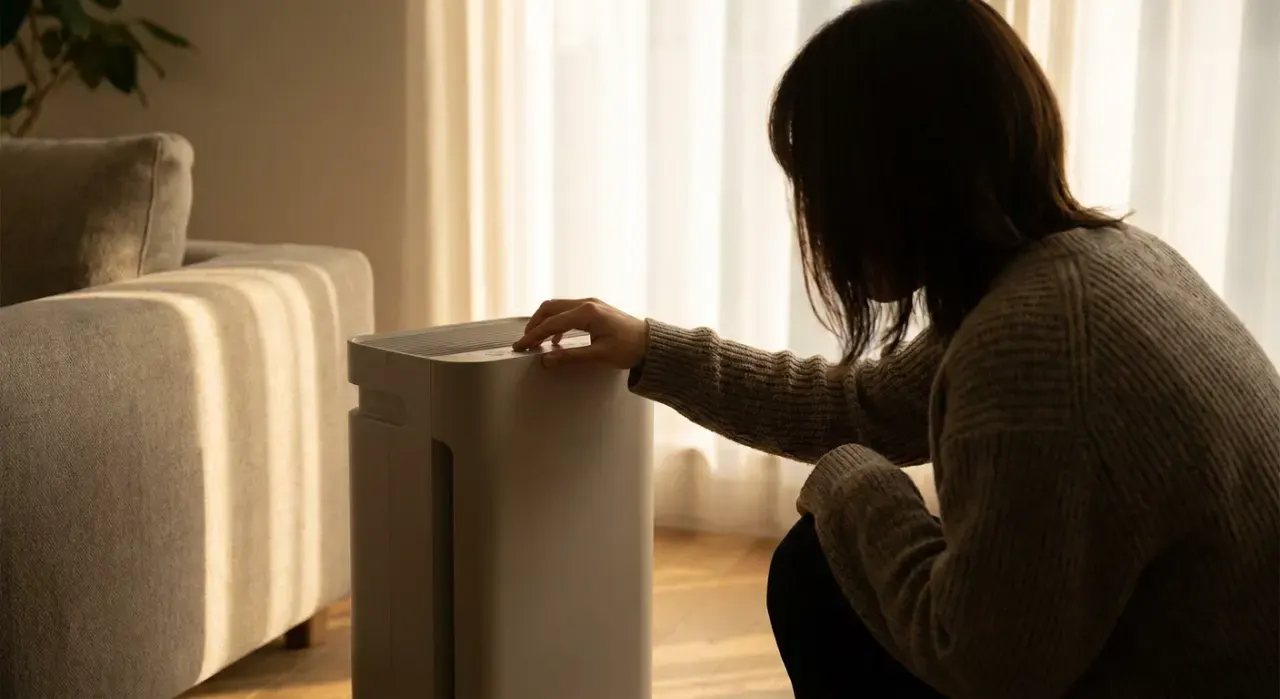
Placement and routine matter nearly as much as the model. Put the machine in the bedroom, give it a foot or two of clear space on every side, and close the door while it runs. Let it run continuously on a medium setting rather than intermittently on high — purifiers work by cycling the room’s air repeatedly, and continuous medium is quieter and gentler on the filter besides.
Then remove what the machine cannot — the EPA is blunt that filtration does not replace controlling the pollutant at source and ventilating. Wash bedding weekly in hot water, use allergen-proof mattress and pillow covers, keep windows closed through peak pollen hours and shower before bed during the worst weeks so pollen does not go onto the pillow with you. Vacuum with a sealed HEPA machine rather than one that sprays fines back into the room. Keep indoor humidity between about 30 and 50 percent, because dust-mite populations are governed by humidity more than by cleaning — the targets are in ideal indoor humidity levels, and if you want to see the numbers rather than guess, a monitor from our best air quality monitor ranking pays for itself in settled arguments. What the evidence does and does not support is set out in do air purifiers help allergies.
How to Choose Between These Six
One bedroom, ordinary seasonal symptoms? The Coway Mighty, or the LEVOIT Core 300-P if budget is tight. Severe pollen or dust-mite symptoms? The Medify MA-40 for the tighter H13 media in a sealed housing. Want the machine to manage itself through pollen season? The WINIX AM90. Large open-plan room? The LEVOIT Core 600S-P, which is the only one here with the verified airflow to do it. Spare room or first purifier? The GermGuardian AC4825E. If pets are the real trigger, the carbon-heavy machines in best air purifier for pets are the better read, and the broader field is in the air quality hub.
The Verdict
For most allergy households the Coway Airmega AP-1512HH Mighty is the machine we would recommend: sealed true HEPA, an auto mode that responds to real particle readings, quiet enough to run all night, and filter costs that will not push it into a closet in year three. Step up to the Medify MA-40 if symptoms are severe, save money with the LEVOIT Core 300-P in a single bedroom, and size up to the Core 600S-P for a large open room. Whatever you buy, size it on CADR, run it in the bedroom with the door closed, and change the filter on schedule. Check price on Amazon → (paid link)