 Garden
Affiliate Disclosure
Some links on this page are affiliate links. As an Amazon Associate, we earn from qualifying purchases — at no extra cost to you. We do not buy, test, or physically handle the products we cover; our rankings come from aggregated owner reviews, ratings and expert consensus. Commissions never change our verdicts. How we rank · full disclosure.
The short answer: yes, for chlorine, and no, for hardness. A shower filter using KDF-55 media, often paired with catalytic carbon, genuinely reduces free chlorine in hot water, and that is the one claim backed by a real standard, NSF/ANSI 177. What a shower filter does not do is soften water: dissolved calcium and magnesium pass straight through, so scale, spotting and poor lather remain. Expect to pay $30 to $70 for a decent unit and to replace the cartridge every 6 months or 10,000 gallons.
The confusion comes from marketing that blends chlorine claims with hard-water claims. We do not test filters ourselves; our rankings come from aggregated owner reviews, certification records and manufacturer specifications, as explained in how we rank. More fixture guidance is at the bathroom hub.
What do shower filters actually remove?
Performance splits sharply by contaminant. The media types used in shower filters work through chemical reduction and adsorption, and both processes work well on some things and not at all on others.
| Contaminant | Does a shower filter remove it? | Media responsible |
|---|---|---|
| Free chlorine | Yes, substantially | KDF-55, catalytic carbon |
| Chloramine | Partially, and slowly | Catalytic carbon only |
| Hydrogen sulfide (rotten egg odor) | Partially | KDF-55 |
| Iron and sediment | Partially | KDF, sediment stage |
| Calcium and magnesium (hardness) | No | None present |
| Fluoride | No | Requires activated alumina |
| Lead | Rarely, only if NSF 53 certified | Specialized carbon block |
| Bacteria | No | Requires NSF 231 or UV |
KDF-55 is a copper-zinc alloy that reduces free chlorine to harmless chloride through a redox reaction. It is used in shower filters specifically because, unlike plain activated carbon, it keeps working at shower temperatures. Plain carbon loses efficiency in hot water, which is why carbon-only shower filters underperform their claims.
Why does hot water matter so much?
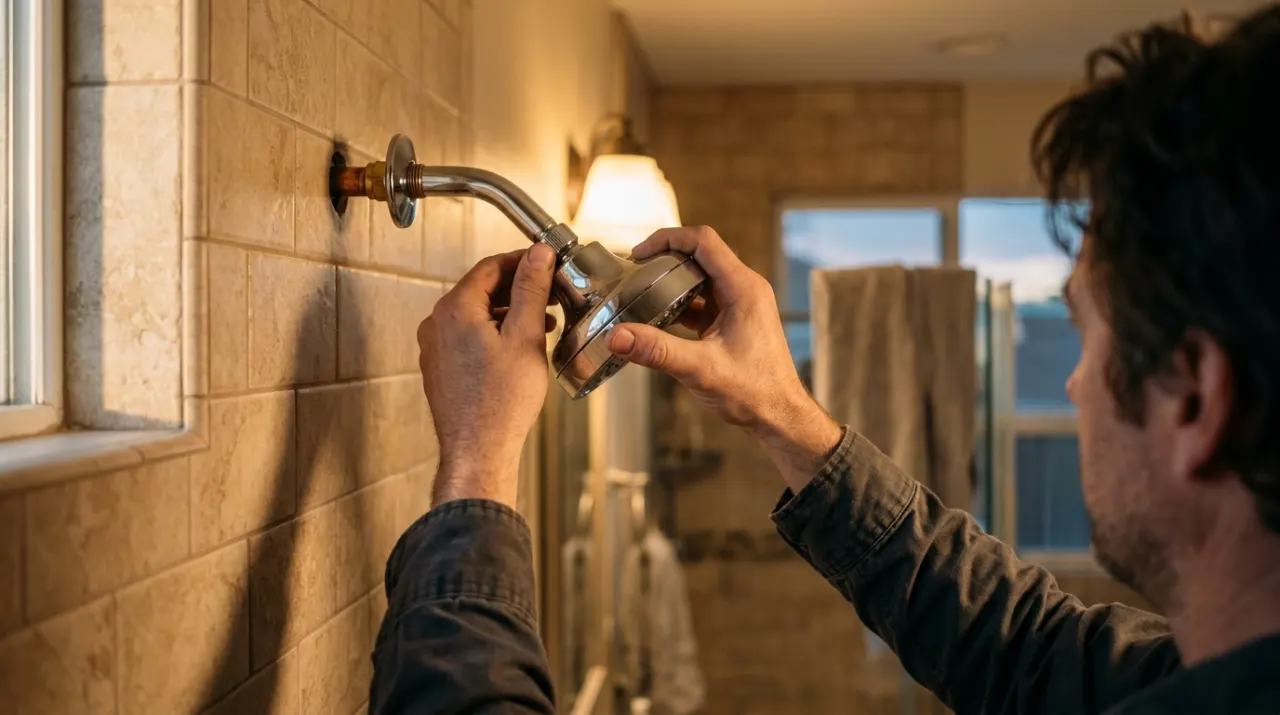
Because most filtration media are rated in cold water and shower water runs at 100 to 110°F. Activated carbon adsorption weakens as temperature rises, and adsorbed compounds can even release back into the stream. That single fact explains most of the gap between a shower filter's advertised percentages, usually generated in cold-water bench conditions, and what owners experience. It is also why the better products lead with KDF rather than carbon, or use both in sequence. Contact time compounds the problem: water spends a fraction of a second in a shower filter compared with minutes in an under-sink cartridge.
What will you actually notice?
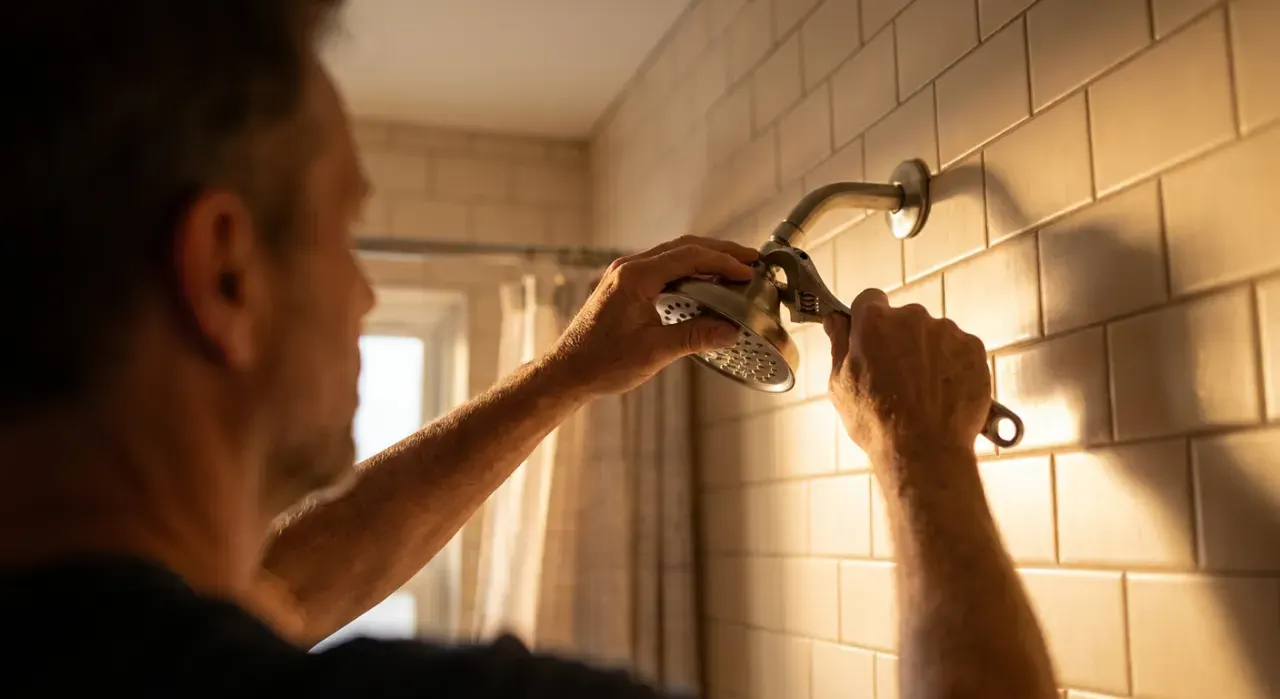
The reliable, repeatable change is the smell. Chlorinated municipal water has a distinct pool odor that intensifies in steam, and a working filter removes most of it within the first shower. Beyond that, reports diverge. Many owners describe softer-feeling hair and less itchy skin; others notice nothing. Plausibly the chlorine reduction accounts for some of it, since chlorine is a recognized skin irritant, but the evidence base for shower filters specifically is limited and the effect size is not established. If you have persistent eczema, dermatitis or scalp problems, see a dermatologist. Nothing here is medical advice.
Will a shower filter fix hard water?
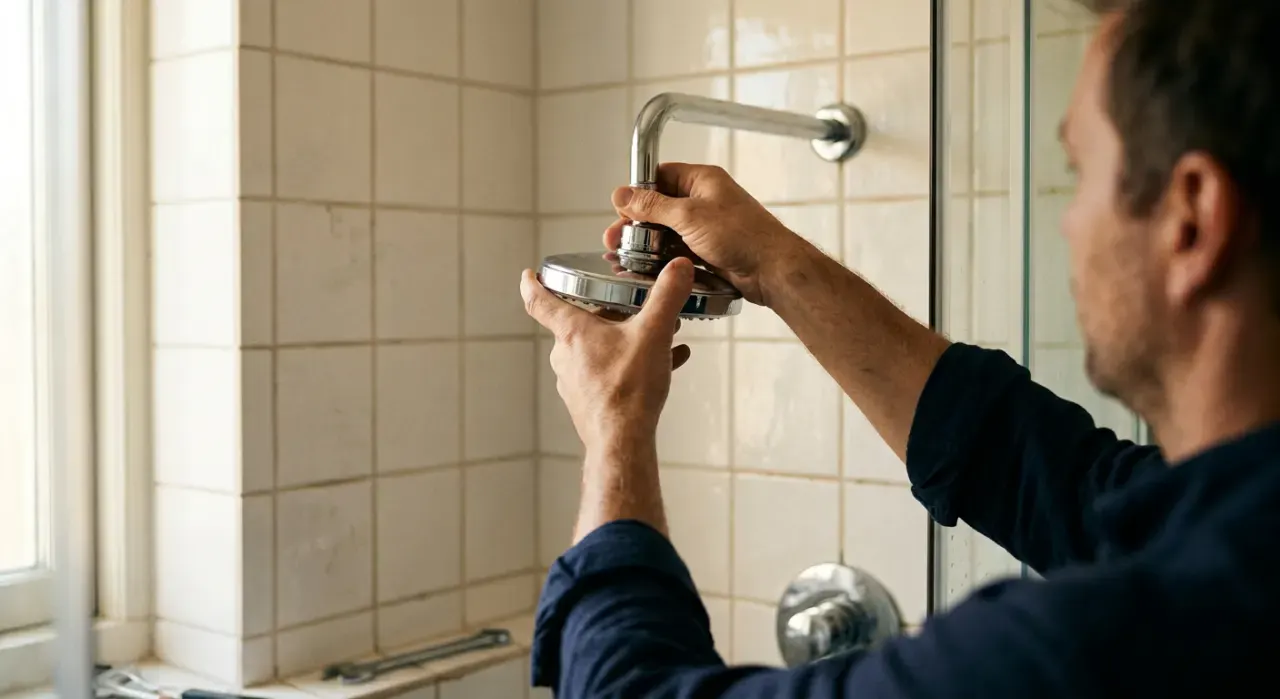
No. Hardness is dissolved calcium and magnesium, and removing it requires ion exchange with a resin bed that must be regenerated with salt, which is a whole-house softener. No shower filter contains enough resin, and none regenerates. If your symptoms are white crust on the shower head, soap that will not lather, spotting on glass, and a film on skin, that is hardness and a filter will not change it. A shower head with rubber nozzle tips you can rub clean, plus periodic vinegar descaling, manages the visible scale. This is covered in do shower filters help with hard water.
What should you look for if you buy one?
- Certification to NSF/ANSI 177 for chlorine reduction, or at minimum a named third-party test rather than an unsourced percentage.
- KDF-55 plus catalytic carbon, not carbon alone, and preferably with a sediment stage if you are on a well.
- Standard 1/2 inch NPT threads, so it fits between the arm and any shower head.
- Cartridge availability and cost, since a $30 filter needing $30 cartridges twice a year is not the cheap option.
- Flow impact. Inline filters cost some pressure; if your pressure is already marginal, see do shower filters reduce water pressure.
Related reading: do shower filters remove chlorine for the mechanism in detail, and how to fix low shower pressure if adding a filter has made flow worse. Our current picks are in best shower filter, and head options are in best shower head.