 Garden

Affiliate Disclosure
Some links on this page are affiliate links. As an Amazon Associate, we earn from qualifying purchases — at no extra cost to you. We do not buy, test, or physically handle the products we cover; our rankings come from aggregated owner reviews, ratings and expert consensus. Commissions never change our verdicts. How we rank · full disclosure.
Most low shower pressure comes from a shower head clogged with mineral scale, and the fix is to soak the head in white vinegar to dissolve the buildup. Unscrew the head (or bag-soak it in place), leave it in vinegar a few hours to overnight, scrub the face, clear any blocked holes with a pin, and rinse. If cleaning does not help, check the flow restrictor for trapped grit, the diverter or valve cartridge for wear, and whether other fixtures are also weak — which would point to a whole-house pressure problem rather than the shower itself.
We never buy, test or physically handle the products we rank; recommendations come from aggregated owner reviews and expert consensus, described in how we rank. More at the bathroom hub.
How do you clean the shower head?
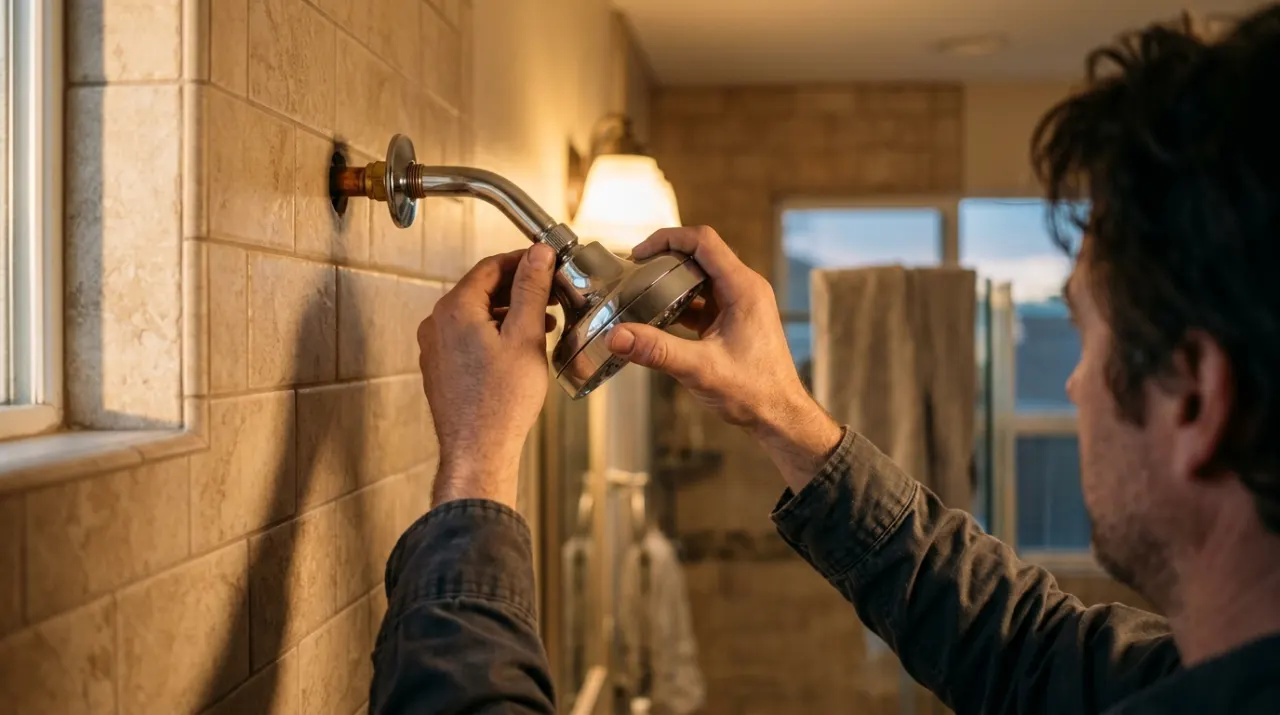
This is the first and most productive step because scale in the head is the single most common cause. If the head unscrews easily, take it off and submerge it in a bowl of white vinegar; if it is awkward, fill a sandwich bag with vinegar and rubber-band it over the head so the spray face sits in the liquid. Leave it a few hours or overnight — the acetic acid dissolves the calcium and lime that plug the tiny spray holes. Scrub the face with an old toothbrush, poke any stubborn holes clear with a pin or paperclip, rinse, and reinstall. In hard-water homes this restores good pressure surprisingly often.
How do you find the real cause?
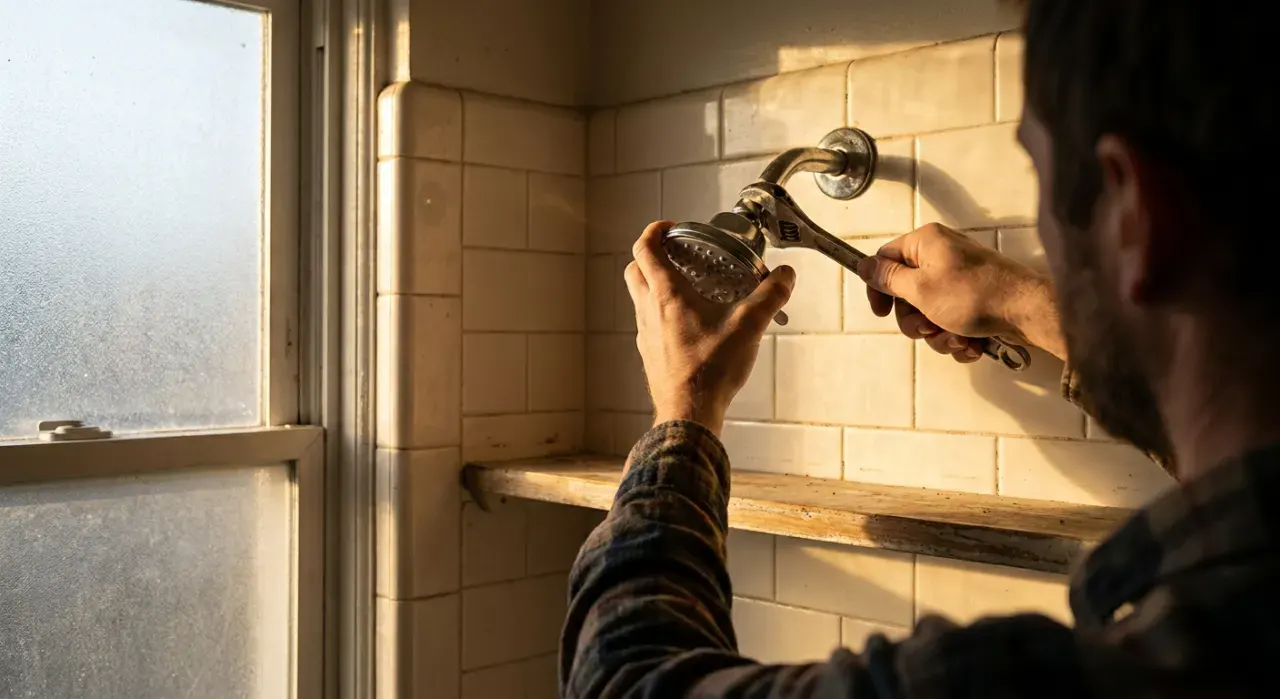
Before buying parts, narrow it down. The quickest test is whether the problem is one shower or the whole house — that single fact splits the diagnosis in two. Work through this:
| Symptom | Likely cause | Fix |
|---|---|---|
| One shower weak, gradual onset | Scale in head or restrictor | Vinegar soak, clean restrictor |
| One shower weak, won't get hot/cold | Valve cartridge failing | Replace cartridge |
| Weak only when diverter is up | Worn tub/shower diverter | Replace diverter |
| Whole house weak | Main shutoff, PRV, or old pipes | Check valves, test psi |
What about the flow restrictor?
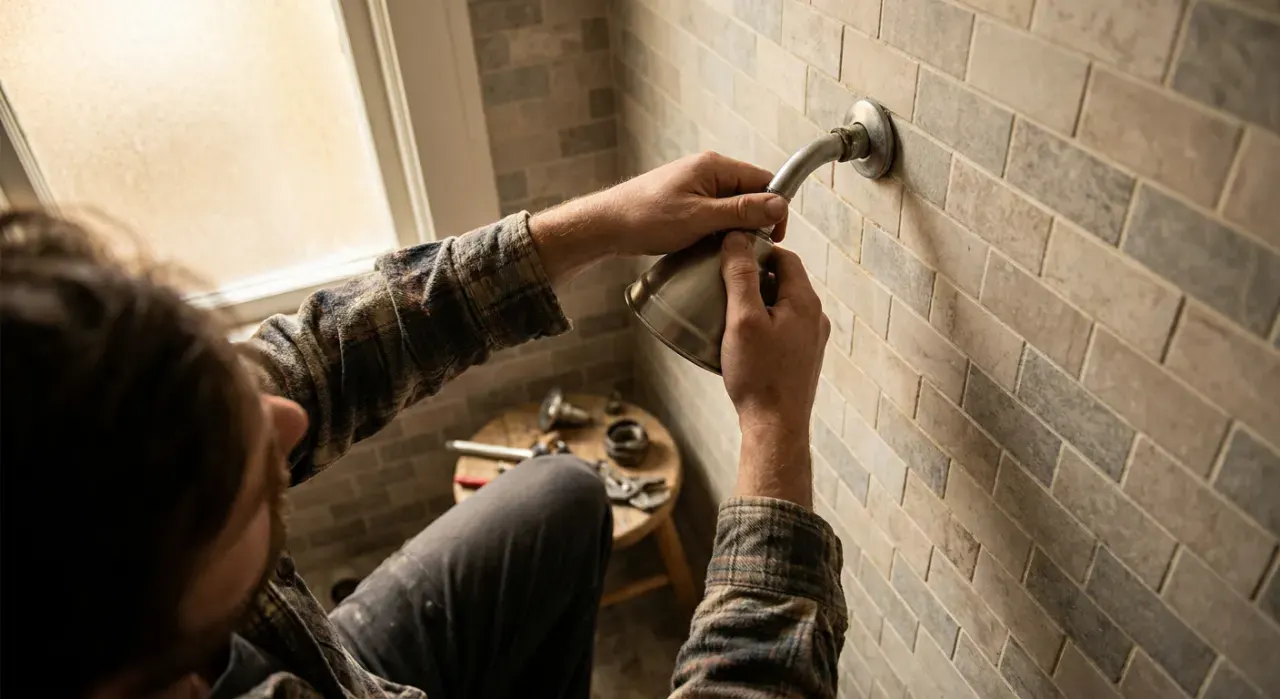
Inside the head, behind the spray face, is a small plastic flow restrictor that caps flow at the federal 2.5 gallons-per-minute limit (some states cap lower). Grit can lodge in it and choke flow below even that. Pop it out, rinse away any debris, and reinstall — cleaning it often restores strong pressure. You can remove it entirely for more flow, but that uses noticeably more water and heated water, and removing it may run afoul of state water-efficiency rules in places like California. Clean it first; remove it only if cleaning is not enough and you accept the higher usage — see how much water a shower uses.
When is it the valve or the whole house?
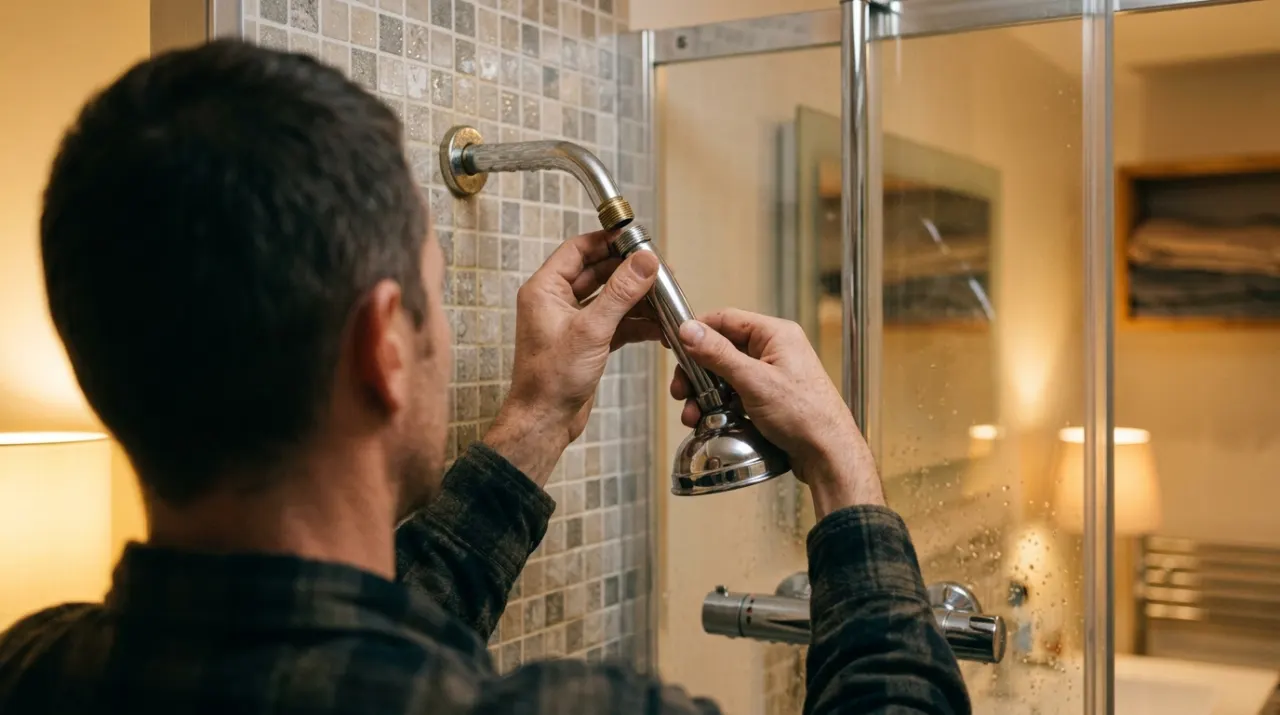
If the head is clean and pressure is still weak, and especially if the shower also struggles to reach the right temperature, the pressure-balancing valve cartridge is likely worn or clogged — replacing that brand-specific cartridge usually restores both. If instead every fixture in the house is weak, the cause is upstream: a main shutoff not fully open, a pressure-reducing valve set too low or failing, corroded galvanized pipe in an older home, or low municipal supply. An inexpensive gauge on an outdoor hose bib reads your static pressure; normal is roughly 40 to 60 psi.
What else is worth checking?
If you are upgrading the head anyway, our best shower head roundup covers models that feel strong even at efficient flow rates, and a shower filter can slow scale buildup in hard-water homes. For related bathroom water issues, see why a toilet runs intermittently and standard shower head height. More in the bathroom hub.