 Garden


Affiliate Disclosure
Some links on this page are affiliate links. As an Amazon Associate, we earn from qualifying purchases — at no extra cost to you. We do not buy, test, or physically handle the products we cover; our rankings come from aggregated owner reviews, ratings and expert consensus. Commissions never change our verdicts. How we rank · full disclosure.
A handheld shower head detaches on a flexible hose, making it far better for rinsing hard-to-reach areas, bathing kids and pets, cleaning the shower or tub, and showering while seated. A fixed shower head is simpler, tidier, has fewer parts to leak, and usually costs less. Choose a handheld for versatility, cleaning and accessibility; choose a fixed head for a clean look and lowest cost. A combo unit that mounts a detachable handheld alongside a fixed head gives you both, which is why it is such a popular upgrade.
What is the real difference?
The difference is whether the spray head detaches. A fixed shower head stays put on the shower arm, delivering a set spray from one position — simple, clean-looking, and with only one connection to seal. A handheld head sits in a cradle but pulls off on a flexible hose so you can aim the water anywhere. That flexibility is the whole point: it adds reach for cleaning, bathing and accessibility, at the cost of one more hose connection and a slightly busier look. Everything else about how they spray is broadly similar.
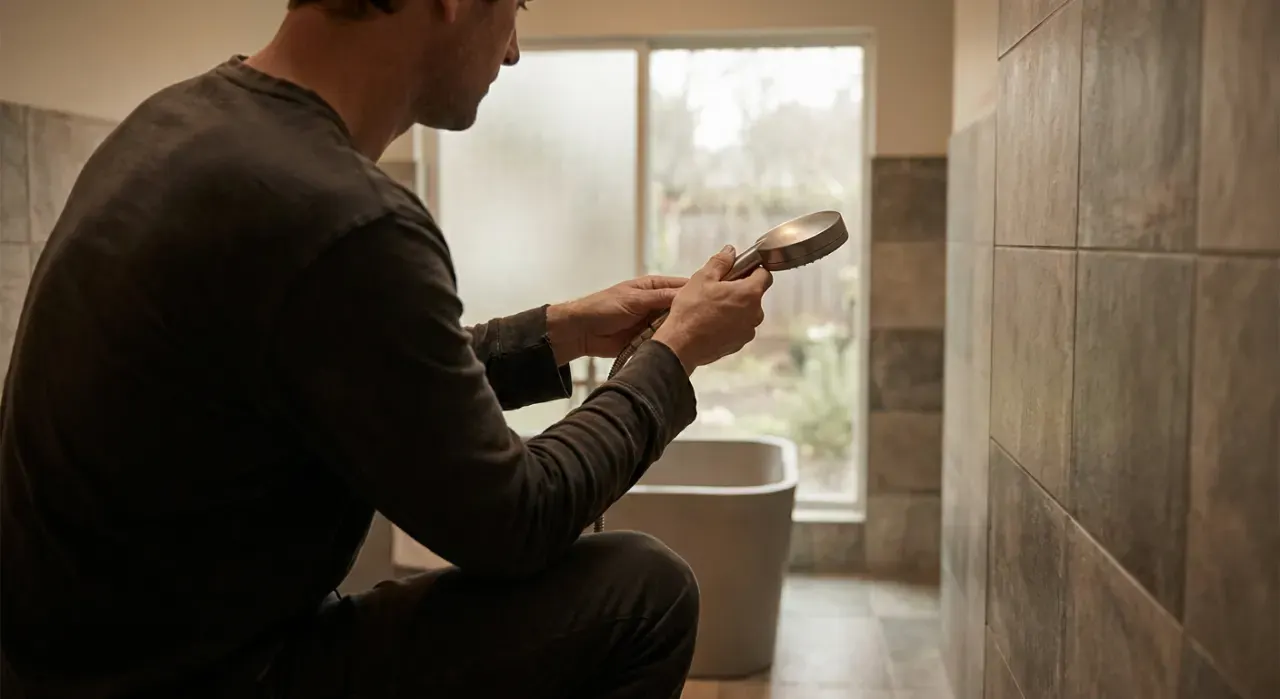
Handheld vs fixed at a glance
| Handheld | Fixed | |
|---|---|---|
| Flexibility | Detaches, aims anywhere | Fixed position |
| Cleaning shower/tub | Excellent | Limited |
| Bathing kids & pets | Easy | Awkward |
| Accessibility | Great for seated showering | Poor |
| Look & simplicity | Busier, hose visible | Clean, minimal, fewer parts |
| Typical price | Slightly higher | Lower |
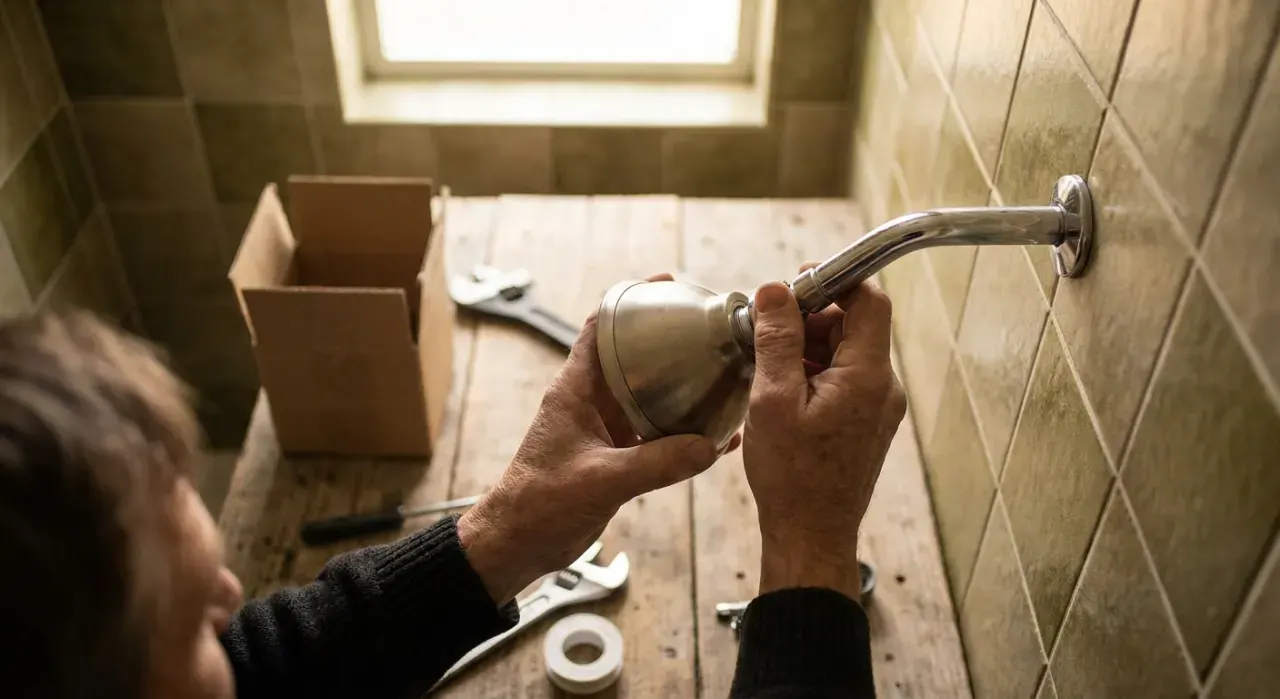
Which is better for cleaning and bathing?
The handheld, by a wide margin. Detaching the head lets you rinse soap scum off tub walls and glass doors, wash down the shower, and direct water exactly where you need it — a genuine time-saver for anyone who cleans their own bathroom. It is also far easier for bathing small children, rinsing pets, and washing off after exercise or gardening. A fixed head simply cannot reach into corners or aim downward, so these everyday tasks become more awkward with one.
Which is better for accessibility?
The handheld, clearly, which is why it is standard in accessible and aging-in-place bathrooms. It lets a person shower comfortably while seated on a bench or shower chair, aim the water precisely, and bathe with minimal reaching or movement, improving both safety and independence. Mounted on a slide bar, the height adjusts for seated or standing use and for different family members. For anyone with mobility, balance or strength limitations, a handheld is one of the simplest, most effective bathroom upgrades.

Which should you buy?
Buy a handheld shower head if you value flexibility for cleaning, bathing kids or pets, or accessibility — it is the more practical everyday choice for most households. Buy a fixed head if you prefer the cleanest minimal look, want the fewest parts and lowest cost, and do not need the reach. If you cannot decide, a combo unit with a fixed head and a detachable handheld on the same mount delivers both, and most models install in minutes onto your existing shower arm.
Where to go next
Ready to shop? Our picks for the best shower heads rank current handheld, fixed and combo models on the ratings and complaints owners report, and the best shower head for low water pressure tackles weak flow. Planning the install? See the standard height for a shower head. Everything sits under the bathroom hub.
We never buy or physically test the products we rank — our recommendations come from aggregated owner reviews and expert consensus, and the method is on how we rank. Use plumbers tape on the threads to prevent leaks.