 Garden
Affiliate Disclosure
Some links on this page are affiliate links. As an Amazon Associate, we earn from qualifying purchases — at no extra cost to you. We do not buy, test, or physically handle the products we cover; our rankings come from aggregated owner reviews, ratings and expert consensus. Commissions never change our verdicts. How we rank · full disclosure.
The short version: this page is ranked on one thing — how a sheet handles being soaked, and how fast it recovers before it happens again. Night sweats are a water problem, not a first-touch temperature problem. Start with the room anyway: the American Academy of Sleep Medicine's healthy sleep guidance is to keep the bedroom cool. The scenario is not feeling warm; it is having saturated the bed at 2 a.m. and needing the fabric to pull the liquid off your skin and dry out before 4 a.m. Our top pick is the DAPU pure linen set.
That narrow axis is why this exists as a separate page. If you simply sleep warm, or you want the general comparison of what makes any sheet cool — breathability versus wicking, and how each material behaves — our best cooling sheets guide is the canonical page for that and covers it properly. Come here for repeated saturation and recovery specifically. For the wider flax field, best linen sheets has more options.
Top Picks at a Glance
The Criterion: Saturation and Recovery
A hot flash does not just raise your skin temperature. It produces liquid, and that liquid has to go somewhere before the next one arrives. Everything on this page is judged on that cycle, and four properties decide it.
How much water the fiber takes up before it feels wet. This is the buffer. A fiber that absorbs heavily can carry a serious sweat inside itself while the surface against your skin still reads as dry; a fiber that absorbs nothing leaves the same sweat sitting on top as liquid.
How fast it gives that water back to the air. This is recovery, and it is where fabrics with similar uptake separate decisively. Cotton absorbs as willingly as anything and then hangs onto it. Flax absorbs willingly and dries quickly. Over a single night with three episodes, that difference is the whole ballgame.
What it does when genuinely saturated. A fabric that has taken on all it can hold either stays lofted off the skin or collapses onto it. Liquid water in contact with skin conducts heat away very efficiently, which is why a soaked synthetic sheet turns cold and clinging the moment the flash passes and your temperature drops back. Thick, irregular yarns and open weaves resist that clinging; smooth dense finishes invite it.
How it survives very frequent hot washing. Night-sweat bedding is laundered every three or four days instead of weekly, because sweat leaves oils and salts behind, and often at a warmer setting. Over a year that is several times the wear normal sheets see. Sturdy plain-woven natural fabrics take it; silky finishes pill and thin.
Those four properties also explain the absence you may have noticed. Polyester microfiber and engineered cool-touch fabrics have effectively no capacity to absorb water — the fiber will not take it in, so a sweat stays on the surface as liquid and the sheet is at its worst precisely when it is needed most: cold, clinging, and no closer to dry an hour later. The strong cold hit they are sold on is conduction on first contact and lasts about a minute. That is a fine trade for someone who runs warm and dry, and a bad one here, so no synthetic set is ranked on this page.
Our #1 Pick: DAPU 100% Pure Linen
Flax is the fiber that does the most work when a bed is genuinely wet. It takes up a large share of its own weight in moisture before the surface starts to feel damp, which is the buffer that keeps you from lying in a puddle — and then, the part that decides the ranking, it releases that water back into the air faster than cotton, bamboo or lyocell. Absorb heavily and dry fast is a rare combination, and it is exactly the specification a repeated-saturation night demands.
The construction reinforces both halves. Linen is spun into thick, irregular yarns and woven loosely, so air moves through the cloth continuously and the fabric sits slightly off the skin rather than plastering itself to you when it is loaded with water. That is the difference between a soaked sheet that is merely damp underneath you and one that has gone cold and clinging. This set is a mid-weight around 170 gsm, which keeps the openness without feeling insubstantial.
It is also the most durable thing here under the laundry schedule night sweats demand. Flax fiber is exceptionally strong and gets stronger when wet, so washing it every three days does not destroy it — linen softens and improves for years rather than pilling out. Given that these sheets will see several times the wash cycles of ordinary bedding, that matters more than the price tag suggests.
The honest limitations are texture, price and looks. Linen has a dry, slightly rough hand that softens over months but never becomes silky, and people who love smooth sheets do not convert. It costs several times what a synthetic set does. And it wrinkles permanently by design.
Check price on Amazon → (paid link)
The Ranked Field

Best for repeated soakings in one night, where the bed has to recover between them
- 100% flax linen from Normandy, around 170 gsm
- Takes up a large share of its own weight in water before feeling wet
- Releases it back to the air faster than any other bedding fiber
- Thick irregular yarns hold the cloth off the skin when saturated
Why buy it: flax absorbs an unusual amount of liquid before the surface reads as wet and then dries faster than cotton, bamboo or lyocell, so the sheet that soaked up a 2 a.m. episode has actually recovered by the time the next one arrives — and it launders hot, often, for years.

Best for heavy sweats when linen texture is a deal-breaker
- 100% lyocell from eucalyptus pulp
- Water is drawn into the core of the filament, not left on the surface
- Deliberately light, roughly 130 gsm, so there is less fabric to dry out
- Naturally odor-resistant between washes
Why buy it: lyocell pulls liquid into the inside of the fiber rather than leaving it sitting against your skin, so even carrying a heavy sweat the face of the fabric stays comparatively dry — the smooth-fabric route to the same recovery flax gets by breathing.
Best for one soaking a night rather than three, on a budget
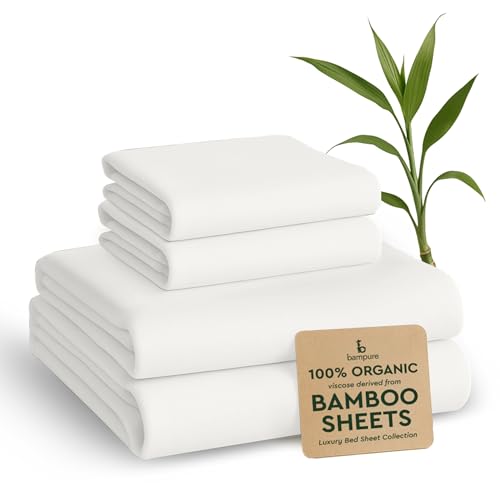
- 100% viscose regenerated from bamboo pulp
- Absorbent cellulose that takes water in rather than beading it off
- Recovers well from a single episode, more slowly from repeats
- The deepest owner-review record of any bamboo set here
Why buy it: regenerated cellulose takes liquid in readily and gives most of it back overnight, which handles one heavy sweat comfortably — and this is the best-evidenced set of its type, with far more long-term owner feedback behind it than the boutique alternatives.

Best for light or occasional sweats, and anyone who launders hot every few days
- Long-staple organic cotton in an open percale weave
- Absorbs willingly — the same reason cotton makes good towels
- Holds onto that water longer than flax does
- Survives frequent hot washing better than any silky finish here
Why buy it: cotton takes a sweat up without complaint and the open percale weave keeps air moving through it, but it stays damp longer than flax — fine when the bed has all night to recover, slow when it does not.
Best for testing whether you can live with linen before spending premium money
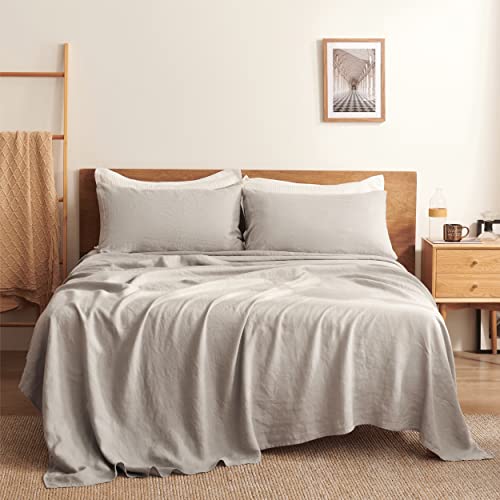
- 100% flax linen, stone-washed and soft out of the bag
- The same uptake and drying behavior as premium flax
- Coarser yarn and finish than a Normandy-flax set
- Deep-pocket fitted sheet
Why buy it: the cheapest genuine flax here, and flax is the fiber that decides this page — a low-risk way to find out whether linen texture suits you before committing, with the same absorb-and-dry cycle behind it.
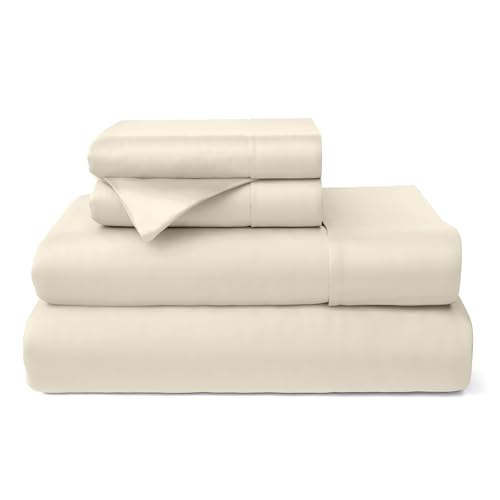
Best for occasional sweats where a silky bed matters more than fast recovery
- 100% viscose derived from bamboo
- Dense silky finish rather than an open plain weave
- Cool and smooth on first contact
- The slowest set here to dry out once saturated
Why buy it: the fiber takes water up well, but the tight silky finish that makes it feel luxurious is the same thing that traps it in the cloth — placed honestly, because the fabric that feels best when you get into bed is not the one that has recovered by 4 a.m.
Quick Comparison
| Product | Best for | Rating | Price | Buy |
|---|---|---|---|---|
| DAPU 100% Pure Linen Sheets Set, French Linen Flax, Queen | Best Overall | — | Check (paid link) | |
| Sijo AiryWeight TENCEL Lyocell Sheet Set, Queen | Best Smooth Fiber | — | Check (paid link) | |
| BAMPURE 100% Rayon from Bamboo Sheets, Queen | Best Bamboo Viscose | — | Check (paid link) | |
| California Design Den 100% Organic Cotton Percale Sheet Set, Queen | Best Cotton | — | Check (paid link) | |
| Bedsure Linen Sheets Set, Queen, 100% Linen | Best Value | — | Check (paid link) | |
| Cosy House Collection 100% Rayon from Bamboo Sheet Set, Queen | Silkiest Finish | — | Check (paid link) |
How Each Set Behaves Through a Soaking
| Set | Uptake before it feels wet | Recovery between episodes | When fully saturated | Frequent hot washing |
|---|---|---|---|---|
| DAPU Pure Linen | Highest here | Fastest here | Stays lofted off the skin | Excellent — improves with washing |
| Sijo AiryWeight | Very high, into the fiber core | Fast | Surface stays comparatively dry | Fair — needs a gentle cycle |
| BAMPURE Bamboo | High | Good after one episode, slower after repeats | Softens and drapes onto the skin | Fair — pills if dried hot |
| California Design Den | Good | Slow — holds water once it has it | Damp but crisp, does not cling | Excellent — launders endlessly |
| Bedsure Linen | Highest here | Fastest here | Stays lofted off the skin | Very good — coarser yarn, same strength |
| Cosy House Bamboo | High | Slowest here — dense finish traps it | Clings once loaded | Fair — the finish is the first thing to go |
How We Rank
We do not buy or sleep on these sheets, and we would rather say so than invent a test bench. For this page the aggregated owner ratings are weighted toward reviews that explicitly mention night sweats, hot flashes or waking soaked, because those are the only reviews that put the fabric under the load this page cares about. The factors, in order of weight: how much liquid the fiber takes up before it feels wet against skin, from published material data; how fast it releases that water back to the air, since recovery between episodes is what separates fibers with similar absorbency; behavior when actually saturated — whether the fabric stays off the skin or turns cold and clinging; and durability through very frequent hot washing, which carries far more weight here than in any other bedding category, because night-sweat sheets see several times the laundry cycles of ordinary bedding. Prices were checked at the time of writing. Full method: how we rank.
The Sheets, Reviewed
1. DAPU 100% Pure Linen — Best Overall
Covered above: the biggest buffer before it feels wet, the fastest recovery once it does, and the only fabric here that genuinely enjoys being washed every three days. Owners praise: waking damp rather than soaked, sheets that are dry again by morning, and fabric that improves over years of heavy laundering. Owners gripe about: the price, a dry rough hand for the first several washes, and a permanently rumpled look. Check price (paid link).
2. Sijo AiryWeight TENCEL Lyocell — Best Smooth Fiber
Lyocell reaches nearly the same place as flax by a different mechanism. The fiber is manufactured so that water is drawn into the core of the filament rather than sitting on its surface, which means the face of the fabric against your skin stays comparatively dry even while the sheet is carrying a heavy sweat. When a fabric is fully loaded that structural difference is what stops it going clammy, and it is the reason lyocell is the one recommendation here for people who read the linen verdict and know they will hate the texture.
Two things keep it second on this axis. Its release rate is fast but not flax-fast, so recovery between two episodes in the same night is a little slower. And it is a smooth, closed fabric rather than an open one, so it relies on the fiber doing all the work with no help from airflow through the weave — the AiryWeight construction is deliberately light, roughly 130 gsm, which offsets a good deal of that by simply having less fabric to dry out.
Two honest caveats. The owner-review record behind this set is thin compared with the mass-market options here, so the consensus is genuinely shallower. And it is the most delicate fabric on the page under the wash schedule night sweats require — it wants a gentle cycle and a low dryer setting, which is a real cost when you are laundering twice a week.
Owners praise: staying dry against the skin through a heavy sweat, a smooth cool drape, and light weight that never feels smothering. Owners gripe about: the price, delicacy in the wash, and thinness that reads as flimsy to people used to heavy cotton. Check price (paid link).
3. BAMPURE 100% Rayon from Bamboo — Best Bamboo Viscose
Bamboo viscose is regenerated cellulose — the name the FTC's textile labeling rules require on the label, whatever the marketing says about bamboo or eucalyptus — and chemically a cousin of lyocell, and it behaves like a slightly less capable one: good uptake, decent release, and a clear tier above anything synthetic. In practice it handles a single soaking well — absorb it, dry out over the rest of the night, fine by morning. Where it falls behind flax and lyocell is the repeat: after a second episode the fabric is still carrying the first, and viscose softens and drapes onto the skin when it is loaded rather than holding itself off.
What earns this particular set the bamboo slot is evidence. It carries by far the deepest owner-review record of the bamboo options here, which is worth a great deal in a category full of near-identical white-label sets making identical claims. It is also the cheapest way onto the absorbent-fiber tier at all.
Owners praise: real moisture uptake at a low price, a cool silky surface, and drying out overnight. Owners gripe about: pilling if washed hot or dried high — a real issue on this laundry schedule — wrinkling, and a slippery hand some sleepers dislike. Check price (paid link).
4. California Design Den Organic Cotton Percale — Best Cotton
Cotton's strength here is uptake and its weakness is release. It absorbs a sweat happily — it is the same property that makes cotton good towel material — and the open percale weave keeps air moving through the cloth so it is never a sealed fabric. But cotton holds onto water noticeably longer than flax does, and a percale sheet that took a heavy soaking at 2 a.m. is still damp at 4. It also stays crisp rather than clinging when saturated, which is genuinely pleasant; it is just slow.
That makes it the right buy for light or occasional sweating, and the wrong one for three episodes a night. Its other real advantage is laundry endurance: sturdy long-staple cotton in a plain weave takes hot washing every few days about as well as linen does, and outlasts every silky finish on this page. If your sweats are mild but frequent, that durability may matter more to you than the recovery time.
Owners praise: genuine crispness even when damp, real airflow, and cotton that softens over years and launders endlessly. Owners gripe about: stiffness out of the packet, heavy wrinkling, and some shrinkage if dried hot. Check price (paid link).
5. Bedsure Linen — Best Value
The same fiber as our top pick at a fraction of the price, which makes it the sensible way to find out whether you can live with linen before spending premium money on it. The behavior does not change with the price tag: flax absorbs heavily, dries fast, holds itself off the skin when saturated and shrugs off frequent hot washing. This set is stone-washed, so it arrives softer than raw linen usually does.
What you give up is refinement and evidence. The yarn and finish are not at the level of a Normandy-flax set, so the hand is coarser and the drape less elegant, and it carries a much thinner owner-review record than the mass-market cotton and bamboo sets here, so the consensus behind it is less settled. As a low-risk entry into the fiber that actually solves this problem, it is still the smartest money on the page.
Owners praise: genuine flax behavior at an accessible price, softness straight out of the bag, and a deep-pocket fit. Owners gripe about: texture variation between batches, wrinkling, and a coarser hand than premium flax. Check price (paid link).
6. Cosy House Collection Bamboo Viscose — Silkiest Finish
A genuinely popular set with a genuinely absorbent fiber, placed last here for one reason: the dense silky finish that makes it feel luxurious is the same thing that traps water in the cloth. The fiber takes moisture up well, but a tight surface gives it nowhere to go, so this is the slowest set on the page to recover and the most likely to cling once it is fully loaded. It feels wonderfully cool the moment you get into bed and it is at its worst several hours later, which is exactly the wrong shape for this problem.
If you sweat occasionally and mostly want a smooth, cool, good-looking bed, that trade is perfectly reasonable and this is a fine set. If you are soaking the bed more than once a night, the entries above it are where your money should go.
Owners praise: a silky cool surface, deep pockets that hold, and a bed that looks smooth without ironing. Owners gripe about: pilling with hot washes, snagging, and dampness that lingers once the fabric has taken on moisture. Check price (paid link).
What Sweat-Prone Sleepers Actually Complain About
Fabric softener quietly killing the absorbency. Softeners and dryer sheets deposit a water-repellent film on the fibers. A set that took up sweat beautifully in month one stops in month four, and the owner blames the sheets. Skip both, permanently — and on this laundry schedule the film builds up faster than it would on ordinary bedding.
Buying by first touch. The set that feels coldest in the store is usually the one with the least capacity to absorb anything. That sensation is heat conduction, it lasts about a minute, and it predicts nothing about how the bed feels after you have soaked it.
Underestimating the laundry. Washing every three or four days is several times the wear normal sheets see, and it is not optional — sweat leaves oils and salts that dull the fabric and encourage odor. Sets that were fine as ordinary bedding pill and thin within a season under this schedule.
A plasticky protector undoing all of it. A cheap waterproof protector is a vapor barrier lying directly under the sheets; it will trap everything the fabric above is trying to release, and the bed never dries. Use a breathable membrane protector — see best mattress protector.
Owning only one set. When sweats are nightly, a single set means a damp bed or a load of laundry in the small hours. Two sets in rotation is the least glamorous and most effective fix on this page, and it halves the wear on each.
How to Choose Sheets for Night Sweats
Start from how often you soak the bed, not from how warm you feel. Several episodes a night, where recovery time is the binding constraint: flax linen. Same problem but linen texture is impossible: lyocell. One heavy episode a night: bamboo viscose. Light or occasional sweating: cotton percale. Any polyester or cool-touch synthetic: not for this, whatever the packaging claims.
Then think about the wash schedule before you buy. These sheets get laundered two or three times as often as normal bedding. Linen and percale cotton are built for that; delicate lyocell and silky bamboo finishes need care and will not last as long. Buy the second set at the same time as the first and rotate them.
Then clear the path underneath and above. A breathable membrane protector rather than a plastic-backed one, or the sheets cannot release anything. And a light, open layer on top — a heavy dense comforter will hold the humidity in regardless of the sheets; best comforter for hot sleepers covers that layer.
Then protect the absorbency. No fabric softener, no dryer sheets, ordinary detergent, low dryer heat. Wash every three or four days so oils and salts never accumulate.
The Verdict
Judged on saturation and recovery rather than how a sheet feels in the first minute, the DAPU pure linen set wins: the largest buffer before it reads as wet, the fastest drying between episodes, fabric that holds itself off the skin when loaded, and the only construction here that thrives on being washed twice a week. If linen texture is a deal-breaker, the Sijo AiryWeight lyocell keeps the surface driest against your skin, at the cost of a gentler laundry routine. The BAMPURE bamboo viscose is the well-evidenced budget route for one soaking a night, the California Design Den percale the durable choice for lighter sweats, the Bedsure linen the cheap way to test whether flax suits you, and the Cosy House bamboo the silky pick if recovery time is not your binding problem. Check price on Amazon → (paid link)
More from this hub: bedding & sleep · best cooling sheets · best linen sheets · best comforter for hot sleepers · best mattress protector · how we rank.