 Garden
Affiliate Disclosure
Some links on this page are affiliate links. As an Amazon Associate, we earn from qualifying purchases — at no extra cost to you. We do not buy, test, or physically handle the products we cover; our rankings come from aggregated owner reviews, ratings and expert consensus. Commissions never change our verdicts. How we rank · full disclosure.
The short version: after weighing six of the most-owned cooling sheet sets in the US on aggregated ratings, fiber, weave and what owners report after a full summer, our #1 pick is the California Design Den organic cotton percale set. Percale is the weave that made hotel beds feel cool decades before anyone printed the word "cooling" on a package, and this is the version owners keep rating highly. If crisp is not your texture, the Cosy House bamboo viscose set is the silky alternative. For genuine night sweats, spend up on the Sijo lyocell.
One thing to settle before you shop: sheets are the fastest, cheapest temperature fix in a bedroom, but they cannot outwork a hot mattress, or a warm room — the American Academy of Sleep Medicine's healthy sleep guidance is to keep the bedroom cool. If you sleep on all-foam and wake up damp, the sheets are treating a symptom — best mattress in a box covers why hybrids run cooler, and best comforter handles the layer on top. If your specific problem is waking up soaked, best cooling sheets for night sweats is the narrower shortlist.
Top Picks at a Glance
Our #1 Pick: California Design Den Organic Cotton Percale
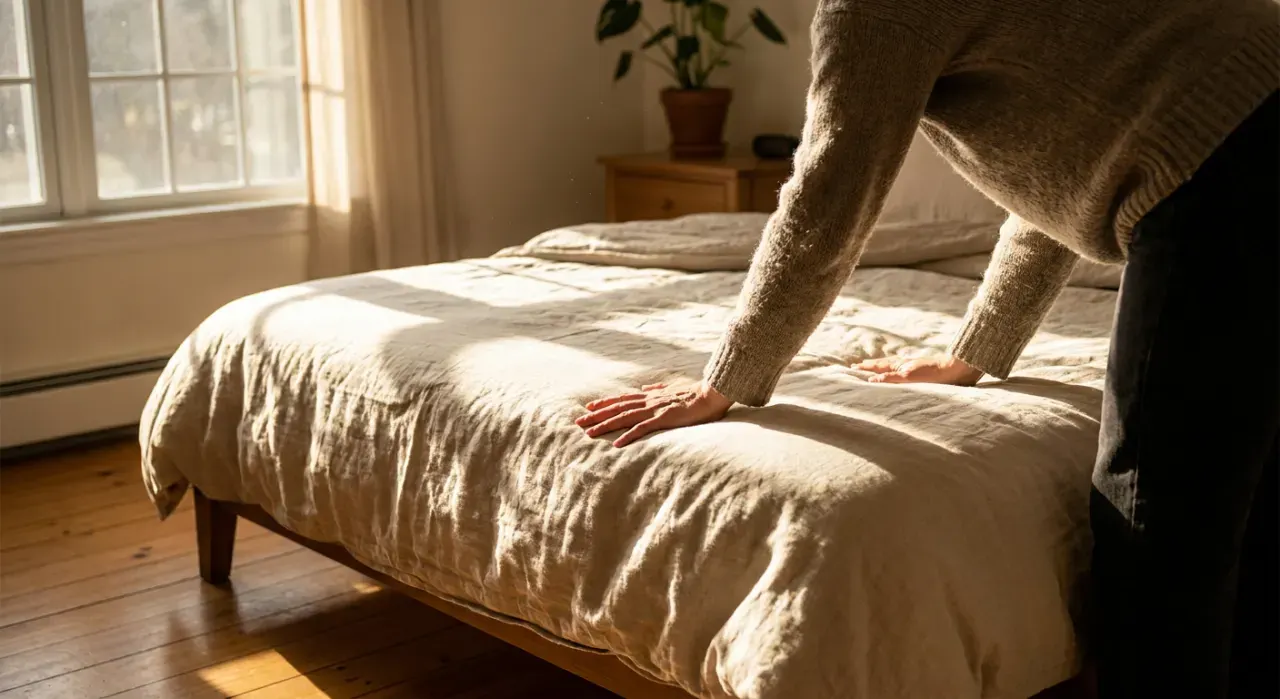
Percale is not a brand feature, it is a weave, and it is the single most reliable cooling technology in bedding. One thread over, one thread under, leaving microscopic gaps that let body heat and water vapor escape rather than pooling against skin. The California Design Den set is the one owners rate most consistently: long-staple organic cotton, a sensible thread count in the 300 range, and deep pockets with elastic all the way around the fitted sheet rather than just at the corners.
What reviewers describe is a sheet that starts slightly stiff, softens noticeably after three or four washes, and then holds that state for years. That break-in period is the main complaint — people expecting immediate flannel softness are disappointed on night one. The other honest limitation is wrinkling. Percale creases, and pulling it straight from the dryer while slightly damp is the only real fix. If you need a bed that looks pressed, this is not your weave.
Check price on Amazon → (paid link)
The Ranked Field

Best for the crisp, breathable weave that beats every cooling gimmick
- 100% GOTS-certified organic long-staple cotton
- Percale weave, roughly 300 thread count
- Deep pockets with all-around elastic
- 4 pieces: flat, fitted, two pillowcases
Why buy it: the classic hotel-crisp percale hand — cool to the touch because air moves through it, not because of a coating.
Best for sleepers who want silky rather than crisp
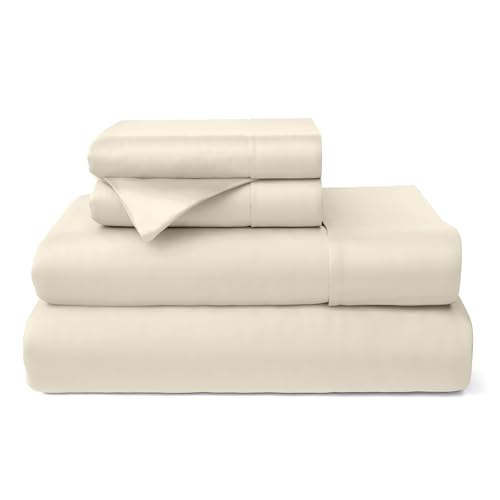
- 100% viscose derived from bamboo
- Deep pockets to about 16 inches
- Moisture-wicking, thermo-regulating fiber
- Four-piece set
Why buy it: the drapey, slippery feel that runs cool without the papery crispness percale fans love and everyone else does not.

Best for serious night sweats and hot climates
- 100% lyocell derived from eucalyptus
- Roughly 130 gsm, deliberately lightweight
- 16-inch deep pockets
- Four-piece set with top sheet
Why buy it: the most moisture-hungry fiber in mainstream bedding — it moves sweat off skin faster than cotton or bamboo.
Best for the instant cold-to-touch sensation on contact
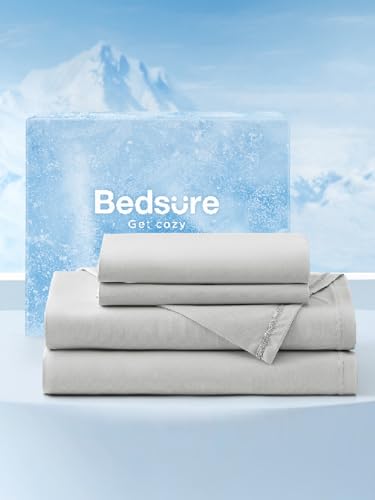
- Engineered cool-touch fiber, Q-Max rated
- Deep pockets to about 18 inches
- Anti-slip fitted sheet band
- Four-piece set
Why buy it: the only sheets here that feel cold the second you get in, which is what people actually mean by cooling sheets.

Best for humid climates and buyers who want sheets to last a decade
- 100% European flax linen, roughly 170 gsm
- Stone-washed for immediate softness
- Four-piece set
- Gets softer with every wash rather than wearing out
Why buy it: the most breathable natural fiber sold as bedding, and the only sheets in this group that improve for years.

Best for guest beds, kids and anyone testing whether cooling sheets matter
- Double-brushed microfiber
- 16-inch deep pockets
- Wrinkle, fade and stain resistant
- Four-piece set in dozens of colors
Why buy it: not the coolest fabric here, but the cheapest sheets people genuinely keep buying again — and they never need ironing.
Quick Comparison
| Product | Best for | Rating | Price | Buy |
|---|---|---|---|---|
| California Design Den Organic Cotton Percale Sheet Set, Queen | Best Overall | — | Check (paid link) | |
| Cosy House Collection 100% Bamboo Viscose Sheet Set, Queen | Best Bamboo | — | Check (paid link) | |
| Sijo AiryWeight TENCEL Lyocell Sheet Set, Queen | Premium Pick | — | Check (paid link) | |
| Bedsure Breescape Cooling Sheet Set, Queen | Best for Night Sweats | — | Check (paid link) | |
| DAPU 100% French Linen Sheet Set, Queen | Best Linen | — | Check (paid link) | |
| Mellanni Iconic Collection Sheet Set, Queen | Best Budget | — | Check (paid link) |
Specifications Side by Side
| Sheet set | Fiber | Weave / feel | Pocket depth | Cooling mechanism |
|---|---|---|---|---|
| California Design Den | Organic cotton | Percale, crisp | Deep, elasticated | Airflow through the weave |
| Cosy House Bamboo | Bamboo viscose | Silky, drapey | ~16" | Moisture wicking |
| Sijo AiryWeight | Eucalyptus lyocell | Smooth, very light | ~16" | Moisture absorption, low gsm |
| Bedsure Breescape | Engineered cool-touch fiber | Slick, cold to touch | ~18" | Heat transfer on contact |
| DAPU Linen | European flax linen | Textured, relaxed | Standard deep | Airflow plus high absorbency |
| Mellanni Iconic | Brushed microfiber | Soft, smooth | ~16" | Light weight only |
How Each Material Actually Cools
There are only two ways a sheet keeps you cool, and knowing which one you are buying explains most of the disappointment in this category. The first is breathability — an open weave that lets warm, moist air escape and cooler air in. Cotton percale and linen work this way, which is why they feel crisp and dry rather than cold, and why they keep working for the whole night. The second is wicking and conduction — a fiber that pulls moisture off the skin and carries heat away on contact. Lyocell and bamboo work this way and feel silky rather than crisp. Engineered cooling fabrics lean almost entirely on the cold-touch effect, which is dramatic for the first minute and then fades as the fabric equalizes with your body.
That is also the honest answer to bamboo versus cotton: percale cools by breathing, so it feels crisp and dry, while bamboo viscose cools by wicking and by a cool surface, so it feels smooth and slippery. In dry heat percale usually wins on airflow; in sweaty heat bamboo's wicking often feels better. Both beat sateen cotton and microfiber, and the choice between them is mostly a texture preference.
| Material | Cools by | Feel | Best for | Note |
|---|---|---|---|---|
| Cotton percale | Breathability | Crisp, cool | Most sleepers, dry heat | Wrinkles; avoid the sateen weave |
| TENCEL lyocell | Wicking | Smooth, cool drape | Night sweats | Higher price |
| Bamboo viscose | Wicking plus cool touch | Silky, slippery | Hot sleepers who dislike crisp | Less crisp than percale |
| Linen | Breathability | Textured, airy | Humid climates | Premium; permanently relaxed look |
| Engineered cool-touch | Cold-touch conduction | Slick, cold on contact | Falling asleep in a hot room | Sensation fades as it warms |
| Brushed microfiber | Neither — traps heat | Soft, warm | Budget beds, cold rooms | Least breathable here |
How We Rank
We do not buy or sleep on these sheets, and we would rather say so than invent a test bench. The ranking is drawn from aggregated owner ratings across the six sets here, weighted toward reviews written after several months of washing, because pilling and shrinkage are the two failures that only appear on a laundry cycle. Four factors decide the order. Fiber and weave, since those govern airflow and moisture movement and nothing else meaningfully does. Rating strength against review volume, so a small pool of glowing reviews does not outrank a large pool of good ones. Durability signals — pilling, seam failure, elastic giving out, colors fading. And fit, which sounds trivial until a fitted sheet pops off a topped mattress at 2 a.m. Prices were checked at the time of writing. Full method: how we rank.
The Sheets, Reviewed
1. California Design Den Organic Percale — Best Overall
Covered above. Owners praise: genuine hotel crispness, real airflow, softening beautifully over time, and a fitted sheet that grips. Owners gripe about: stiffness out of the packet, heavy wrinkling, and a few reports of shrinkage when dried on high heat. Check price (paid link).
2. Cosy House Collection Bamboo Viscose — Best Bamboo
Bamboo viscose is the answer for people who find percale papery. The fiber is smooth and cool against skin, it absorbs moisture readily and releases it fast, and the drape is closer to silk than to cotton. Owners consistently describe waking up dry rather than merely cool, which is the distinction that matters for anyone whose problem is sweating rather than temperature alone.
Owners praise: silky feel, real moisture management, deep pockets that hold, and a set that looks smooth without ironing. Owners gripe about: pilling if washed hot or dried on high, snagging on rough skin and jewelry, and a slippery feel that some sleepers dislike. Check price (paid link).
3. Sijo AiryWeight TENCEL Lyocell — Premium Pick
Lyocell is the technically strongest cooling fiber in mainstream bedding. It holds substantially more moisture inside the fiber than cotton before feeling wet, and the Sijo set is deliberately made light — around 130 gsm — so there is less fabric to hold heat in the first place. This is the set to buy if you are waking up soaked rather than just warm, and it is the one owners with menopause-related night sweats mention most often.
Owners praise: serious sweat management, a cool smooth hand, and light weight that never feels smothering. Owners gripe about: the price, a delicate fabric that needs gentle washing, and thinness that reads as flimsy to people used to heavy cotton. Check price (paid link).
4. Bedsure Breescape Cooling Set — Best for Night Sweats
This is the set that delivers the sensation people picture when they hear "cooling sheets": a genuine cold shock on contact. Engineered cool-touch fibers conduct heat away from skin far faster than cotton, and Bedsure publishes a Q-Max figure for it. The honest limitation is physics — once the fabric reaches body temperature, the effect flattens, so it is best understood as a fast fix for getting to sleep rather than an all-night refrigerator.
Owners praise: the immediate cold-to-touch feel, deep pockets, a fitted sheet that stays put, and a fair price. Owners gripe about: the cooling effect fading during the night, a slick synthetic hand, and less breathability than natural fibers over long stretches. Check price (paid link).
5. DAPU 100% French Linen — Best Linen
Linen is the oldest cooling fabric there is and still one of the best. Flax fibers are hollow and highly absorbent, the weave is loose, and the fabric sits slightly off the skin rather than clinging, which matters more in humid heat than any fiber statistic. It is also the only bedding here with a realistic ten-year horizon: linen softens with every wash instead of wearing out.
Owners praise: exceptional breathability in humid heat, durability, and a texture that improves for years. Owners gripe about: the price, a rougher hand than cotton for the first several washes, and a permanently rumpled look. Check price (paid link).
6. Mellanni Iconic Collection — Best Budget
Microfiber is not a cooling fabric and we are not going to pretend otherwise. What the Mellanni set is, is the most-bought sheet set in America, soft immediately, wrinkle-resistant, available in every color, and cheap enough to keep three sets in rotation. For a guest room, a kid’s bed or a household that is not sure cooling sheets are worth it, this is the sensible starting point.
Owners praise: immediate softness, no ironing ever, huge color range, and a price that makes replacement trivial. Owners gripe about: sleeping warm compared with cotton, pilling after heavy use, and a synthetic feel that natural-fiber sleepers notice at once. Check price (paid link).
What Owners Actually Complain About
Pocket depth causes more returns than temperature does. Measure your mattress height, add the topper, then add an inch. A 12-inch mattress with a 3-inch topper needs a 16-inch pocket minimum, and the fitted sheet that fit perfectly before the topper will pop a corner every night after it.
Pilling is the second theme, and it is mostly a laundry problem. Hot water and high dryer heat abrade fiber surfaces, and fabric softener coats them. Wash cool, dry low, skip the softener, and wash sheets separately from towels — the abrasion from terry cloth is the usual culprit in bedding that pills within a season.
Cooling that fades is inherent to cool-touch finishes rather than a fault. Any fabric equalizes with body temperature within minutes. Sheets that keep working through the night do it by moving moisture, not by feeling cold, which is why percale, lyocell and linen out-perform slick synthetics over eight hours even though they lose the first-touch comparison.
Buying sateen and expecting cool. Sateen cotton feels luxuriously smooth and sleeps warm, and hot sleepers who shop by fiber without checking the weave routinely end up with it and then blame the cotton. Look for the word percale on the label — it is the single most useful word in bedding.
Ignoring the rest of the bed. Cool sheets under a heavy comforter and a dense foam topper still leave you hot; the whole stack has to breathe. See best comforter for hot sleepers.
Shrinkage hits natural fibers hardest, and it happens once. Organic cotton and linen will lose a little in the first hot wash and then stabilize. Buying the correct pocket depth with an inch to spare covers it; drying on low heat prevents most of it.
How to Choose Cooling Sheets
Decide texture first, because it is the thing you will notice every single night. Crisp means percale or linen. Silky means bamboo viscose or lyocell. Soft and forgiving means microfiber, at a temperature cost. No amount of marketing changes those three lanes, and people who buy across their preference return sheets regardless of how well the fabric performs.
Then match the fabric to your actual problem. If you are warm but dry, airflow is what you need: percale or linen. If you wake up damp, absorption is what you need: lyocell first, bamboo second. If your problem is falling asleep in a hot room, a cool-touch set gives you the first twenty minutes, which is often all it takes.
Then check the fitted sheet, not the set. All-around elastic beats corner-only elastic. Deep pockets beat standard. Anti-slip bands are a real feature on tall mattresses. And ignore thread count above about 400 — past that, density works against you, and the number is often inflated by counting plies. More on that in thread count explained, and the laundry rules that keep any of these alive are in how to wash bedding.
The Verdict
The California Design Den organic percale set is the one we would put on most hot beds: the weave does the work, the cotton is good, and the owner consensus is deep and stable. If crisp is not your texture, buy the Cosy House bamboo viscose and get the same airflow with a silky hand. Genuine night sweats justify the Sijo lyocell, humid climates justify the DAPU linen, and a guest room justifies nothing more than the Mellanni set. Check price on Amazon → (paid link)
More from this hub: bedding & sleep · best cooling sheets for night sweats · best comforter for hot sleepers · best mattress in a box · best pillow for side sleepers · how we rank.